Cycling in Yorkshire & Beyond

Cycling in Yorkshire & Beyond
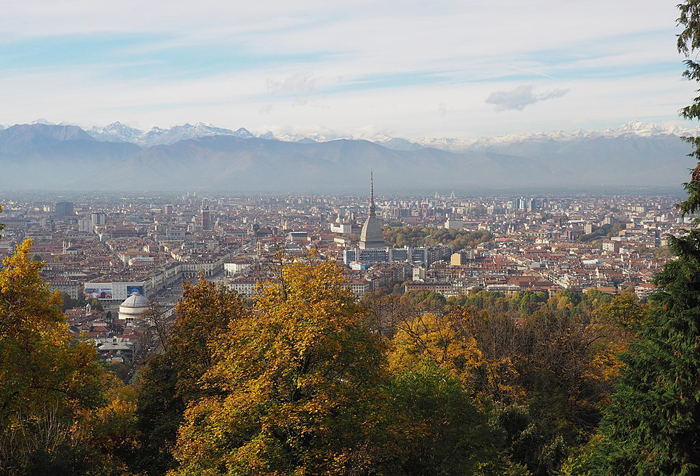
Stage 3 of the Tour de France 2024 is a 230.8km flat road stage from Piacenza to Turin.
It features a visit to Tortona, which was home to Il Campionissimo Fausto Coppi.
The three categorised climbs (all Category 4) are not significant enough to give the sprinters any problems.
This long stage is likely to finish in a bunch sprint on Corso Massimo d'Azeglio, next to the Parco del Valentino in Turin.
These are video highlights of Stage 3 Tour de France 2024.
This is the Stage 3 blog/race report.
Race Details | Poll | Map & Profile | Timings | Videos | Food & Drink | Route Notes | Favourites
| Date | Monday 1st July 2024 |
|---|---|
| Stage classification | Flat |
| Distance | 230.8km |
| Intermediate sprint | Alessandria |
| Climbs | Côte de Tortone Fausto Coppi (Cat. 4) Côte de Barbaresco (Cat. 4) Côte de Sommariva Perno (Cat. 4) |
| Total climbing | 1,100m |
Vote for one of the main contenders to win Stage 3.
This is a map of the route of Stage 3, Tour de France 2024.
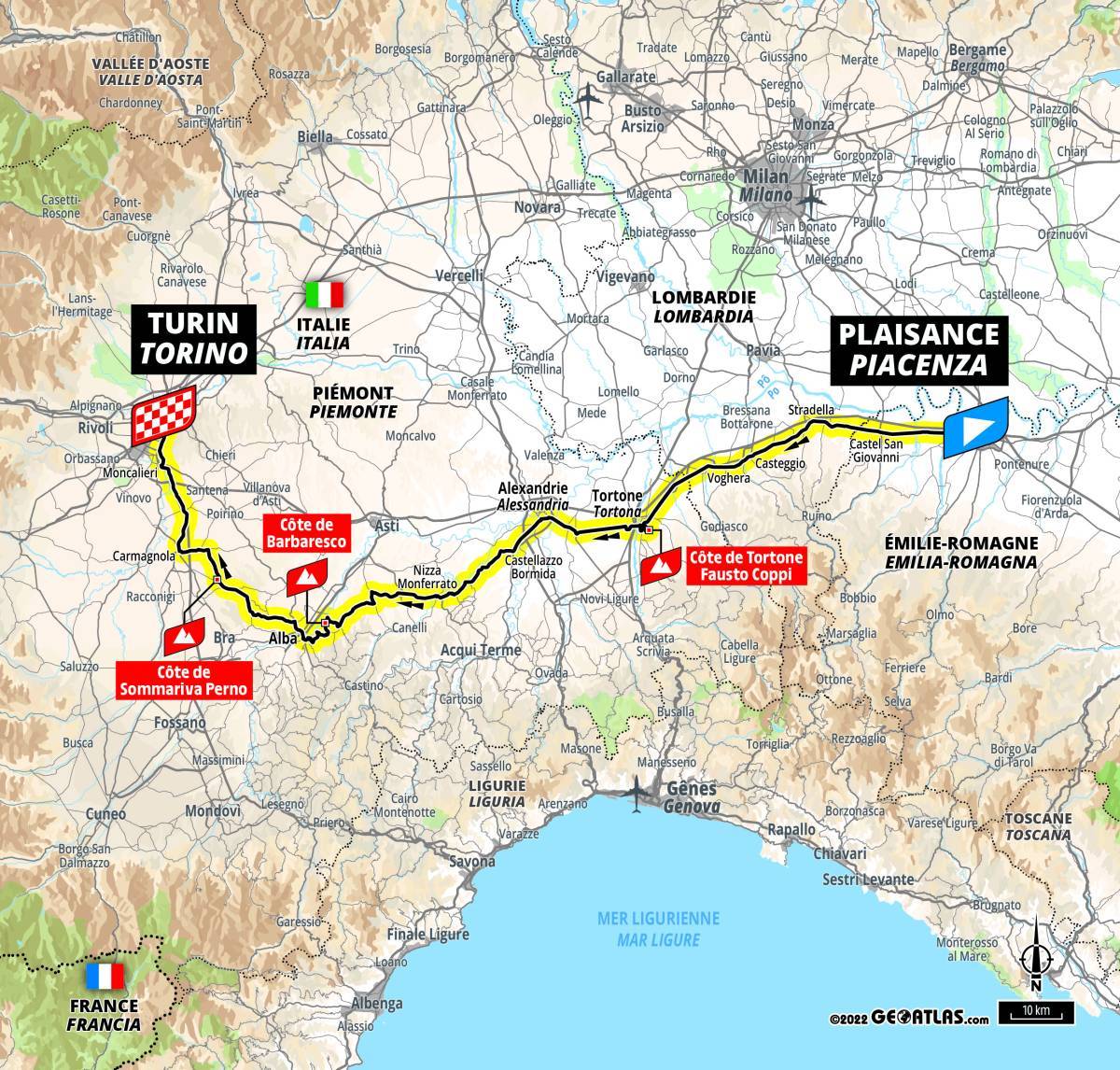
This is a zoom-able map of the route of Stage 3 of the 2024 Tour de France.
Note: this routemap was produced a long time in advance of the race, and could be subject to changes.
This is the profile of Stage 3 Tour de France 2024.

| Caravan | Fast Schedule | Slow Schedule | |
|---|---|---|---|
| Start Time (départ fictif) | 0915 |
1115 |
1115 |
| Start Time (départ réel) | 0935 |
1135 |
1135 |
| Intermediate Sprint Alexandria | 1200 |
1346 |
1400 |
| Côte de Sommariva Perno Climb | 1414 |
1548 |
1614 |
| Finish Line (230.8km) | 1530 |
1657 |
1730 |
This is a video of the route of Stage 3 Tour de France 2024.
This is a short video in which Fausto Coppi's former teammate Raphaël Geminiani remembers il Campionissimo.

There are plenty of specialities local to Turin, many of them dating back to the time when it was part of the Duchy of Savoie (pre-1861).
Tomini al Verde is grilled or baked Tomino cheese served on a bagnèt vert made up of anchovies, parsley, garlic, oil and wine vinegar.
Agnolotti al sugo d'arrosto is pasta stuffed with meat and
served in a meat broth. Alternatively the pasta can be accompanied
by a ragù sauce, or by butter, sage and Parmigiano.
Vermouth is an aperitif that has been drunk in Turin since the 1700s. It is wine with brandy, infused with herbs, spices and botanicals, and sweetened.
Buy a bottle of Vermouth di Torino (affiliate link).
The stage starts in Piacenza (départ fictif).

Piacenza is the capital of Piacenza Province, within the Emilia Romagna region. It has a population of 102,000.
It's at the confluence of the Trebbia, which runs down from the Apennine mountains to the south, and the Po.
The name Piacenza stems from the verb piacere, to please, and means pleasant place.
Piacenza and Cremona were founded as Roman colonies in May 218BC, with 6,000 Roman citizens each. They initially came under pressure from the Gauls who lived in the Po valley at the time. In 200BC, the Gauls sacked the colony at Piacenza and sold the colonists into slavery.
The Patron Saint of Piacenza is Saint Antoninus, who was a Roman soldier and Christian martyr.
Piacenza has a varied history. It was part of the Duchy of Milan in the 1500s, then a Papal State.
Napoléon annexed it in 1802 and made local men fight in the French army. Following the defeat of Bonaparte, Piacenza was part of Austria, and in 1860 it joined the Kingdom of Sardinia, which became the Kingdom of Italy the following year.
The Palazzo Communale in Piazza Cavalli is one of the finest buildings in Piacenza.
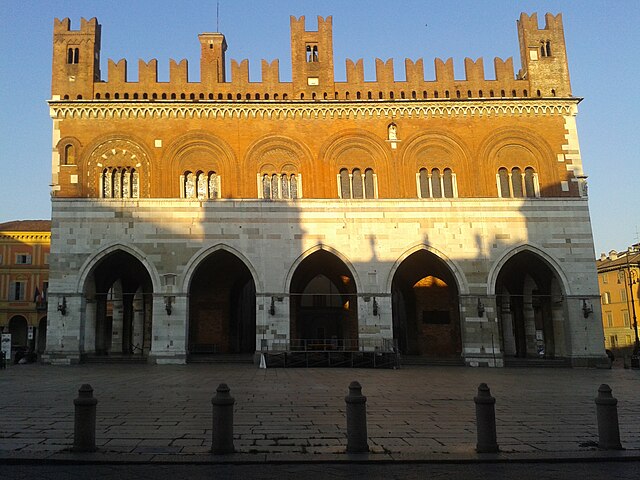
It's also known as the Palazzo del Governatore and the Palazzo Gotico.
The square, Piazza Cavalli, gets its name from two equestrian statues.
Some Piacenza inhabitants speak in Piacentino, a variety of the Emilian-Romagnol language - a member of a different Romance sub-family to Standard Italian.
Seasoned and salted pork products are specialities of Piacenza, like pancetta. Mostarda di frutta is preserved fruits in a sugary syrup flavoured with mustard.
The hills around Piacenza are planted with vines that produce Colli Piacenza wines.
The peloton rolls out of Piacenza heading west. The départ réel is where they cross the Trebbia river at Ponte Trebbia.
After 5km, it goes through Rottofreno, where a battle took place in 1746 during the War of Austrian Succession.
The race continues west to Castel San Giovanni.

Disappointingly, Castel San Giovanni is named after a castle that no longer exists.
Stage 3 goes on to Stradella, a town of 11,000 people.
Stradella was once an important centre for the production of accordions, and has an Accordian Museum which is named after well-known local accordian builder Mariano Dallapé, who began his work in 1871.
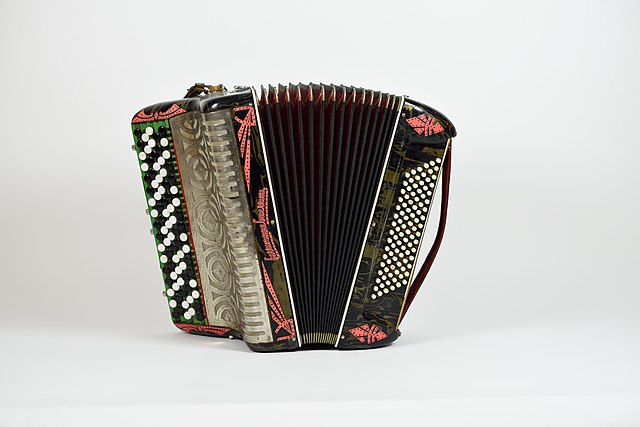
Between the wars, 12% of Stradella's 10,000 inhabitants worked in accordian production.
The Stradella Bass System is a 96-button layout on one side of the accordian for the bass notes.
This is another opportunity to listen to La Fisarmonica di Stradella by Paolo Conte.
He sings about driving through the fog of the Pianura Padana with his companion who isn't talking to him because as usual she has fallen asleep as soon as they set off back from the Sunday evening dance.
The grey of the evening is only broken up by a red traffic light. In the centre of Stradella, where all the accordians of the Pianura Padana were born, Conte hears the sweet sound of an accordian and notices how beautiful his sleeping friend is.
Brilliant! If he ever learns to sing in tune, it'll be even better.
Stradella has a tower that dates from two distinct periods.

The brick part of the tower was part of a castle built in the 1300s. The council bought the castle in the 1800s and demolished it, but preserved the tower and added a bell tower to the top.
This is the edge of the Pianura Padana (Padana Plain, or Po Valley).
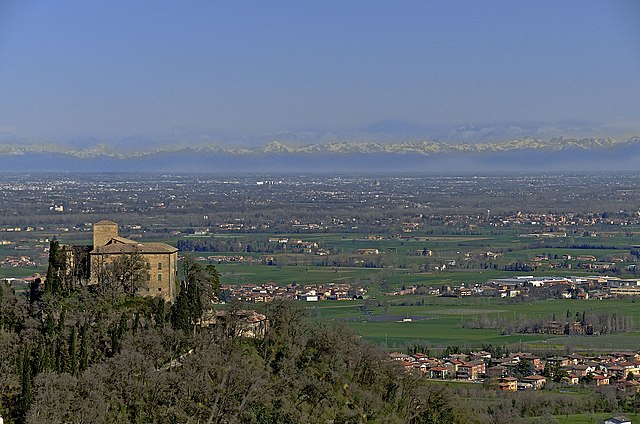
The Pianura Padana, or Po Valley, is 650km wide (east-west). It lies between the Alps to the north and the Apennines to the south.
This area is flat today, but in fact there are ancient canyons underneath which have been buried in sediment.
The lower plain is called La Bassa. A spring line at the edge of the plain provides water and makes La Bassa suitable for agriculture. Settlements are concentrated at the edge of the plain where the springs are.
Some of the Po Valley was a swamp in the Middle Ages, but it was then drained and turned back to agriculture.
The Pianura Padana is the largest unbroken plain in southern Europe, and is home to 17 million people - one third of Italy's total population.
They suffer poor air quality, with satellite images showing high concentrations of nitrogen dioxide. The pollution is produced by nitrogen, phosphorous and potassium fertilisers, by emissions from manure, and by motor vehicles.
The plain is also known for fog in Winter - as Paolo Conte says, as foggy as a glass of pastis and water.
The Po is harnessed for the production of hydroelectricity.
Just beyond Stradella is Broni, and in the hills around Broni, grapes
destined to make Barbacarlo red wine are grown.
The race goes through Casteggio and Montebello della Battaglia. There were two battaglias between the French and Austrians at Montebello - one in 1800 under Emporer Napoléon Bonaparte, and the other in 1859 in the time of Emporer Napoléon III.
Next on the route is Voghera.

According to Wikipedia, the 'Voghera housewife' is a term used in political discourse to reference an average lower middle class person who is not very well-educated but works hard and raises a family.
It's quite a significant town, with a population of 39,000, which stands on the river Staffora. It belongs to the Province of Pavia, but it is Oltrepo Pavese (the other side of the river from the rest of the Province including Pavia itself).
It was made a colony by the Emperor Augustus, but after being destroyed by the Rugii tribe in the 1st century AD it disappeared from history until the 10th century.
It was heavily bombed by the Allies in World War II because of its strategic position on transport routes.
The Cathedral dates from the 11th century, but was remodelled in Baroque style in the 17th century.
Voghera has an historical museum that claims to exhibit the Beretta M34 pistol that was used to kill Benito Mussolini. Mysteriously, one Tripadvisor reviewer comments that 'unfortunately, it is not possible to see it'.
It is also home to a theme park called Cowboyland. Ye-ha!

The Maserati brothers, founders of the fast car company named after them, were from Voghera.
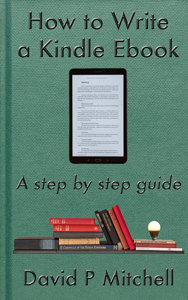
How to Write a Kindle Ebook is a step by step guide to writing and publishing an ebook on Amazon.
It takes you through the process of writing and formatting it using Microsoft Word, then uploading it to Kindle Direct Publishing and selling it on Amazon.
There's advice and guidance at every stage, with examples including screenshots, and tips on how to overcome practical problems you're likely to encounter.
How to Write a Kindle Ebook will be your reliable and trusted companion as you write and publish your own book.
'I find this a really helpful and informative guide to e-book writing and recommend to others' - reviewer on Amazon.
Buy the ebook or the paperback on Amazon.
Soon after, the riders reach Tortona.

Tortona is on the bank of the Scrivia river.
It was founded as Dertona, a Roman colony, around 123BC. Here, the Via Postumia and the Via Aemilia Scauri merged to form the Via Julia Augusta.
Dertona was an important Roman military station.
Later, it was incorporated into the Duchy of Milan (1347), then joined the Kingdom of Sardinia before it became the Kingdom of Italy.
The Colli Tortonesi around Tortona produce wines such as Barbera, Dolcetto and Moscato, as well as three varieties of truffle.
Doom metal band Ufomammut are from Tortona.
The race takes a little detour up into the hills by Tortona, up Strada Levante Castello. This is the first categorised climb of the day, the Côte de Tortone Fausto Coppi.
It is 1.1km at an average 6.3%, reaching a height of 190m after 70.8km raced.

Fausto Coppi lived from 1919 to 1960. He was called Il Campionissimo.
Coppi dominated cycling pre- but more so post-World War II, winning the Giro d'Italia five times between 1940 and 1953. He also won the Tour de France in 1949 and 1952, having not been allowed to enter the race before 1949.
He was born in Castellania, near Alessandria. Money for his first proper bike came from his uncle, also called Fausto Coppi.
The first time he won a race, the prize was 20 lire and a salami sandwich; the next time, it was an alarm clock.
Coppi served in North Africa in World War II, and was captured by the British Army in 1943 and kept in a PoW camp.
Gino Bartali was Coppi's main Italian rival. Bartali was conservative and religious, and popular in the rural south; Coppi was more worldly and innovative in diet and training, and a hero of the industrial north.
Bartali suspected Coppi of using illegal doping products.
Coppi and Giulia Occhini were both married when they met in 1948. They ended up living together in Tortona, and in those days it was regarded as scandalous.

Eventually the Pope got involved, and the pair were put on trial for adultery in 1955, and handed suspended prison sentences. Coppi was disgraced by the affair, and his cycling career declined from then on.
Fausto Coppi caught malaria while taking part in a criterium race in Burkina Faso in December 1959, and died in January 1960 at just 40 years old.
The race passes through Marengo, on the outskirts of Alessandria.
The Battle of Marengo was fought in 1800 between Napoléon and the Austrians. Bonaparte won, and this enabled him to drive the Austrians out of Italy.

Napoléon called his horse Marengo.
There is a museum dedicated to the battle at Marengo, and it organises yearly reënactments (14th June). 'A great find for Napoléon fans', says Gabriel H on Tripadvisor. (I don't think anyone should be a Napoléon fan, but I'm not going to quibble with Gabriel at length here).
After the fall of Napoléon, Alessandria was returned to Savoie, then it became part of a Kingdom of Italy in 1861.

Alessandria is the capital of the Province of Alessandria, and a major railway hub.
It was named in honour of Pope Alexander III. It belonged to Milan and then to the House of Savoy (with a brief interlude as the capital of the Napoleonic département of Marengo after the battle of that name).
Umberto Eco is from Alessandria
The intermediate sprint takes place in Alessandria after 94.3km raced.
The race continues to Nizza Monferrato.

Nizza Monferrato is on the Belbo river. It was originally built around an Abbey in 1225.
The Town Hall dates from 1353, and its bell tower is known locally as Il Campanone.
It was part of Savoie from 1703. The suffix Monferrato distinguishes it from Nizza Marittima (Nice), which also belonged to Savoie.
Nizza Monferrato is also referred to as Nizza della Paglia - 'Nice with straw', because it's in the countyside.
Nizza wine is a red made with Barbera grapes.
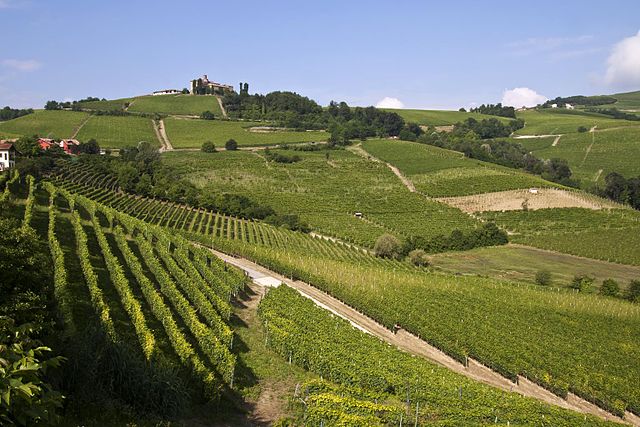
The peloton will pedal through the Vineyards Landscape of Piedmont Langhe-Roero and Monferrato, which is a UNESCO World Heritage site.
The vines that produce Barbera grapes need a lot of sunshine, and so they are generally on slopes that face south-east to west.
The race route goes through Castagnole delle Lanze, which is in Asti Province and the region of Piedmont.

Soon after, the riders pass through Neive, one of the Most Beautiful Villages in Italy, then they come to the next climb, the Côte de Barbaresco.
The climb of the Côte de Barbaresco is 1.5km at an average 6.5%, to a height of 263m after 156.1km raced.
The climb is through Barbaresco vineyards.

Like Barolo, Barbaresco wine is made with the Nebbiolo grape, which has been grown in Piedmont for centuries. Barbaresco vineyards are at a lower altitude than Barolo, so the grapes ripen earlier.
A difference in the soil means that Barbaresco is lower in tannins than Barolo. This makes it a lighter wine.
Barbaresco wines have to be aged in oak or chestnut barrels for at least 2 years, and 4 years in the case of Riserva.

There's then a descent to Alba, on the river Tanaro.
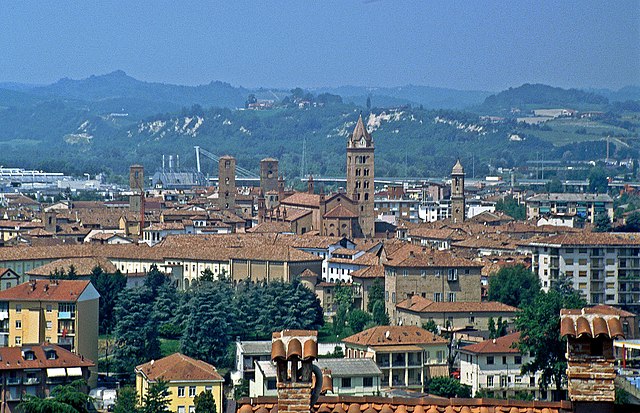
Alba dates back to Roman times, and there are some Roman ruins to see.
It is a centre of wine production. It is also home to Ferrero, the chocolate company, who make Ferrero Rocher, Nutella, and Tic Tacs. The business was started up in the aftermath of World War II.
'The Ferrero family has always kept a low-profile lifestyle and avoided gossip despite their social status and that's something that local people appreciate.
Still today, like decades ago, Ferrero focuses on environmentally-friendly operations, strives for the highest quality, and supports locals'.
Alba is also known for white truffles, and its truffle fair attracts many visitors. As well as the truffle aspect of it, there's a donkey race contested by different villages in the area.
Cyclist Matteo Sobrero is from Alba.
The route continues west north west from Alba, and after ten kilometres or so the riders tackle the next climb, the Côte de Sommariva Perno.

The Côte de Sommariva Perno is 3.1km at an average 4.6% gradient, to a height of 368m. The summit is after 181.4km raced.
Sommariva holds a festival at the end of May to celebrate two local products: strawberries and sweet red Birbèt wine.
From here on it's mainly downhill or flat to the finish.
The race passes through Ceresole Alba then Carmagnola, which has a Fiat factory making cylinder heads.
Soon after, Stage 3 reaches Moncalieri, which has a castle that was a favourite residence of the Savoy family.

The race is rapidly approaching Turin.

Leaving Moncalieri, the race takes the Strada Torino along the left bank of the Po.
There's a sharp left over the Ponte Principessa Isabella di Savoia (Princess Isabelle of Savoie bridge), joining the Corso Dante Alighieri on the far side of the river.
Then there's one more sharp turn, this one to the right onto Corso Massimo d'Azeglio. It runs past the Parco and Castello del Valentino.

The finish line is on the Corso Massimo d'Azeglio, near a monument to Guglielmo Marconi.

Turin is the capital of Piedmont, and it was capital of Italy from 1861-65. It is home to 847,000 people.
The Romans established the city around 28BC, and the Palatine Towers (Roman city gates) survive from that era. The name Turin comes from the Celtic Taurini people.
From 1563 it was capital of the Duchy of Savoie, then the Kingdom of Sardinia (also ruled by the House of Savoie). Many of the grand buildings were built in Baroque style during the Savoyard period.
With Milan and Genoa, it forms an industrial triangle. Fiat, Lancia and Alfa Romeo are based here.
The University of Turin was founded in the 1400s, and there are still excellent universities in the city.
Juventus is a football club based in Turin. Turin hosted the 2006 Winter Olympics.
It's not only sporting events that take place here: the Eurovision Song Contest 2022 came from Turin.
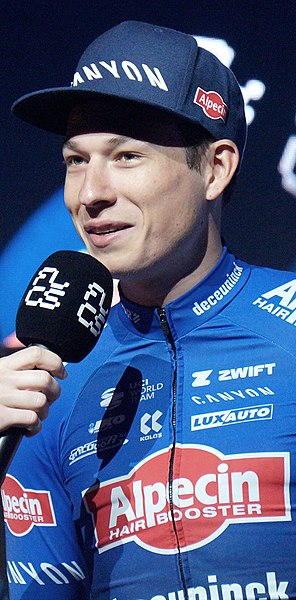
This is the first sprint stage.
In 2023, Jasper Philipsen was the best of the sprinters. Perhaps he will be on form again in 2024, and with Mathieu van der Poel as his final lead-out man he is likely to be put in the best possible position to go for the win.
Who do you think will win Stage 3 of the 2024 Tour de France in Turin?

Samsung Galaxy A15, price £92 from Amazon at the time of writing (affiliate link).
As an Amazon Associate, I can theoretically earn a small commission from qualifying purchases.

New in 2023, Bike Rides in the Yorkshire Dales is available in colour paperback.
Find out more about Bike Rides in the Yorkshire Dales or buy a copy.

Bike Rides In and Around York features a historical city tour, plus family rides, road rides, and mountain bike rides.
Find out more about Bike Rides In and Around York or buy a copy.

Bike Rides in Harrogate and Nidderdale is a book of family, mountain and road bike rides.
Find out more about Bike Rides in Harrogate and Nidderdale or buy a copy.

Find out more about Mountain Bike Rides in the Yorkshire Dales.
Buy Mountain Bike Rides in the Yorkshire Dales at £8 + P&P.

Garmin Edge Explore, £197.99 at the time of writing.
Garmin Edge Explore on Amazon (affiliate link).

Faster by Michael Hutchinson on Amazon (affiliate link).


