Harrogate is a town in North Yorkshire, with a population of 75,070
(2016 figure from North
Yorkshire population information); Harrogate District's
population is 159,800.
Harrogate's mineral waters were discovered in the 1500s, and it
grew as a spa town in the 1600s and 1700s. The town's motto is arx celebris fontibus, meaning
city famous for its springs. Present-day attractions include the
original Bettys tearooms, and RHS Harlow Carr
gardens. It was the happiest
town
in the UK in 2013, and again
in 2014.
Many people who live in Harrogate work in Leeds or Bradford. It is
relatively prosperous, with an average household income of £41,833
in the Harrogate district. (Source: 'A
Profile
of the Harrogate District 2011/12'. It also notes that tourism
accounts for 25% of the district's economy, and that the conference
centre generates £150m in Harrogate). A 2018 county
council Local Insight report on Harrogate & Knaresborough
shows an average house price of £384,452.
This is a map of Harrogate town centre.
Name and history of Harrogate
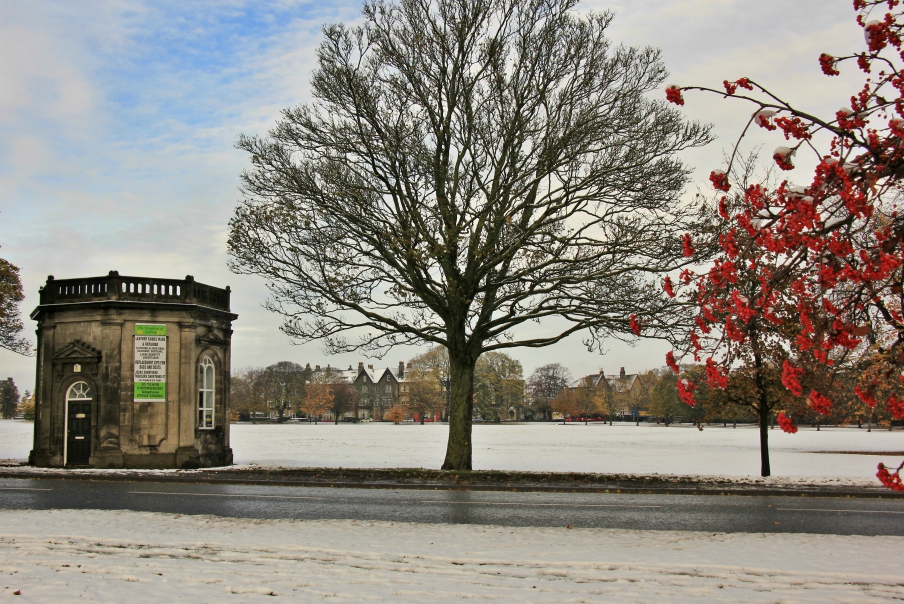
St John's Well, Harrogate
The name Harrogate comes from the Anglo-Norse Here-gatte,
gatte being the way to, and
Here or Herelaw
the soldier's hill (now Harlow). So Harrogate could mean 'the way to
the soldier's hill.' Another idea is that it means 'the way to the
cairn, or heap of stones.'
Harrogate is not mentioned in the Domesday Book, but it is likely
that it existed as a name for many centuries before there was a
settlement here. It was part of the Royal Forest of Knaresborough,
although it was probably actually a heath, with gorse, bracken,
heather, and patches of trees. The first reference to Harrogate in a
document, was in 1332, on the roll of the Knaresborough Court.
The town was created from two hamlets, High Harrogate and Low
Harrogate. High Harrogate had the first important building, the
chantry chapel, built in 1400, and Low Harrogate probably developed
later.
It was the discovery of the first mineral spring in 1571 that was
the catalyst for Harrogate's development as a spa town. The waters
continued to attract visitors until the early years of the 1900s.
See the section below on Harrogate
as
a spa town.
During World War II, Harrogate's large hotels accommodated
government offices evacuated from London. This helped lead to the
town's function as a conference and exhibition centre in the
post-war years, and up to the present day.
There was also industry in Harrogate - ICI had a plant at Hornbeam
Park. Crimplene was invented there in the 1950s, and named after
Crimple Beck.
Harrogate hosted the Eurovision song contest in 1982, the year the
International Centre opened. It has won various floral competitions,
including Britain in Bloom in 2003, and European floral competitions
in 1977 and 2004. The cauldron for the London 2012 Olympics was
designed and built by Thomas Heatherwick in Harrogate.
Harrogate: places of interest and attractions
Harrogate: Bettys
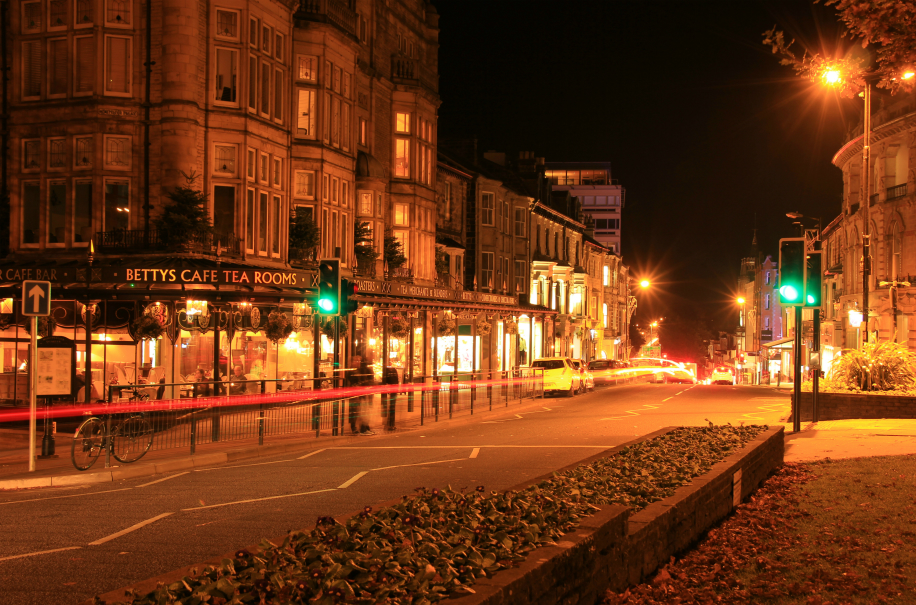
In the centre of town, at no.1 Parliament St, is Bettys
Cafe
Tea Rooms. Founded in Harrogate in 1919 by Frederick Belmont,
an orphan from Switzerland, Bettys quickly became very popular, and
there are now six Bettys, including in York and Ilkley. As well as
the tea rooms, they have a shop selling bread, cakes, biscuits, and
chocolates, all made by hand at Bettys craft bakery. Tea and coffee
is by Taylors of Harrogate - bought by Bettys in the 1960s.
There are various possible explanations for the name Bettys, but
no-one knows for sure who she was. Could it be that the company's
first Board Meeting was interrupted by a little girl called Betty,
just as the directors were discussing what to call the business?
Harrogate theatre
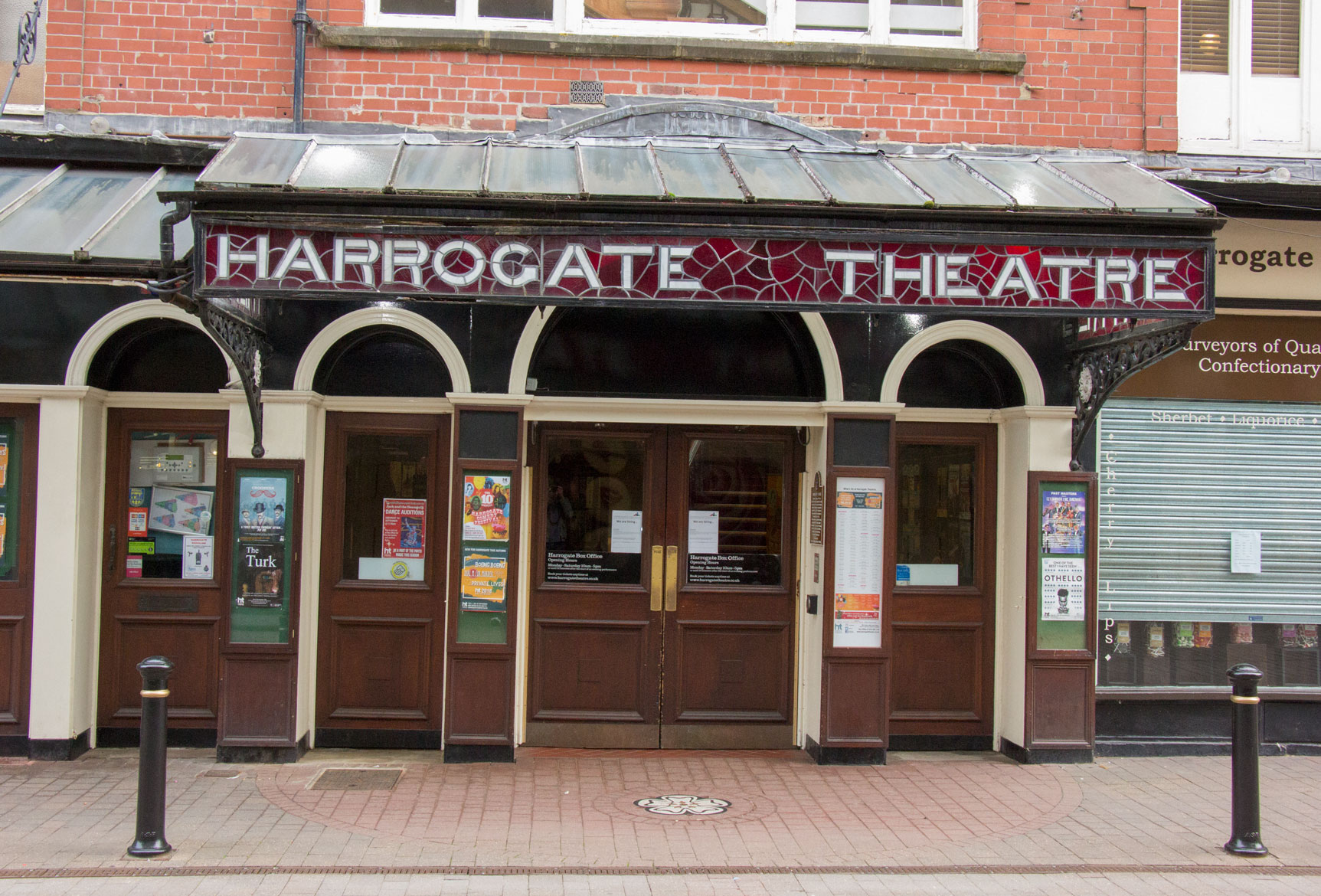
Harrogate theatre
was designed by Frank Tugwell (who also designed the Savoy theatre
in London), and opened in January 1900. Famous actors who have
performed in Harrogate include Charlie Chaplin, Arnold Ridley, John
Noakes, and Ben Kingsley. One of the highlights of the year is the
comedy festival in October.

Harrogate: museums and Turkish Baths
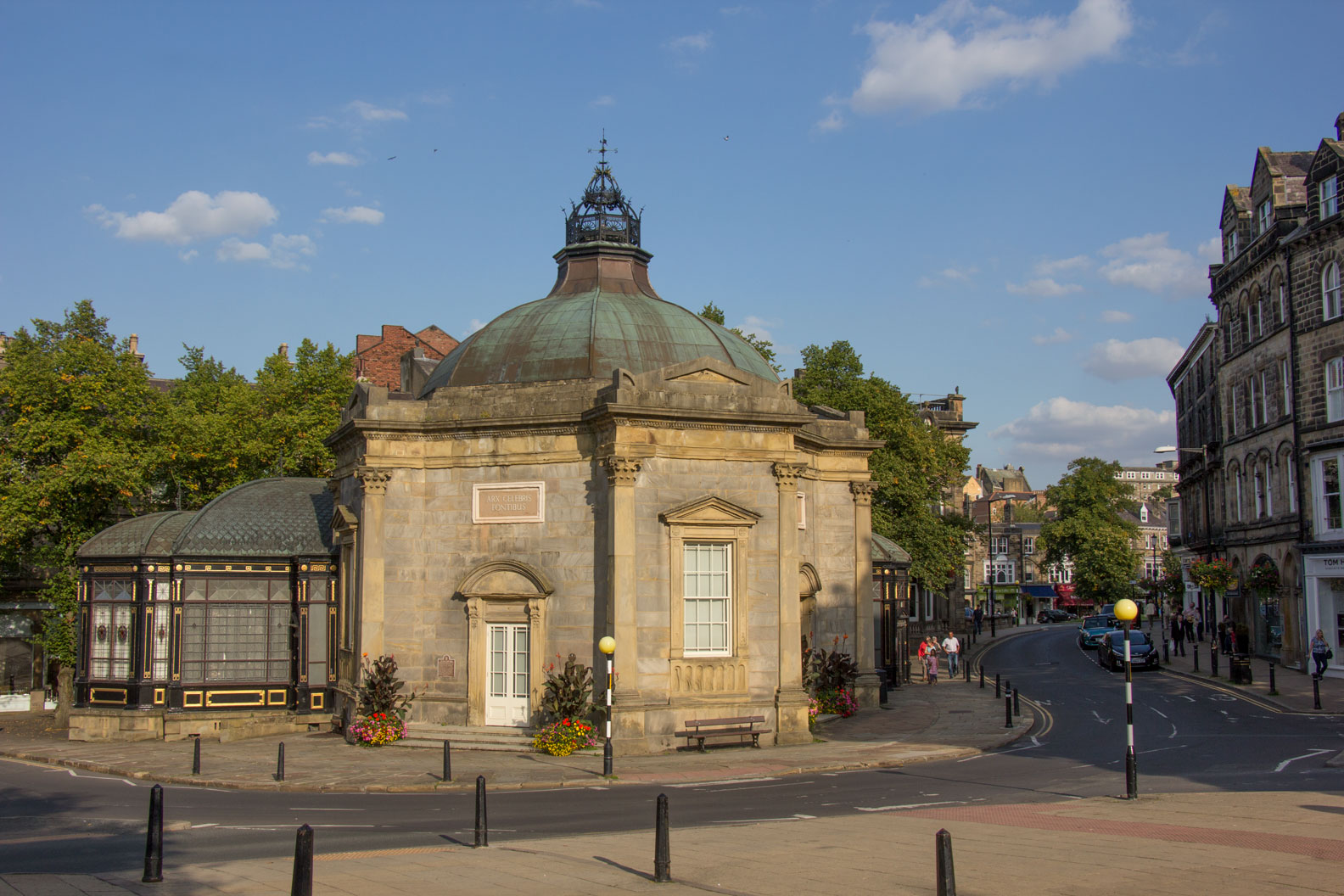
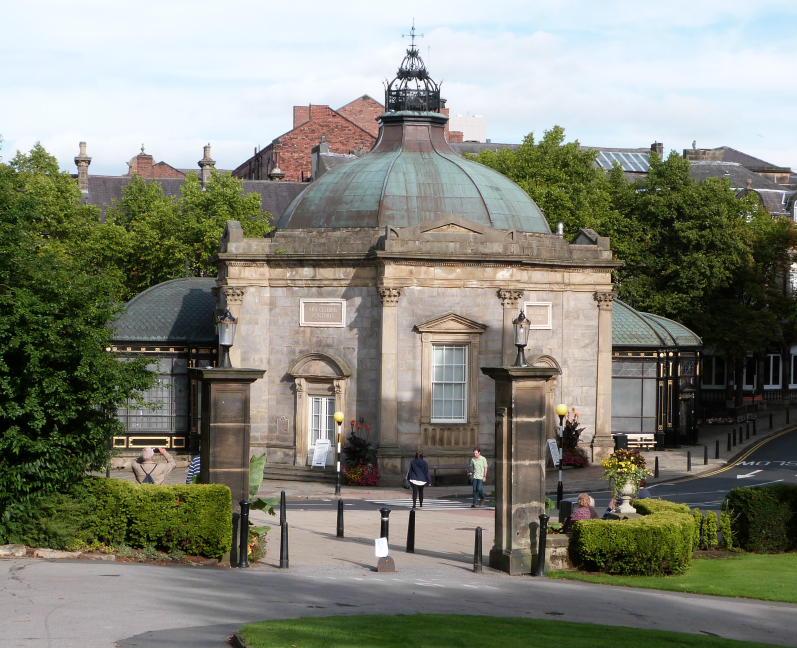
Royal Pump Rooms, Harrogate
The Royal
Pump
Room museum takes visitors through the town's past as a spa
resort. There's an outside tap, dispensing sulphur water. It was out
of action for a long time, but in August 2018 it is working. There's
a notice saying it's not fit for human consumption, but in
Harrogate's heyday, those taking the cure did consume it.
To experience the town's spa history more actively, take a trip to
the Turkish
Baths
and Health Spa. It is in the restored C19th premises on
Parliament Street. After time in the steam room, you can take an
invigorating dip into the plunge pool. They also do massages,
facials, and a range of spa treatments.
The Mercer
Art
Gallery is on Swan Road, close to the tourist information and
Royal Pump Room. The collection includes Atkinson Grimshaw and Sir
Edward Burne-Jones, but is not on permanent display. There are many
temporary exhibitions.

Harrogate: shopping

Harrogate is centred on the War Memorial at Prospect Crescent.
The main shopping area is east from there, on James St, Cambridge
St, Oxford St, and Beulah St. There's a WH Smith and a TK Maxx in
the Victoria Shopping Centre at the top of Cambridge St.
Parliament St and the Montpellier Quarter have a number of
interesting and upmarket stores.

Montpellier Quarter, Harrogate
There are quite a few independent and less expensive shops on
Cheltenham Parade and the streets off it, such as the lower part of
Station Parade, and Commercial Street.
Harrogate: the Harrogate Convention Centre

Harrogate
Convention Centre is a convention and conference centre, which
opened in 1982, and hosted the Eurovision Song Contest in that year.
It's the third largest such venue in Britain.
As well as the modern, purpose-built facilities, conferences can
book the Royal Hall, a 1000-seater theatre which dates from 1903,
and was part of Harrogate's spa facilities. (It was known as the
Kursaal until World War I, when its named was changed for reasons of
patriotism).

Royal Hall, Harrogate
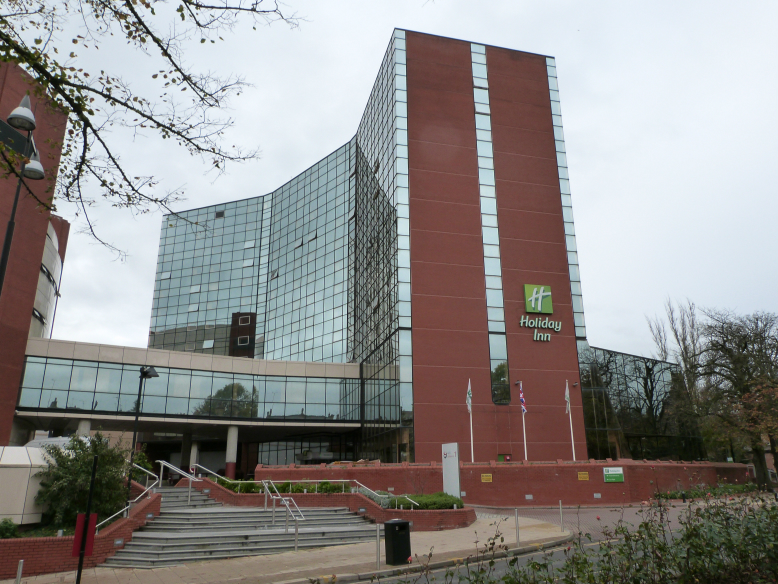
A Crowne Plaza hotel is incorporated in the complex.
Harrogate: the Great Yorkshire Show
The Great Yorkshire
Showground is on the eastern edge of the town, and hosts the
annual agricultural show, attracting 130,000 people over three days.
The first Great Yorkshire Show was held in York in 1838.
Harrogate: parks and
gardens
Harrogate parks and gardens: the Stray
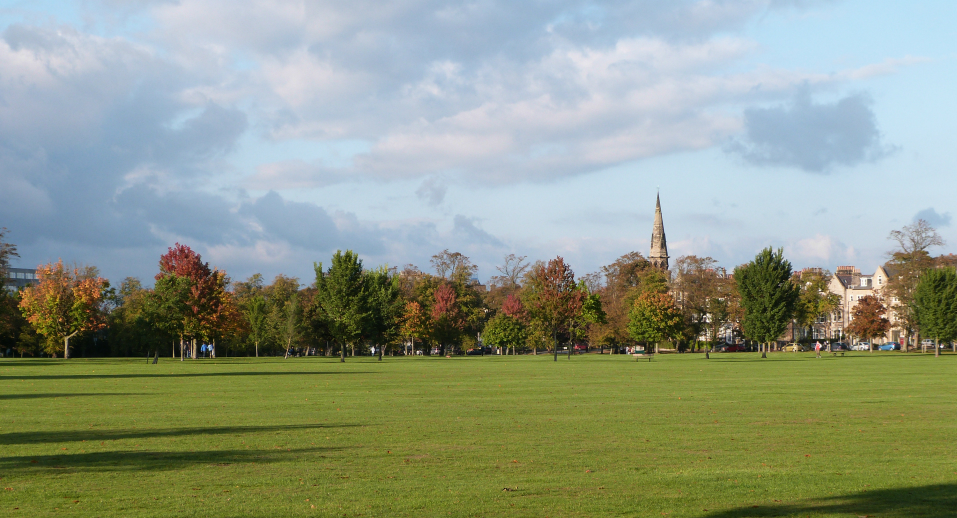
Harrogate
Stray came into being in the 1700s. In the 1760s, there was
widespread enclosure of Crown lands, for financial returns to the
Crown, and to allow private development. Harrogate's wells and
springs were on land that was part of the Royal Forest of
Knaresborough, and the town depended on public access to them. It
would have been very damaging for the land to be divided up and sold
off.
The people of Harrogate made representations to Parliament, and
commissioners were appointed to survey the area. They designated 200
acres of land covering the springs, which would:
'...for ever hereafter remain open and unenclosed, and all persons
whomsoever shall and may have free access at all times to the said
springs, and be at liberty to use and drink the Waters there
arising, and take the benefit thereof, and shall and may have use,
and enjoy full and free ingress and regress in, upon, and over the
said two hundred acres of land...'
The right to the common land was contained in the commissioners'
award of 1778. Use of the Stray is now governed by the Stray Act 1985
and bye-laws under it. It's a great place for football, picnics,
kite-flying, and walking. It gives Harrogate a special
character.
Harrogate parks and gardens: the Valley Gardens
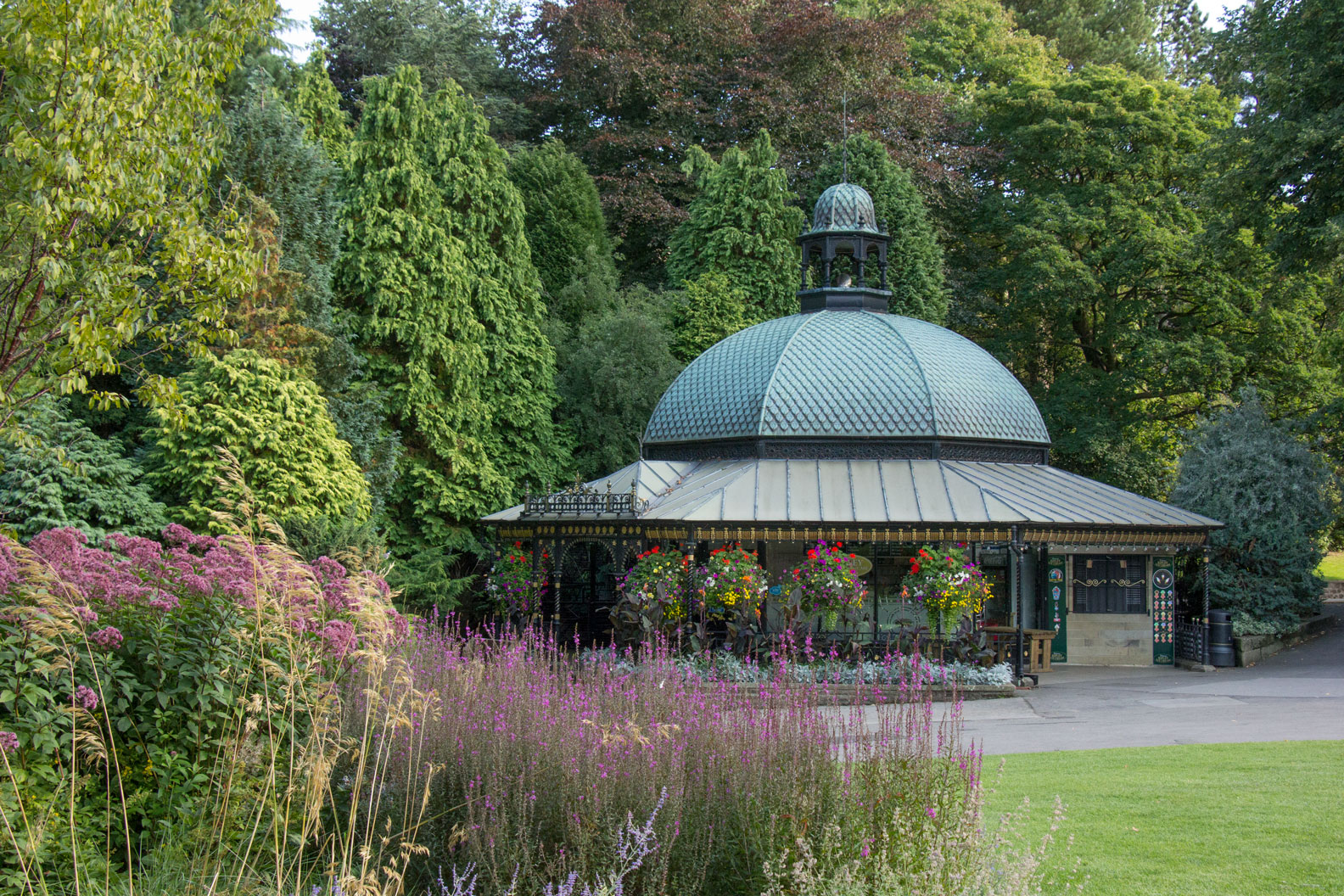
Magnesia Well café, Valley Gardens, Harrogate
The Valley
Gardens is now an area of lawns and flower beds, which begins
at the Royal Pump Room, and extends uphill, south west from there,
bounded by Valley Drive and Cornwall Road. It includes what used to
be called Bogs Field, an area a very high concentration of natural
springs, with greatly varying mineral content. Bogs Field was very
important in the era of spa tourism.
At the top of the gardens, there are tennis courts, pitch and putt,
crazy golf, a skate park, paddling pool, and a children's
playground.

Harrogate
parks and gardens: RHS Harlow Carr
Between the Valley Gardens and Harlow
Carr are the Pinewoods, with some lovely paths running through
them. Harlow Carr is a delightful garden, which includes water
features and woods. It was founded by the Northern Horticultural
Society in 1950.
There's an entrance fee, but it's free for RHS members. Bettys have
a
branch here, for tea, coffee, cakes, and other refreshments.
Harrogate: hotels
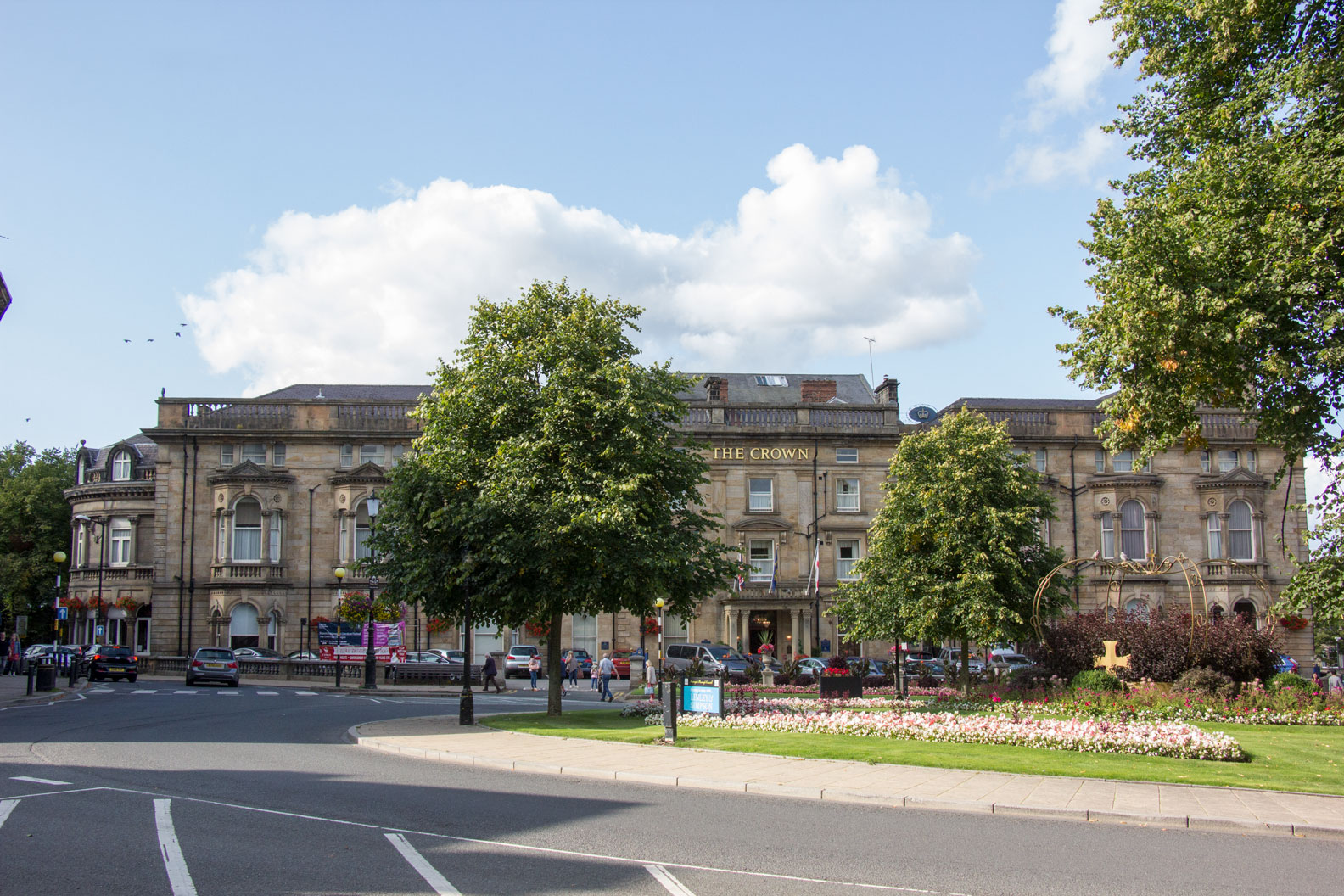
Harrogate has a number of good hotels, some of them dating from the
town's heyday as a spa.
Hotels in Low Harrogate include The
Old
Swan, the Crown,
and the White Hart (which
also houses the popular Fat Badger pub). The Crowne Plaza is right
next to Harrogate Convention Centre.
On West Park (right where the Tour de France finished in July 2014)
are the Hotel
du
Vin and the Yorkshire
Hotel. On the south eastern edge of Harrogate is Rudding
Park, a luxury venue, which was voted best hotel in the UK in
the 2013 Trip Advisor Traveller's Choice awards.
Harrogate: sports clubs
Harrogate has two football clubs, Harrogate
Town and Harrogate Railway. There's a rugby union team,
Harrogate RUFC. For cycling clubs, see our Harrogate
Cycling page.
Harrogate: the
history of Harrogate as a spa town

'The queerest place, with the strangest people in it, leading the
oddest lives of dancing, newspaper reading, and tables
d' hôte.' That was how Charles Dickens described Harrogate
when he visited in 1858.
It is perhaps easy to see why he viewed the town as peculiar.
Dancing and newspaper reading were part of the ritual, but it was
the sulphur water that drew a wealthy clientele to Harrogate.
Despite its offensive smell, visitors would drink four or five
glasses every day.
Read more about the history of Harrogate
as a spa town.
All photos © Hedgehog Cycling