Cycling in Yorkshire

Cycling in Yorkshire
21st September 2021
The All Party Parliamentary Group for Cycling and Walking (APPGCW) has produced an Inquiry Report in advance of the publication of the government's second Cycling & Walking Investment Strategy (CWIS2).
The report has 26 recommendations altogether, but they are split into ten categories - funding, targets, Active Travel England, network and programme planning, active travel and land-use planning, skills and capacity, legislation and standards, attitudes and behaviour, performance management, and knowledge gaps.
Some of the more interesting points follow.
The report is based on evidence from witnesses, and one organisation that gave evidence was Cycling UK. They said that £6-8 billion is needed to meet the targets in CWIS1.
Current spending is £2 billion committed by the government over 5 years, which amounts to £7 per person per year. The Dutch spend £35 per person per year.
West Yorkshire Combined Authorities estimate that to meet their climate targets, by 2038:
£25 per person per year is a reasonable estimate to achieve this.
'This is more than the sector can spend at the moment given its current capacity,' the report states. The APPGCW therefore recommends back-loading funding in a 5-year settlement. If the money is not available from the Treasury, it should be reallocated from the DfT's core budget.
Local government called for longer-term, more secure funding - 5 year settlements, rather than competitions for pots of money.
One oddity in this part of the report is the recommendation that the name CWIS should be changed to the Active Travel Investment Strategy, on the basis that omitting the word 'cycling' would lessen the risk of tribal thinking.
The APPGCW recommends subsidies for e-bikes, in line with subsidies
for other electric vehicles. Similarly, there should be
Motability-type financial arrangments for non-standard cycles for
disabled people.
The report suggests basing targets on the government's binding commitment to Net Zero transport emissions by 2050.
National active travel targets for England should be worked out, and then translated to local targets for individual transport/highways authorities.
Witnesses placed a lot of hope and faith in the yet-to-be-set-up Active Travel England (ATE).
An active travel quality mark should be created, and policed by ATE. ATE should also be a source of training, advice, and documentation, and it should hold a library of template designs for infrastructure measures.
ATE should also hold funds:
Local authorities should develop Active Travel Plans. Their Local Cycling & Walking Investment Plans (LCWIPs) would be at the core of the ATPs, then other complementary projects and policies would be added.
The report notes that the guidance for developing LCWIPs is thought to be quite good, but it is currently being revised to improve it further.
Planning was a major concern for witnesses.
ATE is to be a statutory consultee on new developments, but it should also have the power to refer applications to the Secretary of State where active travel plans fall short.
Local government doesn't have the capacity to deliver 'the volume of activity necessary'.
This problem can be solved by certainty of funding, incentives for talented people to take jobs in active travel, and training in skills like engagement, communication, and change-management.
The report recommends:
Growth in active travel depends both on the creation of conducive environments and on people being willing to make journeys this way.
P30, APPGCW Report
The recommendation is to employ best practice in engagement and consultation. There would be a standard requiring local authorities to involve local people in the process of planning active travel schemes, with accessible and equitable consultations; and to revise plans in the light of stakeholder contributions.
ATE should give intensive support to local authorities that do not meet their targets, rather than taking punitive action.
Knowledge gaps include the investment required for a given level of active travel growth, accurate baselines, ways of monitoring progress, appraisal methods that do not prioritise speed, and an improved understanding of exclusion from active travel.
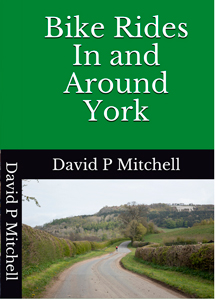
Bike Rides In and Around York features a historical city tour, plus family rides, road rides, and mountain bike rides.
"This book is simply a treasure trove not only of great rides but also as a travel guide to the area."
Read more about Bike Rides In and Around York.

Bike Rides in Harrogate and Nidderdale is a book of family, mountain and road bike rides.
"This guide is a wonderful companion whether you ride alone, with family or friends. Don't set out without it."
Read more about Bike Rides in Harrogate and Nidderdale.