Cycling in Yorkshire & Beyond

Cycling in Yorkshire & Beyond
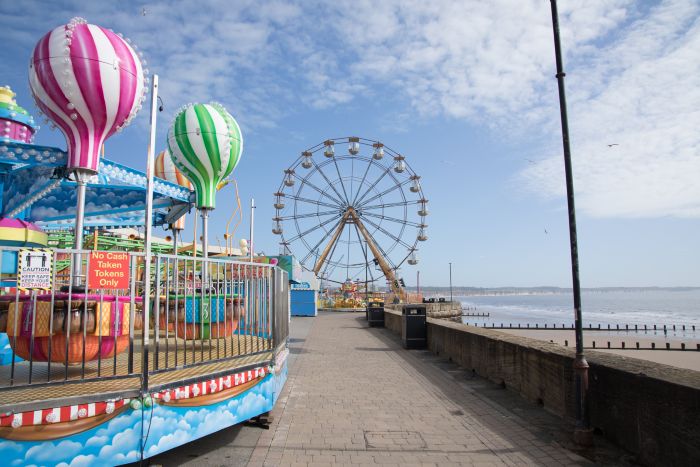
Stage One | Stage Two | Stage Three
This is a guide to Stage Three of the Way of the Roses from York to Bridlington. It includes a video, route notes and images.
This stage is 61 miles, which is a bit more than one third of the total distance of the Way of the Roses - but this is also the flattest stage of the three.
This is a video of the route of Stage Three of the Way of the Roses.
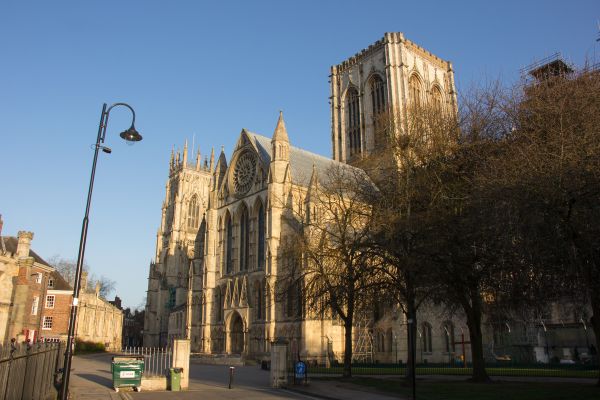
The way I've split the route up, Stage Three of the Way of the Roses starts at the Minster in York.
Pass between the statue of Constantine the Great to your left and the Roman column to your right.
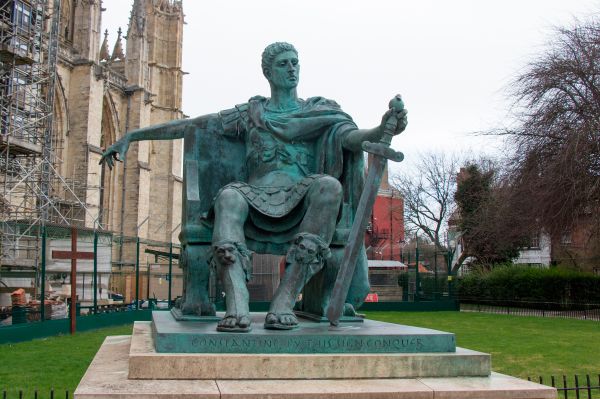
Constantine's father Emperor Constantius I died at York in AD306, and Constantine was acclaimed as the new Emperor by the Roman Legions in York.
Constantine is known for allowing Christians to worship freely, but it is not clear that he lived a very Christian life himself.
Take Deangate and Goodramgate.
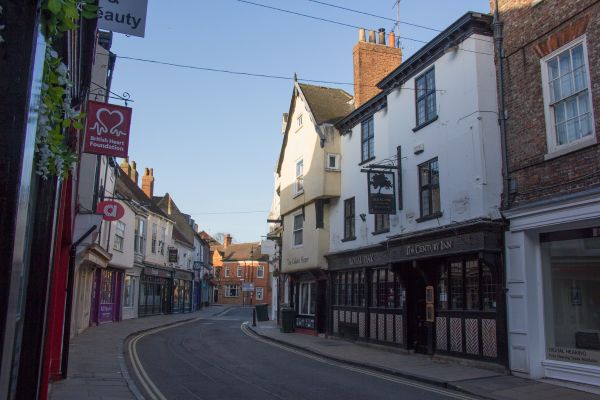
Goodramgate is a diagonal street, not part of the original Roman grid
pattern. It was probably established in the 600s, and got the -gate
suffix in its name in the Viking period when it was named after a
Viking called Guthrum.
Then turn right down Aldwark. At the bottom of the street on your left is the Quilters' Guild in St Anthony's Hall.
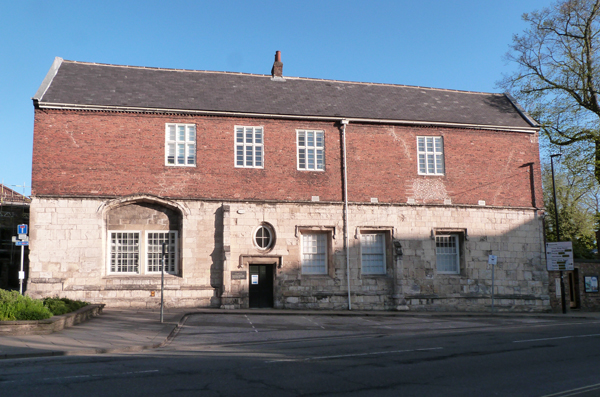
The Quilter's Guild is a charity representing people who work in patchwork, appliqué and quilting.
St Anthony's Hall was built from 1444-53 for the Guild of St Anthony or the Guild of St Martin. It housed the York Bluecoat School from 1705 to 1947. The Quilt Museum and Gallery opened in 2008 and closed in 2015.
As well as housing the quilting collection, the Hall is used by Trinity Church, York.
At the junction of Aldwark and Peasholme Green is the Black Swan.
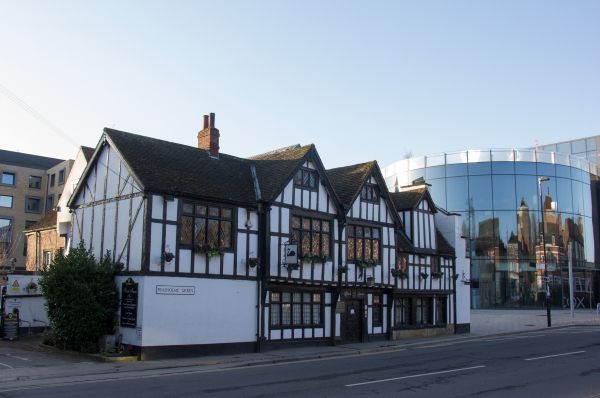
Several Lord Mayors of York lived in a house on the site of the Black Swan (one after the other, not at the same time).
The present building dates from 1560, with alterations in 1670. It is inhabited by several ghosts, including a highwayman who sings along to Irish folk songs.
Turn right on Peasholme Green/Stonebow, and left on Dundas Street.
After passing some very modern buildings, cross the river Foss on Hungate Bridge.
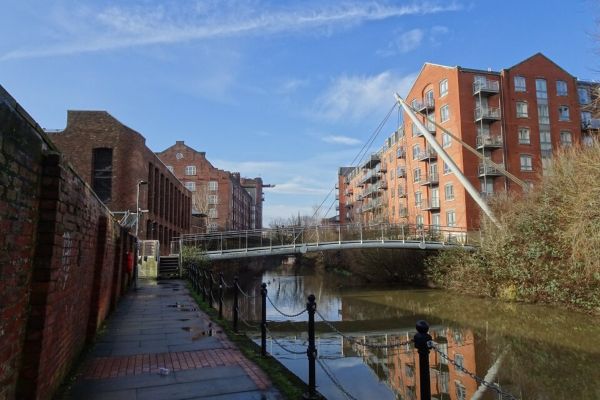
Next, there's an inconvenient two-stage crossing of Foss Islands Road, a path through Foss Islands Retail Park, another awkward crossing (of James Street), then you join a path that takes you over Tang Hall Beck.
Now you're on the Derwent Valley & Foss Islands Track.
It takes you past the entrance to St Nick's Local Nature Reserve.
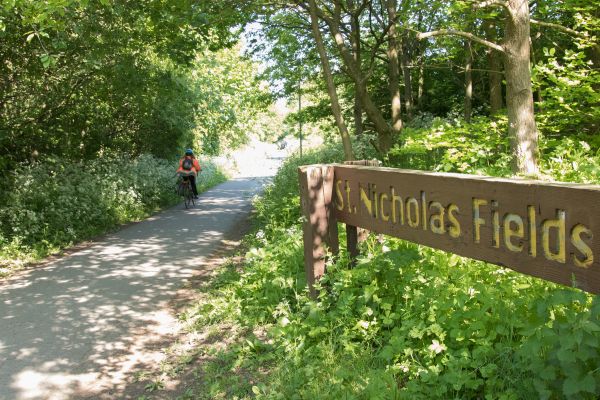
This path is on the trackbed of the old Derwent Valley Light railway, which ran east from Layerthorpe to Dunnington then south to Cliff Common near Selby. For more information, see York's Old Railways.
It's a great path, but watch out for broken glass and a very rough surface at the east end.
Turn right on Metcalfe Lane, then fork left and ride through Osbaldwick.
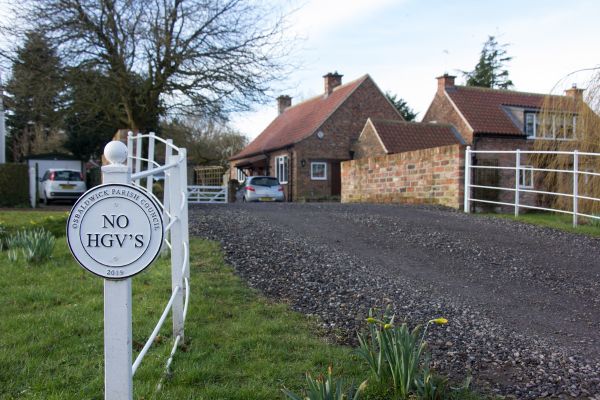
Continue straight on on Murton Way.
Go under the A64, then turn right in Murton and pass Murton Park.
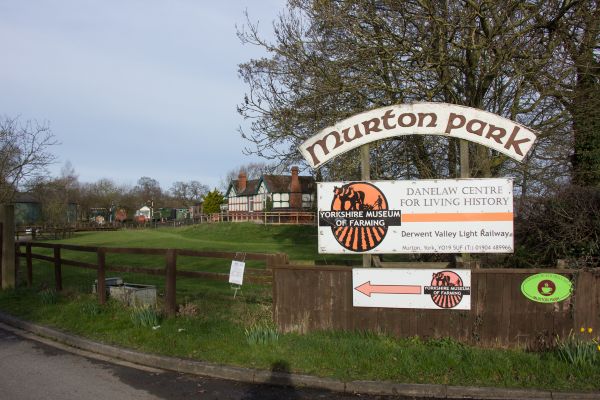
Murton was a station on the Derwent Valley Light Railway, and half a mile of it remains within the park. As well as train rides, you can visit the Yorkshire Museum of Farming.
Next there's a dodgy crossing of the A166 Stamford Bridge Road and a bit of path alongside the A1079 Hull Road, then you follow the road to Dunnington.
Turn right in Dunnington, then left on Intake Lane. The white Route 66 bicycle is at the start of Intake Lane.
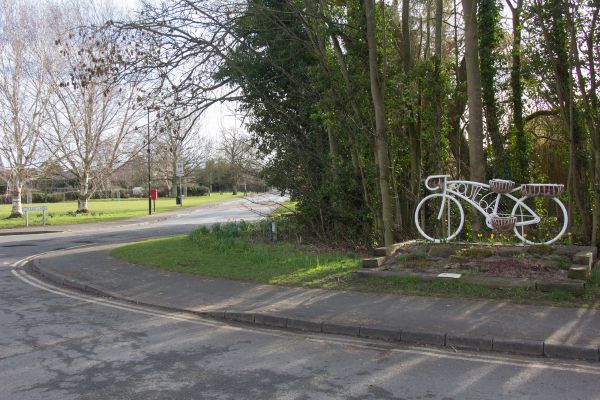
At the top of Intake Lane is Hagg Farm, and the cyclo-cross element of the Way of the Roses starts here.
The rough track takes you past Hagg Wood.
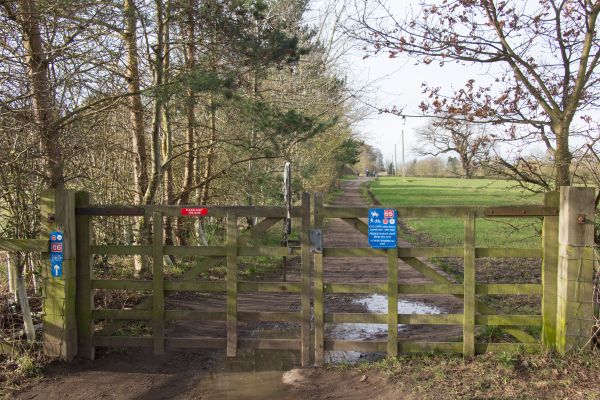
The track then forges a route through open fields.
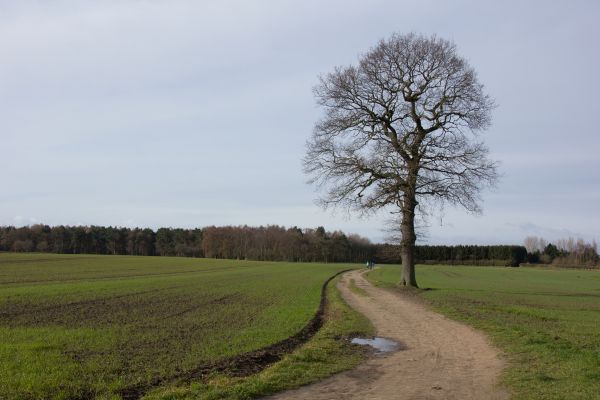
After Lime Field Farm you're back on a tarmacked road.
There are some speed bumps on it, and I came across another cyclist who hadn't seen them, and had hit one and gone over his handlebars - so watch out for the bumps!
You reach the A166 Stamford Bridge Road, and follow the path alongside it which goes through some woods.
Turn right on a path that follows the line of the old York to Market Weighton railway line and crosses the river Derwent on the Stamford Bridge Railway Viaduct.
Soon, you pull into Stamford Bridge Station.
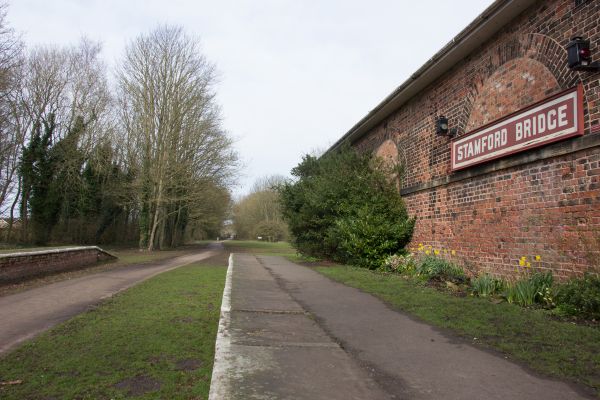
Stamford Bridge is the site of an ancient ford of the river Derwent.
The Romans established a fort here around AD70. We know from documentary evidence that there was a Roman fort called Derventio. Traditionally, it was thought that Malton (also on the river Derwent) was Derventio, but Stamford Bridge Parish Council claims that Derventio was really here.
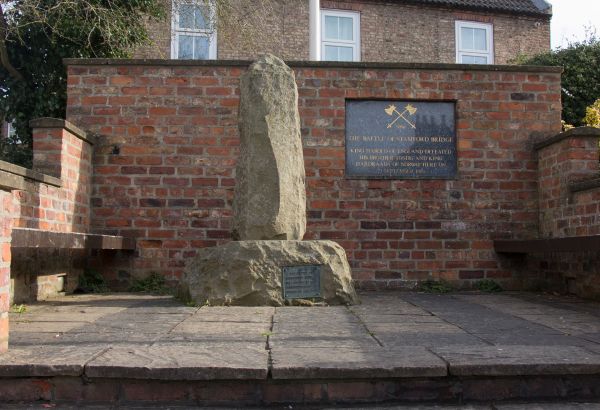
The second most famous battle of 1066 took place in Stamford Bridge, and the result meant the end of the Viking era in Britain.
The Battle was on 25th September 1066, and pitted King Harald Hardrada of Norway and Tostig Godwinson against King Harold Godwinson of England.
Harald had brought 9,000 men on 200-300 ships. He sailed up the Humber and Ouse, and fought a battle at Fulford on 20th September against Earls Edwin and Morcar, winning.
Harold was on the south coast awaiting a Norman invasion, but he marched north and caught the Norwegians by surprise.
The two armies were on opposite sides of the river Derwent, and a 'beserker' held the wooden bridge over the water for the Norwegians until he was dislodged by an English warrior who floated underneath the bridge in a half barrel and stuck a spear up between the planks.
The battle raged for hours, but was ultimately won by Harold Godwinson's men.
The surviving Vikings only needed 24 ships to take them via Orkney back to Scandinavia.
Stamford Bridge was on the York to Market Weighton line, built by George Hudson's York & North Midland Railway, and which opened in 1847.
Trains stopped running in 1965.
Stamford Bridge is on the very busy A166 to the east coast, and the high volumes of traffic are a blight on the village.
It must have been glorious when the bridge was closed in 2007 for eleven weeks for essential repairs.
Stamford Bridge was flooded in November 2000. Flood defences have subsequently been installed at a cost of £3.7 million.
There are shops and cafés in Stamford Bridge, down on the main A166.
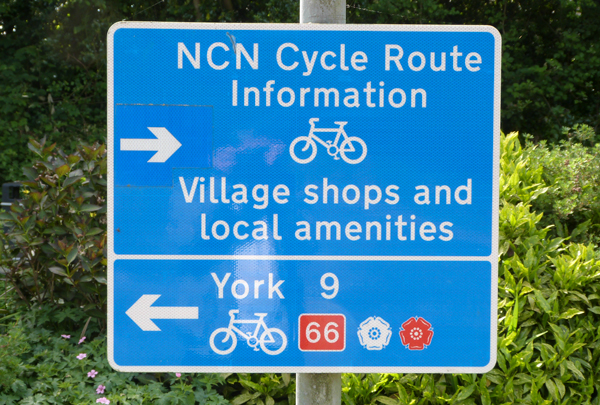
Turn left out of Stamford Bridge Station on Church Road then right on Moor Road.
Leaving Stamford Bridge, you're on country roads over flat terrain. There's a long, straight road past Black Plantation.
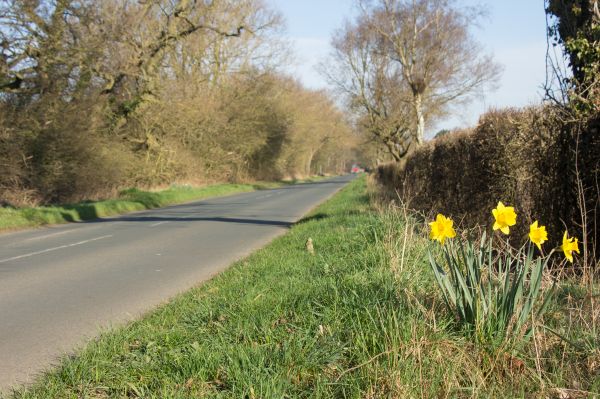
Turn left on Ling Lane then right on Newbridge Lane.
A little later, take a left on Feoffee Lane.
Feoffees (pronounced fee-fees) are a legacy of the Norman feudal system. A feoffee is a type of trustee who administers an estate according to the terms of a will or trust deed.
Drivers around here are not necessarily considerate and careful.
Turn right on Yapham Road, which is straight, fast, busy and intimidating.
It brings you into Pocklington.
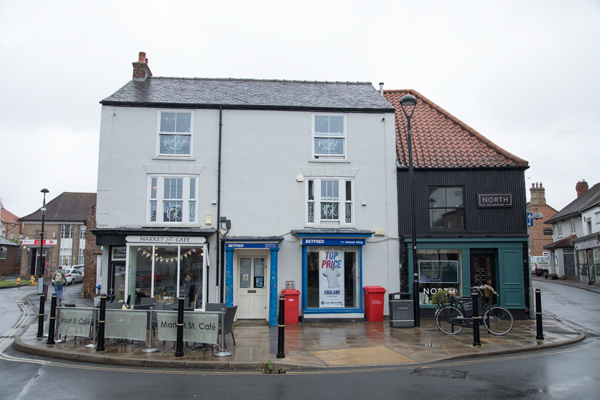
Pocklington is a market town on the edge of the Yorkshire Wolds.
During the Iron Age, the area was inhabited by the Celtic Parisi people. In 2017 during work on a housing development, a 'chariot grave' was found. The person, who died between 320 and 174BC, was placed in a chariot behind horses, and buried with valuable items including a shield.
A further chariot grave was found in 2019.
In Medieval times, Pocklington was a local centre for wool trading.
Pocklington School was founded in 1514. Anti-slavery campaigner William Wilberforce is its most famous old boy, attending from 1771-6.
RAF Pocklington was an airfield used by bombers during World War II.
Burnby Hall Gardens is a popular Pocklington attraction. It has a large collection of water lilies.
In Pocklington take New Street/Percy Road then join the B1246 Kilnwick Road.
About a mile out of Pocklington turn left and ride past Kilnwick Percy. Kilnwick Percy Hall was built in 1845 as a stately home and is now a Buddhist meditation centre and retreat.
Cross Millington Beck and arrive in the village of Millington. You're now in the Yorkshire Wolds.
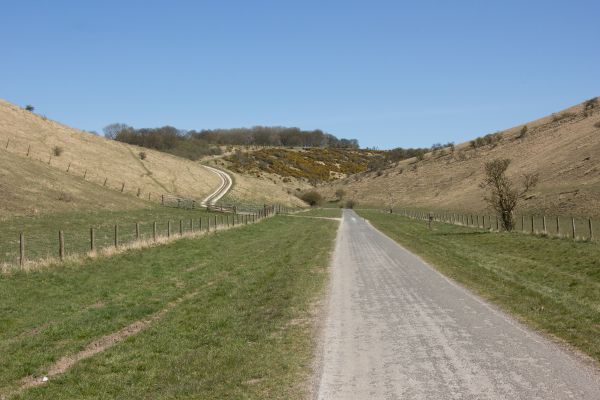
The Yorkshire Wolds are low chalk hills in the East riding and North Yorkshire. They form an arc from Ferriby on the river Humber to Filey and Bridlington on the coast further north.
The Wolds are an elevated plateau, cut by steep-sided, flat-bottomed valleys of glacial origin. Because chalk is highly permeable, most of these valleys are dry.
The area attracted Neolithic, Bronze Age and Iron Age people. They created prehistoric dyke systems, burial mounds and ritual complexes.
The geology of the area results in 'upside down farming' where cereals and potatoes are grown on the higher ground and the valley bottoms are pasture for grazing.
Chalk grassland is a valuable habitat for some wildflowers, and for butterflies like the marbled white which can be seen at the Yorkshire Wildlife Trust's Wharram Quarry site.
Millington Wood dates back to 1086, when it was planted as an ash wood.
In the woods there are wildflowers including bluebells; 28 species of bird including redstarts; and bats, butterflies and mammals.
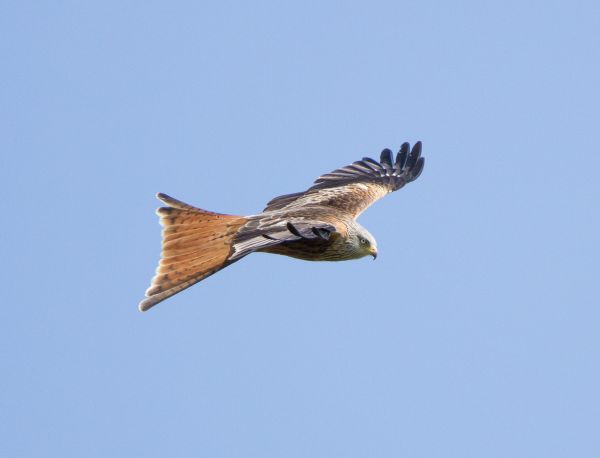
Birds of prey including red kites, buzzards, short-eared owls and barn owls can be seen over the slopes of Millington Pasure.
There's a climb at the head of the dale which brings you up onto the hilltops, and to Huggate.
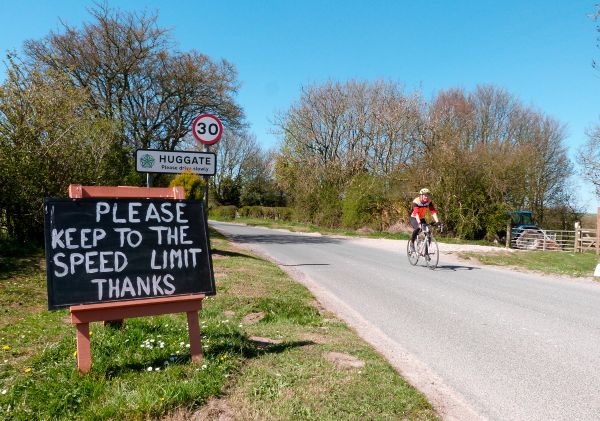
At a modest height of 170m above sea level, Huggate is nevertheless the highest village in the Yorkshire Wolds.
It has a nice looking pub, the Wolds Inn.
Beyond Huggate there are two poorly-signposted junctions. Take the left fork at the first and the right fork at the second.
Now there's a gradual descent to Tibthorpe and Kirkburn.
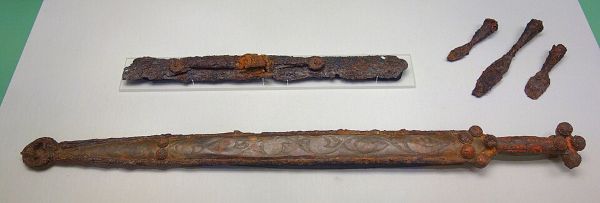
The Kirkburn Sword was found during an excavation in 1987.
It dates from the 200s BC and is probably the finest Iron Age sword in Europe.
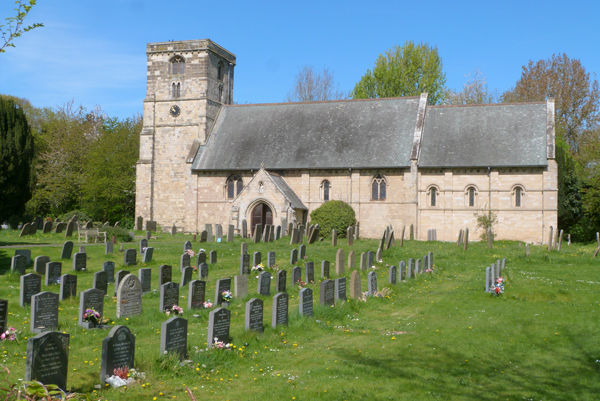
Leaving Kirkburn, you have to cross the busy and fast A614.
Then you're on Southburn Road, which becomes Burnbutts Lane. It's flat farmland, and it can be quite exposed and windy past Bustard Nest Farm and Little Bustard Farm.
Bustards were shot to extinction in the UK in the 1800s, but a population has been introduced on Salisbury Plain, Wiltshire.
After a little bit of shared use pavement by the A164, ride into Hutton Cranswick.
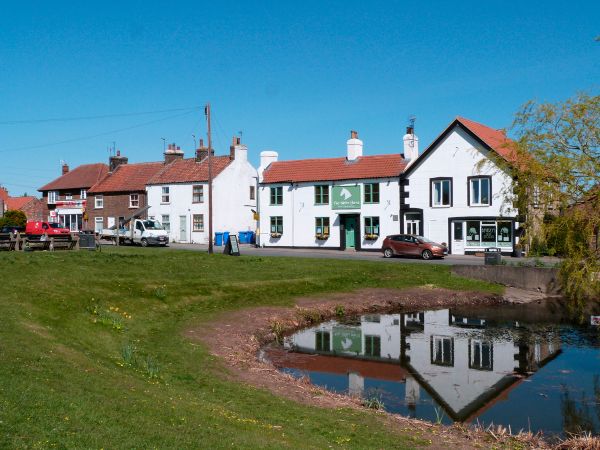
Hutton Cranswick is a village with a large village green and a pond. It has a few shops too, including a Spar and a fish and chip shop. There's a posh pub called the White Horse.
Cross the railway at a level crossing in Hutton Cranswick then turn left on Meggison's Turnpike. Go through the village of Skerne.
You reach a small industrial estate by the river Hull and immediately south of Driffield.
Continue to Driffield.
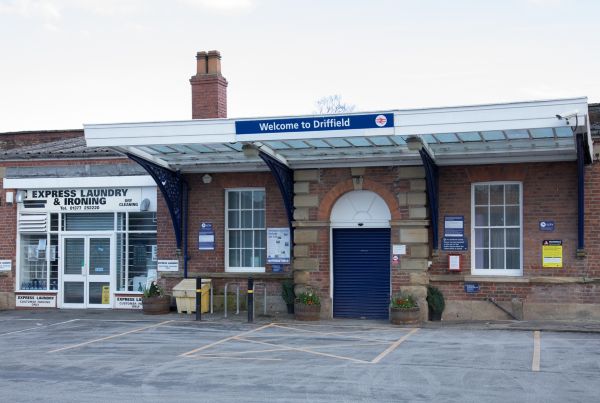
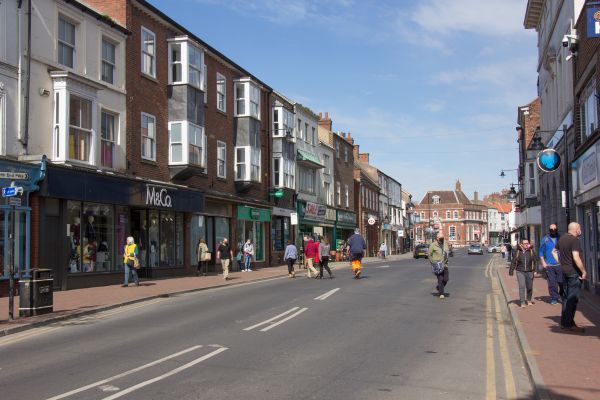
Driffield is called the Capital of the Wolds, as it is the Wolds' largest town.
There were prehistoric settlements in this area.
Driffield was a capital of Anglian Deira, which became part of Northumbria. There may have been an Anglian palace here under King of Northumbria Aldfrith.
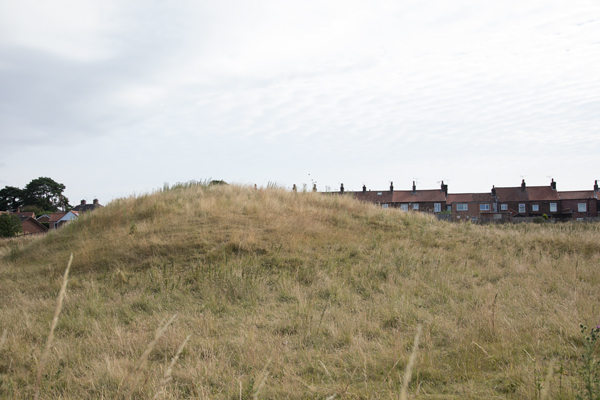
There was a Norman motte and bailey castle. All that's left of it is the earth mound (motte) on which a fortified tower once stood, known as Moot Hill.
The canal came to Driffield in 1770, and that enabled industry to develop at River Head: granaries, flour mills, breweries, coal yards and manufacturing. Commercial traffic on the canal stopped in 1951.
The railway came to Driffield in 1846.
The airfield at Driffield was built in 1916, and in 1934 it became a permanent RAF station. It was bombed by the Germans in August 1940.
There's a Driffield Town Trail with a suggested history walk.
People seem to find Driffield nice, if not very exciting. One contributor to a Reddit thread says:
'Lived in the area for 30+ years. In a nutshell: decent if you don't mind being out of the way with not much going on and hardly any police. Anything you want to do, you'll have to drive to do it.
But if what you're looking for is bags of charm, peace and quiet, charity shops, pretty views and a monolith at Rudston, Driffield is for you!'
There are two route options in Driffield, which are just two of the sides of a rectangle or the other two.
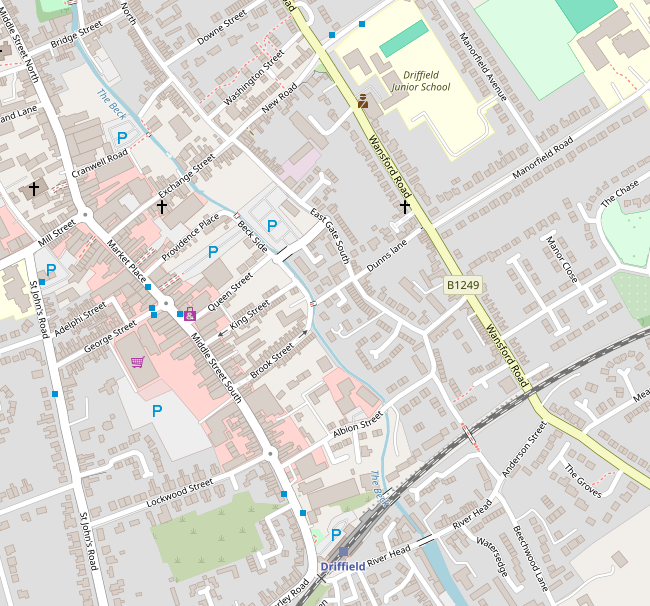
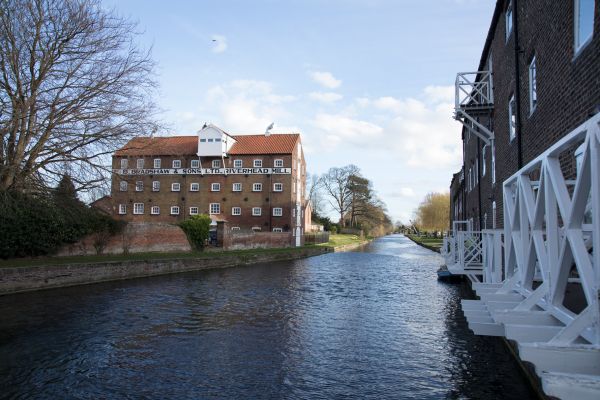
The River Head and Wansford Road route is more picturesque, because you see Bradshaw's Mill at River Head.
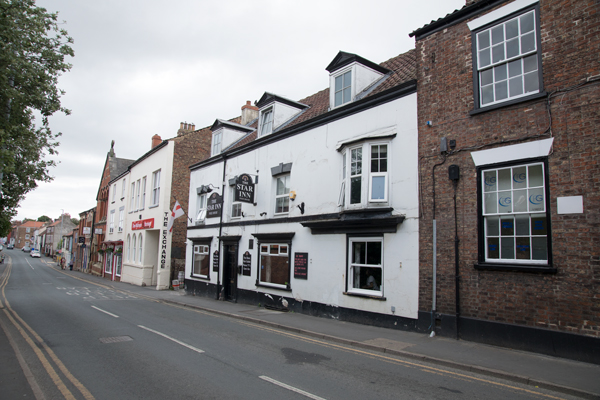
On the other hand, that means two extra level crossings. To avoid them, take Middle Street and Exchange Street/New Road.
Leave Driffield on Bridlington Road.
There are 'murder strip' painted cycle lanes, and really poor arrangements at roundabouts at new housing developments on the edge of town.
Once out of town the street is called New Road. There's a shared use path which is worth using due to fast traffic on the road.
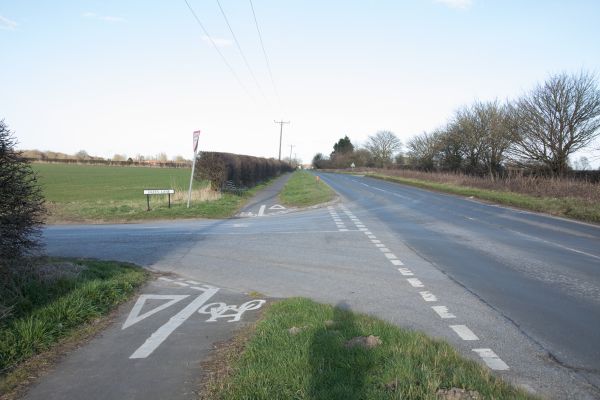
Turn right into Nafferton and ride down the High Street.
Turn left on Coppergate, which becomes Nethergate as you leave Nafferton. It takes you over the railway on the first of many level crossings on this part of the route.
Where you turn left onto Hords Lane, there's a misleading sign saying that the next level crossing is closed.
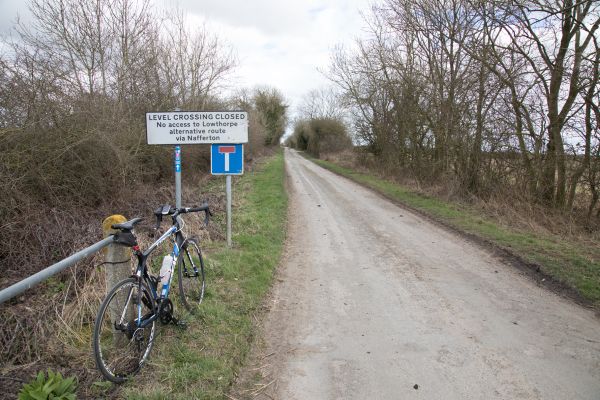
You can ignore it, because the crossing is open to people on foot or wheeling bikes. Just make sure the light is green before you cross.
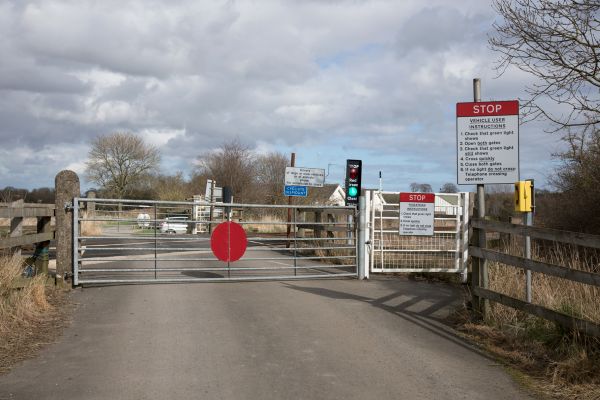
There's a right turn at Lowthorpe on Water Lane, then another on Mill Lane.
The official route used to avoid the village of Harpham, but it has now been changed to include it. Turn left on Station Road to get there.
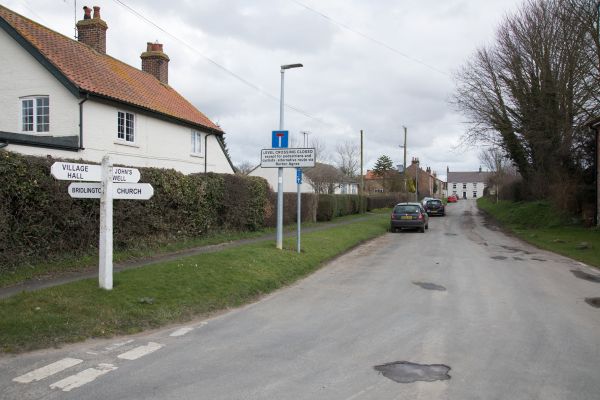
The pub in Harpham is the St Quintin Arms.
The road leaving Harpham is a no through route for motor vehicles, so quiet. It isn't well-maintained though.
It leads to another level crossing. Turn left at the next junction after the level crossing, then there's yet another level crossing before Burton Agnes.
Do a left-right dogleg on the A614 at Burton Agnes. There's a bit of shared use pavement here.
Turn right up Rudston Road, and pass the entrance to Burton Agnes Hall.
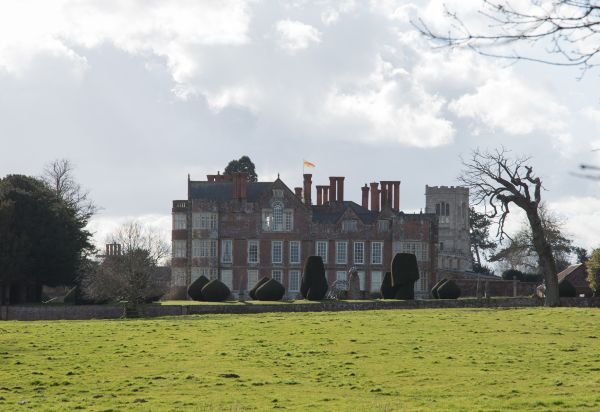
At the junction at the top of the hill, turn right on Woldgate, which the OS map says is a Roman road. It's 40mph, which ought to make it cycle-friendly - but see my comments below.
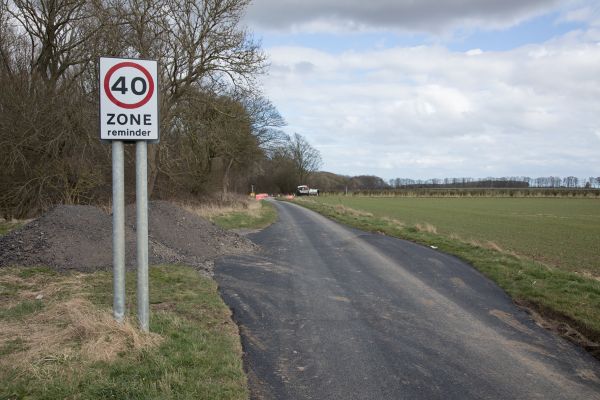
Unfortunately, in the context of Bridlington drivers, Woldgate doesn't work as a cycle route.
Oncoming drivers won't slow down or move over for a person on a bike - they just drive at you at full speed expecting you to take evasive action.
Most overtaking drivers are not prepared to wait for you to pull over in a passing place - they have a Must Get In Front attitude, and blast past leaving almost no clearance.
This is a problem that needs to be resolved.
In my view, Woldgate needs a rural modal filter to cut out through traffic.
David Hockney's 6-canvas painting of Woldgate Woods sold for over £9 million. The trees depicted are actually part of Sands Wood, and Hockney painted them from the track that links Woldgate to Boynton. He also did a number of other paintings around Woldgate.
Woldgate eventually meets the A165 Bessingby Hill. Turn left on a shared path alongside this busy road.
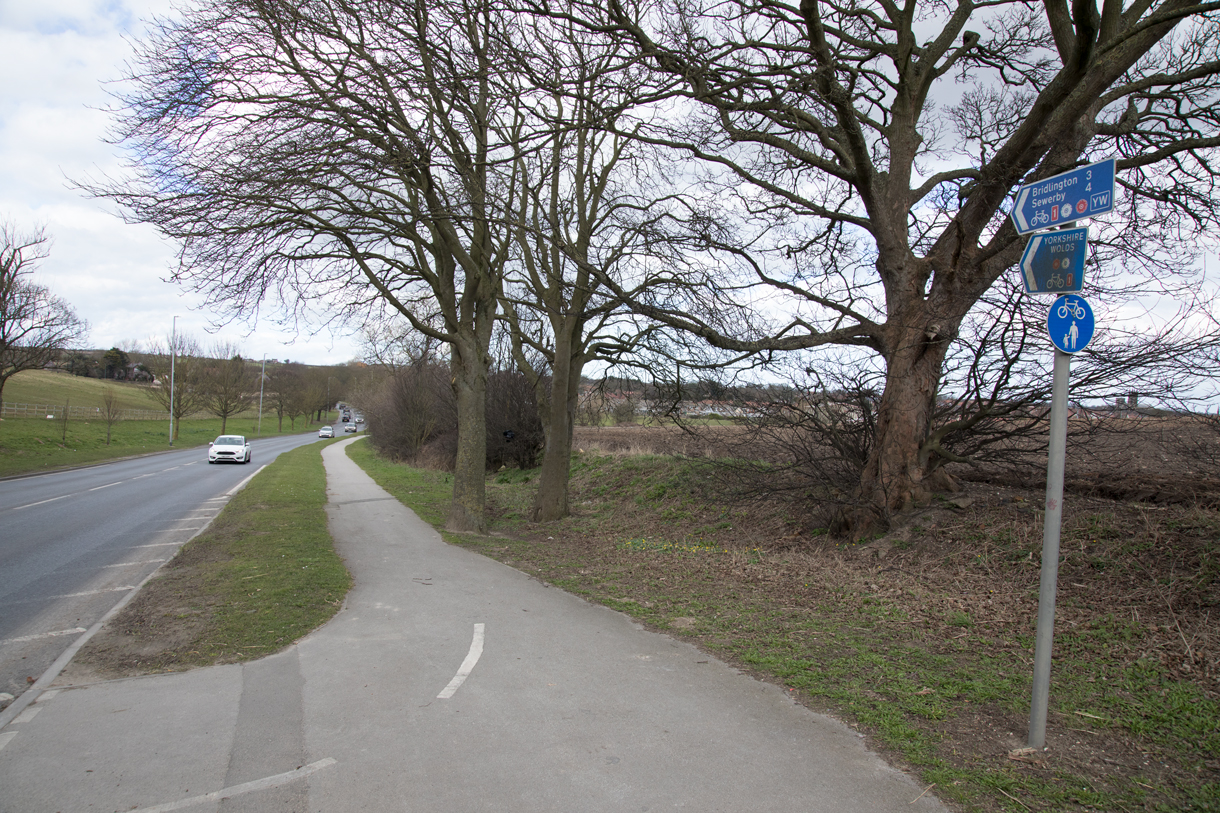
Turn right off the A165 onto a residential street, Easton Road. Easton Road becomes Westgate, then the High Street through Bridlington Old Town.
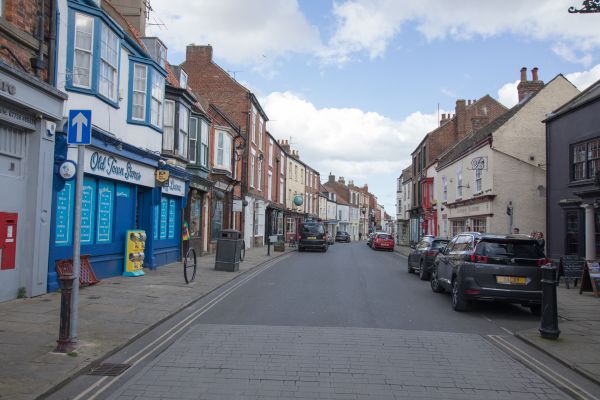
Bridlington Old Town is a high street with shops, cafés and restaurants. There's a bike shop at 35 High Street - Priory Cycleworks.
At traffic lights, cross St John Street. On your right you pass a historic-looking stone gateway.
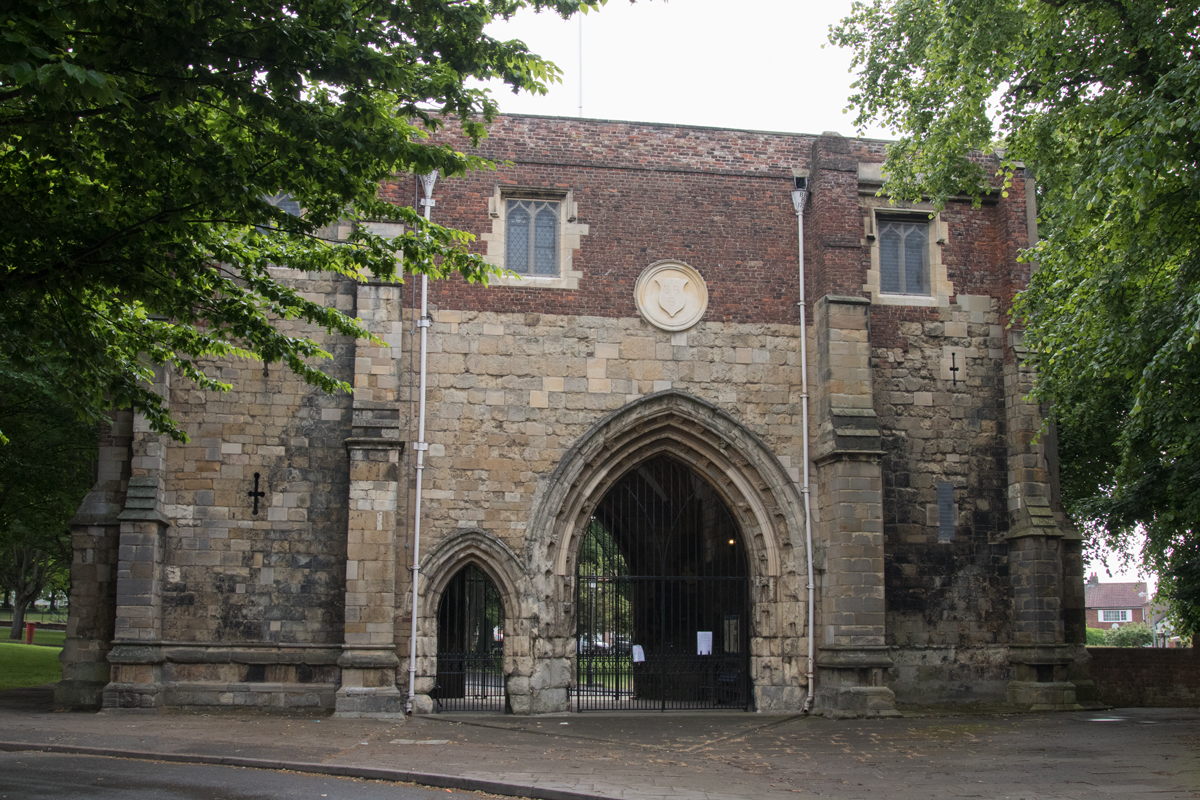
The Bayle Gate is thought to date from around 1143, when it was built as a gatehouse to William le Gros' castle. In the 1300s it became the gatehouse to Bridlington Priory; this arrangement lasted until the Dissolution of the Monasteries in the 1530s.
After the dissolution of the Priory, the gatehouse had a number of different uses including prison, court, school, and soldiers' barracks. It's now the Bayle Museum.
Next on your right is the Priory Church.
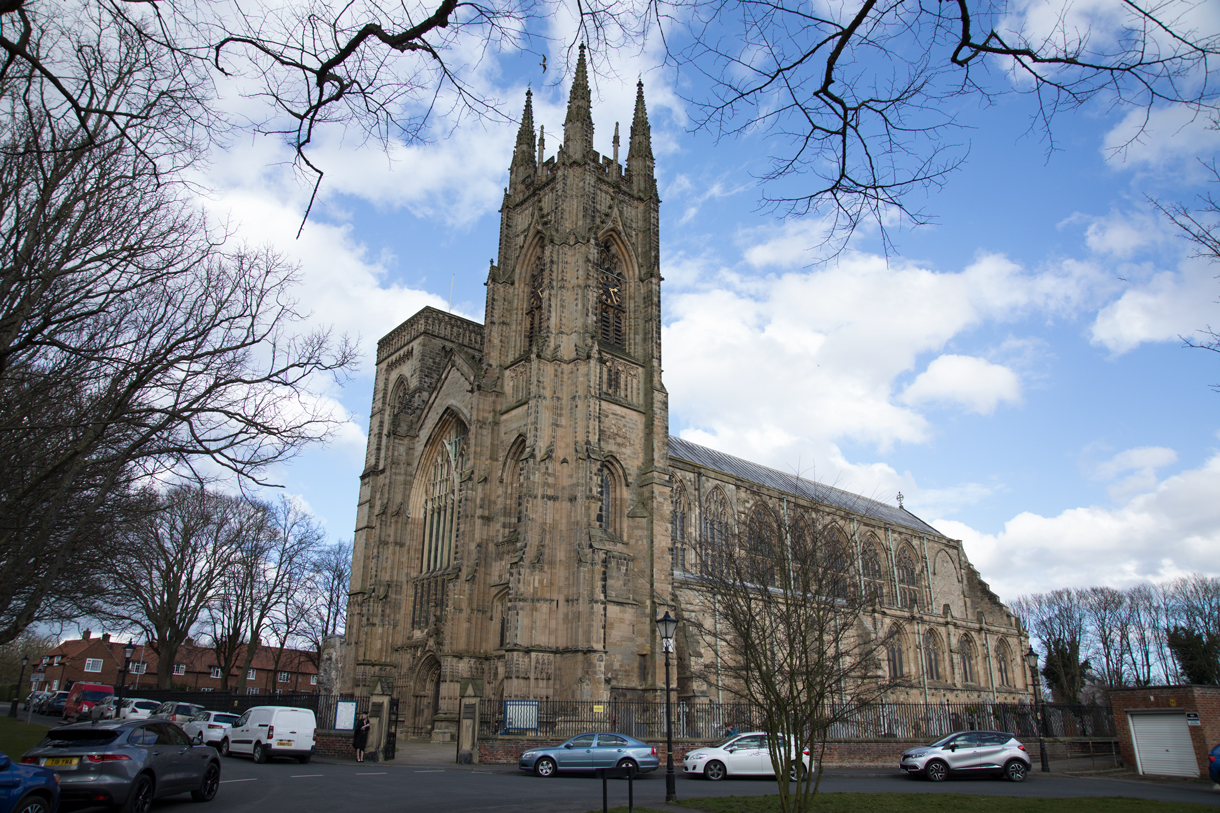
When the Augustinian Priory was dissolved in 1538, all the buildings were destroyed except the nave of the church, which was used as a parish church. The church was restored from 1846.
Next on the right is Bridlington Cemetery, which is striking to the eye.
Continue straight on, on what is now Sewerby Road. Go straight on at the roundabout junction with Fortyfoot, and turn right on Limekiln Lane. You reach the seaside at North Marine Drive.
There's a fish and chip shop by the beach here, and WCs further south along the Promenade towards the harbour.
It's very enjoyable cycling along the Promenade, approaching the finish line.
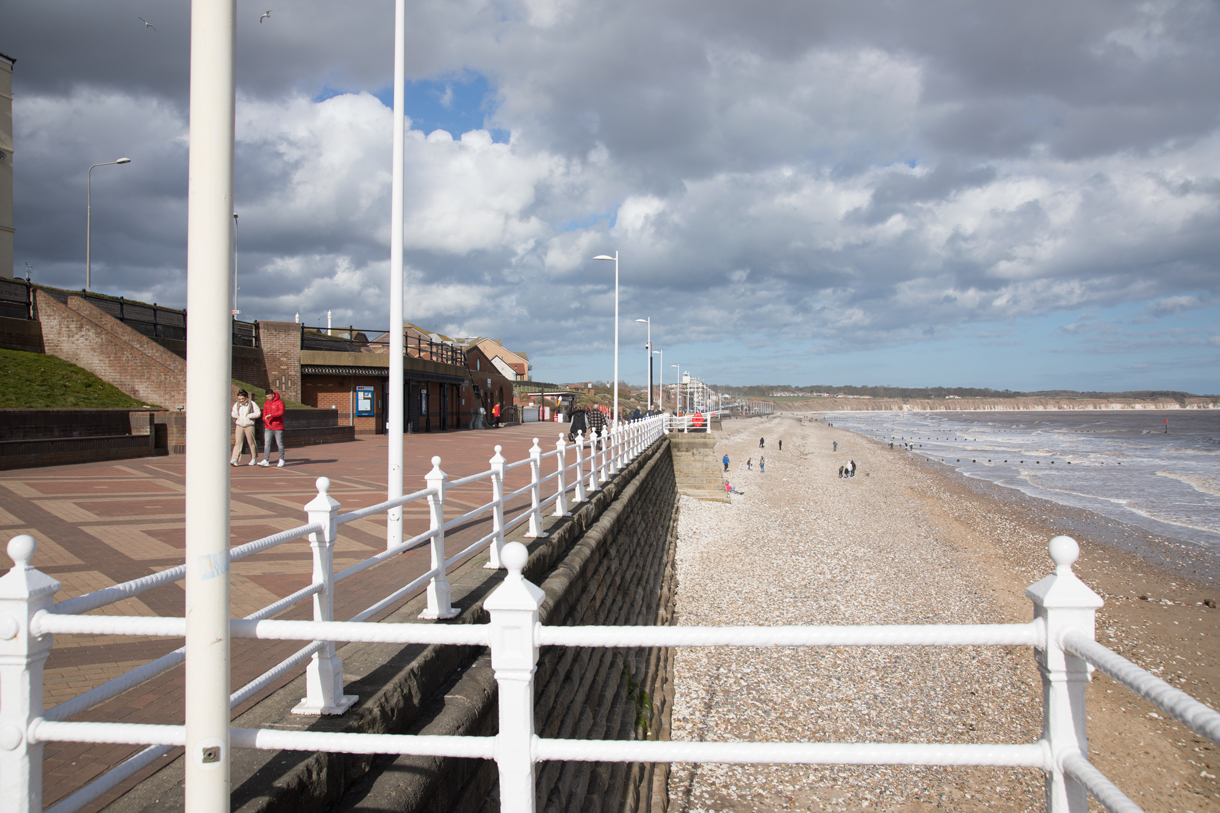
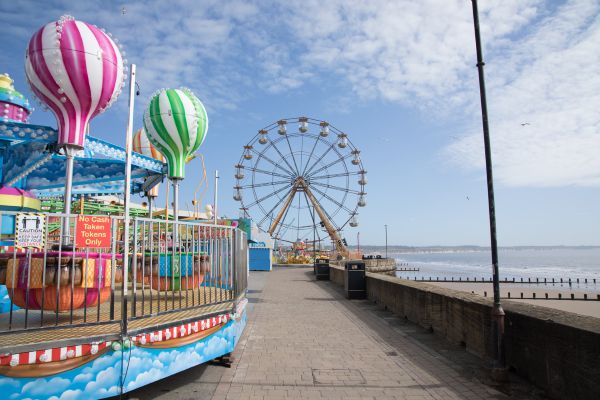
Bright Breezy Bracing Bridlington is a resort on the east coast of Yorkshire.
The Old Town grew around Bridlington Priory, established in 1113. It is a little distance away from the Quay, where you can find Bridlington harbour and the beaches.
Bridlington began to establish a reputation as a holiday resort from the 1760s and continues to play that role today.
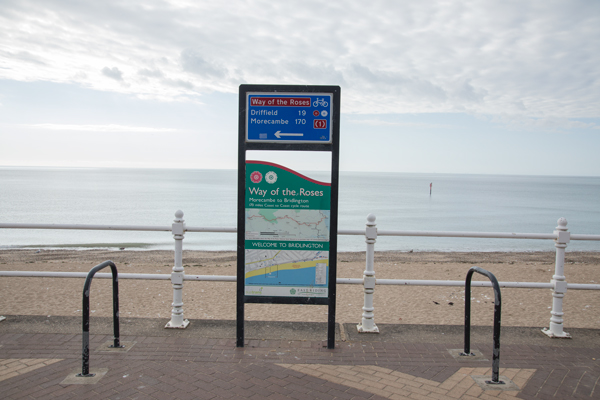
The end of the Way of the Roses is on the front by North Marine Gardens and the end of Sands Lane.

The 1:50,000 OS Landranger map number 98 Wensleydale and Upper Wharfedale covers the second part of the Way of the Roses cycle route.
OS Landranger 98 on Amazon (affiliate link).

Pateley Bridge is on the 1:50,000 OS Landranger map number 99, Northallerton and Ripon.
As an Amazon Associate, I earn from qualifying purchases.
