
Double Dutch Roundabout in Leeds
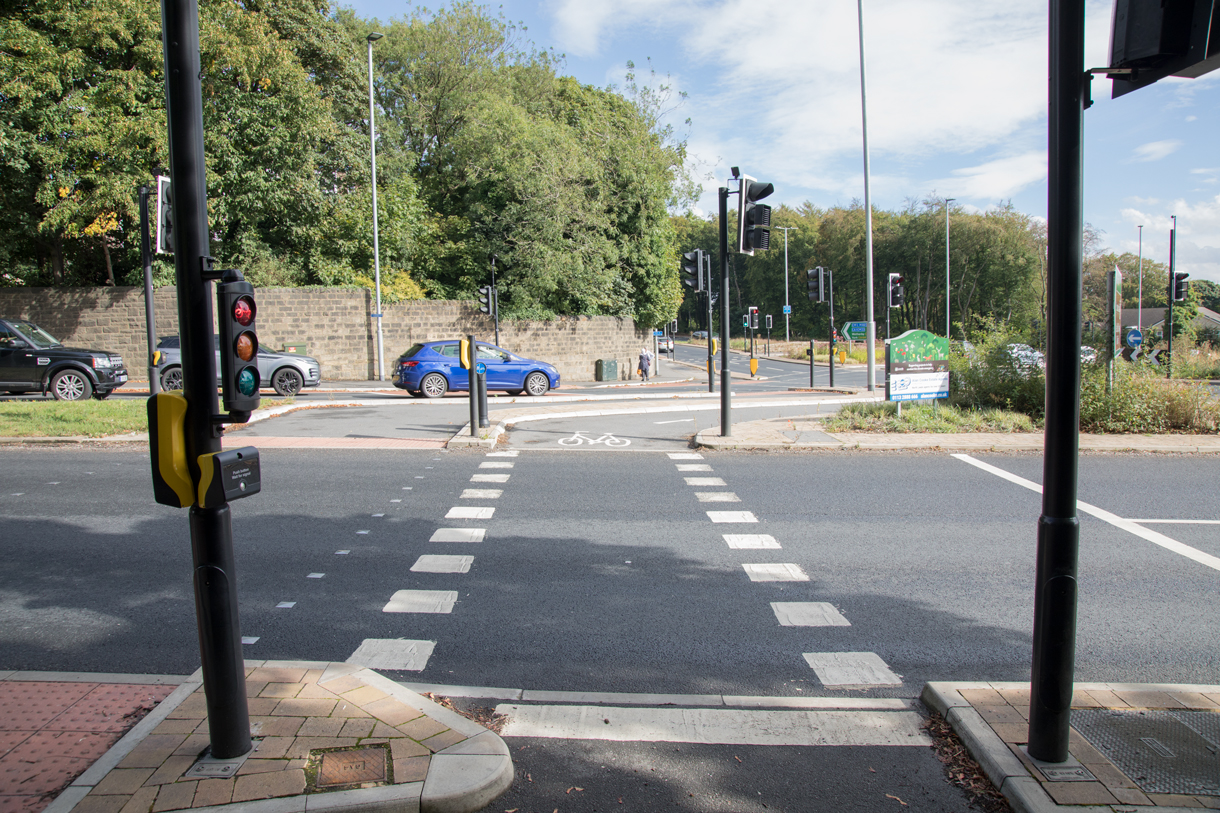
I noticed the cycle facilities on the Moortown roundabouts in Leeds a while ago, and yesterday I had a proper look at them and cycled round them.
I’ve called them Double Dutch roundabouts because there are two of them, not because they’re illegible.
Here are 8 key points about the cycle infrastructure at the Double Dutch roundabouts in Leeds.
1) Professional Standards
In my opinion the designers have done an excellent job to modern, professional standards. It is a world away from the half-Arsenal-ed efforts we’ve seen in North Yorkshire so far.
2) Segregated Cycle Tracks
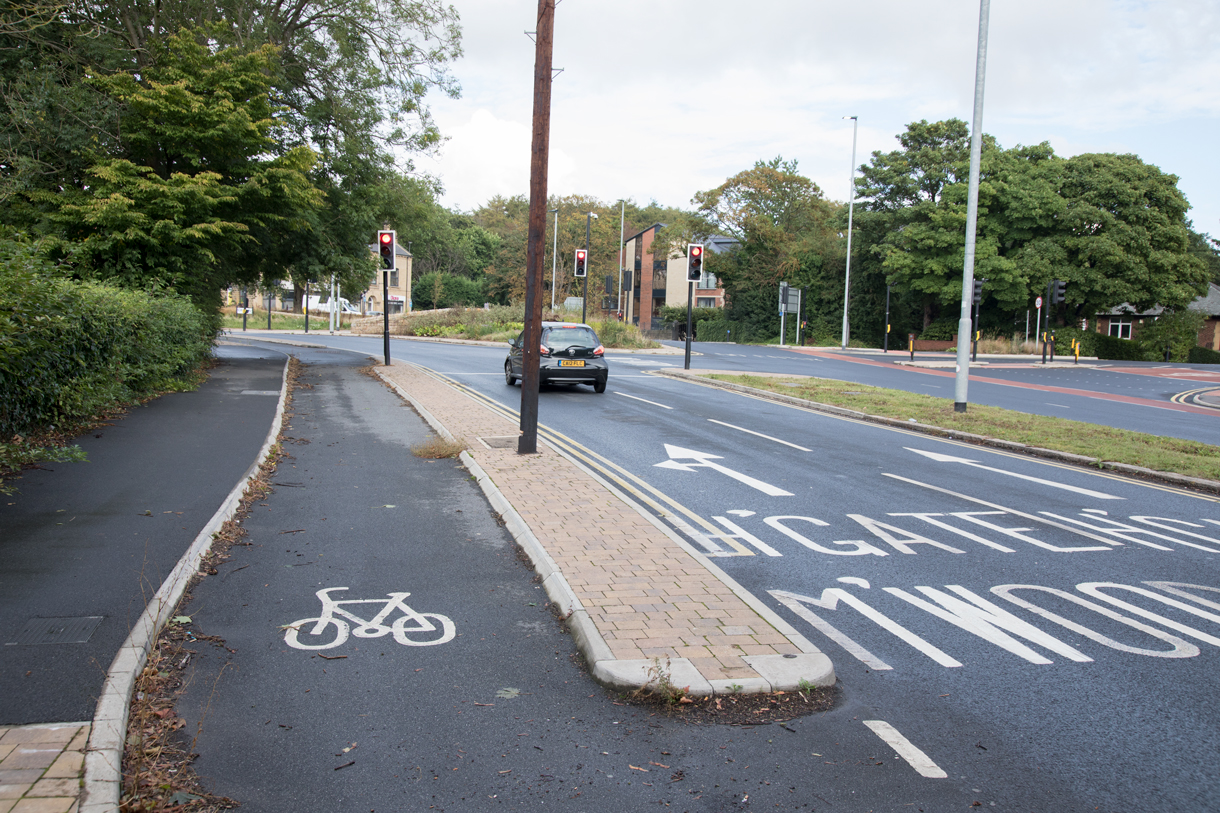
There are proper cycle tracks, segregated from the footway with a level difference and kerb, and with a buffer to the carriageway.
3) Flared Geometry
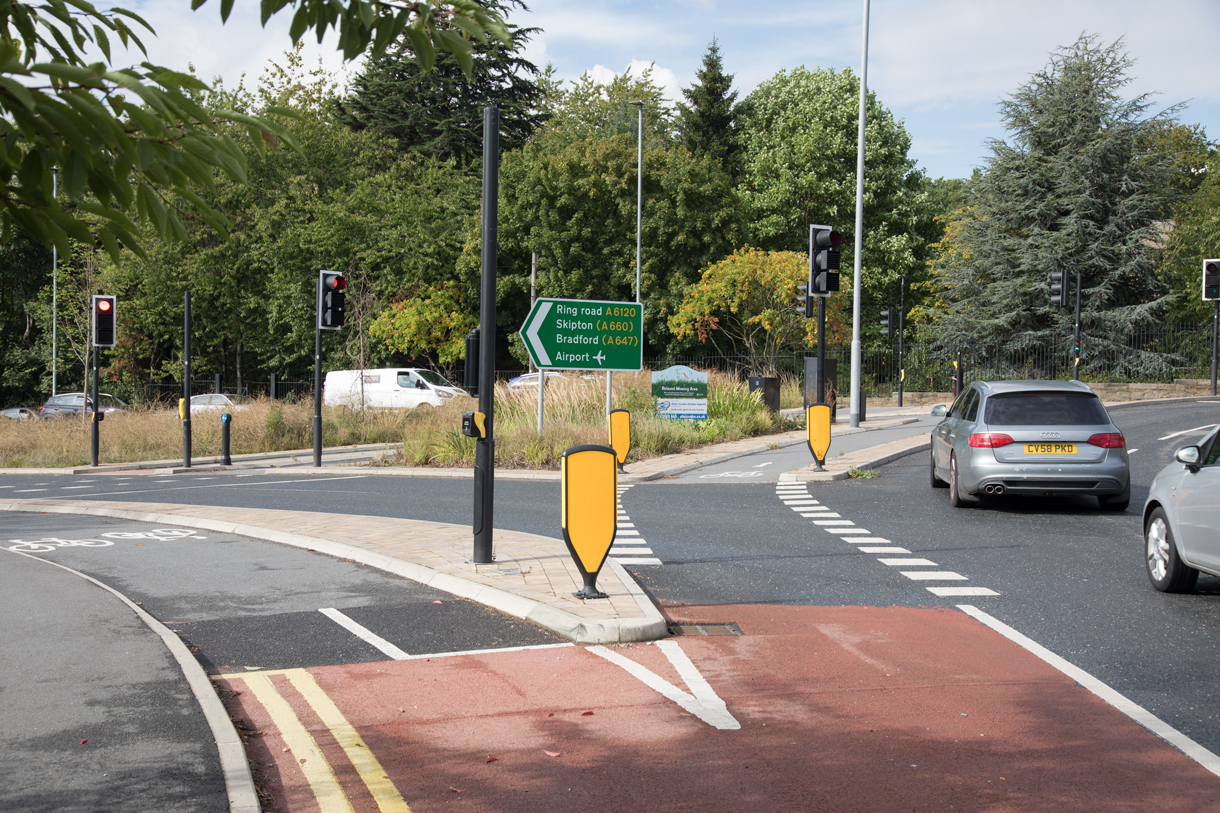
One of the less good aspects of the experience is that the flared geometry of the roundabout leads to drivers going at high speeds. This is not necessarily the fault of the designers who may not have had the budget to redesign the whole of both roundabouts.
It leaves you crossing wide open spaces at the junction arms.
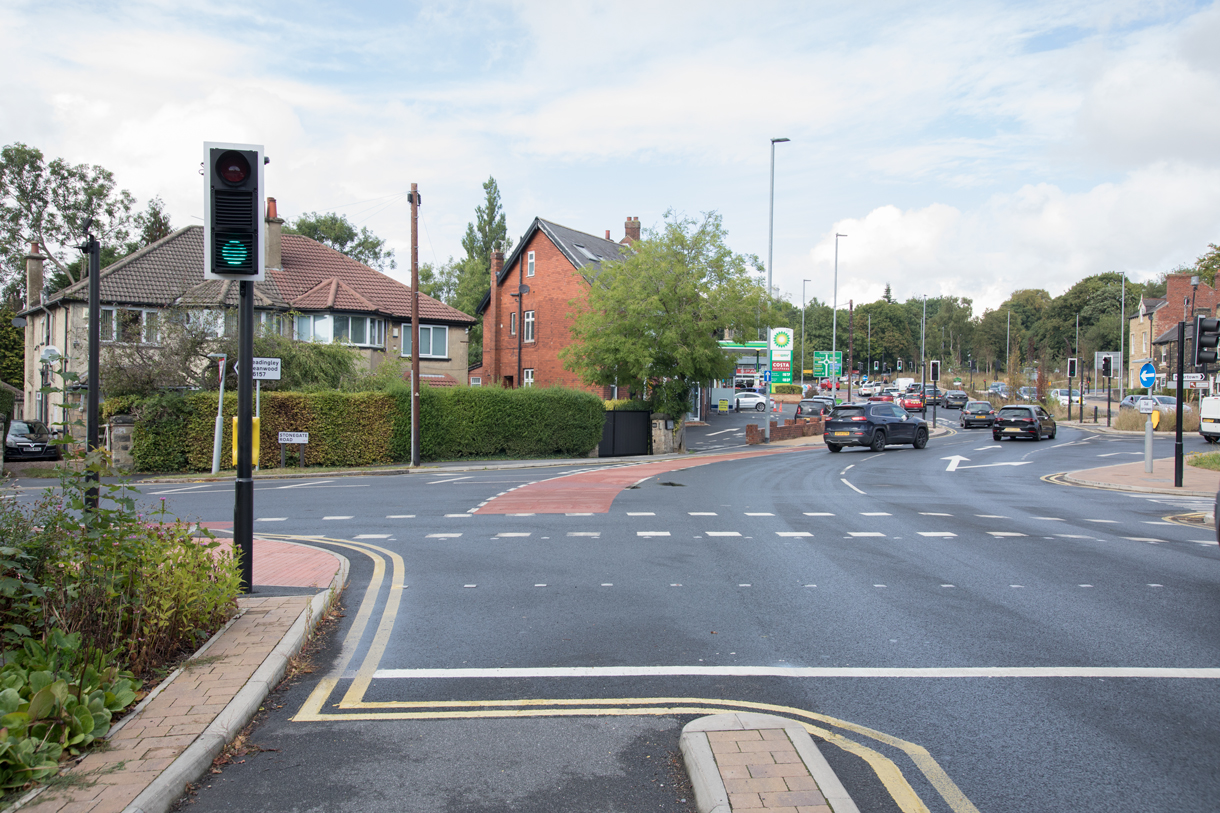
The same applies to the entrance to the BP garage.

You do feel vulnerable to a left hook. It would be better if the kerb continued much further, to narrow the entrance to the garage, make drivers do a tighter turn, and therefore reduce their speed.
4) Clear Distinction Between Footway and Cycle Track
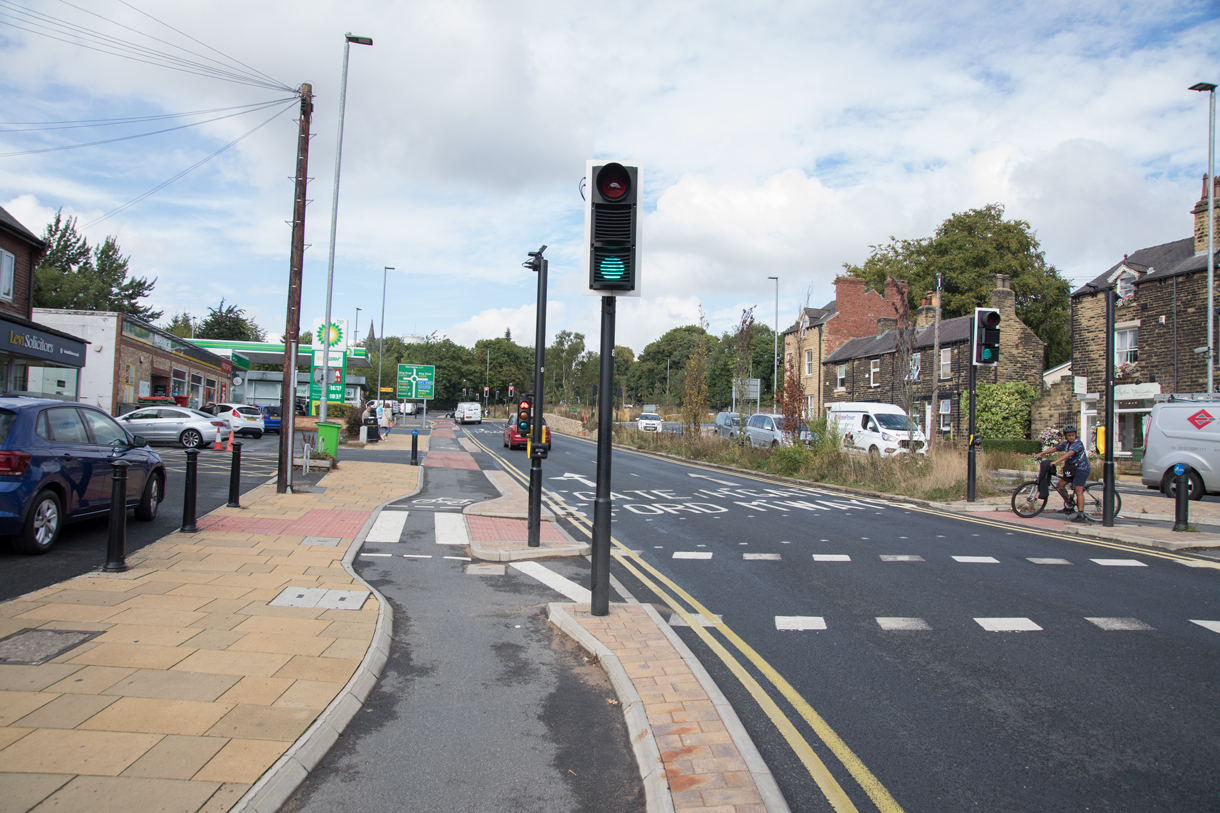
The designers have done an excellent job in making a clear distinction between the footway and the cycle track. The different colour and paving of the footway, together with the angled kerb that edges it, makes it quite clear to everyone where they are supposed to be.
Even where space is quite limited there is a clear difference between footway and cycle track.
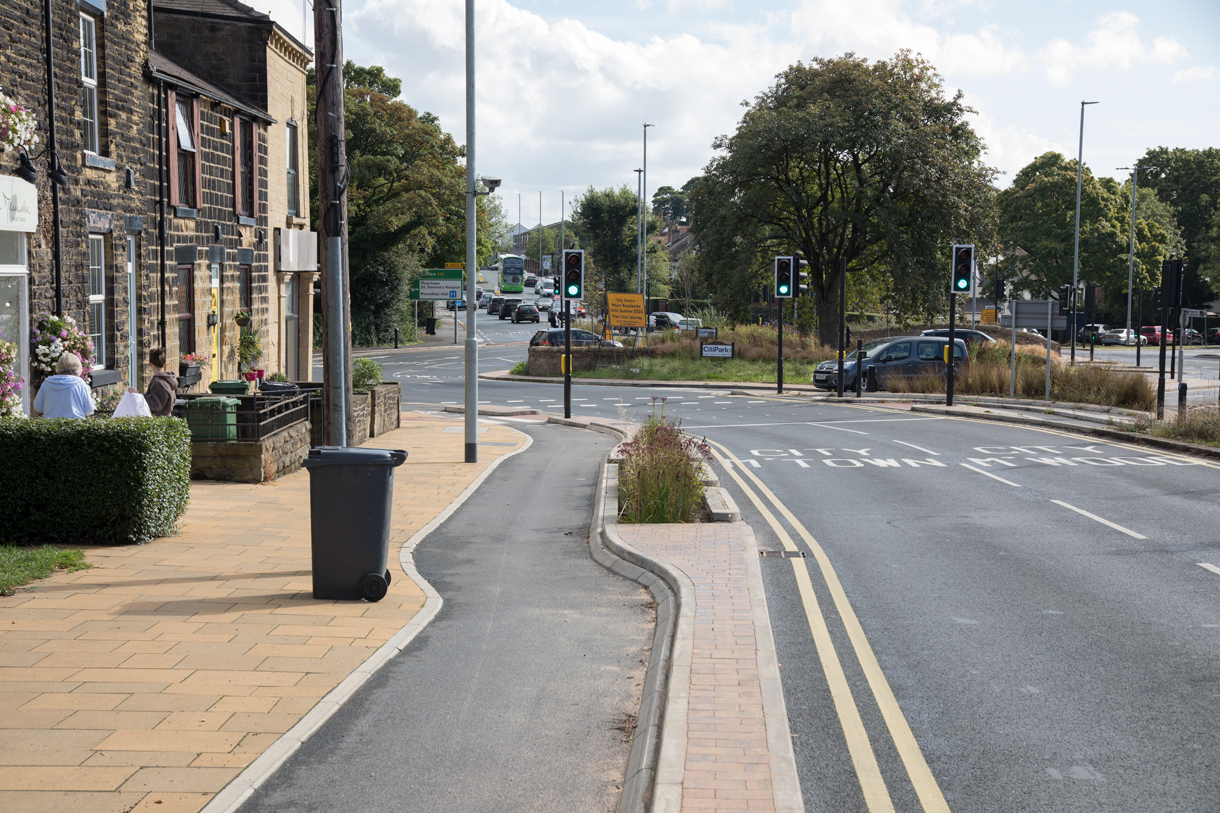
5) Separate Crossings for People on Foot and on Bikes
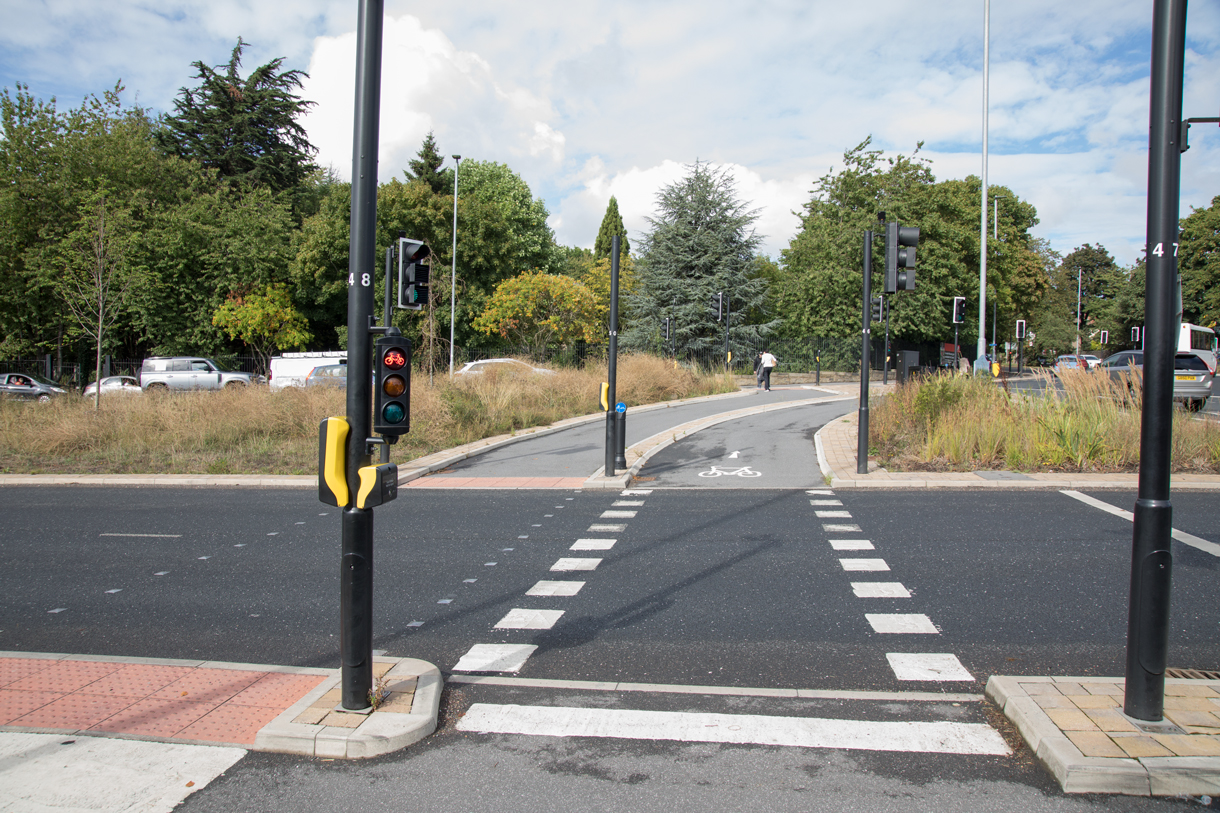
Following on from the last point, there are separate crossing facilities for those on foot and those on bikes.
6) The Roundabout Doesn’t Link to any Quality Cycle Routes
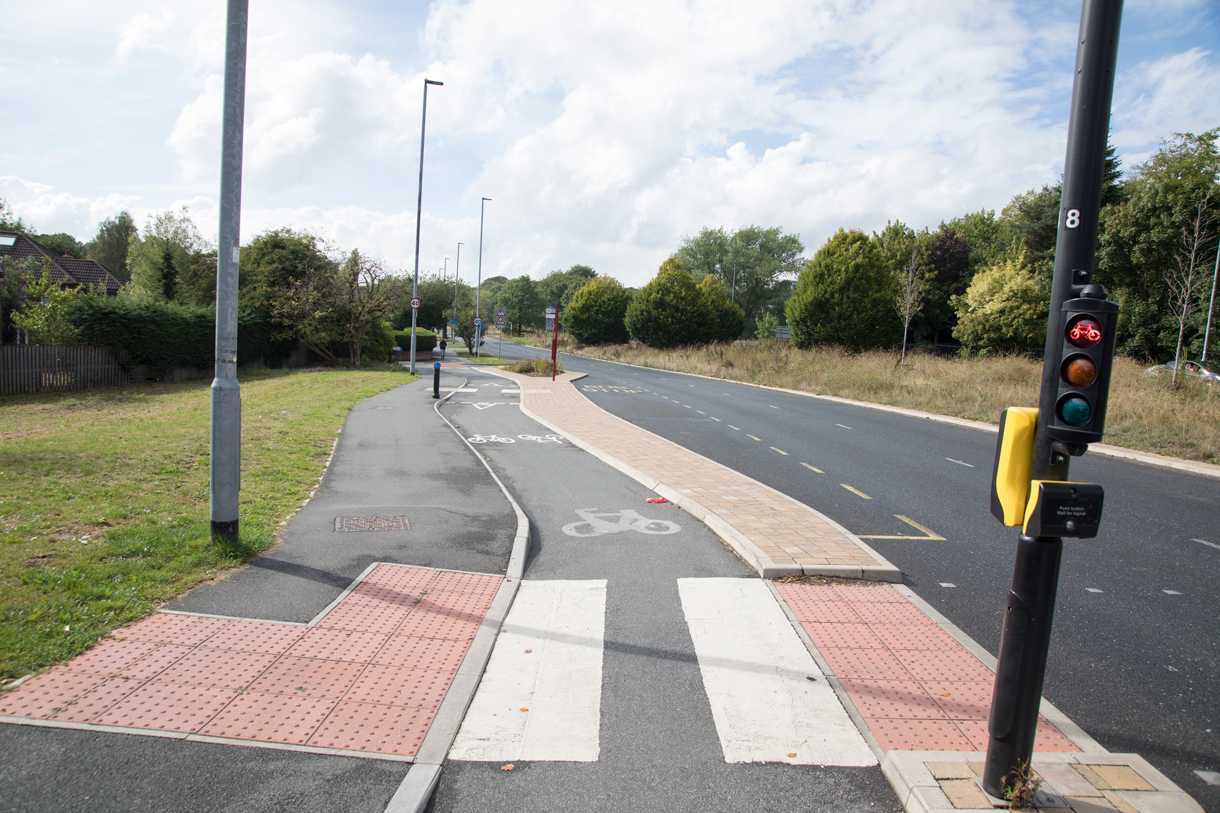
As good as the provision is on the two roundabouts, they don’t seem to link to any quality cycle routes. The bi-directional cycle track pictured above soon becomes a shared use pavement then peters out altogether. Because the cycle facilities on the roundabouts are isolated, usage is low.
Here’s a map showing the two roundabouts.

I guess that there is an intention to build proper cycle facilities on at least some of the routes approaching the roundabouts – perhaps the Ring Road and/or Scott Hall Road.
7) Drivers Would Rather Run You Over than Cede Priority
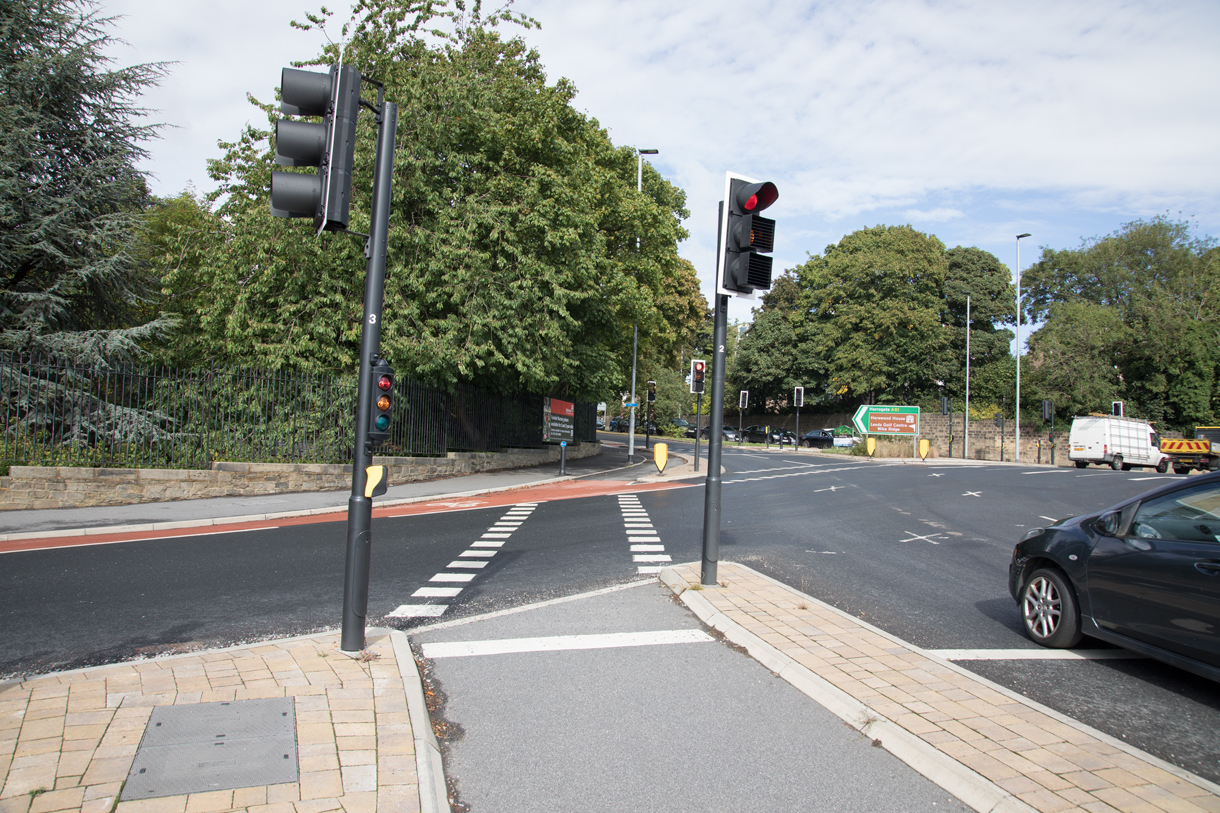
There are some places where it’s not entirely clear what you’re supposed to do (or wasn’t to me, at least).
After using the crossing pictured above, it seemed to me that I could also cross the mouth of the A61 Harrogate Road, and the markings there indicated I would have priority.
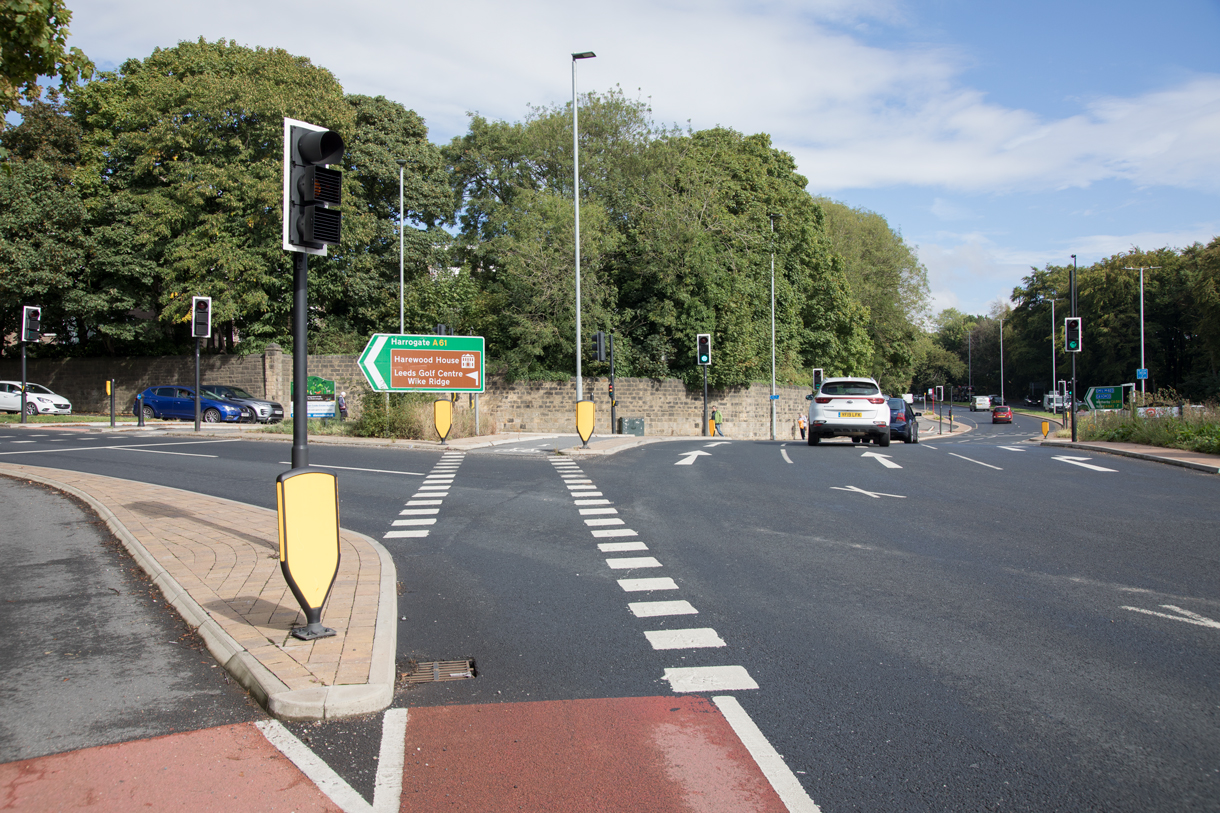
In practice motorists driving two abreast charged at high speed towards the A61, and it was obvious that if I proceeded they would run me over.
Probably the intention is for cyclists to go the long way round and use the signalised crossing a short way up the A61.
As a bear of little brain I may have misinterpreted the infrastructure, but if I rode the roundabout regularly I would soon get the hang of it.
The Double Dutch roundabout in Moortown resembles a CYCLOPS junction, where the aim is to provide an orbital cycle route that separates cyclists from general traffic in space or time.
The issue at the Harrogate Road arm of the roundabout is that if you use the direct cycle route, you’re not separated from general traffic – neither in space nor in time.
I was riding all the way round the two roundabouts, which is relatively unusual. Most people would only ride part way round, on a trip from A to B rather than a Cycle Infrastructure Safari.
At the next roundabout arm (Ring Road Moortown east) I didn’t attempt to take the short route.
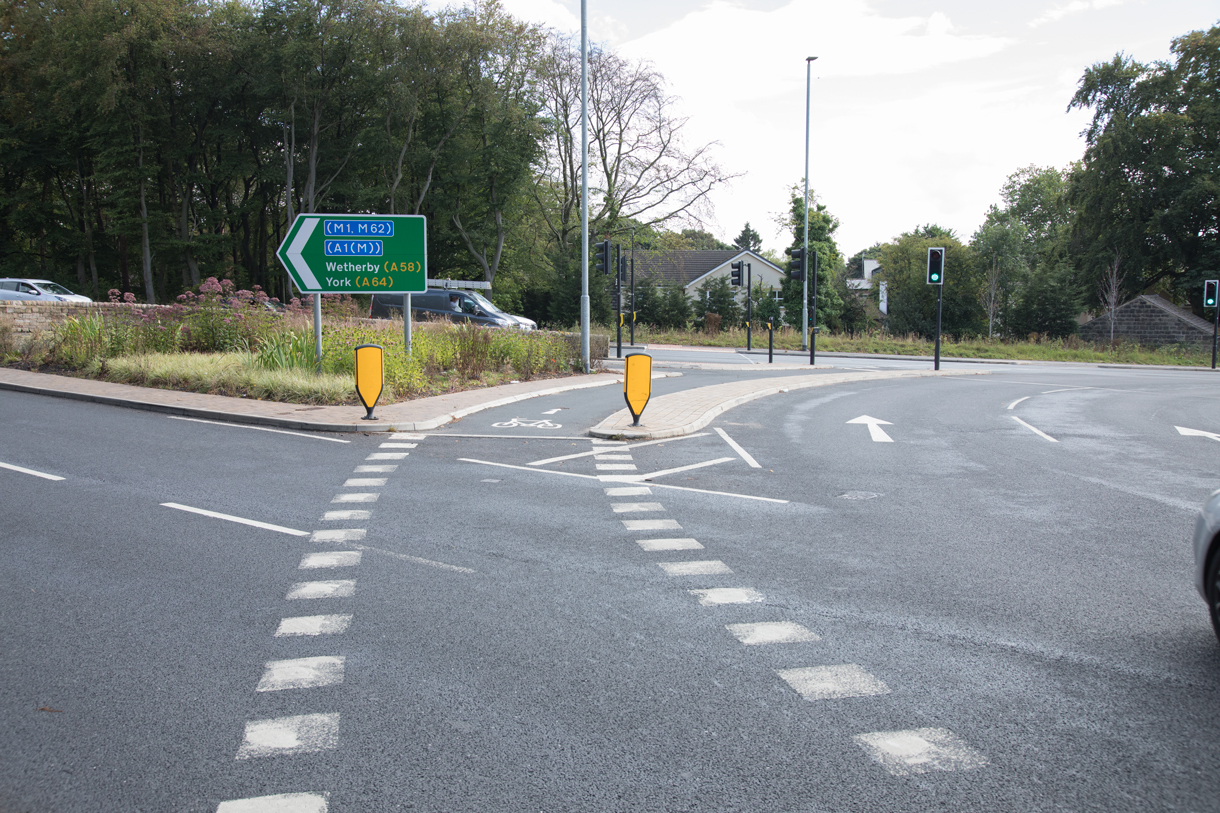
Instead I waited at the signalised crossing a bit further up the junction arm.

Then there’s the other half of that road to cross as well, but I guess the signals are set such that cyclists should normally be able to cross both without waiting a second time.
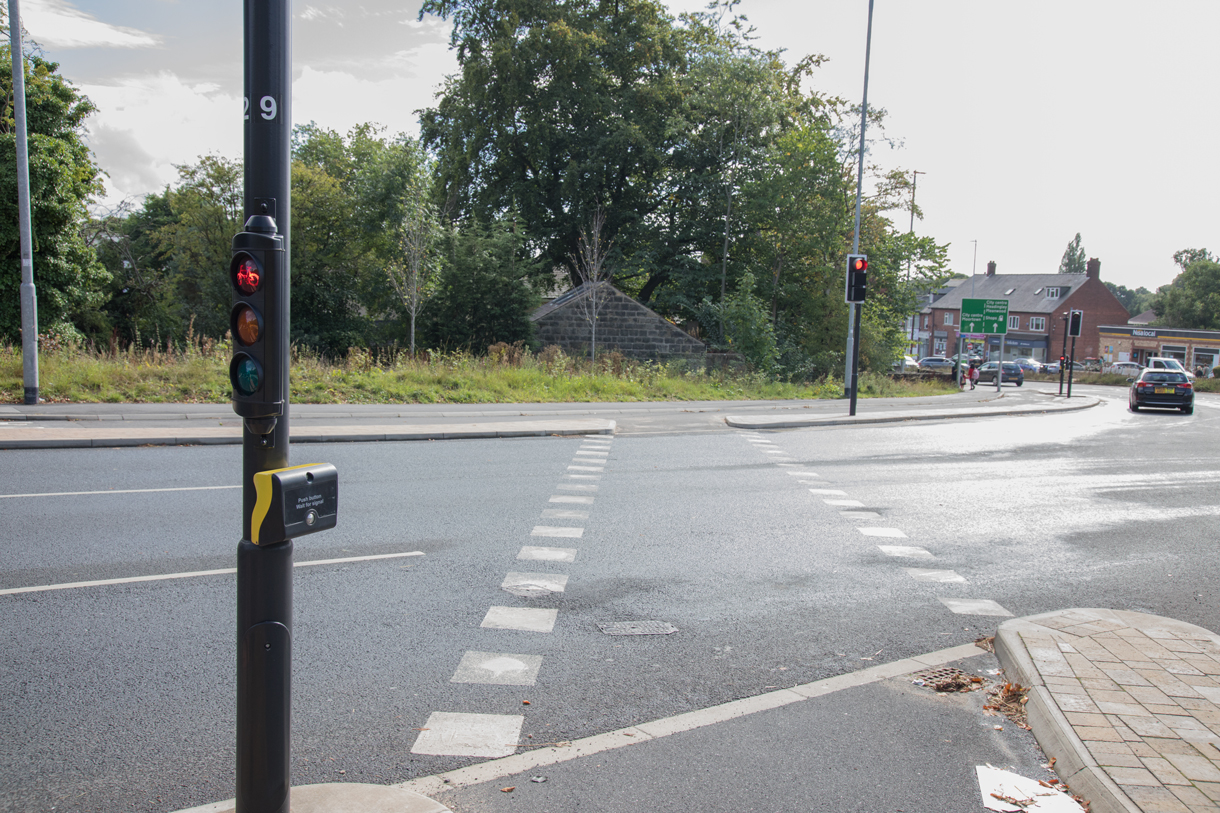
8) Drivers Really Don’t Like Giving Way at the Exits from Roundabouts

The Sand Hill Lane junction is nicely done, with clear markings, a raised table, a coloured surface, and narrowing. Nevertheless, as I crossed it I could see that an approaching driver was reluctant to give way.
It was only by continuing across and looking at her with – and I appreciate that I’m flouting convention by referencing more than one fictional bear in a single post – a Paddington hard stare that I could cross first.
If in future there are higher flows of cyclists, drivers will be expecting us and they will learn how they are expected to interact with us at junctions.
Summary
In summary, the designers have done a really good professional job on the Double Dutch roundabouts at Moortown, Leeds.
The geometry of the roundabouts leads to high speeds and aggressive driving, which makes for an unnerving experience in places. Changes could be made to reduce the wide open spaces and sweeping curves, and therefore driver speed.
I made a mistake in choosing the wrong crossing of a junction arm, but anyone using these cycle facilities regularly would learn the best tactics and where to look out for trouble.
Video
Here’s a video of me cycling round the Double Dutch roundabouts.
That’s an Amber Cars taxi driver who has stopped into the cycle box and even beyond the Advanced Stop Line.
A special shout-out too to the Bill Plant Driving School instructor (or pupil?) for passing inches from me and ignoring the priority markings across the mouth of the A61 Harrogate Road arm of the roundabout.