
Five Observations on Cycling in the Dales
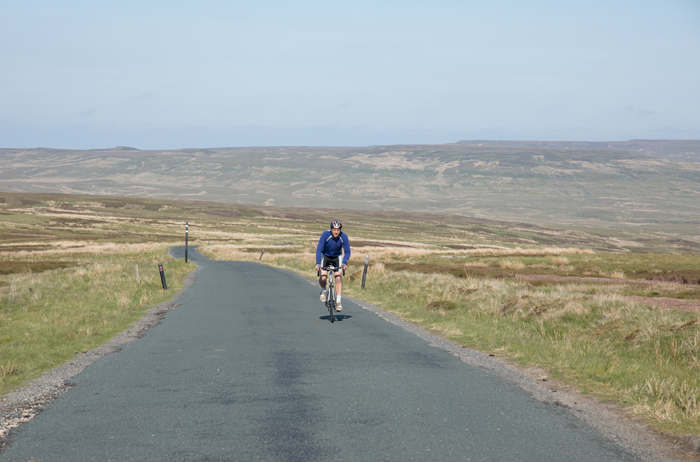
Here are five observations about cycling in the Yorkshire Dales.
1) It’s Hilly
It’s hilly in the Yorkshire Dales.
Admittedly I’m not going to win the Nobel Prize for Insight here, but I mention it because it is probably the most significant factor affecting cycling in the Dales.
Of course the flatter roads are along the valleys, and they tend to be A-roads, as in Garsdale and Wensleydale, or quite busy B-roads as in Wharfedale.
Two modest rides are possible on roads which are both fairly flat and fairly quiet. There’s Dentdale which has two minor roads, which means you can take one on the way up and the other on the way down.
The other opportunity for a (relatively) flat and quiet ride is Littondale. Starting out from Grassington, you can do a ride that stays away from the B-road except for a short stretch.
If you’re planning a longer ride, there’s no choice: toughen up and learn to love hills.
2) Some Bridleways are too Steep for Mountain Biking
Sticking with the theme of hills, some of them are just too steep for mountain biking.
I had a go at riding from Arncliffe up and over Old Cote Moor towards Kettlewell. The uphill slope was too steep, though, and I was left walking. I wouldn’t do it again unless I had assistance from an electric motor.
An e-mountain bike would open up another world of possibilities though.
Even with an electric boost I wouldn’t tackle Occupation Road again, mind you. I used Occupation Road as my route from Dent to the top of White Shaw Moss, on the way back to Ingleton.
It lured me in by being in a decent state of repair at the beginning, but once I was committed it deteriorated badly. Where the Blea Gills stream down the fell, I was reduced to walking, picking my way through a long series of rock pools. I had my ankle nipped by crabs on several occasions, although I may have made that up.
Funnily enough the track was well-maintained again just before I rejoined the road, so whichever end you start from you could be lured in.
3) The Traffic Isn’t Bad at all
Overall, my experience of traffic when riding on Dales roads has been good. Of course staying away from A- and B-roads as much as possible helps.
I find locals and farmers to be considerate, on the whole. As long as there isn’t much traffic, people give you time and space.
I can’t think of many bad experiences, but one springs to mind. I ended up riding the road between Malham and Kirkby Malham in the afternoon, around the time people were heading home. There were a lot of drivers and I got some dodgy overtakes.
Maybe it’s partly that drivers feel pressure from other drivers behind, and overtake when they wouldn’t if the road was quieter? It’s a theory.
4) Quiet Corners
There Yorkshire Dales National Park is more than just Swaledale, Wensleydale and Wharfedale, and there are some quiet corners to explore.
I’ve taken a particular shine to Dentdale. Ok, it’s not unexplored territory and no one is going to mistake me for Sir Walter Raleigh when I return from my adventures there.
Nevertheless, it is distinctly quieter than the most-visited parts of the Dales. You could see it as analagous to the Greek island of Anafi compared to the Ibiza of Wensleydale and Wharfedale.
Also quiet are the bits added to the National Park in 2016 – the western extension around Kirkby Lonsdale, and the north western addition close to Kirkby Stephen.

The Howgill Fells are part of the north western extension, and they feel quite remote. If you had a puncture you couldn’t mend and got stuck there, you might not be found for a couple of decades.
5) Not Fulfilling its Potential for Habitat and Wildlife
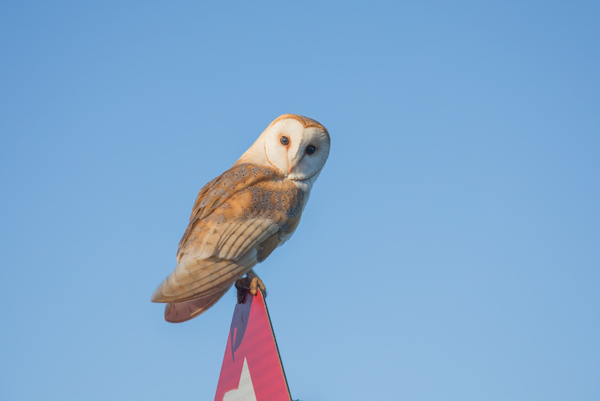
For me, one of the pleasures of cycling is to get out early and see wildlife as I pedal. It could be a brown hare or a buzzard. Whatever it is, it lifts my spirits.
It wouldn’t be accurate to describe the Yorkshire Dales as devoid of wildlife, but neither is it reaching its full potential – not by a long way.
Too many of us have been brought up to think of fields of green grass and dry stone walls as beautiful British countryside. But is there anything in it, other than sheep?
I’m not a professional naturalist, but I have a rough idea of the issues. Over-grazed bare grass landscapes are one part of the problem. Grouse-shooting is another: predators are trapped or shot, and heather is burnt.
What’s missing is a diversity of habitat, with more scrub and native woodland. There would need to be far fewer sheep to accommodate rather more wildlife.
For the time being the focus in the National Park is very much on using the land for human wants, through farming and shooting. There are some small concessions to wildlife, but until recently there has been no landscape-scale approach to wilding the Dales.
Wild Ingleborough is a fairly new project which aims to change that. They want to restore a part of the Dales and help nature recover. Let’s hope it inspires similar projects throughout the National Park.
In the future, we might be pedalling through a rich, wild landscape that realises its full potential for nature.