Cycling in Yorkshire & Beyond

Cycling in Yorkshire & Beyond
Stage 15 | Stage 16 | Stage 17
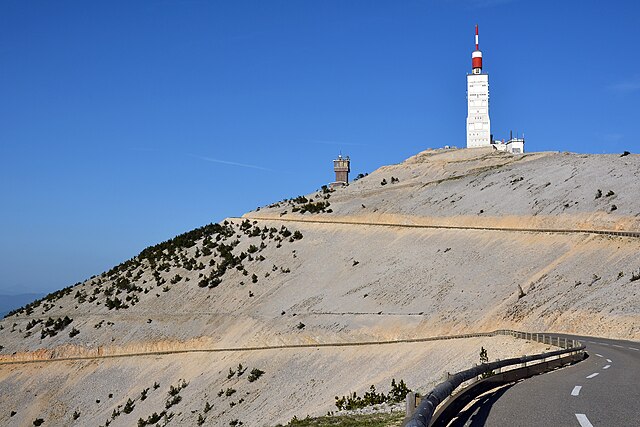
Stage 16 of the Tour de France 2025 is a 171.5km mountain stage from Montpellier to Mont Ventoux.
There are not many difficulties for most of the stage as the riders roll through the Hérault, Gard and Vaucluse départements.
Instead, this stage is all about the one big climb at the end - 15.7km at an average 8.8% to the top of the Giant of Provence.

This is the race report for Stage 16 Tour de France 2025.
These are video highlights of Stage 16.
Race Details | Poll | Map & Profile | Timings | Videos | Food & Drink | Route Notes | Favourites
| Date | Tuesday 22nd July 2025 |
|---|---|
| Stage classification | Mountain |
| Distance | 171.5km |
| Intermediate sprint | Châteauneuf-du-Pape |
| Climbs | Mont Ventoux (HC) |
| Total climbing | 2,950m |
Vote for one of the main contenders to win Stage 16.
Note: I resisted the temptation to put only one name in the poll options.
This is a map of the route of Stage 16, Tour de France 2025.

This is a zoom-able map of Stage 16 Tour de France 2025.
This is the profile of Stage 16 Tour de France 2025.

| Caravan | Fast Schedule | Slow Schedule | |
|---|---|---|---|
| Start Time (départ fictif) | 1010 |
1210 |
1210 |
| Start Time (départ réel) | 1040 |
1240 |
1240 |
| Châteauneuf-du-Pape Intermediate Sprint | 1321 |
1507 |
1521 |
| Mont Ventoux Finish Line (171.5km) | 1512 |
1644 |
1712 |
This is a video of the route of Stage 16 Tour de France 2025.
The last time the Tour de France climbed Mont Ventoux was on Stage 11 of the 2021 edition, when it was tackled twice.
Jonas Vingegaard attacked and cracked Tadej Pogacar - the first time that the Dane showed his immense potential, and the start of a rivalry.
That stage was a Wout van Aert spectacular.

Stage 16 is from Montpellier to Mont Ventoux.
One speciality in Provence is bouillabaisse, which usually has four types of fish cooked in stock, onions, tomato, garlic and herbs.
A salad niçoise has hard boiled eggs and tuna as well as lettuce and tomato.
Buy a bottle of Ultimate Provence rosé wine (affiliate link).
The stage starts in Montpellier (départ fictif).

Montpellier is the capital of the Hérault département, and the 8th largest city in France, with a population of 272,084 in the city, and more in the greater metropolitan area.
It's on the river Lez, and 6 miles inland from the coast. A third of the population is students, and Montpellier has the second-highest student population as a percentage of total population of any French town, after Poitiers.
The name Montpellier comes from Monspessulanus, meaning naked hill (because the vegetation was poor), or the mount of the hill, or the hill where woad (pastellum) grows.
It was never a Roman settlement. It developed around 985AD, when pirate raids on the adjacent coastal town of Maguelone forced people to move further inland. It became a trading centre in the C12th.
The University was founded in 1160, and was given a Charter by Cardinal Conrad van Urach in 1220. The law and medecine faculties were important from the early days of the University. Francois Rabelais (a major French Renaissance writer) took his medical degrees at Montpellier.
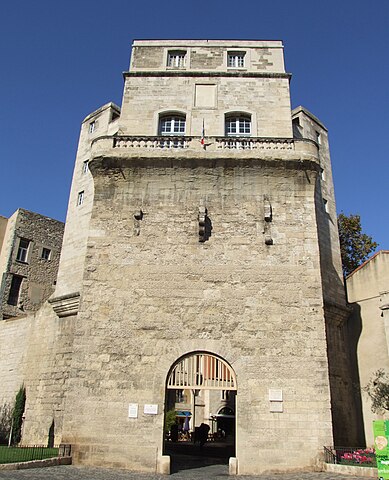
The historic centre of Montpellier is known as l'Ecusson, and dates largely from the C13th.
The Tour de la Babotte is a Medieval tower which was modified in the C18th to become an Observatory. The city walls no longer exist, as they were taken down on the orders of Cardinal Richelieu in 1622. There are now circular boulevards instead.
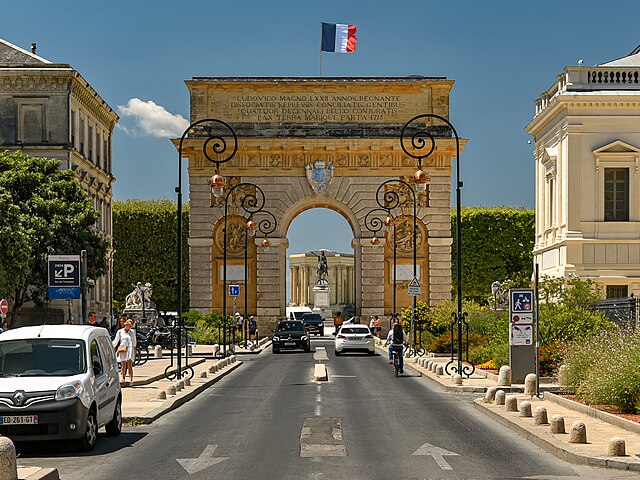
There was a big increase in Montpellier's population in the 1960s when French Algerian settlers came here after Algeria's independence.
Montpellier's economy is diverse. IBM has been here since the 1950s, and employs over 1,000 people. There's also employment in biotechnologies and pharmaceutical products, and Bausch & Lomb (opthalmology) has a plant here. Wine-making has been going on for centuries, and continues today.
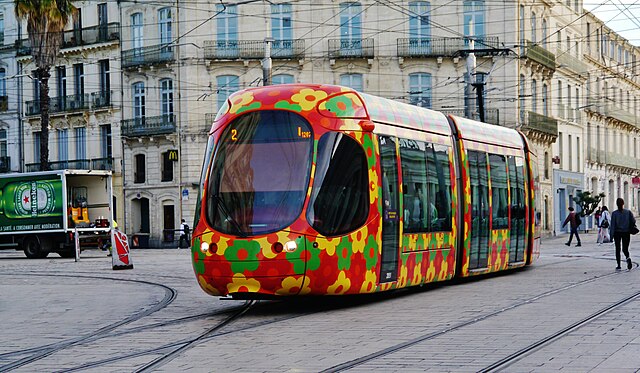
Montpellier is twinned with Louisville (US).
The départ réel is from Prades-le-Lez, north of Montpellier.
The race heads north to Saint-Mathieu-de-Tréviers, which is overlooked by the Château de Montferrand and the Pic Saint-Loup.
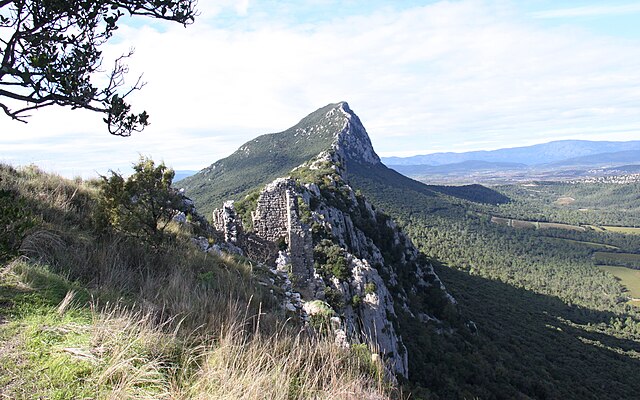
A few kilometres further north, having ridden past vineyards, the riders come to Quissac.
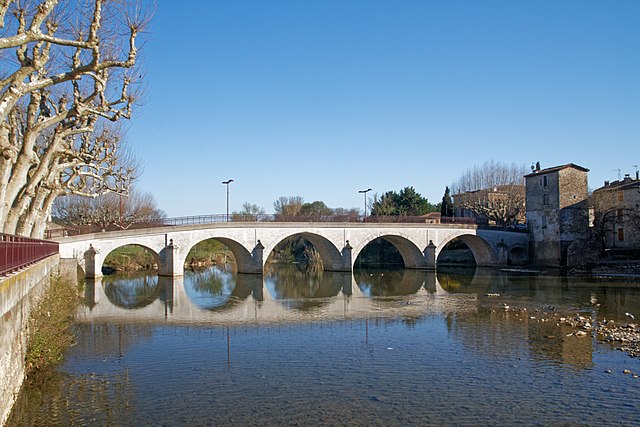
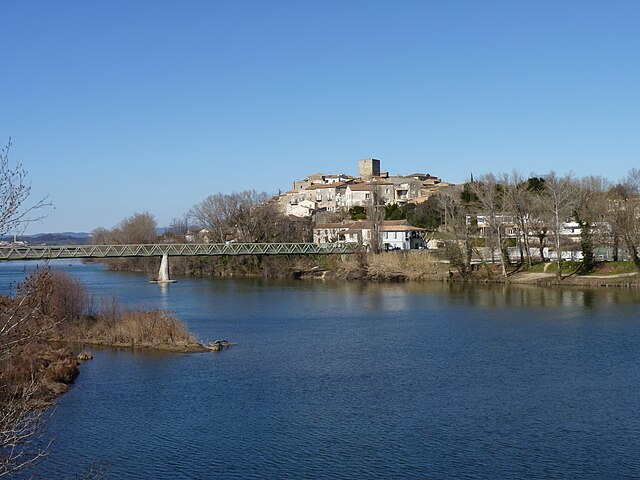
Now Stage 16 continues via the villages of Saint-Théodorit and Aigremont to the Gardon river at Moussac.

Skiing Made Easy is a practical guide to learning to ski based on many happy seasons of ski teaching.
It takes you through the beginner's progression from snowplough to parallel turns, starting at the very beginning and not assuming any prior knowledge.
The book suggests relevant exercises to develop and improve your skills. Common faults are identified, along with the best ways to correct them.
'By the way' sections contain information about many of the little things that people assume you just know, but you may not.
'This is the book I wish I'd had when I started skiing' - reviewer on Amazon.
How to buy:

Skiing Made Easier is the follow-up to Skiing Made Easy, and picks up from where the first book left off.
The first chapter is Refining Your Parallel Turns.
The chapters on ski technique beyond basic parallel turns are Carving, Short Turns, Bumps and Off Piste.
There are then further chapters on Avalanche and Mountain Safety, Ski Psychology, Physical Preparation, Ski Servicing and Alpine Wildlife.
As in Skiing Made Easy, common faults are identified and exercises suggested to correct them and to develop your skills.
'By the way' passages contain bits of skiing knowhow that could otherwise take years to pick up.
How to buy:
The Amazon URLs are affiliate links.
Next Stage 16 heads east through Garrigues and Arpaillargues to Uzès.
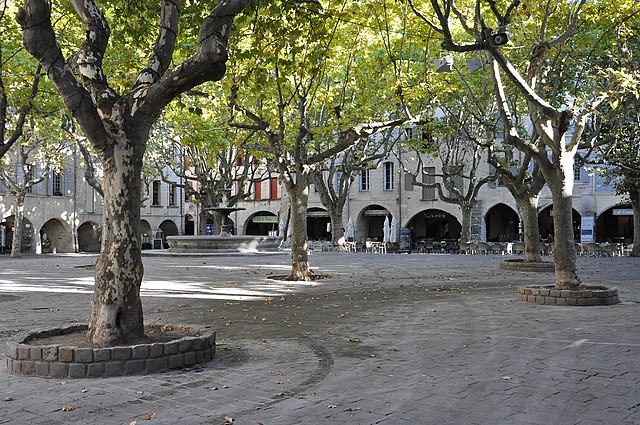
Uzès is an ancient settlement at the source of the river Alzon. There was a Gallo-Roman oppidum here called Ucetia.
A Roman aqueduct took water from the Alzon here via an impressive bridge, the Pont du Gard, to Nîmes.
Uzès became the northernmost stronghold of Muslim Spain in 725. That status lasted until 752.
In the Middle Ages, the Dukes of Uzès ruled here. They were based at a château in Uzès, of which the Tour Bermonde survives.
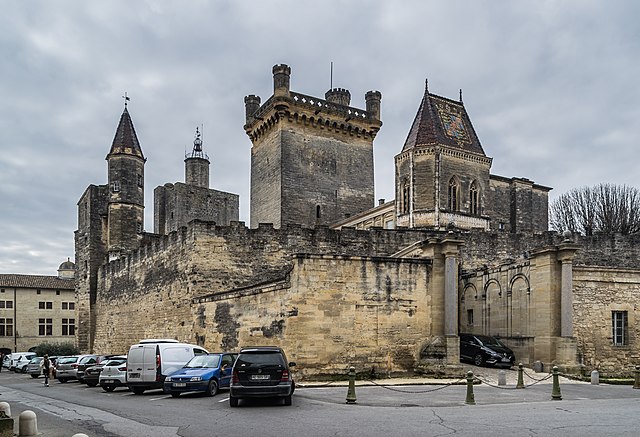
At that time, Uzès was known for manufacturing cloth, notably serge.
Today, Uzès is famous for its Saturday market where you can get local produce, textiles and trinkets.
Haribo has a factory and museum in Uzès.
From Uzès, the race continues north east to Gaujac and Connaux.
It then heads east via Saint-Laurent-des-Arbres to Roquemaure, which is on the river Rhône.
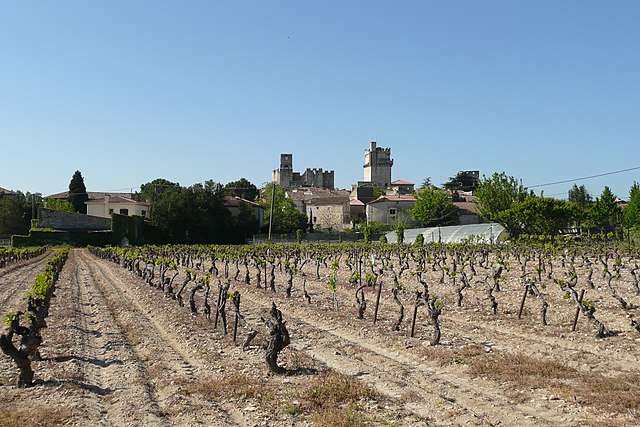
Roquemaure had a royal château in the Middle Ages, but only the ruins of two towers remain. Pope Clement V died in the castle in 1314.
Roquemaure was a river port and is notorious as the place where the North American phylloxera insect that attacks grape vines was introduced into France in the 1860s.
After crossing the river north of Roquemaure, Stage 16 passes through Châteauneuf-du-Pape.
The intermediate sprint takes place after 112.4km raced.
Green jersey competition: from 20 points for 1st place down to 1 point for 15th place.
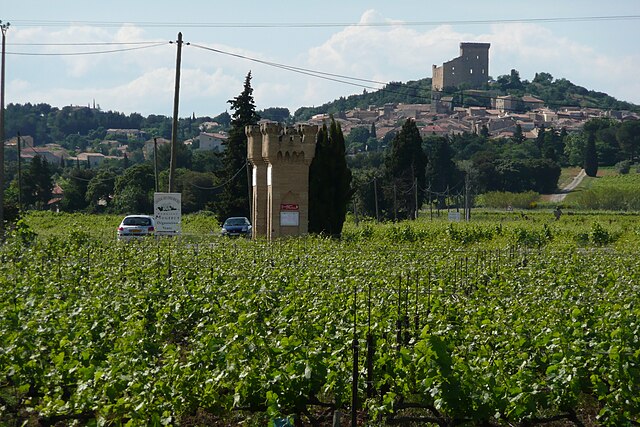
Châteauneuf-du-Pape owes its existence and fame to the Avignon Popes.
Popes were based at Avignon between 1309 and 1377. At the time, Avignon was in the Kingdom of Arles, which was part of the Holy Roman Empire. It was nevertheless strongly influenced by the French King.
The move to Avignon came about as a result of a power struggle between the Roman Catholic church and King Philip IV of France. Allies of the French King broke into the residence of Pope Boniface VIII and beat him up; the Pope died soon after.
Pope Clement V was French and a personal friend of the French King. Clement wanted to get away from the fighting between powerful Roman families, and he moved to Avignon, which was surrounded by the Papal lands of the Comtat Venaissin.
The Papal court in Avignon was very lavish and decadent.
In 1377, Pope Gregory XI moved the Papal court back to Rome.
When Gregory died in 1378, a new Italian Pope was elected, but the French Cardinals elected a different Pope (or antipope) who was based in Avignon. This is known as the Western Schism, and the situation lasted until the Avignon Pope was expelled from the city in 1403. Thereafter, there were antipopes until 1437.
Châteauneuf-du-Pape is a village and ruined castle north of Avignon.
The castle was built for Pope John XXII. At the time, the wines made around Avignon were ordinary.
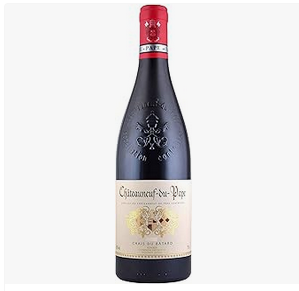
The Avignon Popes liked Burgundy wine, but they also promoted local wines and improved the standards of wine-making. Under John XXII, the wines became known as 'Vin du Pape'. They increased in quality until phylloxera hit.
Thereafter, the wine was used mostly to boost the strength and alcohol levels of Burgundy.
However, Châteauneuf-du-Pape was able to reestablish a reputation. In the 1920s, various rules for its production were drawn up, and this became a template for the French appellation d'origine controllée system.
Part of the area where Châteauneuf-du-Pape is produced has galets roulés, which are pebbles that have been smoothed over thousands of years by the river. They retain heat at night, helping grapes to ripen faster.
Châteauneuf-du-Pape can be red or white, but the majority is red.
It is made from grapes of the 18 officially-approved varieties, including Grenache noir, Syrah and Mourvèdre.
Châteauneuf-du-Pape red wines are earthy with hints of tar and leather. The skins of the grapes are important in the wine-making process, providing high levels of tannins and a dark red colour.
From Châteauneuf-du-Pape, the race continues east to Courthézon, Sarrians and Aubignan.
Then it's on to Caromb and Bédoin. Bédoin is a village at the foot of Mont Ventoux.

Stage 16 finishes with an ascent of Mont Ventoux from Bédoin. It is 15.7km at an average 8.8% to a height of 1,910m.
Love Velo says that there are three ways up Mont Ventoux, but 'for the purists, it's the ascent from Bédoin which is steeped in history'. It adds:
'...the Ventoux climb is a cycling route that tests you to your very limits. The gradient never lets up. The landscape is wild and inhospitable and the weather is unpredictable'.
When climbing from Bédoin, you go through a forested section before reaching Chalet Reynard and the barren, lunar landscape above it.
KOM competition at the finish line: from 20 points for 1st place down to 2 points for 8th place.
Green jersey competition at the finish line: from 20 points for 1st place down to 1 point for 15th place.
Time bonuses at the finish line:

Mont Ventoux is 1,912 high, with a rocky top, known as the desert de pierre (the stone desert). The stone makes it look snow-capped from afar, even when it isn't.
It has an Observatory on the top. Views from the summit of Mont Ventoux are over Provence and the southern Alps.
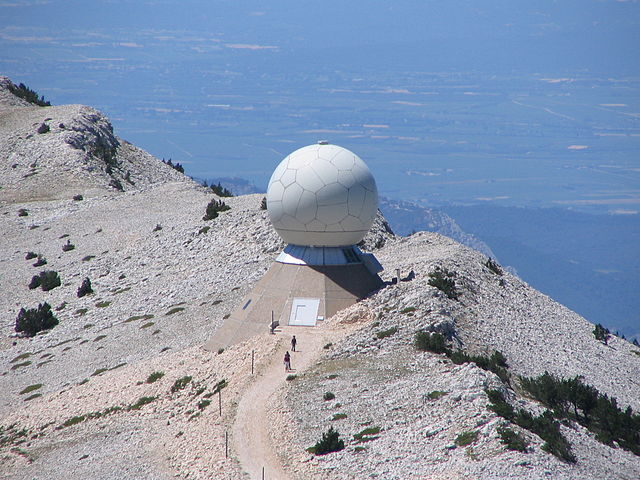
The mountain's forests were felled 400 years ago for ship building, but there has been some reforestation.
Some species of animal are found only on Mont Ventoux (not the rest of Provence) - including the snake eagle, and some spiders and butterflies.
It's very windy at the top. Winds have been recorded at up to 300kmh. It is also much colder than on the surrounding plains. The normal rule is that you lose between 0.5 and 1C per 100m you go up.
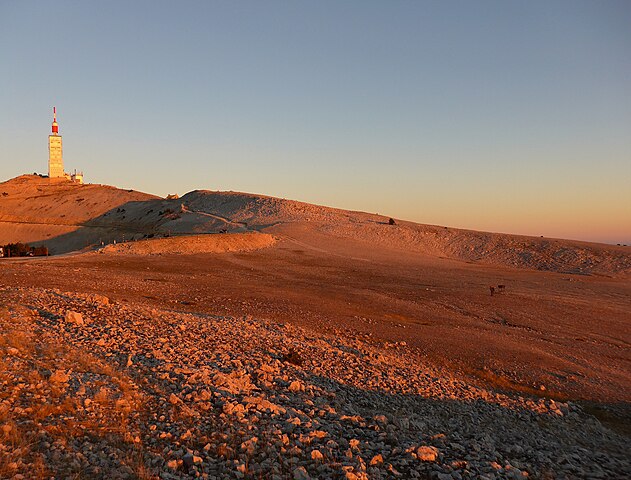
In the Summer, there are guided night-time walks up the mountain from Malaucènes (west of Ventoux).
You set off about 9.30pm, with torches, and after a break on the way up, you arrive at the ski resort of Mt Serein (1,428m) at 2am. You sleep there until 3.30, then get up and complete the ascent, arriving at 5.30 for a 6am sunrise.
As well as the views from the very top, the joys of it are the stars and the lights of the villages, and the scent of lavender and pine.
There have been some great races to the summit of Mont Ventoux.
On Stage 15 of the Tour de France 2013, Chris Froome won ahead of Nairo Quintana.
On Stage 12 of the 2016 Tour, Froome decided that cycling was too easy and he needed to take part in a duathlon.

Favourites for Stage 16 of the 2025 Tour de France will inevitably include Tadej Pogacar and Jonas Vingegaard. Let's hope it's an interesting battle, not a one-man show.
Other possible contenders include Kévin Vauquelin, Primoz Roglic, Florian Lipowitz, Felix Gall, and maybe Oscar Onley.
Who do you think will win Stage 16 of the 2025 Tour de France?

Master Lock wall-mounted key safe, price £16.00 from Amazon at the time of writing (affiliate link).
'The main thing about this key lock is how secure your keys are as it's so well made' - Amazon reviewer.
As an Amazon Associate, I earn from qualifying purchases.

Bike Rides in the Yorkshire Dales is available in colour paperback.
Find out more about Bike Rides in the Yorkshire Dales or buy a copy.

Bike Rides In and Around York features a historical city tour, plus family rides, road rides, and mountain bike rides.
Find out more about Bike Rides In and Around York or buy a copy.

Bike Rides in Harrogate and Nidderdale is a book of family, mountain and road bike rides.
Find out more about Bike Rides in Harrogate and Nidderdale or buy a copy.

Find out more about Mountain Bike Rides in the Yorkshire Dales.
Buy Mountain Bike Rides in the Yorkshire Dales at £8 + P&P.

Garmin Edge Explore, £197.99 at the time of writing.
Garmin Edge Explore on Amazon (affiliate link).

Faster by Michael Hutchinson on Amazon (affiliate link).


