
CWIS3 Published
The government has published its Third Cycling & Walking Investment Strategy (CWIS3).
It follows a consultation on a draft CWIS3 in Autumn 2025.
The strategy is set out in a document organised as follows:
- Foreword
- A 10-year target for active travel
- A new cross-government approach
- A locally-designed national strategy
- The first 5 years
- Financial resources
- Active Travel England
- Cross-government working
- Summary of commitments
Foreword
The Foreword by Ministers Heidi Alexander and Lilian Greenwood talks about the well-known benefits of active travel.
It mentions cross-government working – integrating active travel into health, planning, physical activity and cost of living policies.
The Ministers want to prioritise schools:
‘Between 2025/26 and 2029/30 we will prioritise building safe, coherent networks around schools, giving children the confidence and freedom to travel independently.
We will also invest in building regional capability – ensuring local authorities have the skills, leadership and delivery confidence required to turn their ambition into infrastructure on the ground’.
The Foreword mentions a proper national active travel network for England – but then talks about mapping and route-planning apps. There isn’t much point in maps if the routes aren’t there in the first place.
A 10-Year Target for Active Travel
Vision
The Vision is for walking, wheeling and cycling to be safe, easy and accessible choices for everyone, with a target of 55% of all short stages in towns and cities to be walked or cycled by 2035.
Objectives
There are three objectives.
- Enable more people, particularly the least active, to benefit from physical activity through active travel.
- Make active travel the easy and integrated choice.
- Improve safety for people walking, wheeling and cycling.
The government is looking to achieve certain outcomes by 2035.
One is that 60% of children aged 5-16 usually walk or cycle to school. Another is 5.3 million more people physically active through active travel.
A third is 600 million more cycling stages in towns and cities.
CWIS3 promises that people across England will see visible changes by 2030.
Three details include:
- every Mayoral Strategic Authority will have a funded, phased active travel network plan
- a national Safe Routes to School programme will be under way at visible scale
- Active Travel England (ATE) will ensure new housing and development plans include high-quality active travel provision from the outset
A New Cross-Government Approach
This section notes that increasing active travel is the DfT’s most direct contribution to the government’s Health Plan.
There will be a cross-departmental working group to track progress against the targets and objectives in CWIS3.
A Locally-Designed National Strategy
The government says it is giving funding to Mayoral Strategic Authorities and local authorities, and passing responsibility to them for delivery.
‘…we will set the framework through which authorities must deliver high quality, accessible active travel routes that form coherent local networks, making active travel a safe and easy choice.
Our aim is for authorities to have the freedom to plan local networks that meet national quality standards.’
The strategy says that Mayors receiving the Integrated Settlement or the Mayoral Transport Fund have already signed up to deliver 3,500 miles of safer routes.
The First 5 Years
Connecting Schools to Homes and High Streets
‘Over the next five years of this strategy, we will focus first on enabling millions more children to walk, wheel and cycle to school by providing safe, coherent networks that connect schools, high streets and homes.
Giving children the freedom to walk, wheel and cycle in early life will set habits and deliver health benefits for generations to come’.
This will be achieved by:
- tackling pavement parking (partially)
- bringing in side road zebras by 2028
- updating the Manual for Streets
- giving local leaders powers to deliver shared cycle schemes
- revising Setting Local Speed Limits guidance
- delivering an HS2 active travel legacy – an uninterrupted active travel route between London and Birmingham, away from traffic and connecting to towns and villages along the route
- connections to rail: new cycle parking actively considered by Great British Railways; ATE to publish a framework to assess the quality and connectivity of walking, wheeling and cycling routes to stations as well as cycle parking provision
- hoping that National Highways will make a contribution to wider active travel networks on and around the Strategic Road Network
Mapping a National Network
‘By 2030, ATE will establish the basis for a national active travel network by connecting the high-quality local routes already built, funded or planned.
This means treating existing programmes as parts of one system rather than separate initiatives…’
ATE is to update LCWIP guidance to help develop local networks, and publish rural design guidance.
There’s also to be work on signing and wayfinding.
‘A signing system for active travel already exists, but delivery has been inconsistent. Routes are often poorly signed, fragmented and less intuitive than those for driving.
Over the next five years we will therefore plan, pilot and begin delivering a national wayfinding system that turns signs, symbols, naming and information into a practical tool for everyday movement’.
By 2030 there is to be a single digital platform showing a national network, and new on-street wayfinding standards.
Financial Resources
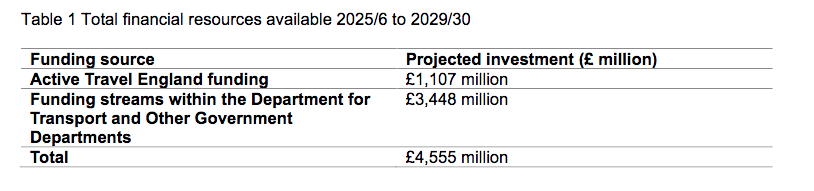
The headline figure for funding of active travel over 5 years is £4.56 billion.
This is not new money, but a summary of existing funding streams, including:
- money distributed by ATE
- Transport for City Regions
- City Region Sustainable Transport Settlements
- Local Transport Grant/Integrated Transport Block
- Integrated Settlements
- Mayoral Transport Fund
- Integrated Transport Fund
- Highway maintenance funds
- Pride in Place programmes
- National Highways money
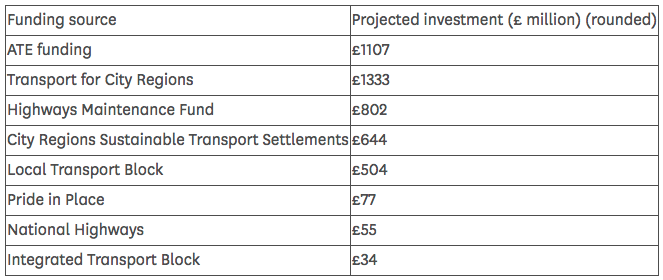
The Minister made a further clarification in reply to another Parliamentary question.
CWIS3 notes that authorities have the flexibility to spend active travel funds on other priorities, or to invest other transport funding in active travel.
Active Travel England: Local Partner, National Coordinator
CWIS3 says that ATE acts as ‘a delivery accelerator’ by building capability, assuring quality and providing hands-on support.
It will provide oversight and assurance of the investment in the CWIS3, and report on progress towards the targets and objectives in it.
Cross-Government Working
The cross-government working section of the strategy document outlines the way active travel fits in with other government priorities and departments.
Physical activity has beneficial impacts on physical and mental health.
People who walk to the high street typically spend 40% more than those who drive, which boosts the economy.
On net zero, CWIS3 says that if the 2035 targets are met then that will result in 700 million fewer vehicle miles.
The DfT and ATE are to work closely with the Department for Education on new walking, wheeling and cycling routes to schools.
Summary of Commitments
The final section summarises the commitments made in CWIS3.
Among them are:
- 55% of all short stages in towns and cities to be walked or cycled by 2035
- 60% of children aged 5-16 usually walking or cycling to school by 2035