
York & North Yorkshire Strategic Transport Framework
York & North Yorkshire Combined Authority (YNYCA) adopted a Strategic Transport Framework at a meeting last week.
It is a precursor to a Local Transport Plan (LTP) for the region. The LTP is likely to go out to consultation later in 2025.
The LTP ‘…will include a comprehensive assessment of the carbon impacts of transport and will outline the potential measures to help ensure transport contributes to the Transition to Carbon Negative’.
Councils have been waiting for LTP guidance for some years, but it was repeatedly delayed by Mr Sunak’s government. Under the current Labour government it is not expected until much later in 2025.
YNY’s Strategic Transport Framework is intended to align with the Mayor’s Economic Framework and Growth Plan.
Mayoral Funding and Powers
The Framework says that YNYCA has £540 million over 30 years, plus Local Transport Fund money from April 2025.
‘This will empower the Mayor to drive impactful projects across the region that will attract further investment’.
The Combined Authority will work with the government and Transport for the North on business cases for strategic transport interventions. It will develop a transport assurance framework which will comply with the government’s value for money policies.
It is the Combined Authority that produces an LTP, and that’s the main way that the Mayor will influence the two highways authorities, North Yorkshire Council and City of York Council.
Mayor’s Vision
The Mayor’s overall vision for the region is:
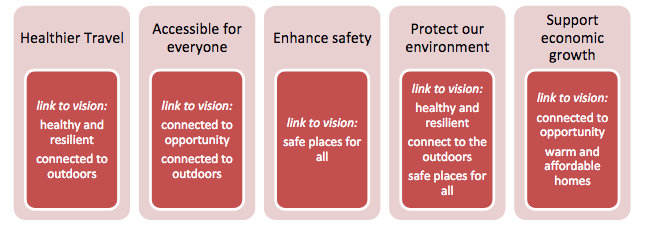
‘…to make healthy and resilient communities, that are connected to opportunity, where people live in warm and affordable homes, where people are connected to the outdoors and where there are safe places for all’.
Among the Mayor’s transport priorities are developing an Integrated Transport System, and appointing an Active Travel Commissioner.
The Framework also says (para 1.14):
‘The delivery of a safe, efficient, sustainable and affordable transport system is a key element in facilitating strategic growth plans for the York and North Yorkshire area’.
The Current Transport Picture
At present, there is a mixed transport picture across the region.
York is the top place for commuting by public transport, and has the lowest transport emissions. Selby has the lowest public transport use and the highest emissions.
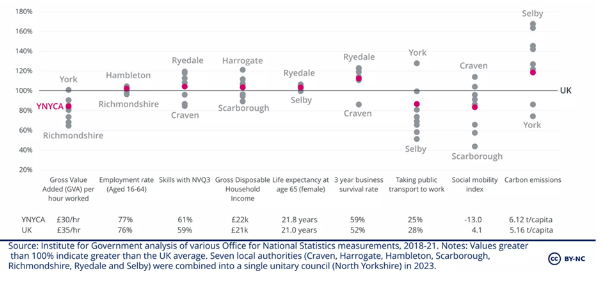
Private car journeys account for most rural trips, and distances to everyday destinations are often longer in the countryside.
Transport Objectives
The Mayor’s five transport objectives are:
- healthier travel
- accessible for everyone
- enhance safety
- protect our environment
- support economic growth
The goal is to deliver an Integrated Transport Network that delivers decarbonisation, choice and availability.
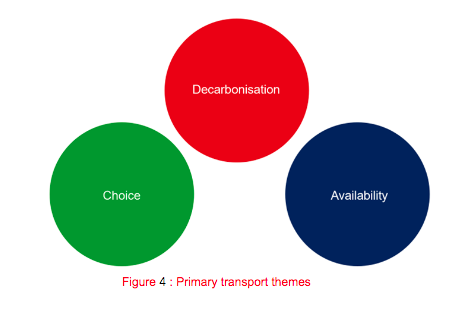
Public realm and active travel improvements are relevant to choice and decarbonisation.
Challenges include (para 4.2):
- the ability to provide real alternatives to the car for many journeys in the region, including improved provision for pedestrians and cyclists on existing roads
- decarbonisation of the transport network, including vehicles and infrastructure
- resilience to the impacts of climate change
National government is developing an Integrated Transport Strategy for England, which will empower local leaders to deliver solutions.
The Mayor’s Strategy
The Mayor’s Strategy will be crystallised in the future LTP, but it is likely to include these targets (para 5.3):
- deliver net zero by 2034
- reduce vehicle miles driven across the region
- increase active travel mode share
- increase bus use
There will be more specific targets in the LTP.
Active Travel
The active travel strategy is in paras 5.11 to 5.14. The Framework says:
‘The Mayor will work with CYC and NYC to source funding for expansion of a safe and secure active travel network that encourages day to day walking, wheeling and cycling for commuting and leisure purposes, including safe storage facilities for cycles.
This expansion will also recognise the importance of active travel as a key part of the tourism market in our area, with many long distance cyclling and hiking paths generating benefits to local economies.
Micromobility will also be explored, ways to incorporate e-cycles, e-scooters and similar electric mobility options, particularly their application in rural contexts to make more journey types possible for more people.
The Mayor’s vision commits to ensuring that active travel is a core part of an integrated transport network. In the long term this means a comprehensive network of lit, well-maintained walk, wheel and cycle routes across the Combined Authority.
The Mayor will appoint an Active Travel Commissioner that will provide a figurehead and expertise for this network, working with Active Travel England, highway authorities, land owners and businesses to provide facilities for walking and wheeling, promoting and encouraging the uptake of these modes of transport across the CA area’.

Travel hubs will link rail and bus services with active travel, car clubs, e-bike hire and Park & Ride (para 5.15).
The Framework says that decarbonisation will be integral to highway maintenance (para 5.18).