Cycling in Yorkshire & Beyond

Cycling in Yorkshire & Beyond

Stage 3 of the Tour de France 2025 is a 178.3km flat stage from Valenciennes to Dunkerque.
The peloton rides through Béthune on the way to a climb of the Mont Cassel. Then the race heads north to the Channel coast at Dunkerque.
In principle this is a sprint stage, but there's a chance of crosswinds and echelons.

This is the race report for Stage 3 Tour de France 2025.
These are video highlights of Stage 3.
Race Details | Poll | Map & Profile | Timings | Videos | Food & Drink | Route Notes | Favourites
| Date | Monday 7th July 2025 |
|---|---|
| Stage classification | Flat |
| Distance | 178.3km |
| Intermediate sprint | Isbergues |
| Climbs | Mont Cassel (Cat. 4) |
Vote for one of the main contenders to win Stage 3.
This is a map of the route of Stage 3, Tour de France 2025.

This is a zoom-able map of Stage 3 Tour de France 2025.
This is the profile of Stage 3 Tour de France 2025.

| Caravan | Fast Schedule | Slow Schedule | |
|---|---|---|---|
| Start Time (départ fictif) | 1110 |
1310 |
1310 |
| Start Time (départ réel) | 1125 |
1325 |
1325 |
| Intermediate Sprint Isbergues | 1414 |
1559 |
1614 |
| Mont Cassel Climb | 1456 |
1637 |
1656 |
| Finish Line (178.3km) | 1540 |
1718 |
1740 |
This is a video of the route of Stage 3 Tour de France 2025.
The last time the Tour de France visited Dunkerque was for the start of Stage 4 of the 2022 edition - a race won by Wout van Aert in Calais.

One local speciality in Dunkerque is carbonade flamande, a beef and onion stew made with beer. Coq à la bière is chicken in a creamy beer sauce - and we start to understand how popular cooking with beer is.
Moules frites are also popular.
A local cheese called Maroilles is used to make a tart known as flamiche.
Genièvre is better-known as Jenever, or Dutch gin. Traditionally, it was distilled wine or beer, flavoured with juniper berries.
When Jenever is drunk alongside beer as a chaser, it is referred to as a kopstoot (headbutt).
Over half of France's breweries are based in the Hauts-de-France region, and they produce blond, brown, amber and golden ales.
One French bière blonde that's available online is La Goudale. Buy a bottle of La Goudale beer.
Buy a bottle of Appel Jenever (affiliate link).
The stage starts in Valenciennes (départ fictif).

Valenciennes is a town of 41,000 people on the river Scheldt.
The town developed under the Frankish Empire, and was later part of the Spanish Netherlands. La Maison Espagnole, dating from the time of Spanish occupation, is now the tourist office.
In the 1500s, Valenciennes prospered from manufacturing wool and fine linens, in the 1700s from lace-making, and in the 1800s from sugar-refining and coal-mining.
Valenciennes suffered in both World Wars. The German Hindenburg defensive line ran through it in World War I, leading to extensive destruction of the town. The town centre was devoured by a fire when the Germans occupied it at the start of World War II.
The façade of the Town Hall (pictured above) survived the two conflicts.
One modern-day industry is car-making : the Toyota Yaris is assembled near Valenciennes.
The peloton heads north out of Valenciennes to Bruay-sur-l'Escaut. The départ réel is on the Rue Jean-Jaurès in Bruay.
The riders turn left on Boulevard Marcel Cachin, then join Rue Berthelot. They continue on Rue Michel Brabant and go west past the Marais Foucard.
Next, on Rue Léopold Dusart, the peloton passes the Terril Sabatier Sud (a slag heap left over from old mine workings).

The route passes close to the Château de la Princesse Arenberg and reaches Raismes.

Now Stage 3 heads goes through la Forêt de Raismes-Saint-Amand-Wallers. The riders soon reach Saint-Amand-les-Eaux.

Saint-Amand-les-Eaux is a town on the river Scarpe.
There was an Abbey here from the 630s until the French Revolution in 1789. A tower on the Grand Place remains from the Abbey, and it has a carillon with 48 bells.
The building pictured above is called L'Echevinage and dates from 1632. It was a primary entrance into the Abbey. It later served other purposes, including as a Magistrates Court.
As the town's name suggests, there are thermal baths at Saint-Amand. There were also faïence (tin-glazed pottery) factories from the 1700s.
The route continues to Rumegies, Aix-en-Pévèle and Orchies.

Orchies used to have a Chicory Museum but it has now closed because there were only 6,000 paying visitors per year. The company Leroux, sellers of chicory products, is based here.
Chicory is a herbaceous plant. It's leaves can be added to salads, and its roots are used for various things including as a coffee substitute.
From Orchies the race continues to Mons-en-Pévèle.
Mons-en-Pévèle is known for being on the route of Paris-Roubaix.

Paris-Roubaix is a one-day race which has been held since 1896.
It takes place in early April, and is one of the Spring Classics. It's known as one of the 'Monuments' - the most important one day races.
The riders must cover sections of cobblestones which are either slippy or dusty depending on the weather. Because of the difficult terrain, or perhaps because of the state of the route after World War I, the race is known as 'the Hell of the North'.
Mons-en-Pévèle is a 5-star cobbled sector, i.e. very difficult.
The finish is in Roubaix velodrome. The winner receives a cobblestone.
Mathieu van der Poel won in 2023, 2024 and 2025.
Stage 3 continues to Wahagnies, Seclin, Gondecourt, Annoeullin and Douvrin, before passing through Béthune.
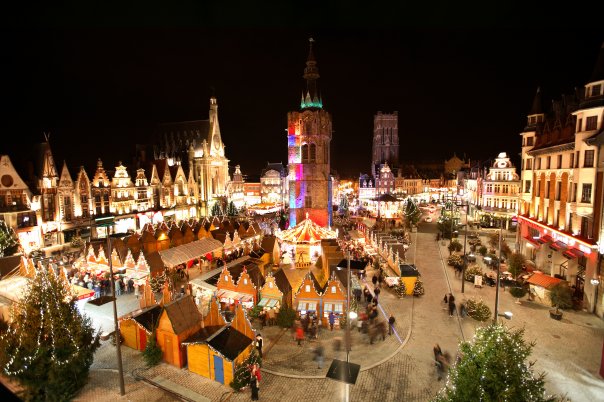
Béthune is a town of around 25,000 people. It has a central Grand Place and belfry.
It was an important railway junction and command centre for British Canadian and Indian forces in World War I. It was badly damaged during an offensive by German troops in 1918.
The town was damaged again in 1940 when it was attacked and captured by SS Panzer Division Totenkopf.
Béthune's belfry has 36 bells and plays melodies every 15 minutes. They include a lullaby in the local ch'ti dialect.
Now Stage 2 continues west to Chocques and Lillers, before heading north to Isbergues (a coal-mining and steel-producing place). The intermediate sprint is at Isbergues.

Isbergues has swamps that were conducive to growing watercress. Later, the land was drained and used for metal-working.
People like the Histoire de Bistrot Hotel in Isbergues. One Tripadvisor reviewer says there was an impeccable welcome, a beautiful setting, and a meal that was 'just excellent'.
There are green jersey points available at the intermediate sprint in Isbergues, from 20 points for 1st place down to 1 point for 15th place.
Next on the route is Aire-sur-la-Lys.

Aire-sur-la-Lys is a town on the river Lys and in the Pas-de-Calais département.
Historically it was part of Flanders, but then joined the County of Artois in 1196, before being ruled by the Burgundians. It became part of France in 1713 under the Treaty of Utrecht.
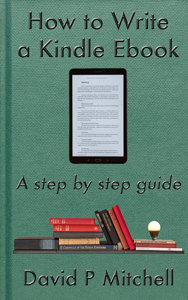
How to Write a Kindle Ebook is a step by step guide to writing and publishing an ebook on Amazon.
It takes you through the process of writing and formatting it using Microsoft Word, then uploading it to Kindle Direct Publishing and selling it on Amazon.
There's advice and guidance at every stage, with examples including screenshots, and tips on how to overcome practical problems you're likely to encounter.
How to Write a Kindle Ebook will be your reliable and trusted companion as you write and publish your own book.
'I find this a really helpful and informative guide to e-book writing and recommend to others' - reviewer on Amazon.
Buy the ebook or the paperback on Amazon.
The race continues north to Wallon-Cappel (just west of Hazebrouck) on an exceptionally straight road - explained by the fact that it's an old Roman road.
Stage 3 reaches Cassel.
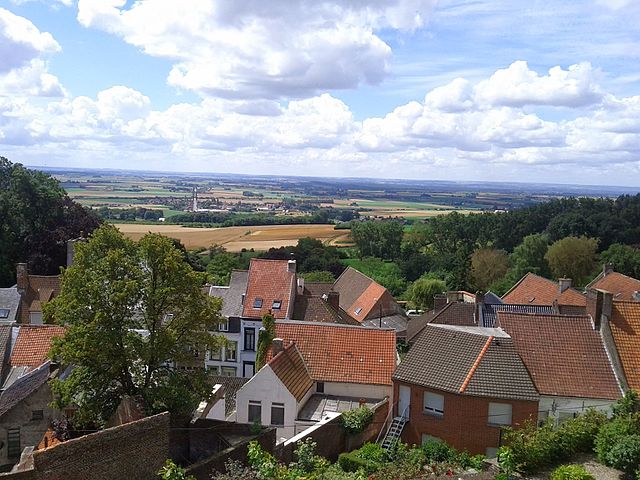
The Mont Cassel is the only categorised climb of the stage. Cassel has already featured in Stage 1, although this time the riders climb a different way up through the village.
It's 2.3km at an average 3.8%, peaking at a modest 144m.
There is 1 point in the KOM competition for 1st place.
Today's battle at Cassel isn't the first. In 1677 during the Franco-Dutch War, the French army commanded by Philippe Duke of Orléans defeated a combined Dutch-Spanish force.
Now the riders join the D916 and race on northwards via Wormhout, Quaëdypre and Bergues.

Bergues was the setting of Bienvenue Chez les Ch'tis, a 2008 movie which made more money than any other French film.
Stage 3 then reaches Dunkerque on the Channel coast.

Stage 3 ends with a probable sprint finish in Dunkerque.
The riders arrive in Dunkerque on the D916 Route de Bergues, passing the Parc du Fort Louis. The Route de Bergues runs alongside the Canal de Bergues.
The road bends right and becomes the Boulevard Victor Hugo. It's still next to a branch of the canal. From a certain point it is called Rue de la Cunette.
The finish line is on Rue de la Cunette, across the water from the Stade Marcel Tribut.
The finale of Stage 3 could not be any more straightforward than it is.
There are green jersey points available at the finish line, from 50 points for 1st place down to 2 points for 15th place.
There are also time bonuses as follows:

Dunkerque, or Dunkirk, is near the northern tip of France and is a major port. The name comes from Flemish, and means 'church in the dunes' (Wikipedia).
The Count of Flanders built a town hall here around AD960 to protect the settlement from Viking raiders. The surrounding wetlands were drained and cultivated by the monks of Bergues Abbey.
Dunkirk became part of Burgundy (1384) and then part of the Habsburg Empire (1581). It even had English governors in the 1600s, but King Charles II of England sold it to France in 1662.
Dunkirk was bombarded by the Germans in 1917, during Word War I.
Dunkirk is known for the evacuation of the British Expeditionary Force in World War II. British soldiers had been assisting the French and Belgians, but retreated to Dunkirk in the face of German Panzer attacks. Churchill ordered any ship or boat available to collect soldiers from Dunkirk, and 340,000 men were evacuated as part of Operation Dynamo, or the miracle of Dunkirk. Vehicles and military equipment were left behind.
The town was largely destroyed at the end of the second war by Allied bombing.
A Dunkirk speciality is coq à la bière. It is chicken in a creamy beer sauce (see Food and Drink above).
The Four Days of Dunkirk is an important bike race in the area.
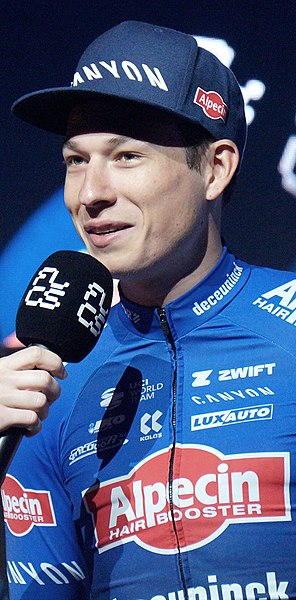
Unless it is disrupted by crosswinds and made selective, Stage 3 is likely to end in a bunch sprint.
Jasper Philipsen (Alpecin Deceuninck) could win. Who are the other candidates? They include Jonathan Milan (Lidl Trek), Tim Merlier (Soudal Quick-Step) and Dylan Groenewegen (Jayco AlUla).
Who do you think will win Stage 3 of the 2025 Tour de France in Dunkerque?

Samsung Galaxy A15, price £92 from Amazon at the time of writing (affiliate link).
As an Amazon Associate, I can theoretically earn a small commission from qualifying purchases.

New in 2023, Bike Rides in the Yorkshire Dales is available in colour paperback.
Find out more about Bike Rides in the Yorkshire Dales or buy a copy.

Bike Rides In and Around York features a historical city tour, plus family rides, road rides, and mountain bike rides.
Find out more about Bike Rides In and Around York or buy a copy.

Bike Rides in Harrogate and Nidderdale is a book of family, mountain and road bike rides.
Find out more about Bike Rides in Harrogate and Nidderdale or buy a copy.

Find out more about Mountain Bike Rides in the Yorkshire Dales.
Buy Mountain Bike Rides in the Yorkshire Dales at £8 + P&P.

Garmin Edge Explore, £197.99 at the time of writing.
Garmin Edge Explore on Amazon (affiliate link).

Faster by Michael Hutchinson on Amazon (affiliate link).


