
Car Use in York & N Yorkshire Must Be Cut by 48%
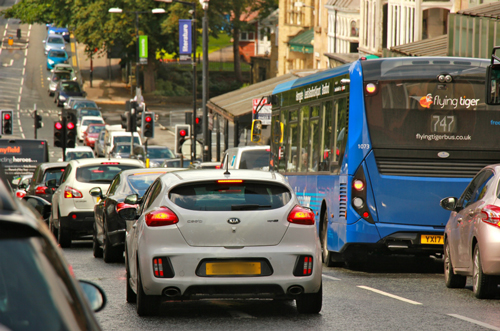
Car use in the York & North Yorkshire region must be cut by 48% by 2030, and cycling increase by 900%.
Those are two of the targets set out in York & North Yorkshire’s Routemap to Carbon Negative, which was the focus of a meeting of York & North Yorkshire’s Local Enterprise Partnership (YNY LEP) Board on 22nd July 2022.
YNY LEP is leading on the Routemap, but it is described as a ‘co-owned plan’ – co-owned by York and North Yorkshire’s local authorities, public bodies, utilities and big businesses. North Yorkshire County Council (NYCC) Leader Carl Les and City of York Council (CYC) Keith Aspden both attended the meeting.
The Routemap sets out how the region can achieve its targets:
- to reach net zero by 2034 and
- to be carbon negative by 2040
Background to the Routemap and Next Steps
The Routemap is based on a number of documents, including the Emissions Reduction Pathways for York & North Yorkshire.
An initial consultation was held from 28th February to 17th March 2022.
Implementation will be overseen by YNY LEP’s Board until new structures are in place when a York & North Yorkshire Mayoral Combined Authority is set up.
The Routemap will be formally launched at the YNY LEP’s Business Summit in October 2022.
Gap Between Words and Actions
It’s worth noting that at the time of writing, YNY LEP’s website features:
- an article praising a multi-million pound road expansion project at J47 of the A1M
- a consultation on a multi-million pound road expansion project on the A64 north east of York
Journey to Carbon Negative
Chapter 2 of the Routemap is titled The Journey to Carbon Negative.
It says that the Routemap’s objectives include:
- providing strategic direction and a coordinated approach to decarbonisation
- catalysing collaborative action at pace and scale
It focuses on priorities and actions from 2022 to 2027, because decisions at national level will impact York & North Yorkshire’s pathway to net zero beyond 2027.
Enabling Transformation
Chapter 3 on Enabling Transformation notes that business as usual and incremental changes are not enough. ‘Drawing on systems thinking and change management principles, we will achieve the vast scale of change set out in this document.’
There needs to be a strategic and holistic approach to enable change across the region. ‘Enablers’ will create the conditions for York & North Yorkshire to decarbonise at pace and scale.
‘These enablers are inter-related and intrinsic to each other, with all elements required to achieve systemic change. An important outcome of delivering these enablers is behaviour change – through making it easy for people and organisations to take steps to reduce their carbon footprint.’
p17 of the routemap to carbon negative
One of the ‘enablers’ is research, planning & strategy, and here an intervention is a review of local planning policy, so that local planning policy supports the strategic objectives in the Routemap.
Another ‘enabler’ is communication, engagement and movement-building. The Routemap says it’s important to get people and organisations actively engaged.
‘We now know what we need to do to get to net zero and beyond to carbon negative, but communicating these solutions and obtaining buy-in remains a huge challenge…As a region, want to go beyond developing buy-in from people, and provide the conditions for organisations, communities and individuals to have a leadership role in taking climate action. To tackle the climate crisis and achieve our carbon negative ambition, we need a critical mass of people to be engaged, empowered and working together to take action. This includes within communities, businesses and other organisations to develop low carbon projects and embed net zero across all functions of an organisation, or parts of a community.’
communication as an enabler, p19 of the routemap to carbon negative
Another enabler is collaboration and innovation. Organisations collaborating will include local authorities (NYCC and CYC), academic institutions, businesses and other bodies.
Transport

The Routemap’s vision for transport is to make it easy for people to make green travel choices.
The document sets out the scale of the ambition on transport.
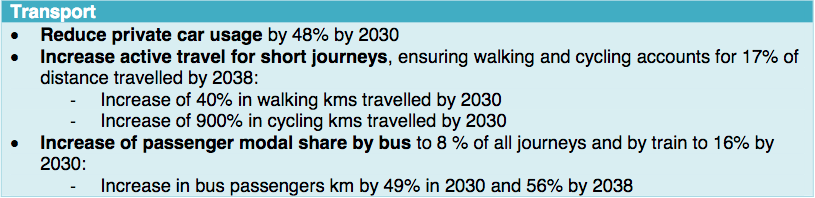
This includes:
- reducing private car use by 48% by 2030 (the Max Ambition pathway from Emissions Reduction Pathways)
- increasing walking by 40% by 2030
- increasing cycling by 900% by 2030
Modal share for public transport must increase by 2030:
- so 8% of all trips are by bus and
- 16% of trips are by train
2% of van traffic is to be replaced by cycle freight.
The Routemap sets out why, what, how and who for decarbonising transport.
Why?
Transport is the highest greenhouse gas emitting sector in the region, so needs to be tackled. The challenge is to develop an integrated multi-modal transport system where people can move seamlessly between green travel options.
‘As outlined in the strategic priorities for transport, we are taking a travel hierarchy approach to prioritise the greenest forms of travel. We need to ensure that active travel, public transport and shared mobility schemes are easy, quick and affordable.’
p43 of the routemap to carbon negative
What?
The what includes:
- developing infrastructure for active travel
- planning 15 minute neighbourhoods
- increasing use of public transport
- shifting to low-carbon vehicles, including car clubs, electric vehicles, electric bikes, and e-scooters
- enabling cleaner logistics
How?

Actions include:
- reallocate road space to cycling and walking
- develop and implement LCWIPs
- expand car clubs
The Routemap talks about a coordinated approach to active travel.
‘Coordinated approach to active travel ensuring routes are safe and convenient for people, villages and nearby towns are connected, and access to the outdoors (without using a car) is improved.’
p45 of the routemap to carbon negative on coordinated approach to active travel
Gap Between Words and Actions
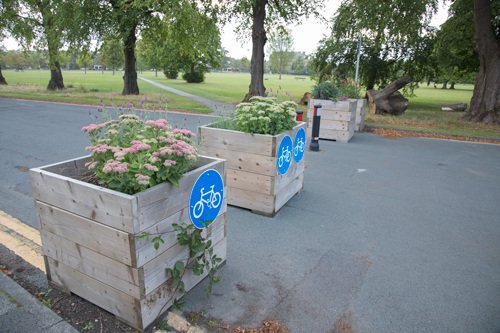
It’s hard to read this without thinking about the gap between the words and the actions we see in practice in council transport decisions.
NYCC put in a really good active travel scheme on Beech Grove for an 18-month experiment. It created a safe pedestrian crossing, a safe cycle route into town, and it made trips by car slightly less convenient – exactly the strategy in the Routemap.
Some residents complained that it made car trips less convenient, and NYCC took the scheme out – prioritising short trips by car over safe active travel facilities.
It is not clear that the Executive Member for Transport who took the decision is even aware of the Routemap strategy for the region.
Communication, Engagement and Movement-Building
Still in the How? section, the Routemap says there should be a transport-focused engagement campaign.
‘As part of the region-wide public campaign, design and deliver a transport focused engagement campaign that targets all key stakeholders to raise awareness of green transport options and incentivise behaviour change.’
p45 of the routemap to carbon negative
Investment

Investment should be focused on low-carbon travel choices, including maintenance of cycle routes and pavements in Winter.
Who?
Who is primarily local authorities through their Local Transport Plans.
Other actors include the wider public sector, institutions in the region, the private sector, and Transport for the North.
Challenges & Risks

The Routemap says the rural nature of the region makes it harder to decarbonise transport. That is true of a lot of the region, but not of Harrogate and York – and in Harrogate and York, we are not seeing active travel being prioritised; motor vehicles continue to be given precedence.
It also says that increasing active travel relies on behaviour shift, and this is ultimately a personal choice. That is not true in the sense that if you make active travel safe and the most convenient option, people will take it up – as in Munster. If, as now, local authorities make cycling marginal and dangerous, people will not take it up in numbers.

Another challenge and risk is that existing plans to upgrade major roads – like York Outer Ring Road the A64 – may increase the use of private cars. They will, so the plans should be torn up.
Umbrella Strategy
The Routemap is an umbrella strategy for the region.
York has its own draft Climate Change Strategy. The city is aiming to reduce private car use by 25% by 2030 (but does not have policies in place to reduce private car use at all).
NYCC declared a climate emergency on 5th July 2022. It is developing a climate change strategy and will consult on it early in 2023, it says.