
Active Travel England at the Transport Select Committee – Part 1
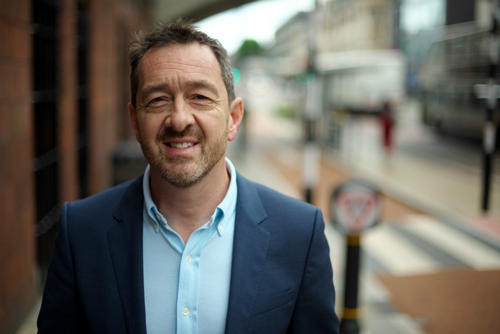
Active Travel England (ATE) appeared in Parliament before the Transport Select Committee on Wednesday 7th September 2022.
The two witnesses were CEO Danny Williams and National Active Travel Commissioner Chris Boardman. The Chair of the Select Committee is Huw Merriman MP.
The session lasted nearly 2 hours, and provided great insight into the way ATE intends to work. Since there’s a lot of interesting detail, I’ll split it into more than one post.
1) A Long-Term Plan
In opening remarks, Danny Williams (DW) said that ATE is committed to a long-term and robust plan for making active travel happen.
Chris Boardman (CB) pointed out that where there is sustained investment, the number of people walking and cycling will rise. For example:
- in London there has been a 25% increase in active travel on pre-pandemic levels
- in Manchester, active travel is up 40% on 2015 rates
2) Working with the Willing
There was a question about whether ATE would use the carrot or the stick approach. CB suggested hitting local authorities with a big carrot.
DW said:
‘We need to find ways so that everyone who wants to can win. Not everybody does want to. [For those who want to] we will support them with toolkits, advice, guidance and resources.’
danny williams, ceo of ate
3) ATE Staff
Around 20 people have been employed so far, and ATE’s total headcount will be 98.
4) ATE’s Budget
The active travel budget is £2 billion over 5 years, but ATE is overseeing £3.8 billion altogether, CB said.
Some of the extra money beyond the core active travel budget is levelling up funds held by the Department for Levelling Up, Housing and Communities (DLUHC), and ATE will be reviewing submissions and advising the department.
5) 50% Target and Funding Needed to Reach it
ATE’s target is that 50% of trips in towns and cities in England will be walked or cycled by 2030.
The funding needed to achieve this is:
- £9 billion if resources are concentrated on densely-populated towns and cities where local authorities already have expertise or
- £18 billion if resources are spread to rural areas
How it is done is a governmental choice.
6) Integration with other Means of Transport and Policy Areas
CB said ATE must be involved with rail and with National Highways, to create an integrated transport system.
DW later pointed out that 51% of people in the Netherlands arrive at train stations by bike – so active travel integrates with rail. CB said this shows the potential of active travel to be part of a bigger reduction in CO2 from transport than that simply attributable to the active travel stage of the journey.
CB said that ATE is the biggest single health intervention this government is making.
7) Helping Local Authorities
ATE teams have already helped local authorities with designs. This relates to ATF3, where £200 million was allocated a few months ago. DW’s team was able to say ‘Do you want some help?’ Or even in a couple of cases, ‘Would you like us to draft something for you?’
‘That’s a wholly new collaborative and helpful way to get the job done.’
8) Influencing the Public Debate
CB said that ATE is a delivery agency not a campaigning agency, but he wants to stop the debate being tribal and divisive. He would rather ask people, ‘how would you like your kids to get to school?’
DW said ATE intends to help local councillors and MPs to understand what good could look like if they want to adopt it.
This will include media. They are currently putting together 15 guidance videos for transport planners, with case studies showing how you do certain interventions.
ATE will do the same for councillors, showing them before, during and after active travel measures are put in.
9) More on Targets
Greg Smith MP asked how useful targets are and how reliable monitoring is.
DW said that the 50% target is helpful because it focuses ATE as a team, and they can anchor everything else around it.
They will have other metrics, and their data analysis team with be able to do big computing and come up with more detailed models – but that is 18 months to 2 years away.
Internally, ATE has some more detailed metrics to work to, including:
- 3,000 miles of active travel routes by 2025
- interacting with 2,000 projects
- working on at least 1,000 housing developments