
DfT Major Road-Building Policy Pays Minimal Attention to Climate and Nature
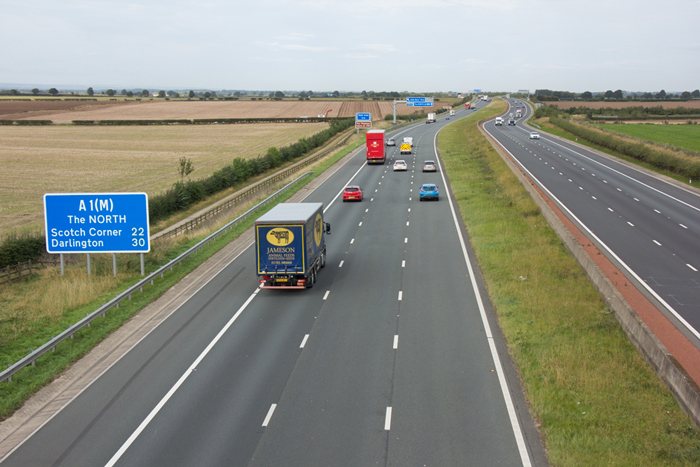
The DfT is planning to bust the UK’s carbon budgets and destroy wildlife habitat by carrying on with road-building business as usual.
It is consulting on a draft National Networks Policy Statement (NPS) which sets out government policy and guides future planning decisions by the Transport Secretary on the strategic road network (motorways and trunk roads) in England.
The consultation runs until 6th June 2023.
1) Warm Words about Sustainability
In the Introduction, the NPS has warm words about sustainable development, which it says is ‘meeting the needs of the present without compromising the ability of future generations to meet their own needs’ (1.11).
We haven’t been very good at doing that, and business as usual will not achieve it.
Damage to Climate and Habitats
The NPS and an Appraisal of Sustainability document claim that the effect of the draft policy on greenhouse gas emissions and air quality is uncertain (1.20).
The NPS and a Habitats Regulation Assessment state that projects brought forward under the NPS are likely to lead to significant negative effects on wildlife habitat.
‘An initial screening exercise concluded that projects brought forward under the NPS could lead to impacts on European Sites, and the potential for significant effects could not be excluded.’
para 1.23 of the draft nps
The NPS’s solution to this is to blunder on regardless.
‘…it was determined that there were no feasible alternative solutions to the NPS and adverse effects to the integrity of European Sites remained possible. It was therefore necessary to consider Imperative Reasons of Overriding Public Interest and compensatory measures.’
para 1.23 of the draft nps
The Imperative Reasons given are economic (para 1.24). In plain English, it is a case of pursuing money whatever the cost to climate and nature. That is not truly public interest.
The only sliver of hope is that Habitats Assessments still apply to individual projects (para 1.25). If by that time we have a good Secretary of State who understands that we can’t continue building motorways for ever, we might get good individual results.
2) A Lot of Excuses but no Solutions
Section 2 of the NPS then contains a lot of warm words and excuses about active travel, the natural environment and carbon emissions. What’s missing are the solutions: there is no commitment to actions that would address these vital issues.
The Welsh government has the right idea. We need to stop building roads, because it leads to never-ending increases in motor traffic. The UK government hasn’t caught on yet.
Active Travel
Para 2.6 contains mendacious propaganda often heard from National Highways about active travel.
‘Roads facilitate active travel, such as walking, wheeling and cycling.’
para 2.6 of the draft Nps
The NPS concerns trunk roads and motorways. Cycle tracks on such roads are vanishingly rare, and the roads themselves are hostile for cycling.
A plan to build new trunk roads and motorways is of zero benefit to walking and cycling.
The Natural Environment
Similarly, paras 2.16 and 2.17 have some warm words about ‘conserving and enhancing the natural environment’. In the context of building new trunk roads and motorways, this is risible.
‘Putting sustainability at the forefront of how our national road, rail and strategic rail freight interchange developments grow and adapt, presents opportunities for the environment and the health and wellbeing of people, now and in the future.’
para 2.17 of the draft nps
How daft do they think people are?
Carbon Emissions
Thirteen paragraphs attempt to explain how a major road-building programme contributes to reducing carbon emissions. These are some of the main points:
- the DfT is relying on electric cars as a get-out-of-jail-free card, even though we know a switch to electric vehicles won’t be enough to achieve the UK’s binding climate targets
- the NPS mentions modal shift, but building motorways does not enable that
- emissions from construction and operation of the strategic road network represented 2% of total [transport?] emissions in 2021 [?] according to para 2.24. The implication seems to be that we can ignore greenhouse gases from road-building, and hope that emissions from driving on roads come down
3) The Alleged Need to Build More Major Roads
Section 3 contains the claimed justifications for carrying on with road-building business as usual.
Essentially, the authors of the document have learned nothing about the vicious circle of increased demand > increased provision > increased demand. They don’t seem to understand the need to reduce high-carbon travel by motor vehicle.
Briefly, they justify road-building business as usual as follows:
- the economy and population growth (3.2)
- they deny that induced demand is a major factor (3.3)
- congestion (3.4)
- customer satisfaction (3.5)
- spending money on roads so that they aren’t damaged by the impacts of extreme weather that they have helped cause (3.11)
- anticipating higher traffic volumes (3.14)
- disregarding the Transport Decarbonisation Plan’s policy to move from ‘predict and provide’ to ‘vision and validate’ (3.44)
4) Policies
Section 4 of the NPS sets out the proposed policies which the Transport Secretary will apply to major road projects.
The NPS states that there will be a presumption in favour of granting development consent for Nationally Significant Infrastructure Projects (4.2).
That is road-building business as usual enshrined in the document.
The Transport Secretary should take account of faster journey times and economic development (4.3). But we know that new or expanded roads fill up, and journey times go back to what they were before after 3 or 4 years.
As for economic development, we can either build an unsustainable economy based on travelling long distances by car, or we can plan a sustainable economy on the foundation of less travel and sustainable transport.
This government is choosing a motorway economy that will contribute to runaway global heating, instead of a sustainable economy.
Para 4.11 of the NPS says that environmental assessments should take account of cumulative impacts, including those from nearby developments. That’s the first good thing in the document.
Para 4.15 is a get-out clause allowing projects to proceed even though they will damage vital habitats.
Biodiversity Net Gain
There are paragraphs about Biodiversity Net Gain.
North Yorkshire Council have made some mention of it in cutting down 300 trees for the Kex Gill diversion.
Essentially the concept appears to allow the destruction of natural habitat now in return for promises of possible future tree-planting or habitat creation.
5) Impacts
The NPS accepts that the construction and operation of national networks leads to greenhouse gas emissions (para 5.26).
All proposals should include a whole life carbon assessment (5.30). That’s good, unless it is just ignored. Para 5.33 says that maybe developers could plant a few trees.
The Transport Secretary must be satisfied that the applicant has done a greenhouse gas assessment (para 5.34). It looks as though any scheme should be assessed against the UK’s total carbon emissions (para 5.35), rather than against transport emissions locally.
Para 5.37 is the real killer, and shows the reckless, irresponsible approach of the UK government to the environment.
‘Operational greenhouse gas emissions from some types of national network infrastructure cannot be totally avoided. Given the range of non-planning policies aimed at decarbonising the transport system, government has determined that a net increase in operational greenhouse gas emissions is not, of itself, reason to prohibit the consenting of national network projects or to impose more restrictions on them in the planning policy framework.’
para 5.37 of the draft nps
As for biodiversity, if you have to you just move protected species out of the development site, and move them back again after you’ve finished construction (para 5.45). Seriously.

Nature sites are addressed from para 5.53 onwards.
Habitats Sites (of international importance) are to be protected, except when they are not – if there are ‘imperative reasons of overriding public interest’. We’ve already seen that that can mean money-making.
SSSIs are protected except when they are not – for example if the ‘benefits of the development’ outweigh the impact on the SSSI.
Ancient woodland is protected except when it is not – for example if the ‘public benefit would clearly outweigh the loss or deterioration of habitat’.
Local Nature Reserve designations are not a reason to refuse development consent.
Summary
In summary if you want to build a motorway, you get to build a motorway. Transport Action Network call the NPS appallingly bad.
107 pages of NPS try to give a veneer of respectability to the government’s irresponsible approach, but ultimately as long as developers jump through the right hoops, they can do what they like.
The protections for climate and nature are wafer-thin.
Money trumps the environment. It’s road-building business as usual as far as this government is concerned.
What can be done about it?
You can respond to the consultation until 6th June 2023, but it seems unlikely that will have much effect.
Longer term, we need to vote this government out and get a better one.