A59 Multi-Modal Study
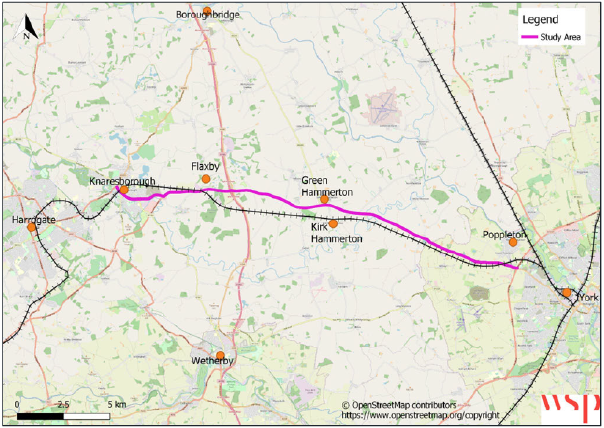
An A59 Multi-Modal Study by consultants WSP (‘the Study’) provides options for improving transport on the 23km stretch of the A59 between Bond End Knaresborough and the York Outer Ring Road at Poppleton.
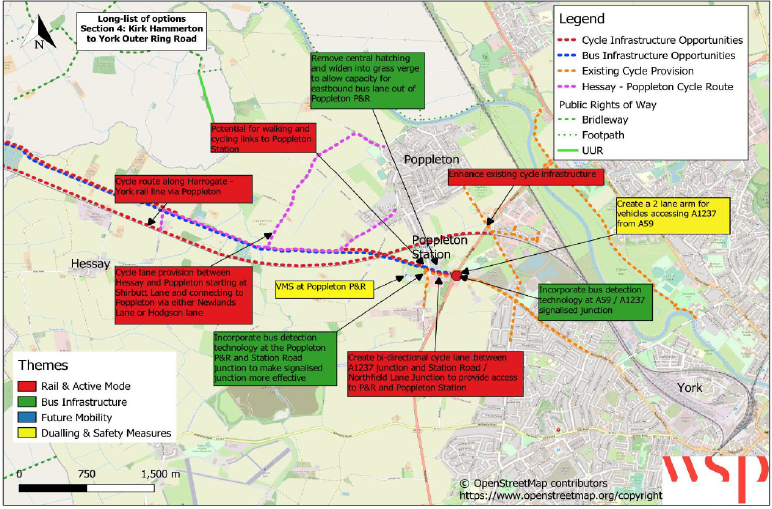
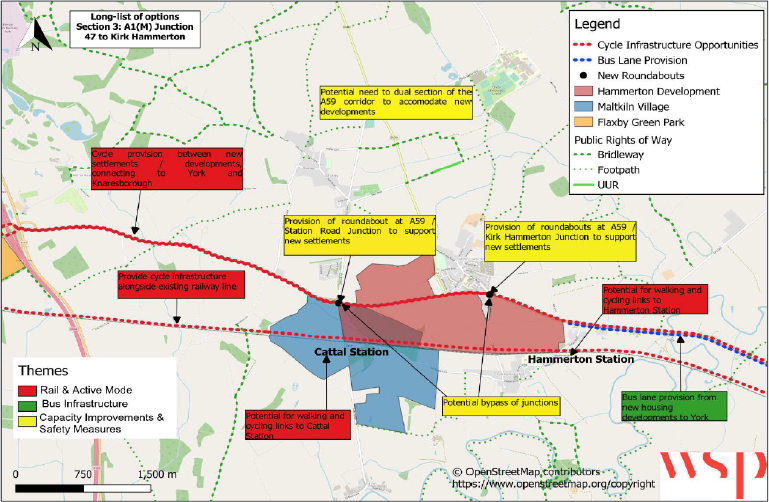
The options include cycle infrastructure, either by the A59 or next to the railway line.
The Study dates from July 2021, but has only recently been extracted from North Yorkshire Council via a Freedom of Information request. It was funded by York & North Yorkshire Local Enterprise Partnership, now transformed into the Combined Authority.
Current Situation
The Study sets out the current situation at some length.
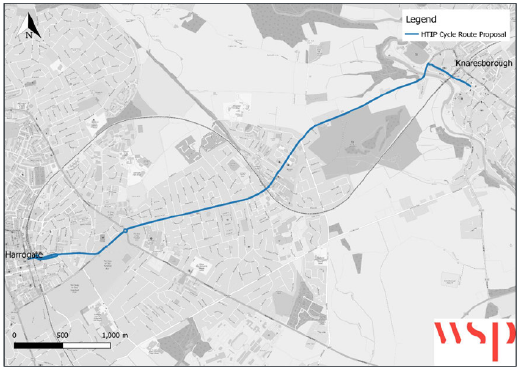
One point of interest is a reference to a future segregated cycle route along the A59 between Knaresborough Station and Harrogate Station, proposed by consultants as part of the Harrogate Transport Improvement Programme, HTIP.
At the Harrogate end, it would take a route via Empress Roundabout, A6040 Knaresborough Road, and North Park Road.
The car ownership figures are interesting too. 79% of Harrogate & Knaresborough households have a car, 21% do not.
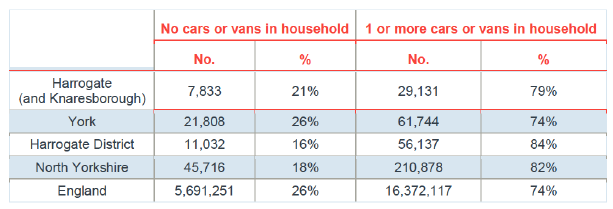
Table 2-13 shows the current journey to work modal shares.
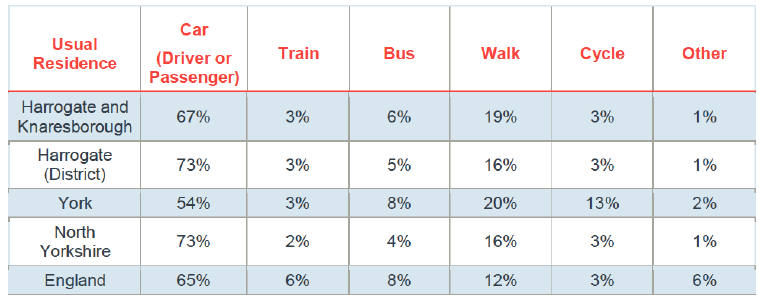
Cycling’s modal share for Harrogate and Knaresborough’s residents travelling to work is 3%, whereas in York it is 13%.
The Study includes information about the volume of traffic currently using the A59.
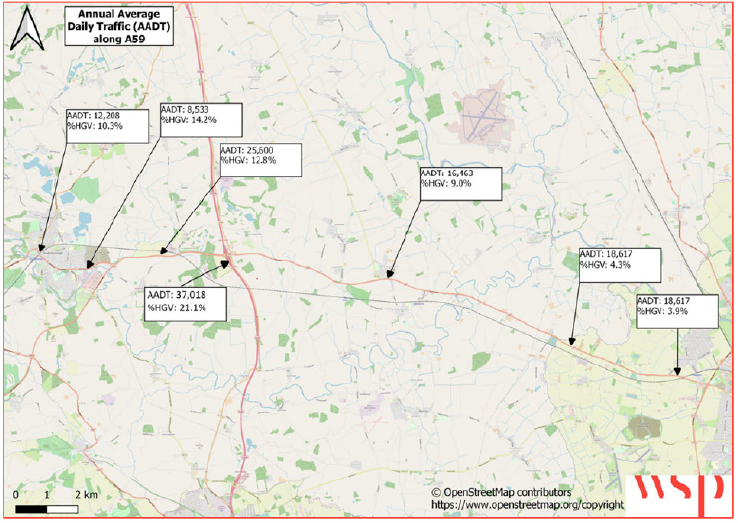
The busiest section is Knaresborough to the A1M, which carries 25,600 vehicles a day. East of the A1M, traffic volumes are between 16,000 and 18,000 vehicles a day.
The Study identifies that there is no cycling provision on the A59, and large gaps in footway provision (para 2.6.1).
It notes a demand for cycle provision to link Hessay to Poppleton (2.6.11), but fails to identify the need for a Goldsborough to Flaxby link.
The Study sums up the current situation for cycling on the A59 as follows:
‘The A59 is currently a hostile environment for cyclists, with only the fittest, most confident cyclists wishing to use the road.
[There is a lack of safe crossings of the A59].
Additionally, there are no parallel off-road routes, so cycle journeys are not possible in this corridor for the majority of the population.
If development is to take place, provision for active mode travel must be provided as a priority…’
Development Proposals
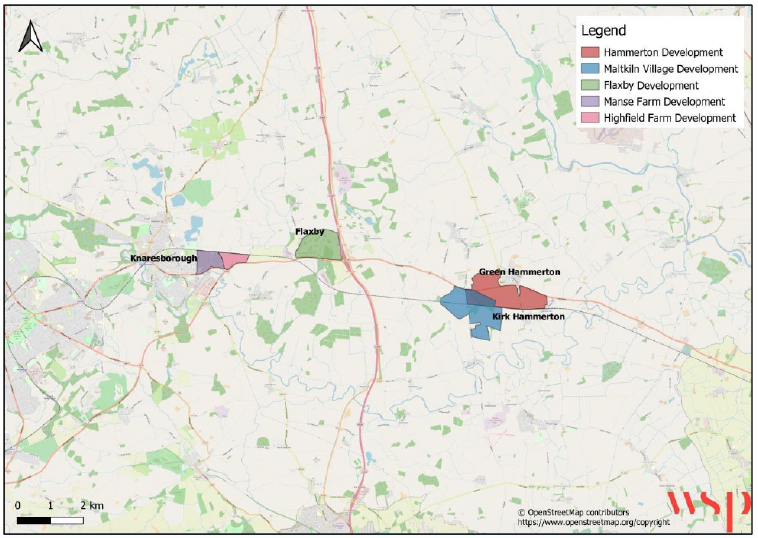
There are sites along the A59 which may be developed for housing, and this will increase the amount of traffic.
The Study floats the idea of dualling the A59 between the Maltkiln site and J47 of the A1M to cope with the extra traffic which will be generated.
Note that the Routemap to Carbon Negative for the York & North Yorkshire region requires a very significant reduction in traffic volumes to meet its climate targets.
The Study says that its high-level strategic objectives are to improve multi-modal connectivity on the A59.
Options
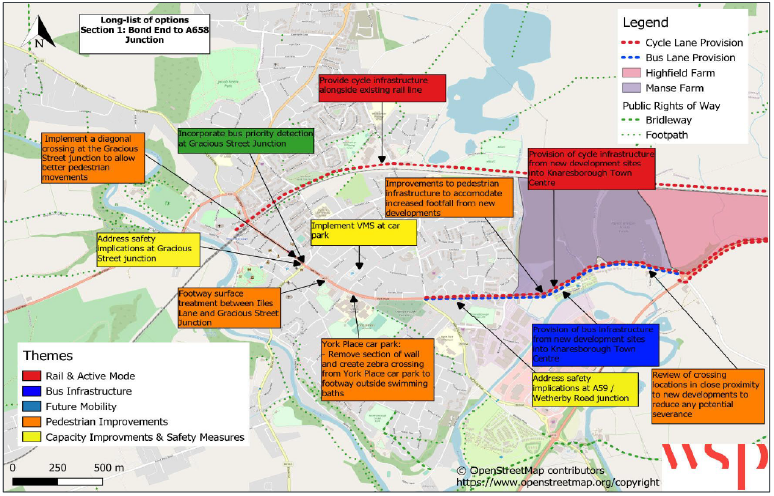
The Study sets out and prioritises a number of options.
The options were discussed by the consultants with representatives from the councils, as well as Highways England and Network Rail.
Transdev were invited to comment, as were Sustrans and York Cycle Campaign. Neither North Yorkshire County Council nor Harrogate Borough Council thought it useful to ask for input from Harrogate Cycle Action.
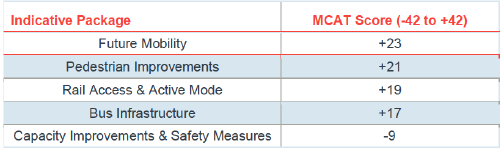
Options were assessed using the Multi Criteria Assessment Toolkit against Critical Success Factors. The resulting scale was from -42 to +42.
Future Mobility
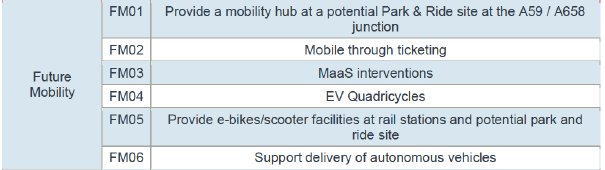
Future mobility is soft measures which would only work if combined with infrastructure.
It got the strongest score of any of the options, +23.
Pedestrian Improvements
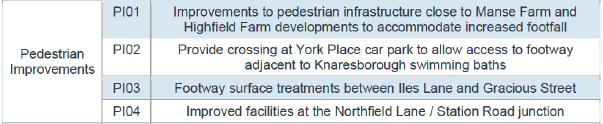
The Pedestrian Improvements package was the second-highest scoring, at +21.
Rail and Cycling Options
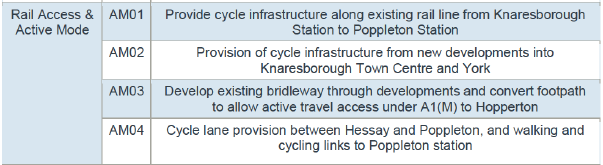
This package scored +19.
The cycleway score was lower than it would otherwise have been because it would require land purchase to go ahead.
The cost of a cycleway (2017 prices) alongside the A59 would be between £11 and £14 million – but much of that involves getting it over the A1M. Excluding that element, the cost is more like £5.5 million.
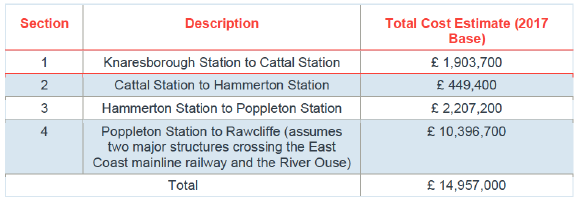
A cycleway by the railway would be cheaper – around £4.5 million (2017 prices) as far as Poppleton.
Another £10.4 million would be needed for a bridge over the railway and the Ouse to Rawcliffe.
Bus Improvements
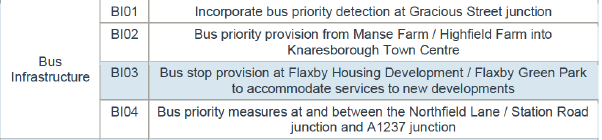
The Bus Improvements option scored +17.
Highway Capacity Increases
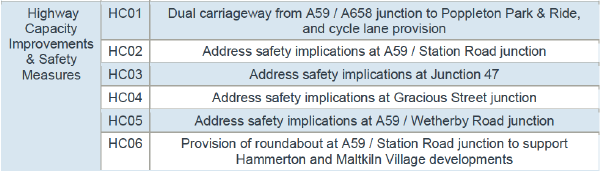

Another of the options identified by the consultants was to increase capacity for motor vehicles, or as the Study puts it, ‘increased capacity improvements’.
Dualling the A59 would exacerbate its role in severing settlements either side of it.
The Study says ‘Public acceptability is anticipated to be low due to…the likely increases in carbon emissions’.
The cost of dualling the A59, in 2017 prices, would be around £314 million. That’s approximately double the current active travel budget for the whole of England.
This option scored -9.
The Study says that this option would have been abandoned due to its low score but for the fact that Harrogate Borough Council requested that it be pursued further.
Summary of Scores
This is a summary of the scores of the different options.
Next Step
The next step would be to prepare one or more Strategic Outline Business Cases.
It’s fair to point out that the Study dates from 2021, and as far as I know no work has begun on business cases.