Cycling in Yorkshire & Beyond

Cycling in Yorkshire & Beyond
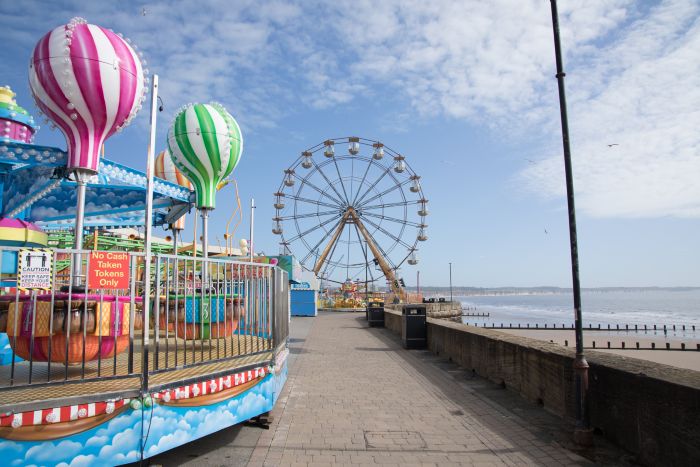
'Bright, Breezy, Bracing Bridlington' (slogan c.1910) is a resort on the east coast of Yorkshire.
There are other taglines for the resort too. A 1938 leaflet advertised 'SEA SUN SPORT FUN at BRIDLINGTON'. By the 1950s, leaflets claimed 'You'll feel so young at Bridlington - YORKSHIRE'S TONIC RESORT'.
Bridlington appeared in the Domesday Book of 1086 as 'Bretlinton'.
'Berlinton' appeared on a charter in the 1100s as the name of the town.
Anglo-Irish nobleman Richard Boyle was made Earl of Burlington in 1665; Burlington referred to the town we now know only as Bridlington.
The Boyle family had a London seat called Burlington House, Picadilly, which is now home to the Royal Academy. Adjacent to Burlington House is the Burlington Arcade.
When the railway came to town in 1846, the station name was Bridlington and other variants were dropped.
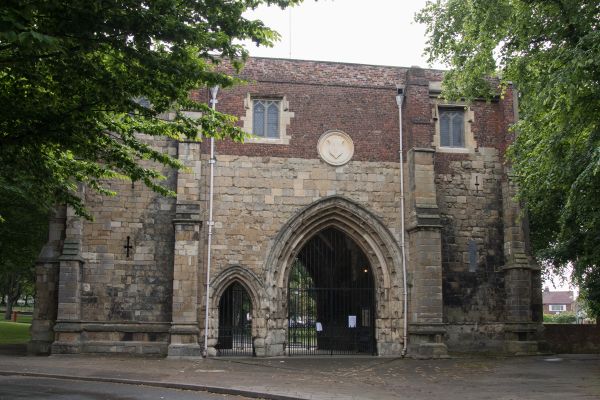
Until the 1800s, Bridlington was really two separate settlements - the Old Town and the Quay.
There was Roman activity in the area, but Bridlington Old Town grew up around Bridlington Priory in the Medieval period.
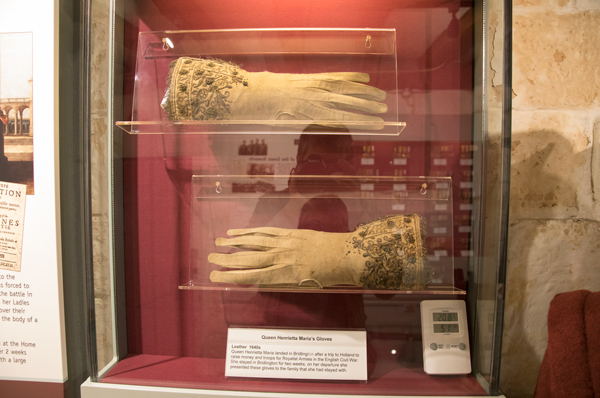
Queen Henrietta Maria was in Bridlington during the English Civil War.
From the 1760s, Bridlington developed as a holiday resort.
Read about Bridlington History.
Bridlington Priory | the Bayle Museum | North of the Harbour | Bridlington Quay Shopping Streets | the Harbour | South of the Harbour | Quay Road and St John Street | the Old Town
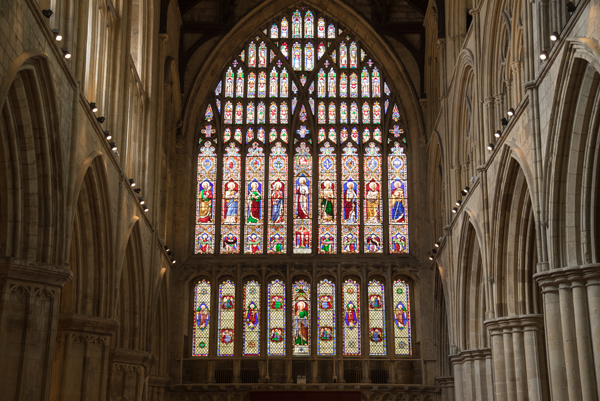
The priory church at Bridlington is well worth exploring.
When standing outside the church at the west end of the building, an information panel shows the layout of the monastery buildings before they were reduced to rubble at the Dissolution of the Monasteries.
On your right when you enter the church is the Founder's Stone.
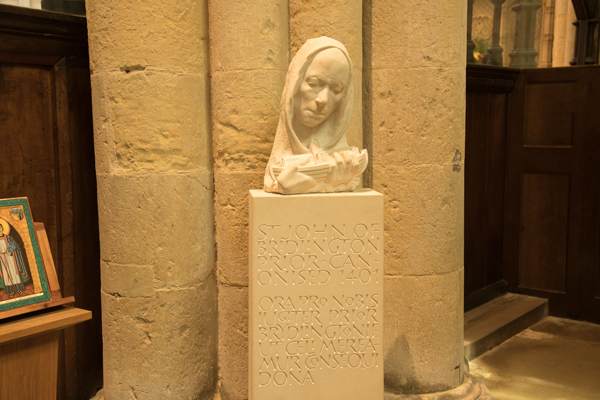
In the south east corner of the church there's a chapel dedicated to St John of Bridlington. A sculpture shows St John cradling a boat that holds the priory church.
The organ was built in 1889 by Belgian organ builder Charles Anneessens. It has been rebuilt a number of times, most recently by Nicholson & Co in 2005.
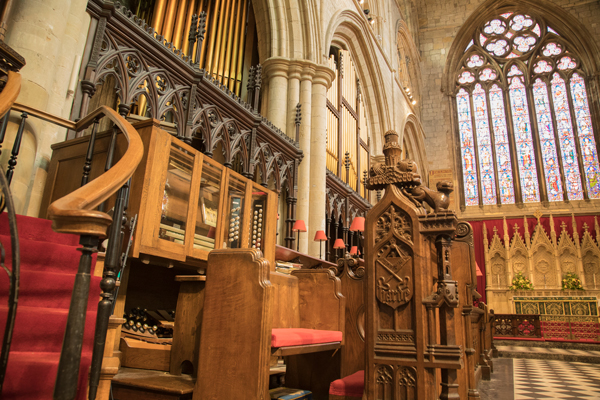
It is one of the largest and finest parish church organs in the country.
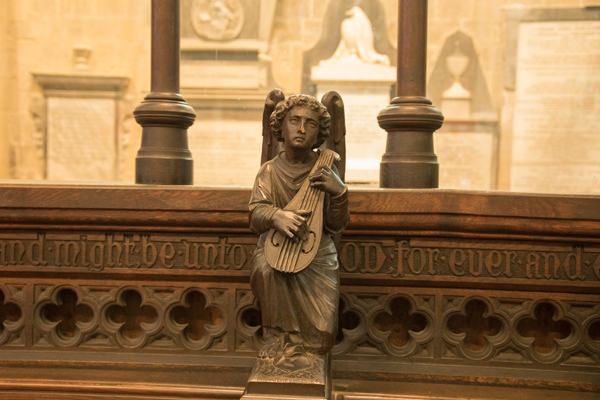
The choir stalls are carved, with the carvings based on Psalm 150.
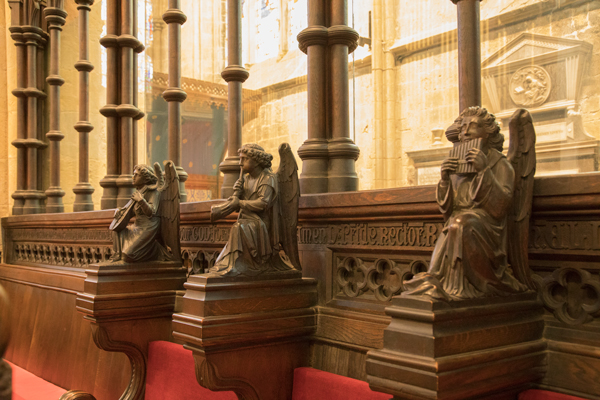
They show angels with various musical instruments.
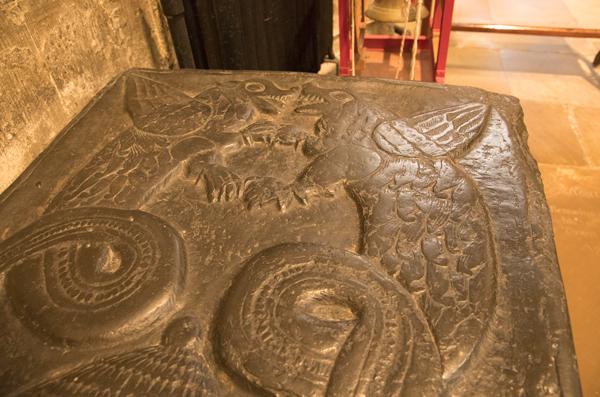
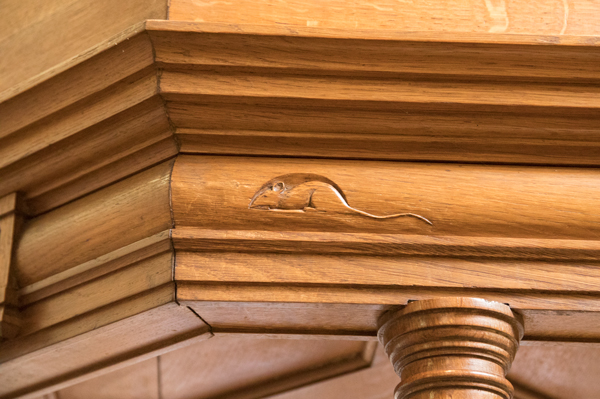
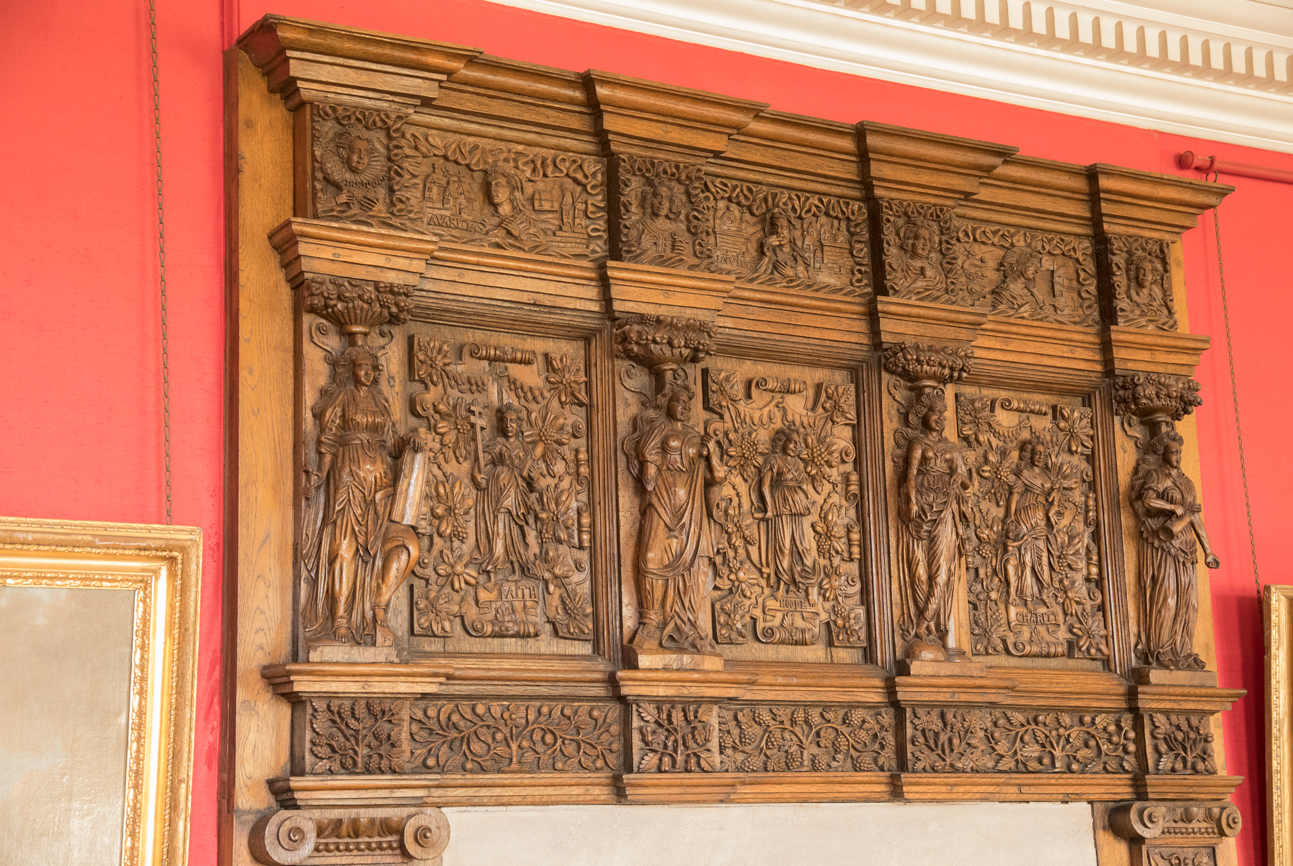
There are 18 or so pieces of Mousey Thompson furniture in the church. The font cover (in the image below) is one of the best, and it's by the original Robert 'Mousey' Thompson.
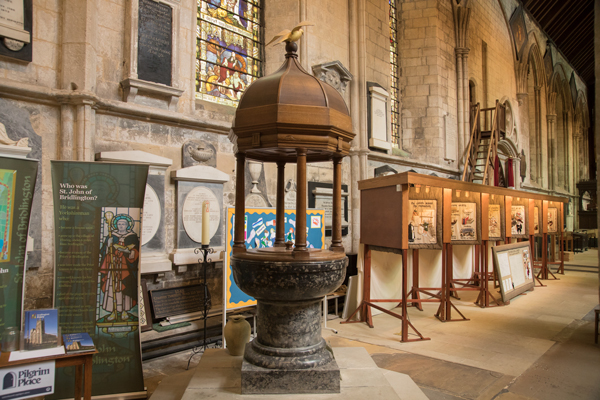
The font cover has an unusual inset mouse.
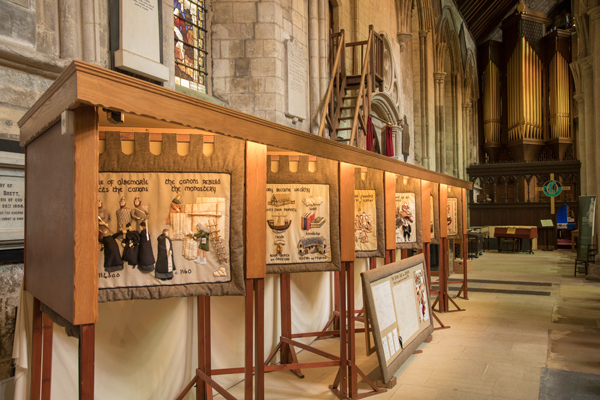
A series of appliqué panels tell the story of the priory. Some of them are on the Bridlington History page.
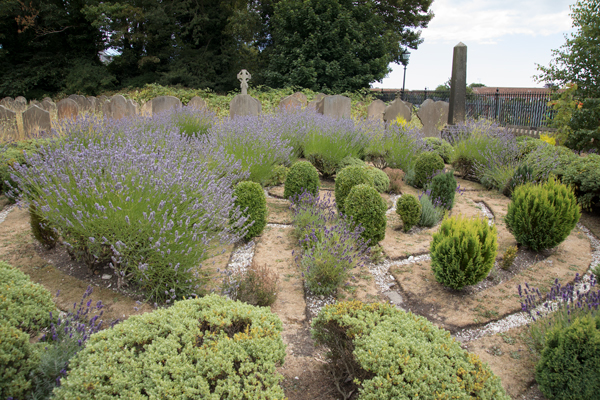
Outside, the grounds are managed as a Living Churchyard for nature. There are nettles for caterpillars and knapweed for butterflies.
There's a Labyrinth with lavender and small bushes.
Also in the churchyard, a stone marks the approximate location of the Shrine of St John when it was in the (now destroyed) choir of the priory church.
A further stone has an incantation to St John - a request to him to make prayers of intercession.
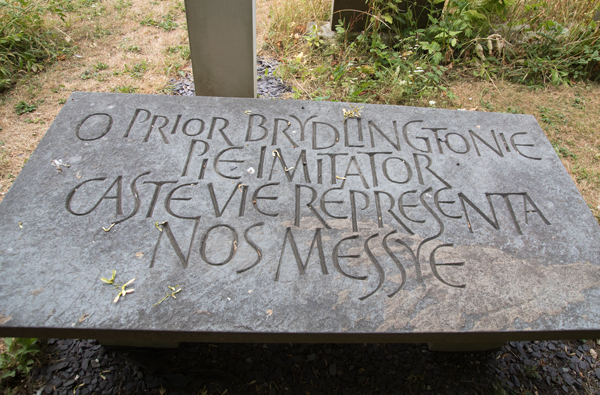
The words on it first appeared in the Beaufort Book of Hours by Margaret Beaufort, mother of Henry VII. In Latin the quote is:
'O Prior Brydlingtonie pie, Imitator caste vie, Representa nos messye'
It means, 'O Prior of Bridlington, follower of a chaste life, pray for us'.
There's a memorial to those who drowned in the Great Gale of 1871 in the north east corner of the churchyard.
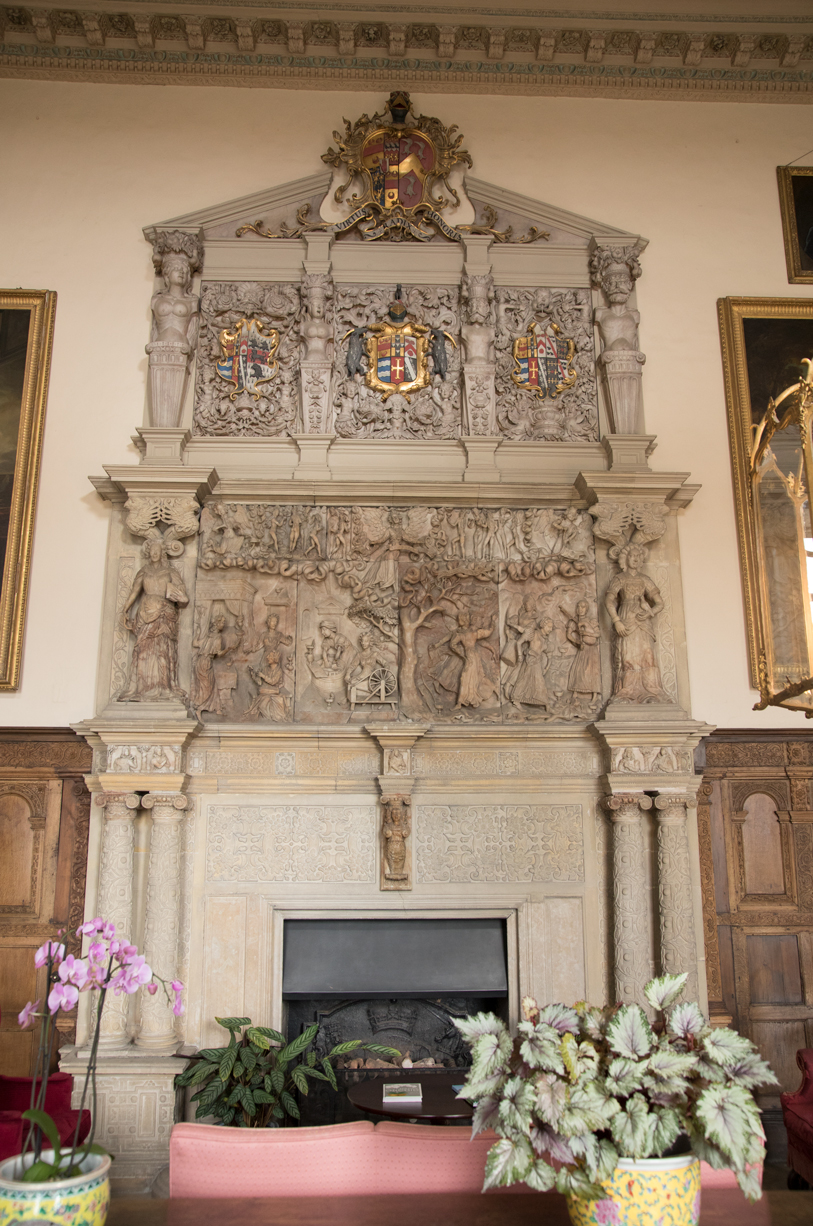
The base of the memorial has:
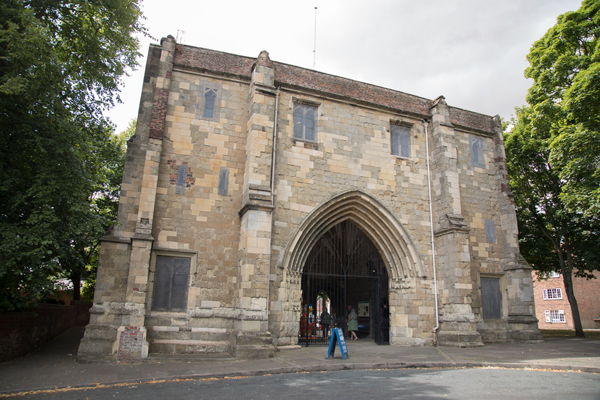
The Bayle Museum is inside the Bayle Gate of Bridlington Priory.
It was authorised when the priory was given a Licence to Crenellate by King Richard II in 1388.
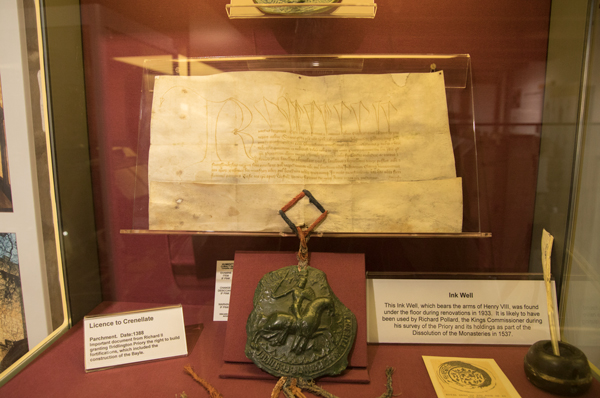
An information board in one of the stairwells explains how the garderobes would be used.
The museum has Henrietta Maria's gloves, given to the family she stayed with in Bridlington in 1643.
At one time post-Dissolution, the Bayle was used for schooling.
The Bayle was turned into a museum in 1928 by the Lords Feoffees and the Augustinian Society.
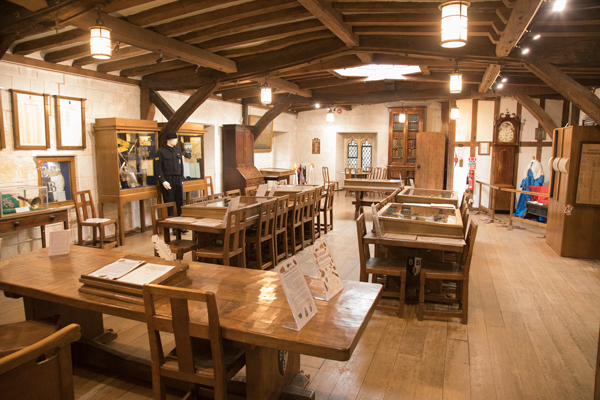
Many of the exhibits are in the big room at the top of the gate.
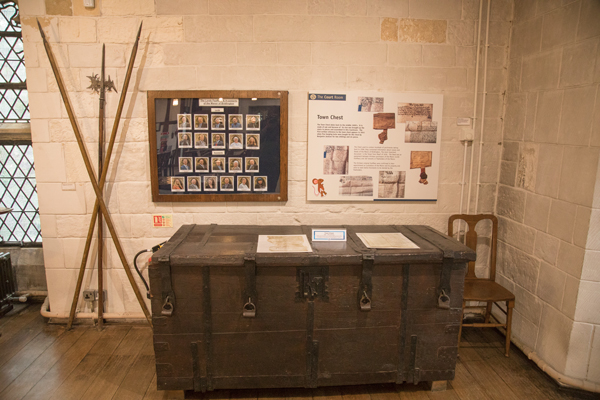
The exhibits include the town chest, which held many of the town's most important documents.
The museum has information about Bridlington photographer Foster Brigham.
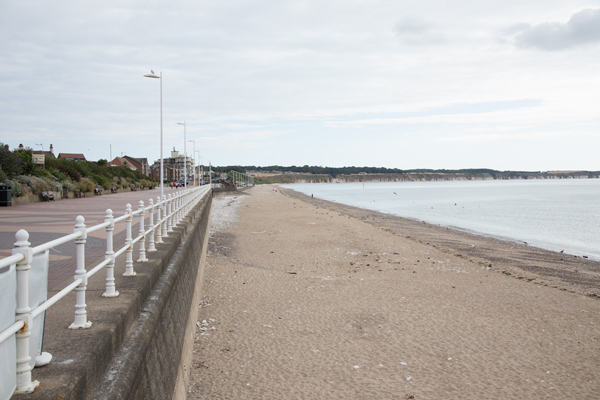
North Sands is the beach to the north of the harbour. Behind it there's a sea wall with a Promenade on it.
East Riding Leisure is on the Promenade.
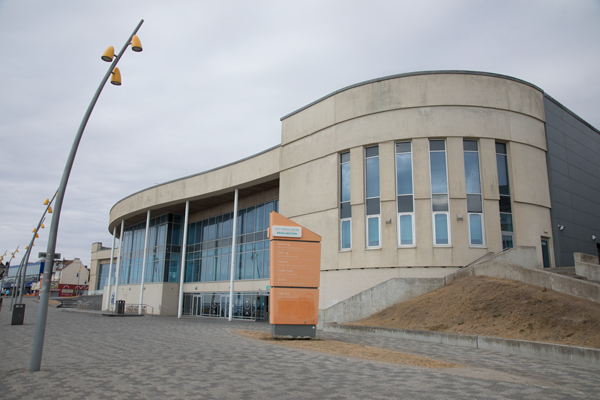
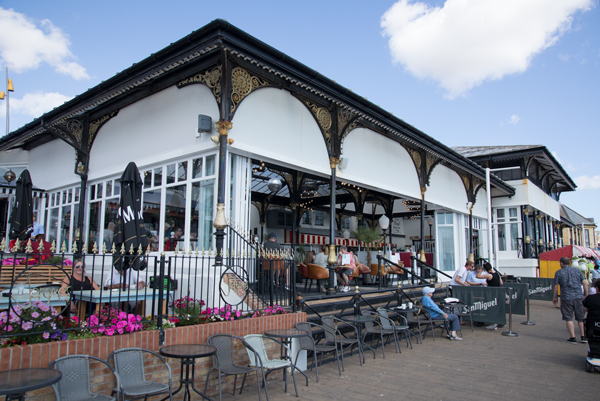
There's a funfair on the seafront here, and beyond it is the Floral Pavilion.
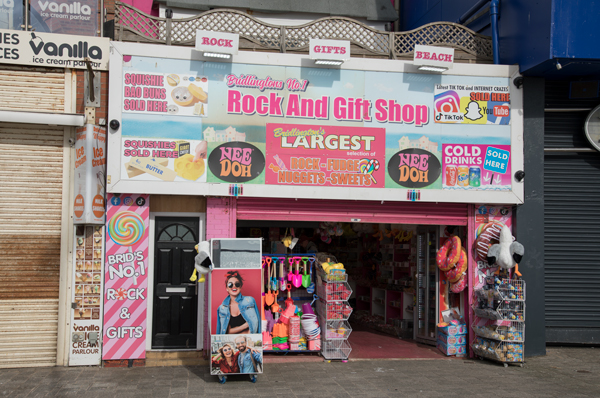
There are shops selling rock and gifts here.
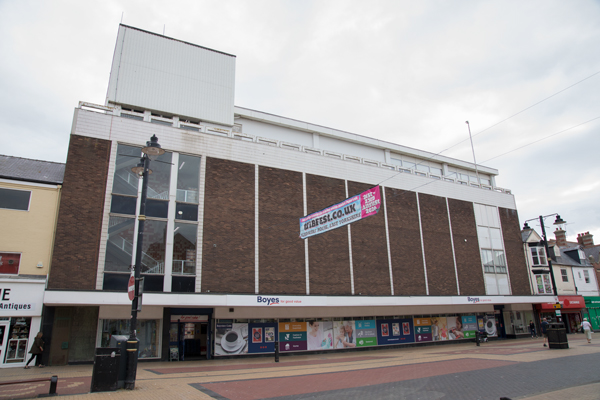
There are shops at Bridlington Quay on Prince Street, Queen Street, King Street and Chapel Street. They include Boyes department store.
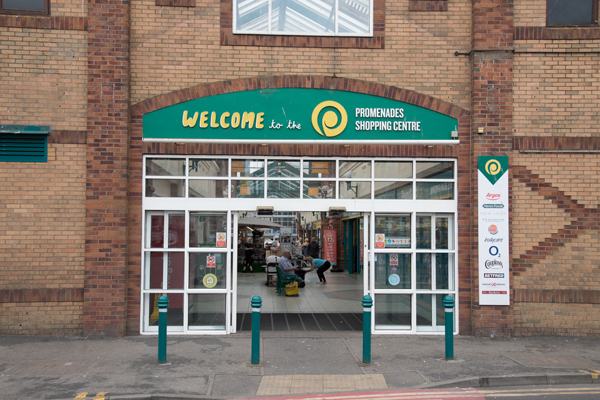
The small shopping centre is called Promenades.
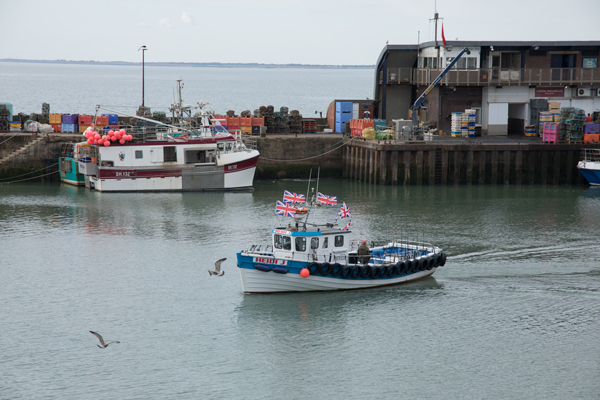
On the North Pier of the harbour there's a Gansey Girl statue.
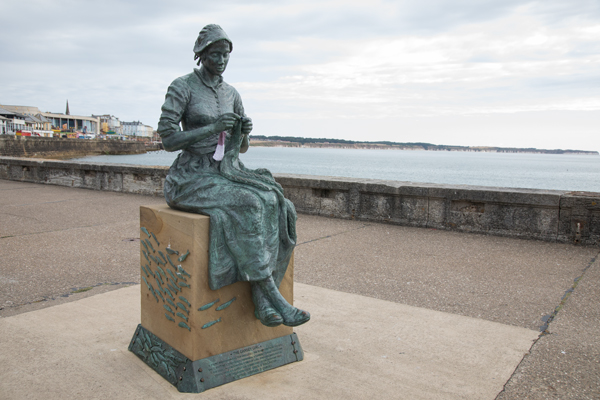
The Gansey Girl is a bronze statue by Stephen D Carvill from 2015. The subject is sitting knitting a gansey while waiting for her loved one to return from the sea.
It is based on a photo by Whitby photographer Frank Meadow Sutcliffe.
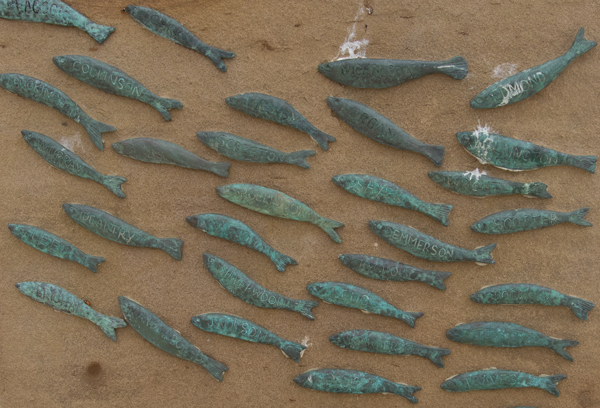
The small fish on the pedestal record the names of the long-standing Bridlington fishing families.
Guernsey sweaters were made in the Channel Islands from the 1600s. Unlike the Jersey which has a motif such as an anchor on the front, a Guernsey is symmetrical so reversible.
Guernseys were adopted on the east coast of Scotland and Yorkshire around the 1850s, as ganseys.
A gansey is hand-knitted in one piece using five knitting needles and oiled worsted wool that resists wind and water. A traditionally-made garment costs around £500.
Patterns were unique to each port which meant that if a fisherman drowned and his body washed up, his home village could be identified.
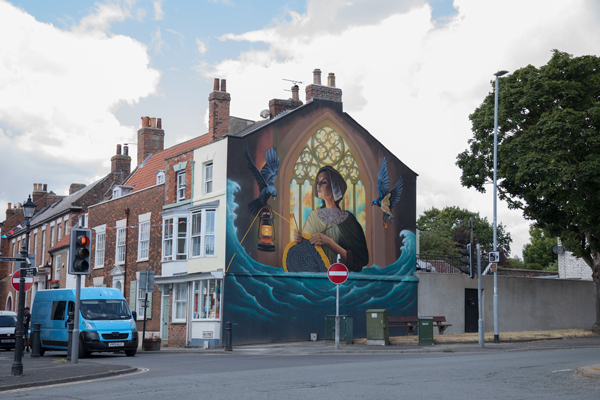
At the junction of St John Street and High Street in the Old Town is a mural depicting another Gansey Girl. She is in front of one of the priory church's windows.
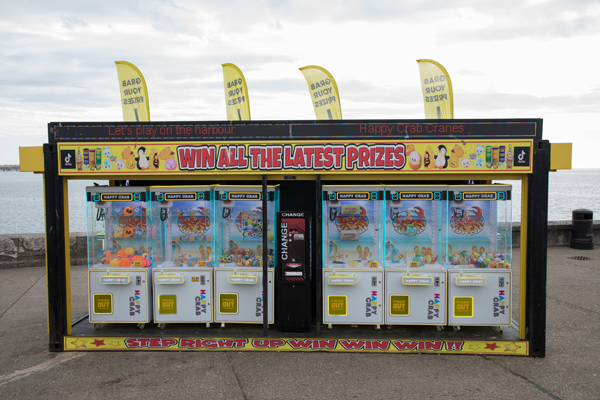
There are food stalls and arcade-style games around the harbour.
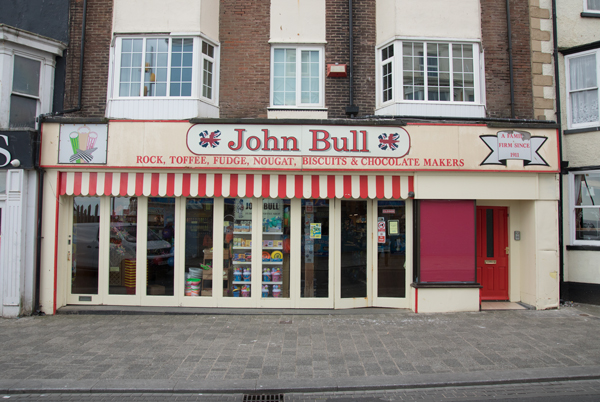
John Bull Rock is on the corner of Garrison Street and Prince Street.
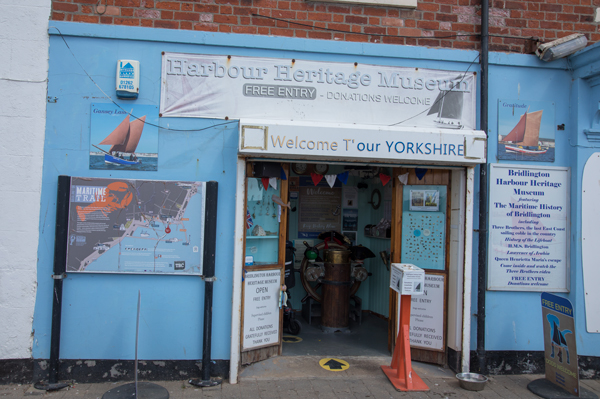
There's a Harbour Heritage Museum.
Cobles are moored in the harbour.
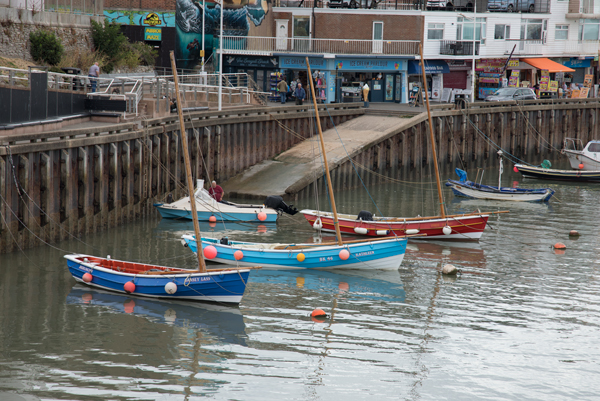
On the other side of the harbour there's an anchorman statue.
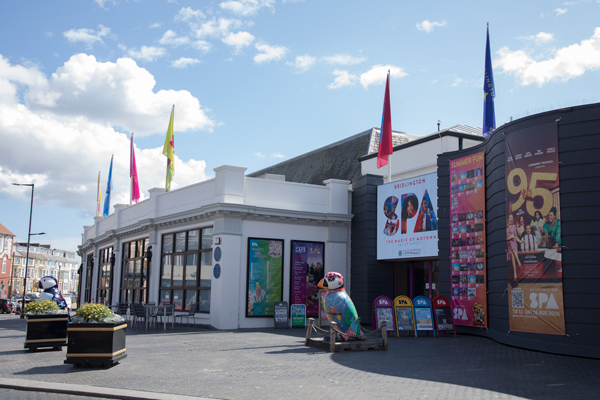
Bridlington Spa opened in 1896. You could stay there all day for sixpence.
There was a big fire in 1906. Herman Darewski was musical director from 1924 to 1939. Another fire burnt the Spa in 1932, but it reopened after only 52 days.
Oasis played the Spa twice in 2009, but often acts that play it these days are sound-alikes (tribute acts).
The Spa has the Royal Hall, which is a 3,500-capacity Art Deco Ballroom, and a 675-seat theatre. There's also the Spa Café Bar, with stunning views of the bay, and conference facilities.
Beyond the Spa are the South Sands.
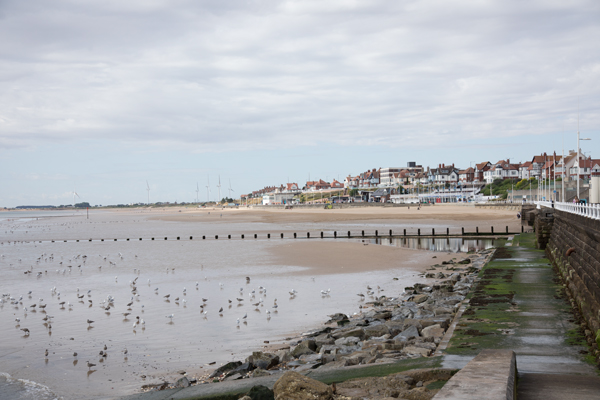
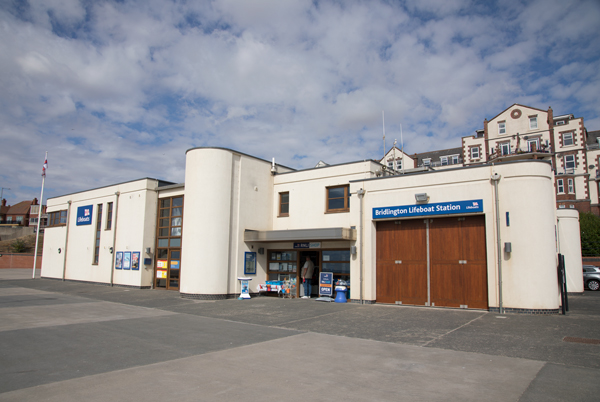
There's a lifeboat station.
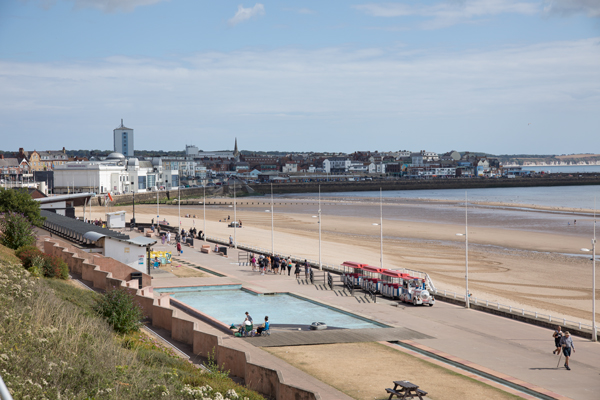
There are paddling pools too.
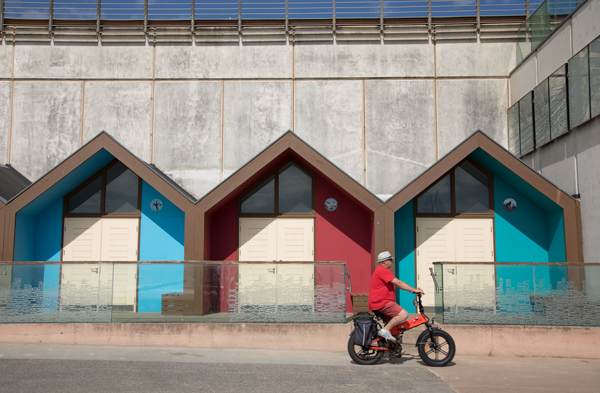
And beach huts.
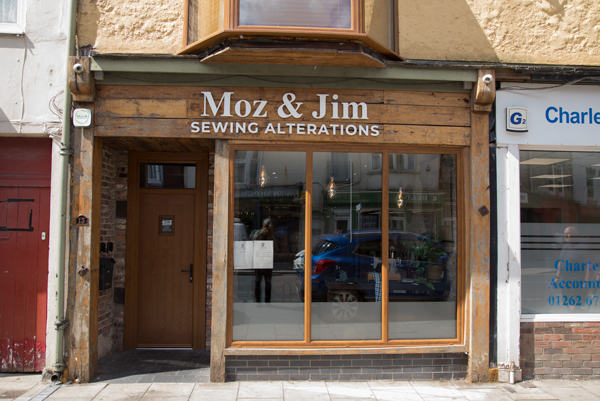
Actually on Prospect Street is Moz & Jim Sewing Alterations.
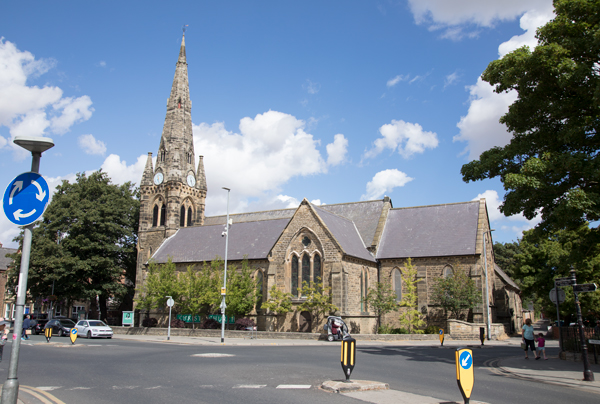
At the corner of Wellington Road and Quay Road is Christ Church, co-designed by Sir George Gilbert Scott.
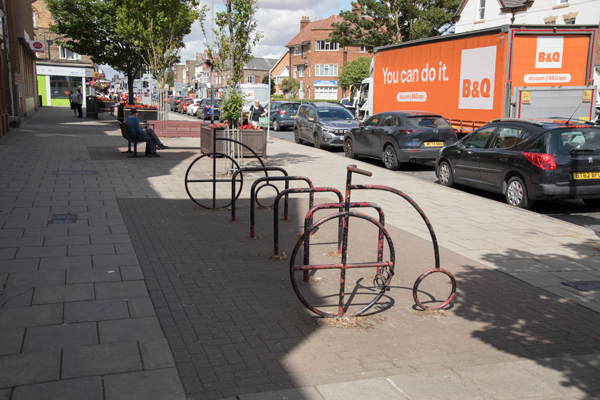
There are some Penny Farthing bike racks.
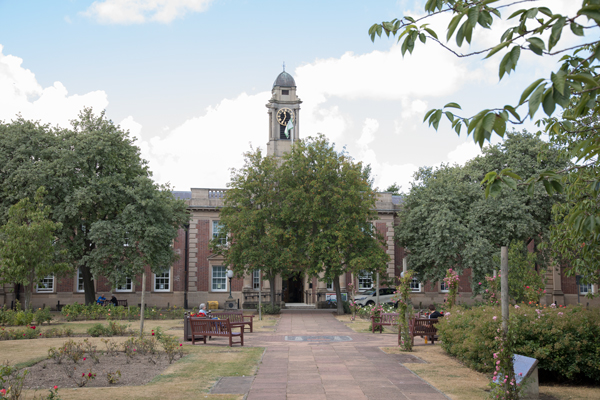
The Town Hall is off Quay Road in a triangle of land behind the station.
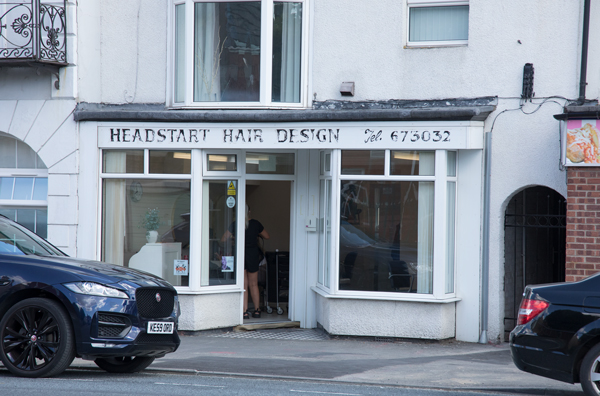
Further up Quay Road is Headstart Hair Design.
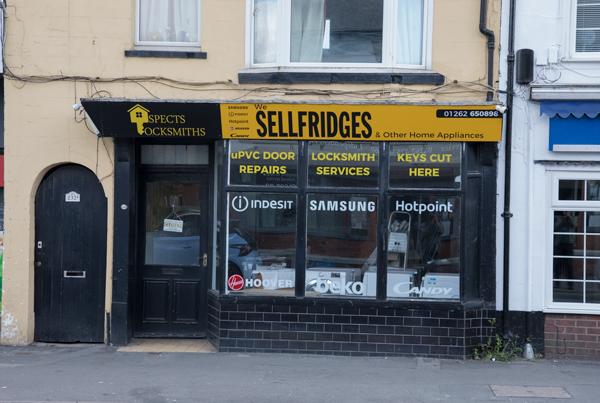
Aspects Locksmiths also SELLFRIDGES.
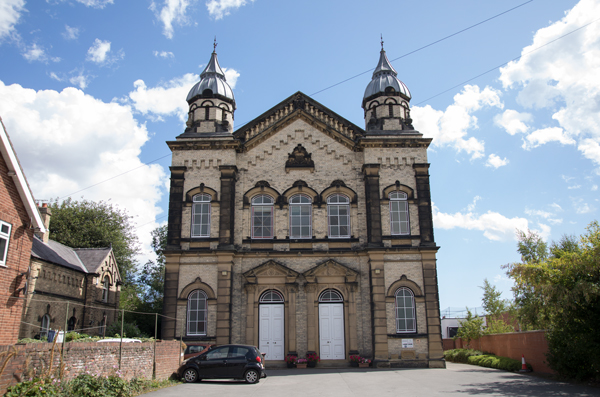
St John's Burlington Methodist church is just north of the point where Quay Road turns into St John Street.
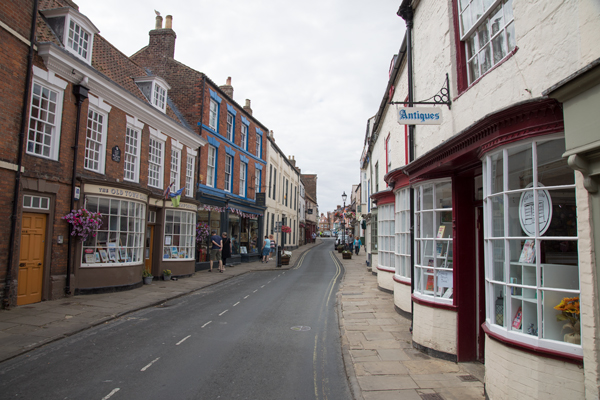
The shops on High Street in the Old Town tend to be upmarket galleries and antique shops.
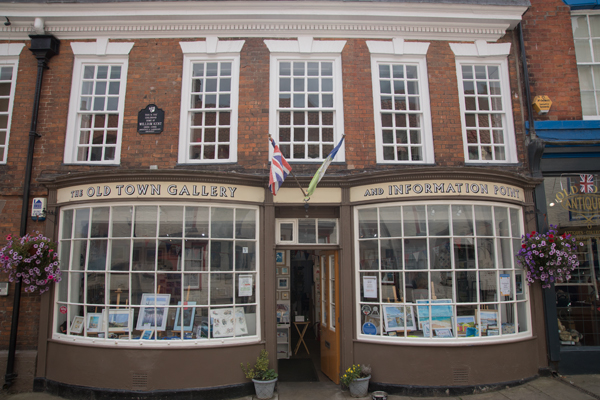
The Old Town Gallery has a blue plaque on it which says this was the childhood home of William Kent.
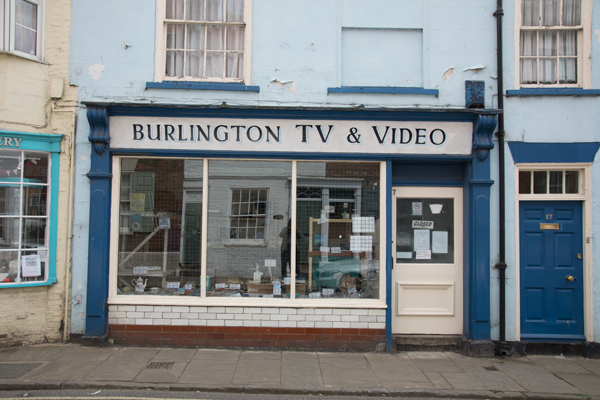
There's also Burlington TV & Video, which has an A4 sheet of Approximate Opening Times in the window.
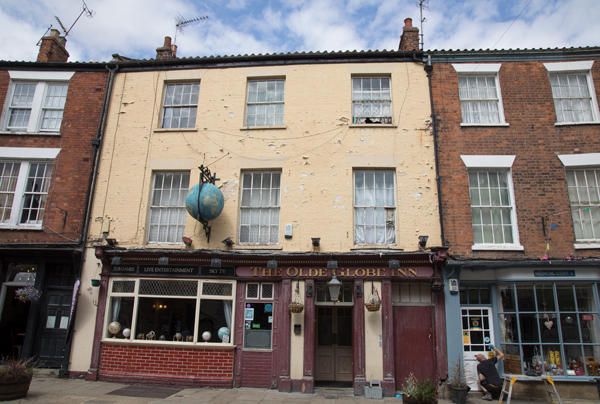
There are pubs on High Street.
And round the corner on Market Place there's the Pack Horse.


Bike Rides in the Yorkshire Dales is available in colour paperback.
Find out more about Bike Rides in the Yorkshire Dales or buy a copy.

Bike Rides In and Around York features a historical city tour, plus family rides, road rides, and mountain bike rides.
Find out more about Bike Rides In and Around York or buy a copy.

Bike Rides in Harrogate and Nidderdale is a book of family, mountain and road bike rides.
Find out more about Bike Rides in Harrogate and Nidderdale or buy a copy.
As an Amazon associate I earn from qualifying purchases.