Cycling in Yorkshire & Beyond

Cycling in Yorkshire & Beyond
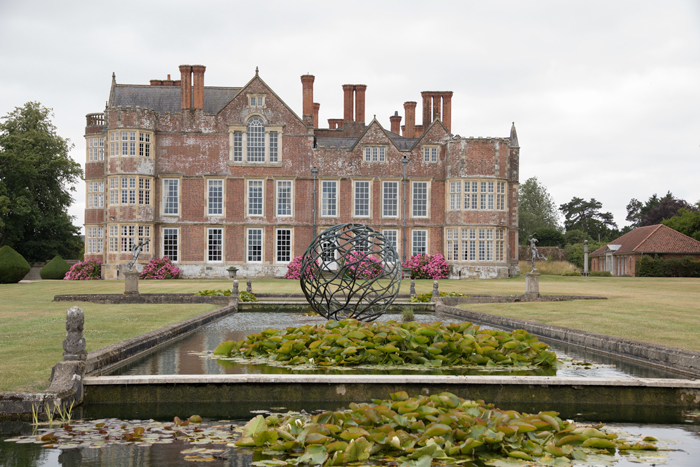
Burton Agnes Hall is an Elizabethan manor house, built from 1601-10.
There's also an earlier manor house dating from 1173, a church, and interesting grounds featuring a walled flower garden and a woodland walk.
Burton Agnes Hall is a family home, but it's open to visitors.
Burton means 'the settlement at the fort'. Agnes was one of the daughters of Roger de Stuteville, Lord of the Manor in Norman times.
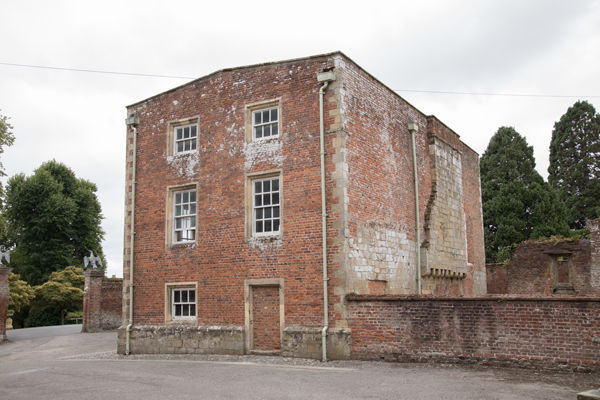
The Norman manor house was built for Roger de Stuteville in 1173.
The first reference to 'Burton Agnes' was in a deed dated 1175.
Since Roger de Stuteville had his manor house built in 1173, the property has never been sold. It has passed by inheritance, sometimes through the female line so that the name of the owners has changed.
Herbert St Quintin, descendant of a Herbert St Quintin who came over with William the Conqueror, married Agnes de Stuteville in the early 1200s and thus acquired the manor of Burton Agnes as well as that of neighbouring Harpham.
Sir Walter Griffith came to live here in 1457.
One of Sir Walter's descendants was Sir Henry Griffith, and Henry committed to living at Burton Agnes after he was appointed to the Council of the North in York in 1599. He had Burton Agnes Hall built from 1601-10.
One of Sir Henry's daughters, Katherine (known as Anne), died at Burton Agnes in 1620.
Naturalist Sir Henry Somerville Boynton lived here.
Marcus Wickham Boynton started a stud farm at Burton Agnes, and carried out a restoration of the hall. In 1977, he arranged for it to be passed to the trustees of a registered charity. He died in 1989.
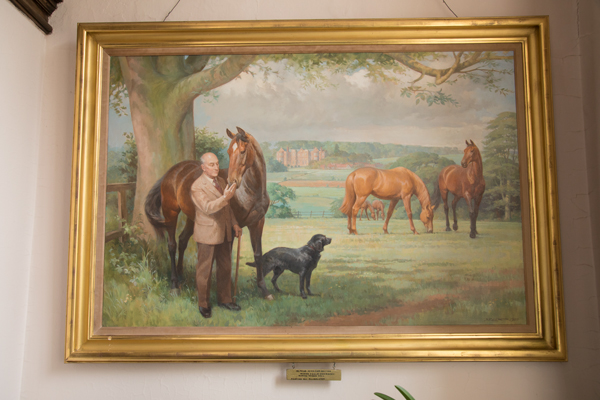
Control of Burton Agnes then passed to Boynton's young cousin Simon Cunliffe-Lister when he was 12.
Burton Agnes had a station on the Yorkshire Coast Line. In 1947, there was a crash on Burton Agnes level crossing involving a train, and a truck carrying German prisoners of war.
Burton Agnes Station closed in 1970.
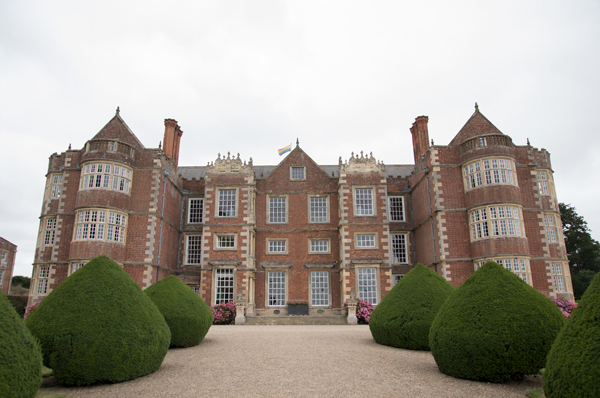
Burton Agnes Hall features Tudor Renaissance architecture. The principles applied to the building were Commoditie, Firmness and Delight - the Vitruvian virtues, originally set out by a Roman architect.
The architect appears to have been Robert Smythson, Master Mason to Elizabeth I.
There are three floors to the hall - ground, first and second floors - with interesting things to see on each level.
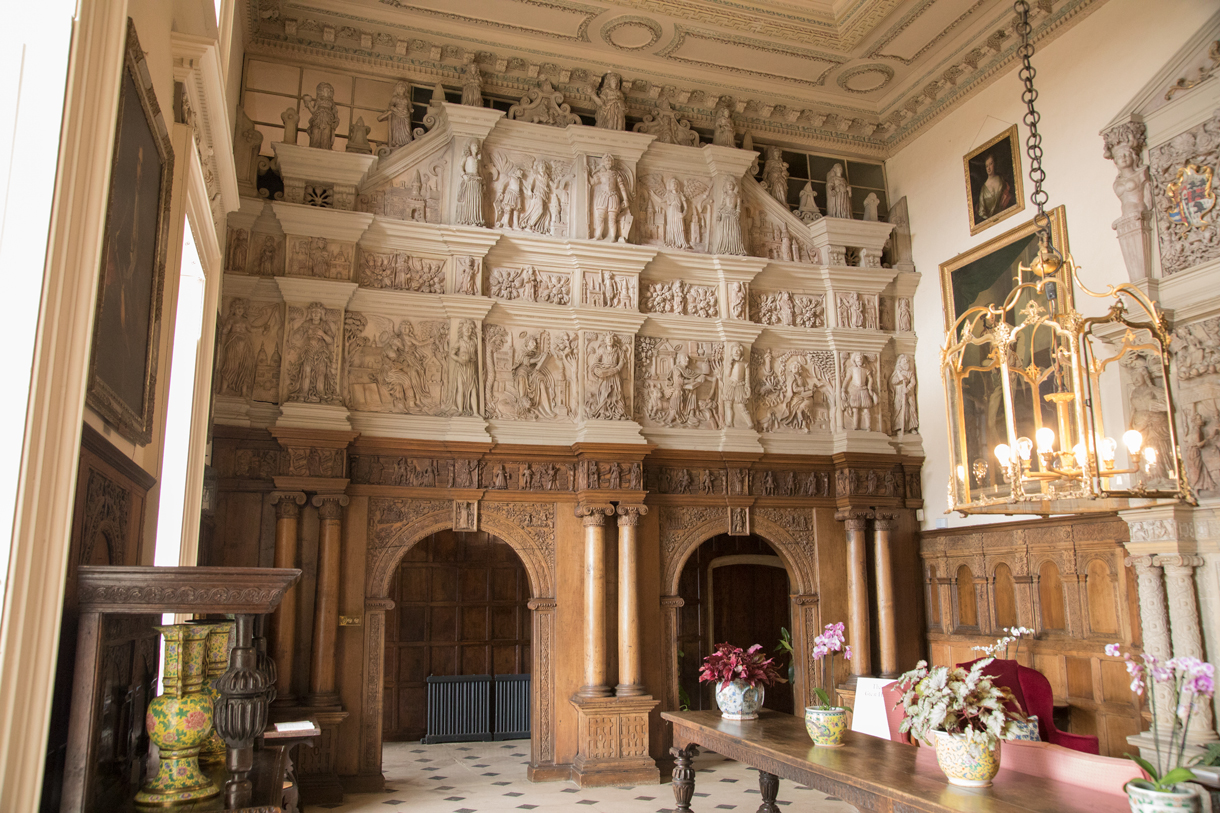
The hall's entrance door leads to the Great Hall.
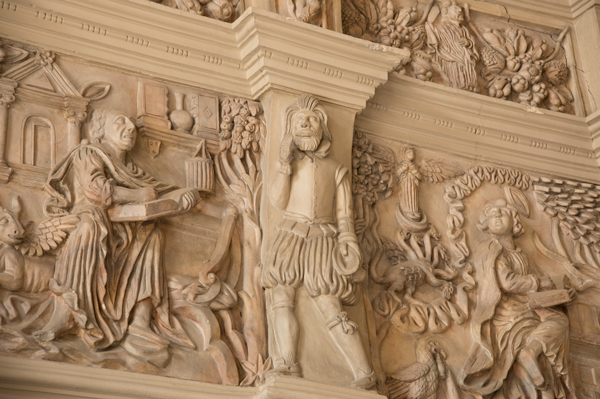
Above the arches shown in the photo are wood carving and plasterwork representing:
The Great Hall's information board says that the Elizabethan gentleman who appears at each level is likely to be Sir Henry Griffith.
The Great Hall also has a big carved fireplace with stone at the bottom, alabaster in the middle, and painted wood at the top.
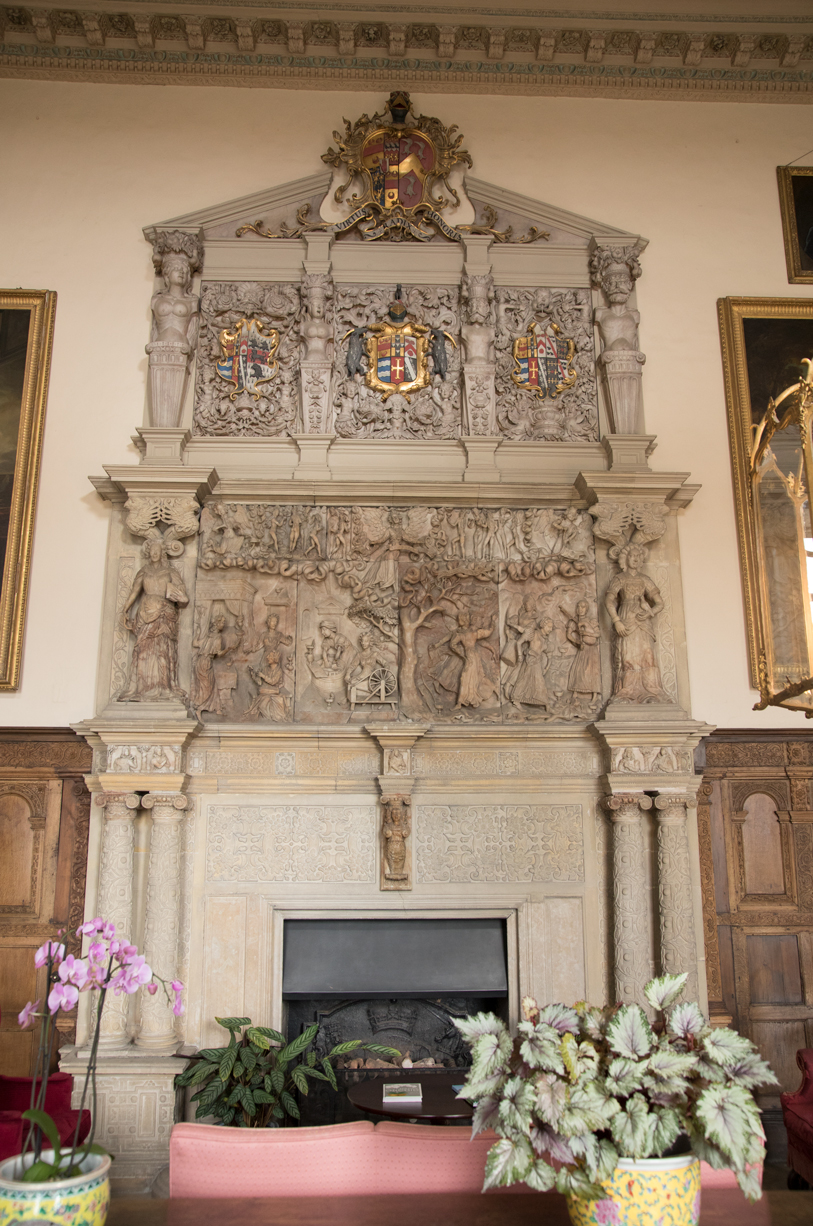
The alabaster section depicts the biblical story of the Wise and Foolish Virgins.
Those on the left are spinning and washing, while those on the right sing and dance; bagpipes are involved in the bad behaviour.
Next on the visit is the Inner Hall.
It features a Geerhardts painting of Sir Henry Griffith's three daughters Margaret, Frances and Katherine (Anne). Anne was painted over in black after her death.
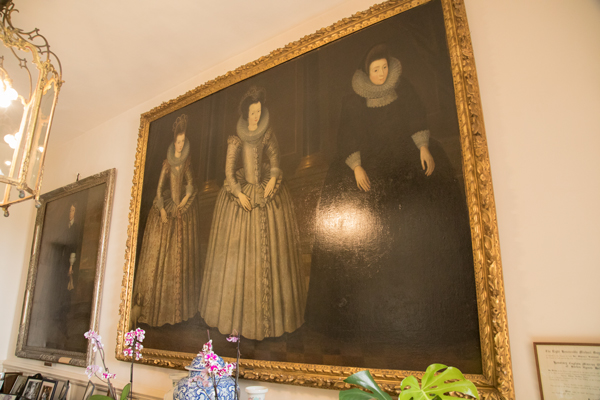
The ghost in the hall is Katherine/Anne Griffith.
When her father Sir Henry Griffith was having the new house built, she was so excited that she could think and talk of nothing else. She said it would be the most beautiful house ever built.
One day she went to visit the St Quintins at Harpham, but she was attacked and robbed by ruffians. Brought home to Burton Agnes, she died a few days later.
In her last delirious hours she told her sisters that she would never rest unless part of her could remain 'in our beautiful home as long as it shall last'.
Her sisters agreed to her request that her head should be severed and preserved in the hall.
Anne was buried in the church, but her ghost walked around and scared people. The sisters then agreed with the vicar that her grave should be reopened. They found that her head had separated from her body.
Anne's skull was brought into the house. As long as it was left undisturbed, the hall was peaceful. Whenever it was thrown away or buried, the ghost walked and caused noise and upheaval.
Eventually the skull was built into one of the hall's walls, probably in the Great Hall.
A BBC article about the Burton Agnes ghost says that it is still around. A member of Burton Agnes staff told the Corporation, 'One of our house stewards was between the bedrooms and felt somebody behind him. But when he turned around, there was nobody there'.
Next on the visit is the Red Drawing Room.
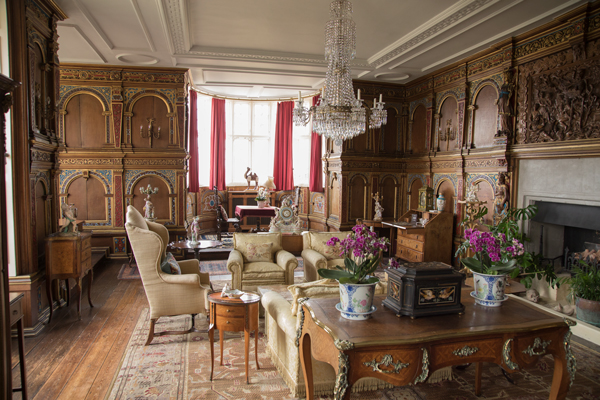
Above the fireplace in the Red Drawing Room is a wooden Dance of Death carving.
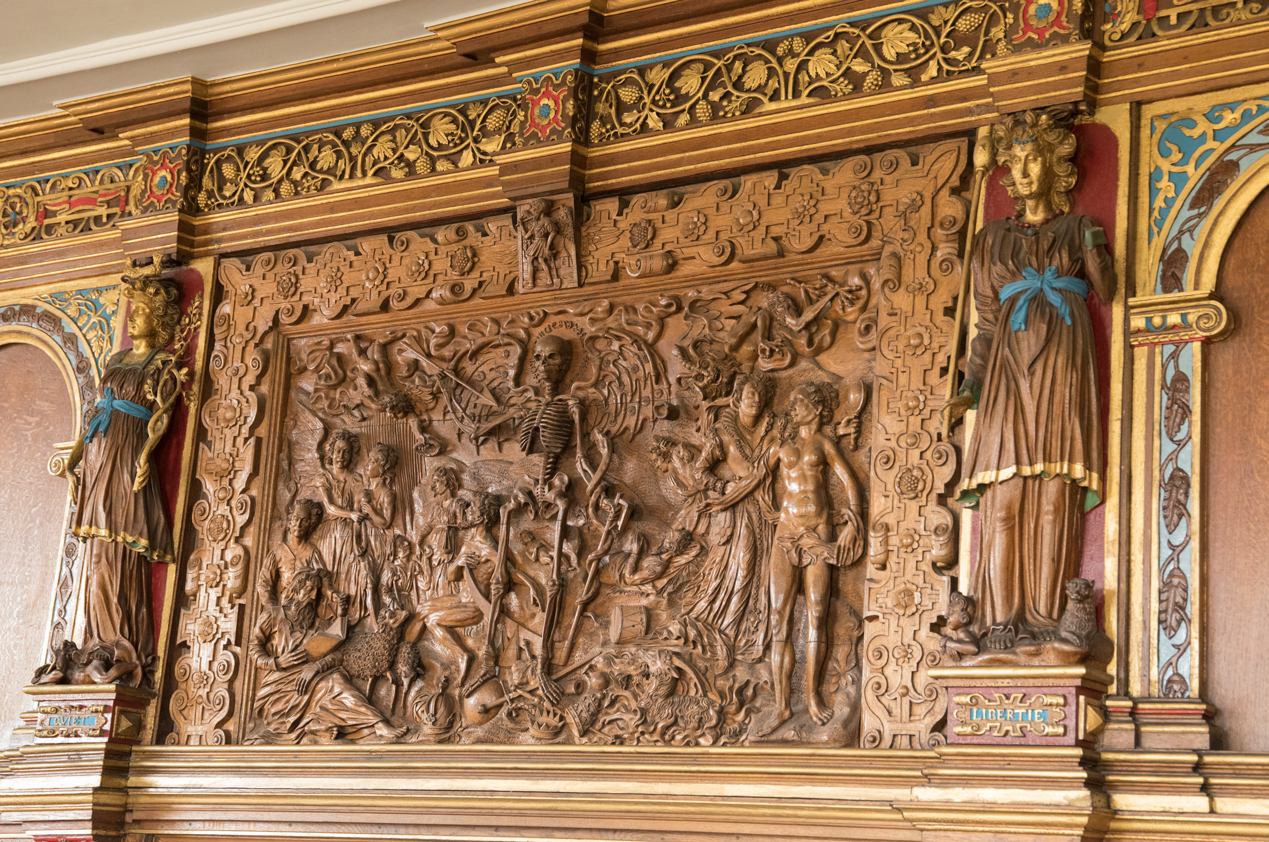
A skeleton is trampling on the symbols of earthly vanity, which include a Papal crown, orb and sceptre, mitre and weapons of war.
On the skeleton's right, the Just are being received by angels; and on the skeleton's left, the Unjust are being claimed by the Devil.
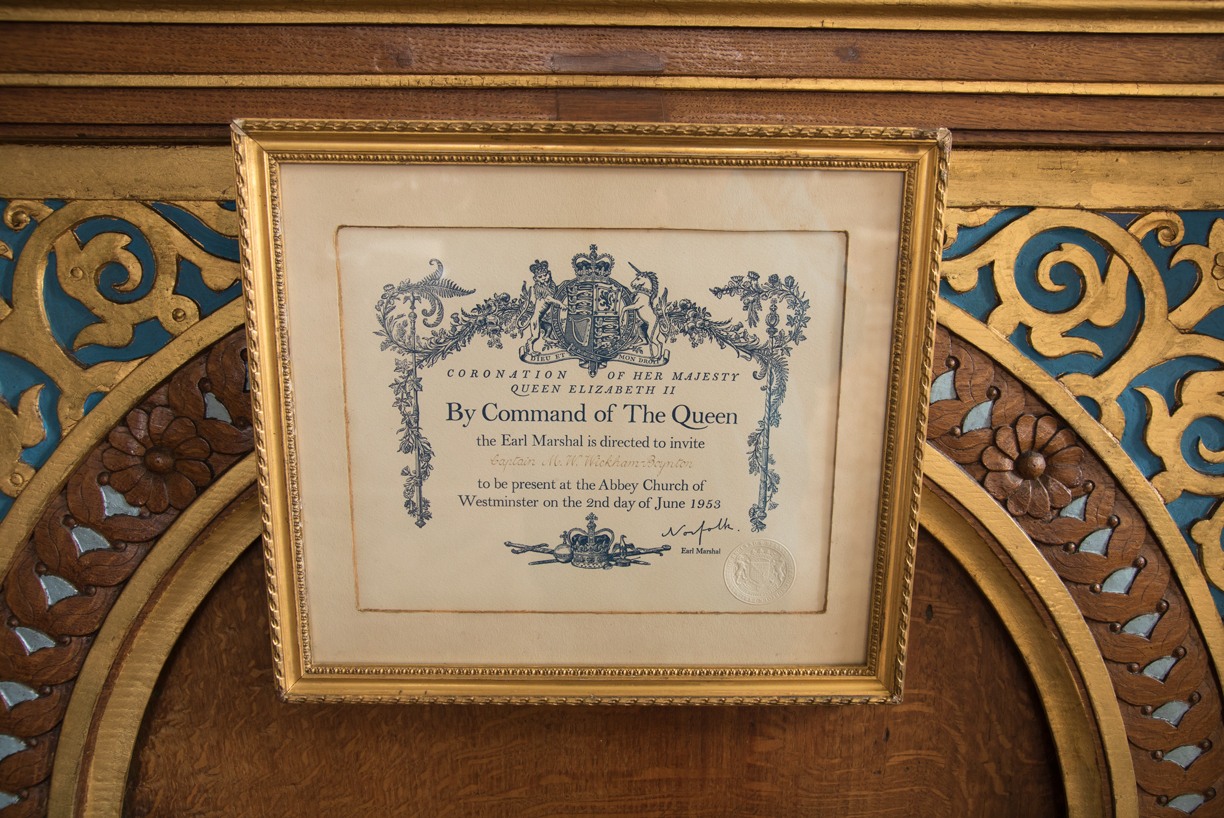
Marcus Wickham-Boynton's invite to Elizabeth II's coronation in 1953 is on the wall in this room.
Now move into the Chinese Room.
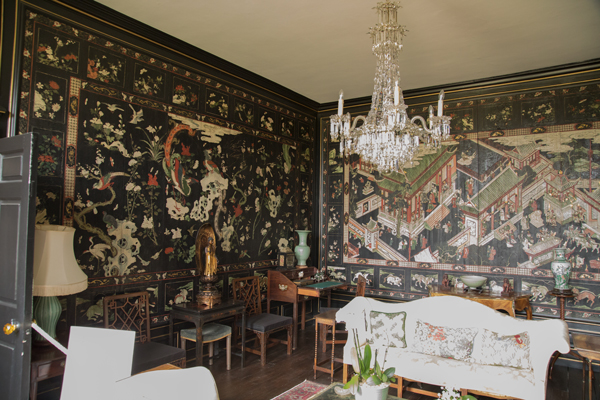
This was a family parlour with oak panelling. In the early 1700s when Chinese culture became very popular, the panelling was replaced with Chinese lacquer screens.
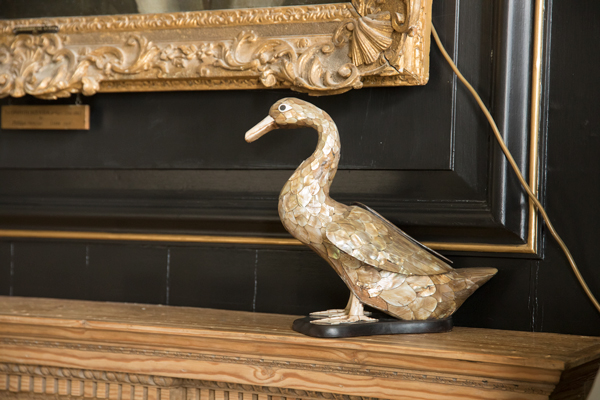
Under the main painting there's a fetching pair of ducks or geese.
The Chinese Room leads on to the Dining Room.
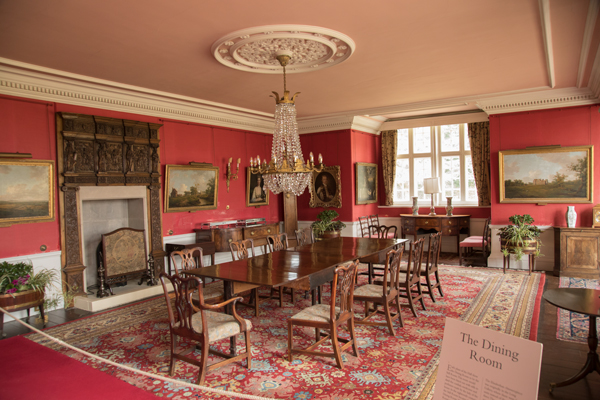
Some of the dining chairs are by Chippendale.
There's a carving above the fireplace: Justice, Prudence, Fortitude and Temperance are the main figures, with Faith, Hope and Charity in between.
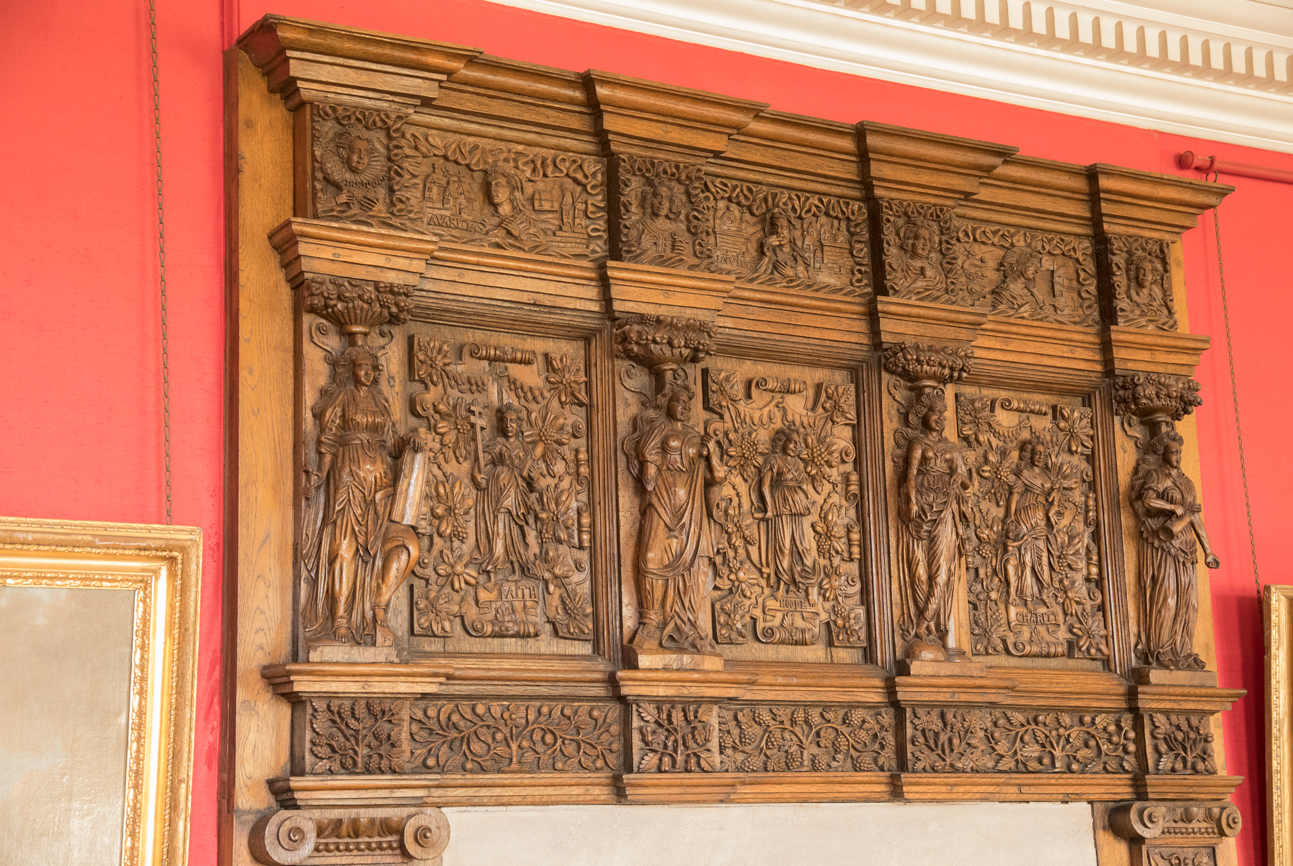
In the frieze above are Greed, Envy and Sloth.
Now take the Oak Staircase to the first floor.
The hall's information says the staircase is a 'continual newel' design which evolved from spiral vice staircases in turrets. It seems to mean that there's a smooth, continuous handrail.
On the first floor you enter the Music Gallery.
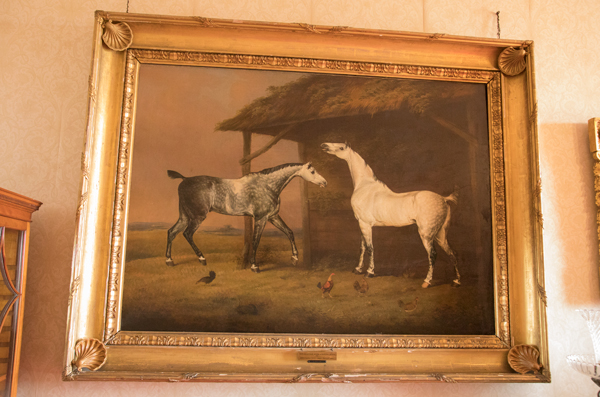
Here there are paintings of horses by HB Chalon.
And sketches by Augustus John (1878-1961), 'an artist with an interesting character and lifestyle' from Tenby in Pembrokeshire.
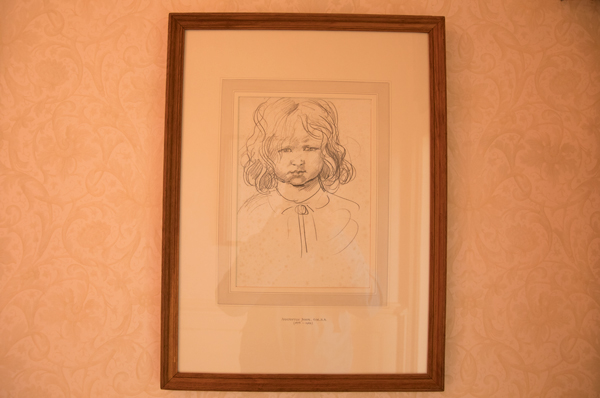
Wikipedia says that for a time John travelled in a caravan, gypsy-style, with his wife Ida, his mistress Dorothy, and their children. He had children with other women too, making a total of around a hundred.
Also, 'he was known for the psychological insight of his portraits, many of which were considered 'cruel' for the truth of the depiction'.
Next on the tour of the hall is the Queen's Bedroom.
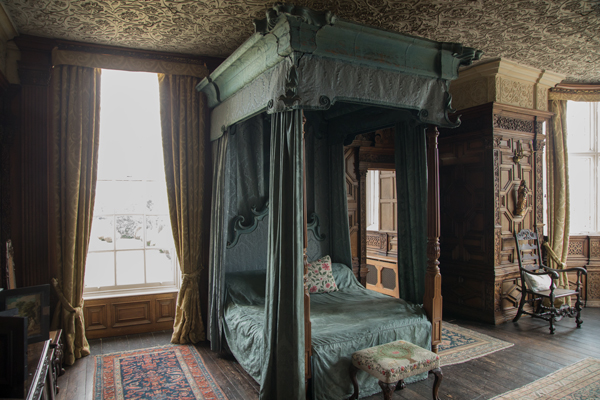
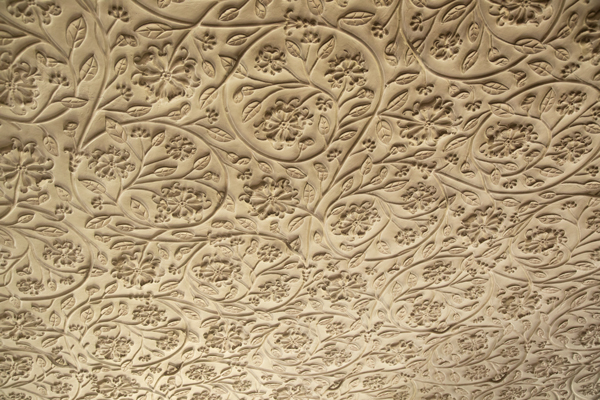
This room has a beautiful ceiling with fronds of honeysuckle.
Above the fireplace is a carved panel showing the Virtues of Patience, Truth and Constance as well as the reward for them, Victory.
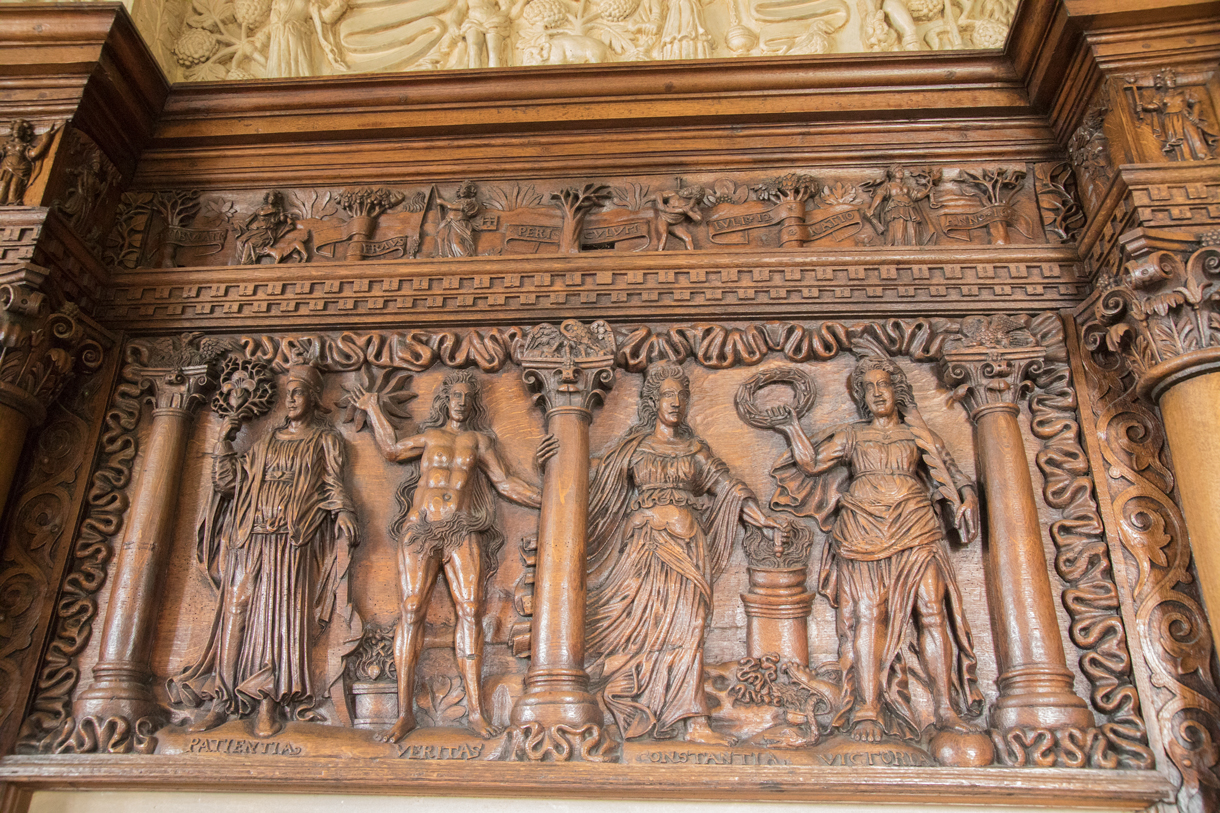
In the frieze above are the antitheses of these values, Tribulation, Fraud, Danger and Reason(?).
The work dates to 12th July 1610 (IULI 12 ANNO 1610).
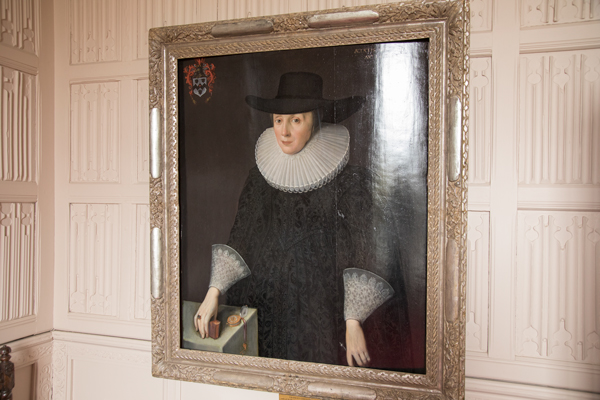
Between the two bedrooms is the Justices' Room, a small dressing room. It contains a portrait of Sir Henry Griffith's eldest daughter Frances, in Puritan clothes.
Now you walk into the King's Bedroom.
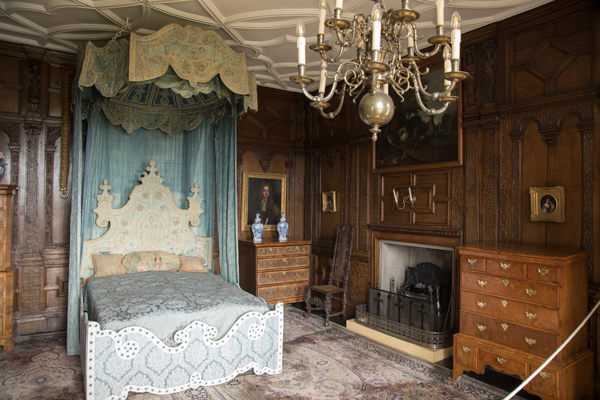
The hall's information boards says that the bedroom door could be locked and opened via a system of cords and pulleys without the occupant getting out of bed.
Next door to the King's Bedroom is the White Drawing Room. There are some Impressionist paintings here, but you're kept at a distance from them by a rope.
Then it's upstairs to the second floor.
The Reading Room is in one of the bays on the second floor.
The Long Gallery runs the length of the main front of the hall, and gives views to Bridlington Bay.
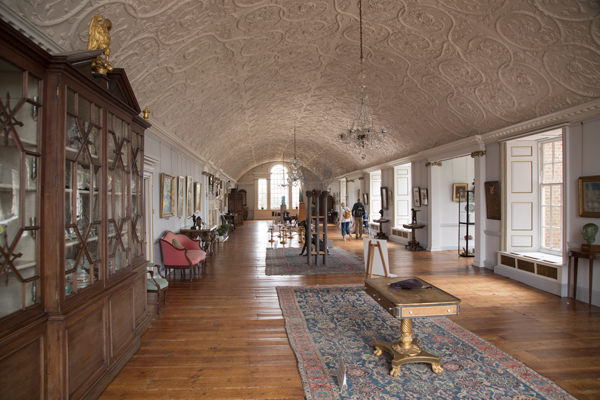
The Long Gallery was divided up into bedrooms at one point in its history, but Marcus Wickham-Boynton restored it in two phases, in 1951 and 1974.
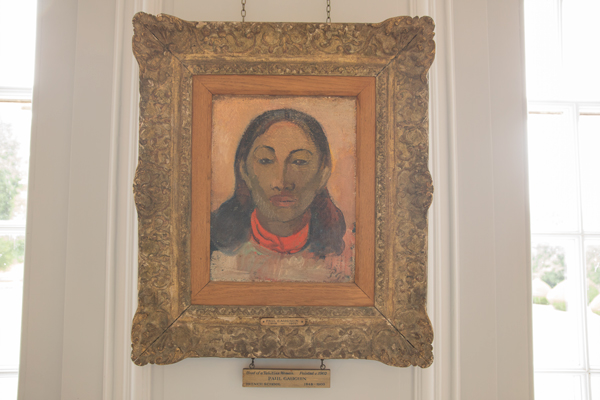
There's a painting by Gaugin, Head of a Tahitian Woman.
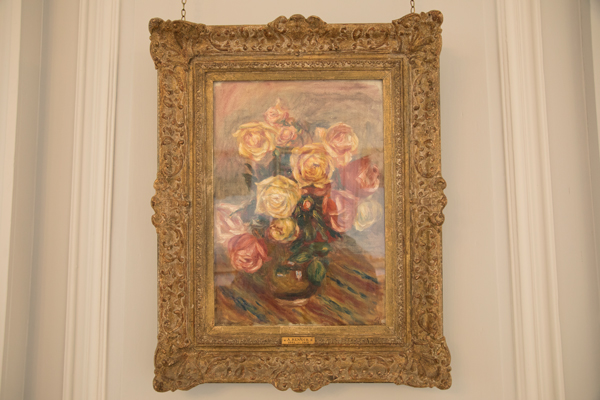
And one by Renoir.
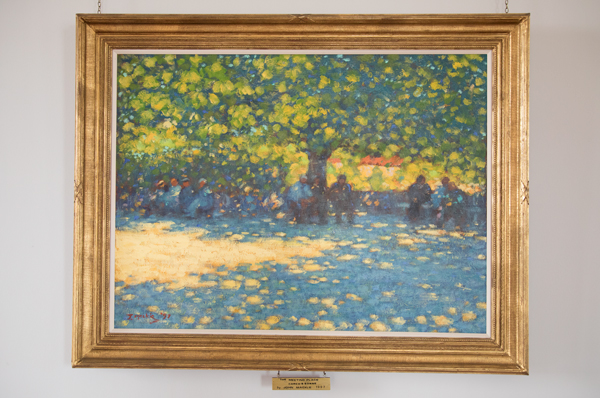
And a John Mackie, The Meeting Place, which shows people sitting under a plane tree in Carcassonne.
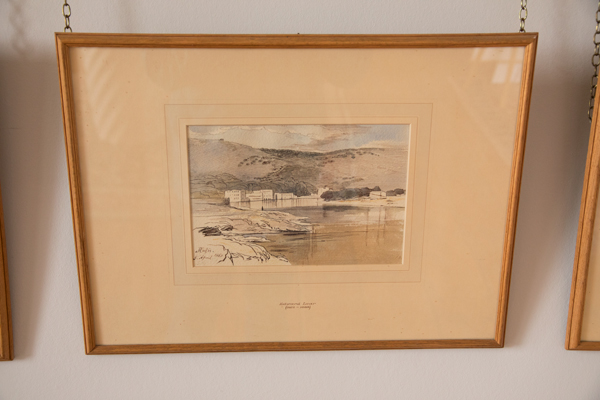
You can also see a number of watercolours by Edward Lear.
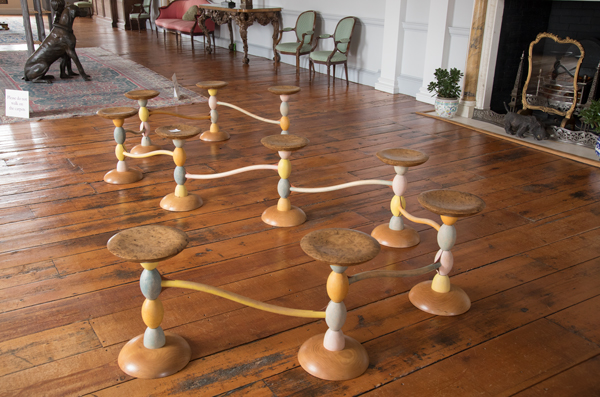
There's information about the furniture-maker John Makepeace. Makepeace was his maternal grandmother's maiden name, and he was born John Makepeace Smith before changing his name.
His pieces here include Gallery Seat - stools with twizzling tops made from elm.
There's Tuscan Obelisk, a chest of drawers made from English yew, sycamore, cedar of Lebanon and hornbeam. There are cypress trees on top, carved from lime wood and painted.
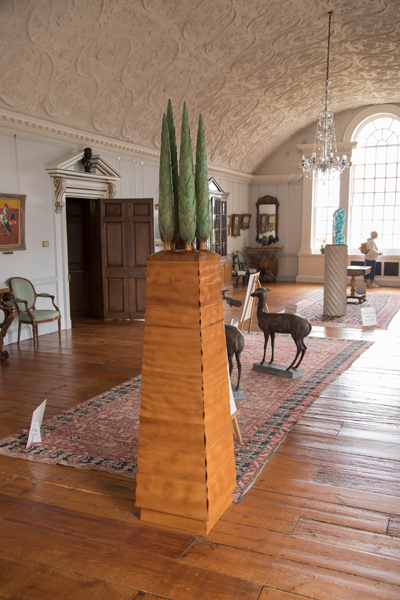
And Coppice, sprouting shelves.
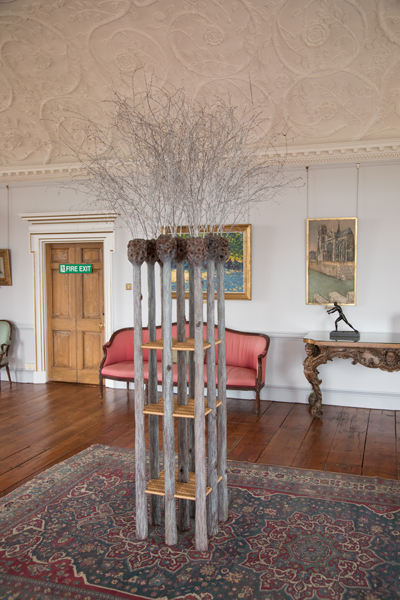
The uprights are of painted lime, the shelves of white willow, and the shoots at the top are willow too.
Traditionally, trees such as willow or hazel were coppiced so that they would produce shoots that could be used to make products such as baskets.
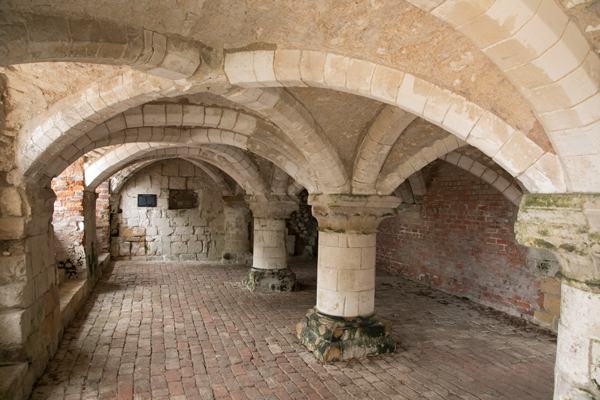
This building is Roger de Stuteville's original manor house from 1173.
You enter it via the Undercroft.
On one of the central columns there's a pattern of small holes which would have taken wooden or bone pegs. They were used to play Nine Men's Morris, a game a bit like noughts and crosses.
'The object is to the the first to removed one's opponent's pieces from the board. One piece my be removed each time the opposing forces form three men in any diagonal, horizontal or vertical line'.
A narrow spiral staircase takes you up to the main room, the Living Quarters.
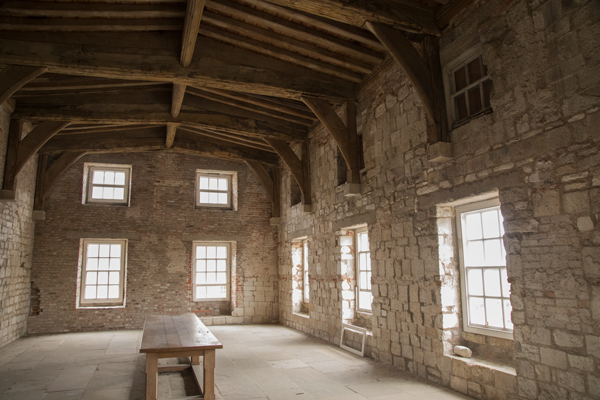
This would have been the dining hall and sleeping accommodation for the Lord of the Manor and some of his retainers.
There would have been other buildings such as chapel, kitchen and stables.
In the 1400s, Sir Walter Griffith added an upper room as his Great Hall, but this is not accessible.
The building was encased in bricks in the 1600s, when it was being used as a laundry block.
At the back of the building there's a water wheel that was worked by a donkey.
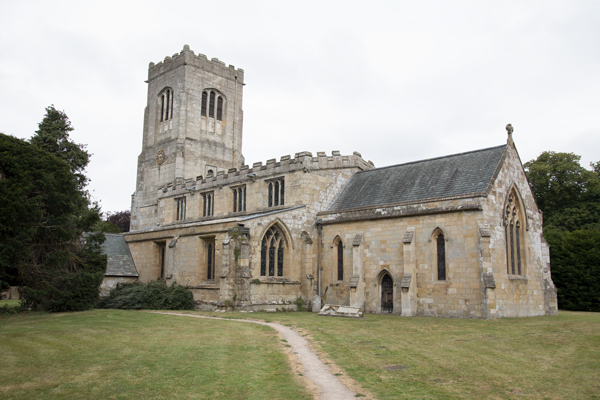
St Martin's Church dates to the 1100s. The tombs of the families who have owned the hall are in there, including an elaborate wall monument to Henry Griffith.
In the mid-1800s, the church's chancel was restored by one of William Wilberforce's sons, Archdeacon Robert Isaac Wilberforce.
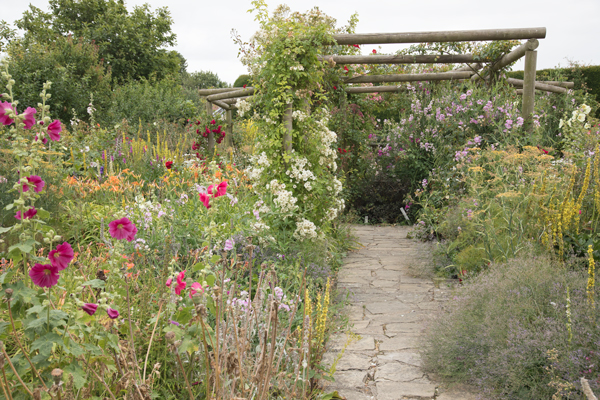
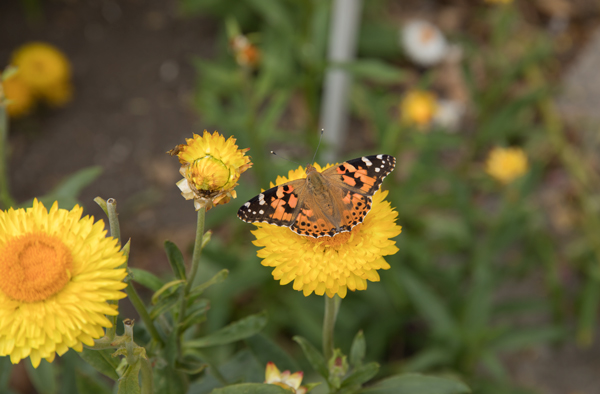
The grounds include a Walled Garden, which is popular with butterflies.
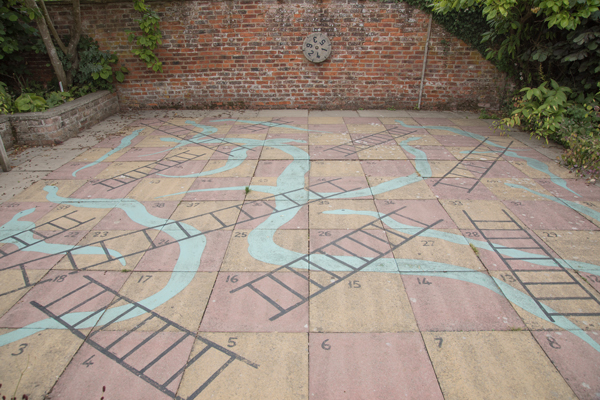
At the bottom of the Walled Garden is an area with giant board games.
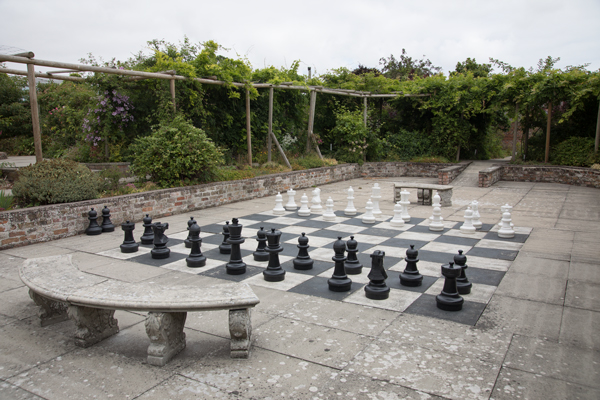
There's chess (above), hopscotch, draughts, and snakes and ladders (below).
Near the Walled Garden is the Maze. North of the hall is a Woodland Area with an Adventure playground.
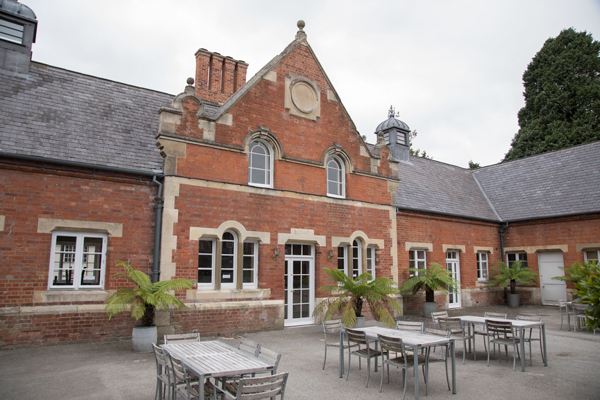
Refreshments and loos are available at the Carriage House.
Elsewhere on the estate is a stud farm, and rental properties.
There are seasonal events at Burton Agnes, including a Jazz & Blues Festival, an Autumn Fair and a Halloween Trail.

Bike Rides in the Yorkshire Dales is available in colour paperback.
Find out more about Bike Rides in the Yorkshire Dales or buy a copy.

Bike Rides In and Around York features a historical city tour, plus family rides, road rides, and mountain bike rides.
Find out more about Bike Rides In and Around York or buy a copy.

Bike Rides in Harrogate and Nidderdale is a book of family, mountain and road bike rides.
Find out more about Bike Rides in Harrogate and Nidderdale or buy a copy.
As an Amazon associate I earn from qualifying purchases.