Cycling in Yorkshire & Beyond

Cycling in Yorkshire & Beyond
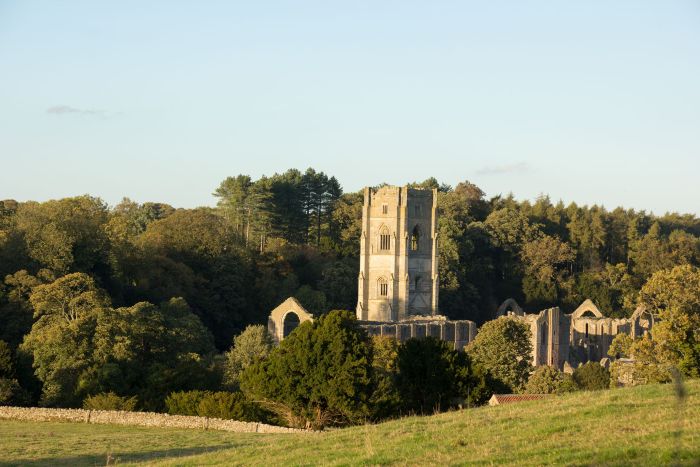
Fountains Abbey is a ruined Cistercian Abbey on the river Skell in North Yorkshire.
It is currently looked after by the National Trust, and is a popular visitor attraction.
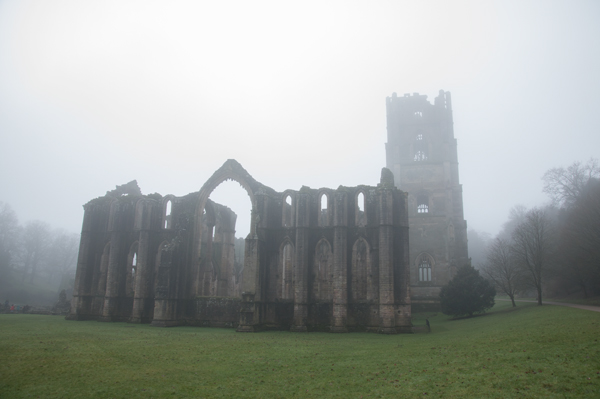
Fountains Abbey was founded in 1132.
It was the result of a split at St Mary's Benedictine Abbey in York. There was a dispute over the practices of the abbey, and the perceived soft and luxurious life being lived by the monks. It boiled over, and thirteen monks including Robert of Newminster had to escape to the church and bar themselves in to avoid physical violence.
The thirteen decided to leave.
Archbishop of York Thurstan gave them land by the river Skell. There were six springs, so the monks called their new abbey Fountains.
In 1133, they applied to join the Cistercians. They were under the direction of Clairvaux Abbey in Burgundy, while Cîteaux was the mother abbey of the order. Fountains was the second Cistercian abbey in England, after Rievaulx.
Geoffrey of Ainai came from Clairvaux to show the monks how to celebrate the eight canonical hours.
The buildings were wooden at first, but soon rebuilt in stone.
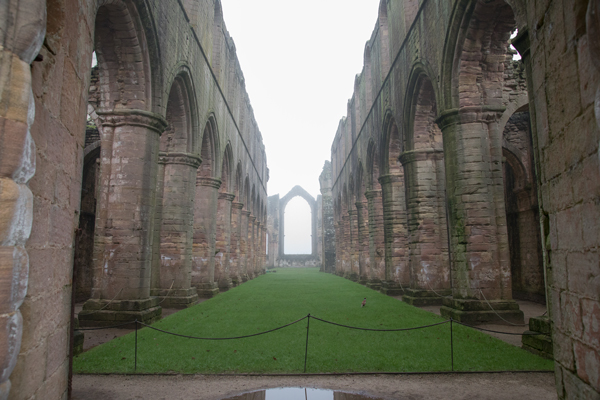
Henry Murdac became abbot in 1143. He was blamed for persuading the Pope not to confirm a man called William as Archbishop of York, and in 1146 a mob of William's friends who were angry with Henry attacked the abbey. Everything burnt except the church.
There was rebuilding to do after the attack.
Inside the abbey's walls were the church and religious buildings, domestic buildings, and industrial and agricultural buildings.
The industrial buildings included a water mill for grinding grain, and a tannery.
Outside the walls were granges - farms.
Fountains Abbey was given land by rich benefactors. They had land in Nidderdale, land at Malham Moor, and a fishery at Malham Tarn.
The maximum extent of the abbey's land holdings was around 1265.
Lay brothers - those who, unlike the cloister brothers, could not read - did much of the agricultural work, as well as mining, quarrying, iron-smelting, fishing and milling.
After the Battle of Bannockburn (1314), in which Robert the Bruce defeated Edward II, the north of England suffered from Scottish raids. The Black Death haunted the country in the mid-1300s.
By the early 1500s though, Fountains had recovered. Marmaduke Huby, abbot from 1495 to 1526, had the church tower built. The dedication is Soli Deo Honor et Gloria (honour and glory to God alone), but it's called Huby's Tower.
The taxable income of the estate in 1535 was £1,115, which made it the richest Cistercian monastery in England.
The last abbot, Marmaduke Bradley, had to surrender the abbey to Henry VIII in 1539 at the Dissolution of the Monasteries.
The buildings were sold to Sir Richard Gresham the following year.
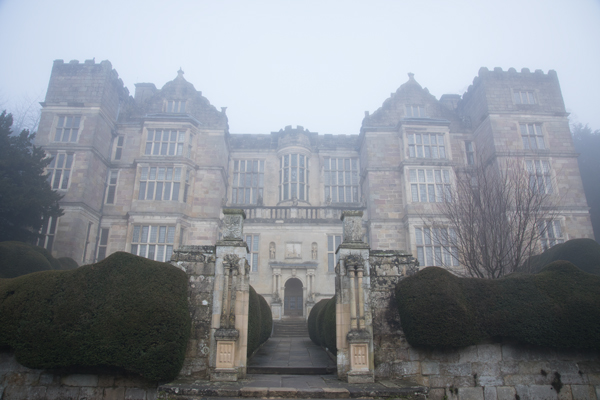
Sir Stephen Proctor was owner from 1597, and he had Fountains Hall built.
In 1767 William Aislabie bought the estate and combined it with Studley Royal.
The National Trust bought it from North Yorkshire County Council in 1983.
Fountains and Studley Royal are a World Heritage site.
As such, they have to assess the impact of climate change on the estate. This has led to the Skell Valley Scheme, which looks to rejuvenate 12 miles of the river Skell, and reduce the risk of flooding.
If you enter at the West Gate and pay at the kiosk, below are some of the elements of a visit more or less in the order that you come to them.
You can see them on the site map.
On the left is Fountains Hall; you can enter and see the downstairs rooms.
It's worth a look at the quiet garden on the right, especially in Summer when there are lots of butterflies.
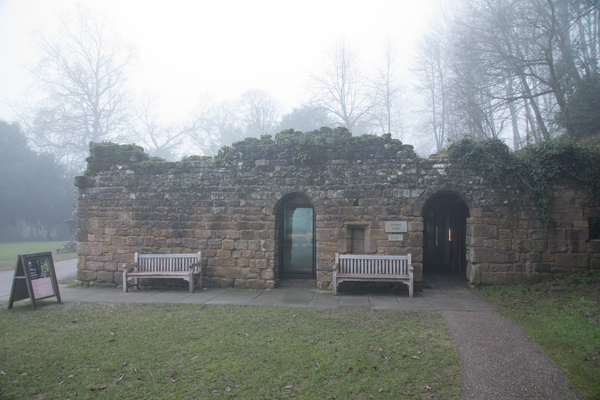
On the left, the Porter's Lodge has an exhibition with the history of the monastery and a scale model.
Once you've looked at the scale model, you can enjoy the abbey ruins.
A leaflet available at the entrance kiosk tells you about the layout of the abbey. Some of the elements include the nave, the Chapel of the Nine Altars, the cloister, the cellarium, and the reredorter.
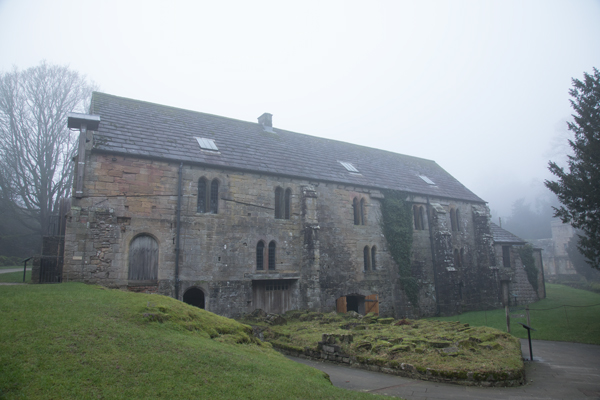
Fountains Mill ground cereals to make flour, which in turn was used to make bread for the monastery. The bread they made was maslin, from wheat, rye and barley.
There's a café by the mill.
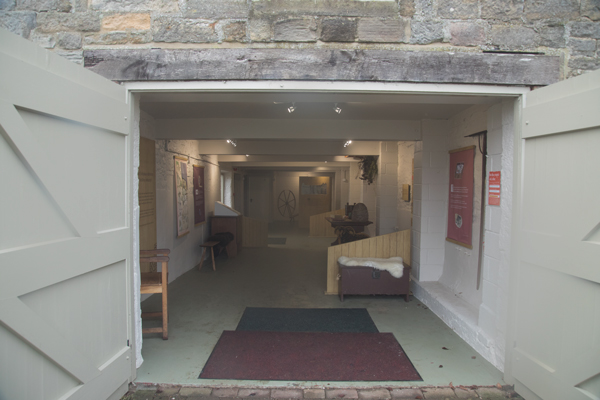
Swanley Grange was one of the farms, probably the closest one to the monastery.
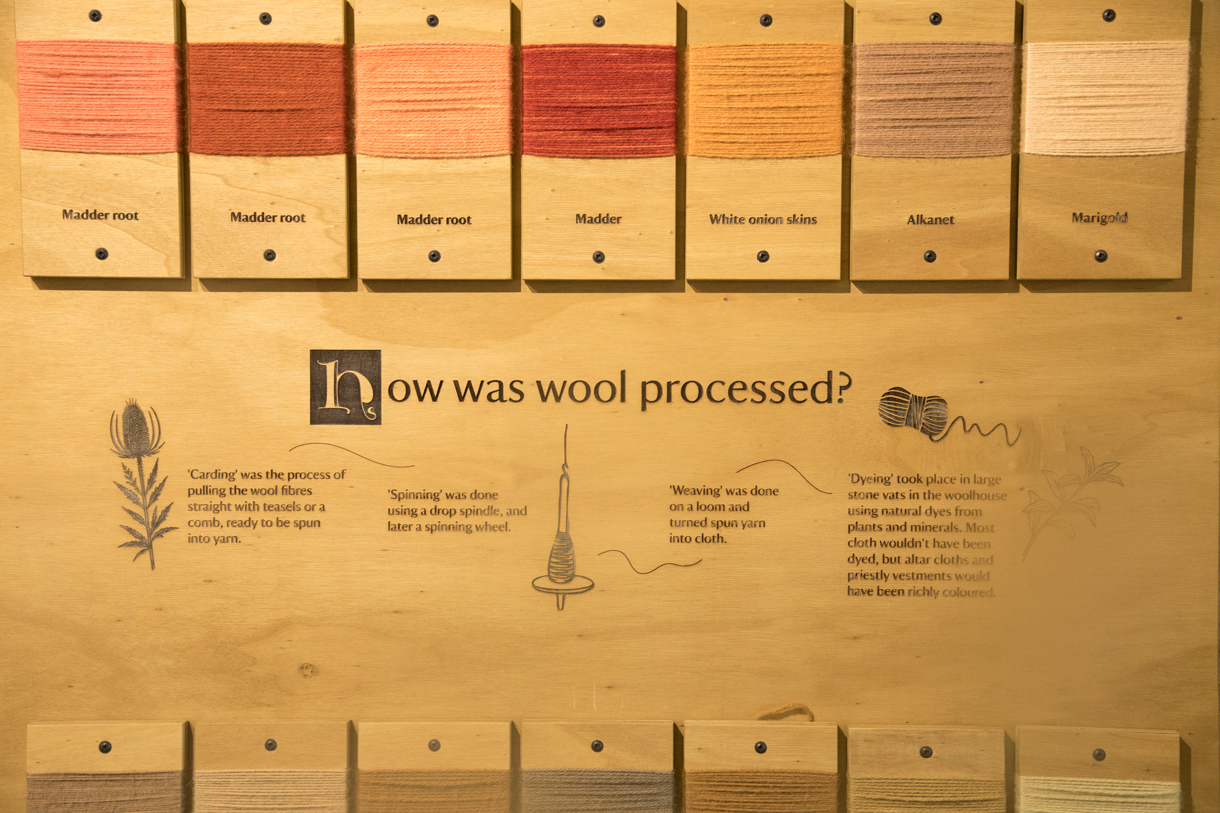
It contains an exhibition with information about sheep-farming and the wool trade. Wool had to be carded, spun, woven and dyed.
The Visitor Centre has a shop and café.
A walk along the Skell and up a little wooded hill brings you to Surprise View, where you can look back to the abbey.
Below Surprise View is the Water Garden, where the Skell is channeled into canals and lakes.
At this east end of Fountains is another entrance gate and café. Go out of the gate and you're in Studley Royal Deer Park.

Fountains Abbey is on the 1:50,000 OS Landranger map number 99, Northallerton and Ripon.

Bike Rides in the Yorkshire Dales is available in colour paperback.
Find out more about Bike Rides in the Yorkshire Dales or buy a copy.

Bike Rides In and Around York features a historical city tour, plus family rides, road rides, and mountain bike rides.
Find out more about Bike Rides In and Around York or buy a copy.

Bike Rides in Harrogate and Nidderdale is a book of family, mountain and road bike rides.
Find out more about Bike Rides in Harrogate and Nidderdale or buy a copy.
As an Amazon associate I earn from qualifying purchases.