Cycling in Yorkshire & Beyond

Cycling in Yorkshire & Beyond
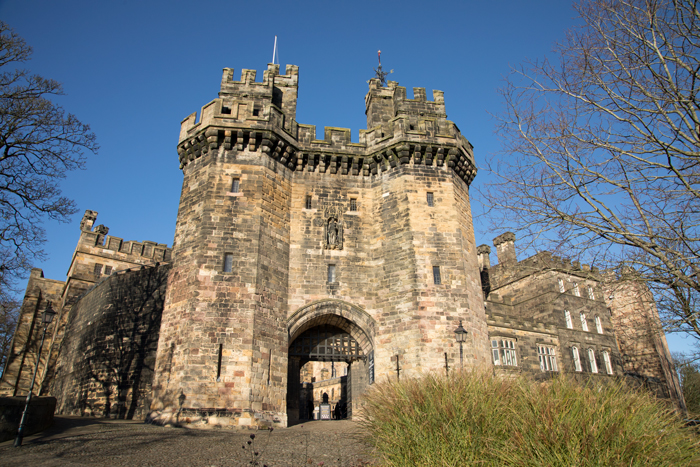
Lancaster is a city on the river Lune and the Lancaster Canal. It has a population of around 52,000, but with 145,000 in the Lancaster district.
It started out as a Roman fort, and the castle on that site has remained important over the centuries.
There was a Port of Lancaster which thrived from trade in spices and slaves. The main shipping facility now is downriver at Glasson Dock.
Although technically a city, Lancaster today is really a bustling market town.
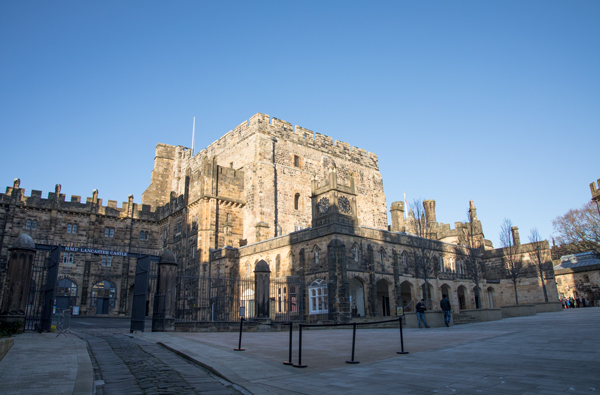
The name Lancaster comes from the city's river and castle.
In the Domesday Book of 1086, it was referred to as Loncastre. Lon is the river Lune, and castre is the castle (originally a Roman fort).
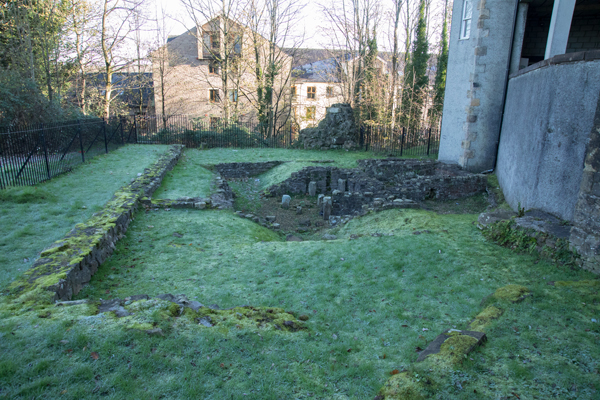
The Romans built a turf and timber fort on the site of the current Lancaster Castle in the 70s or 80s AD. It protected a crossing of the river Lune.
It may have been called Galacum, but other suggested names are Calunium, Lunium or Longovicus.
A civilian town, or vicus, grew up alongside the fort.
The fort was rebuilt in stone in 102AD.
The fort's garrison (71-125AD) was a 480-strong auxillary cavalry unit called Ala Augusta Gallorum Proculeiana, a regiment formed in Gaul (France) by the Emperor Augustus. Proculeiana was the first commander.
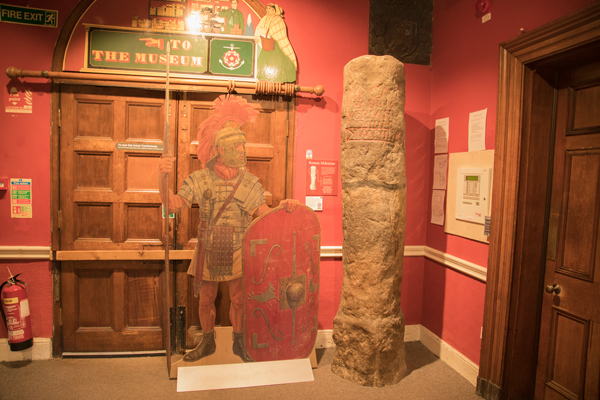
The Insus tombstone dates from this period (75-100AD).
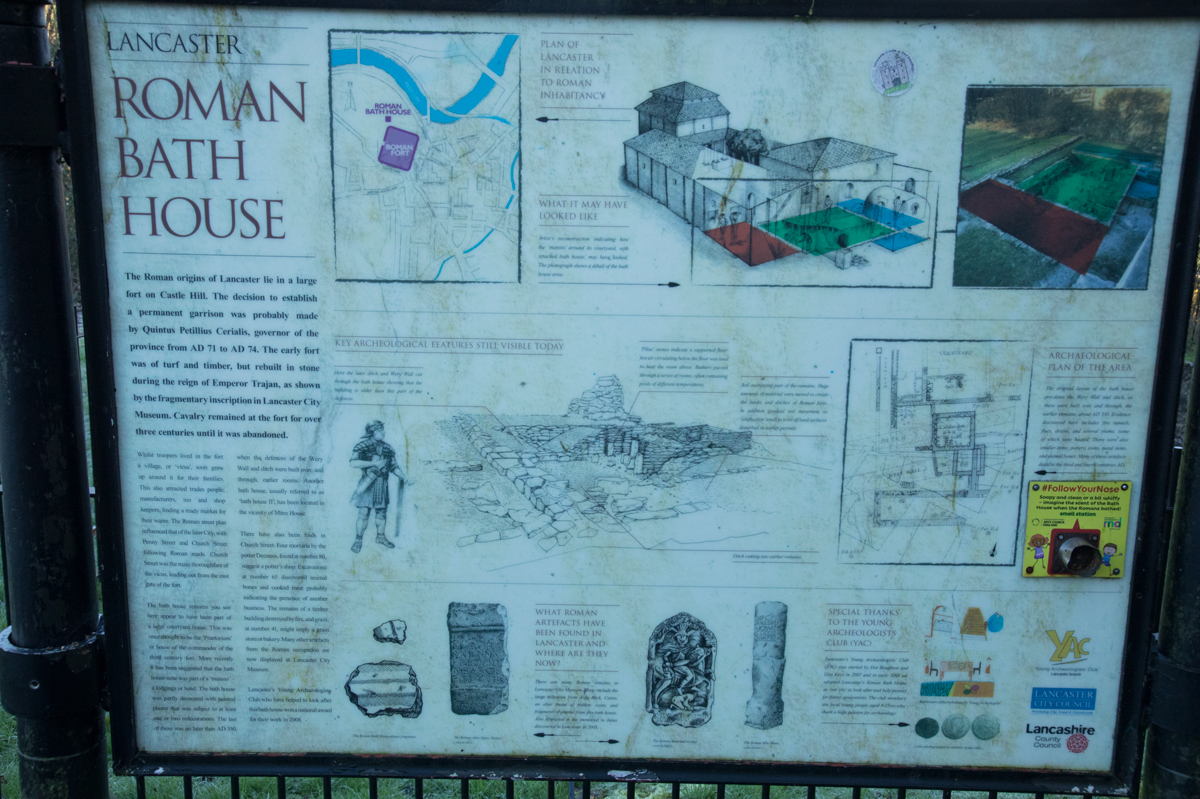
The fort may have been abandoned for a period around 150AD, and again in the early 200s.
When it was reoccupied, it was by the Ala Gallorum Sebosiana, a regiment formed in the Loire Valley region of Gaul from the Sebusiani people.
There may also have been lightermen (boatmen) from the Numerus Barcariorum Tigrisiensium.
The fort was substantially remodelled in the 300s, with a design that included external bastions. A fragment of one those survives - the Wery Wall.
This last version of the fort was part of coastal fortifications to protect Roman Britain from raiders from Ireland.
There were baths near the fort which were demolished to make way for the re-building of the fort in the 300s.
Modern Church Street and St Leonard's Gate are likely the route of the Roman road to a fort at Over Burrow.
Lancaster's Roman fort was in use until the end of Britain's Roman period in the early 400s.
After the Romans left, little is known about Lancaster (not just by me, but by anyone). From the 500s, there may have been a Saxon monastery on the site of Lancaster Priory.
After the Norman conquest of 1066, Lancaster was given to Roger de Poitou.
These are some more key dates in Lancaster's history at this period:
These days, Lancaster lives from tourism, textiles, chemicals, farm machinery, IT and telecoms.
Lancaster University is south of the city centre at Bailrigg. It was founded in 1964 and is a 'plate glass' university.
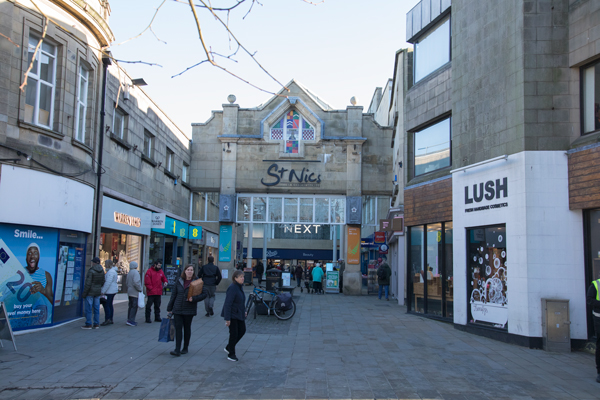
Lancaster has a pedestrianised city centre that includes Market Street and Church Street. The main shopping centre, St Nicholas Arcades, is at the east end of Market Street.
A horseshoe said to have belonged to John O'Gaunt is embedded in the pavement on Market Street.
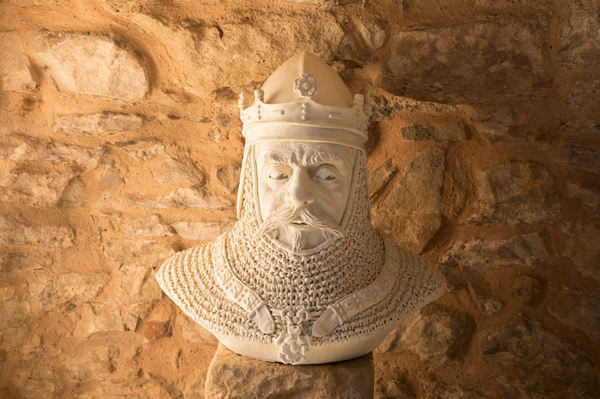
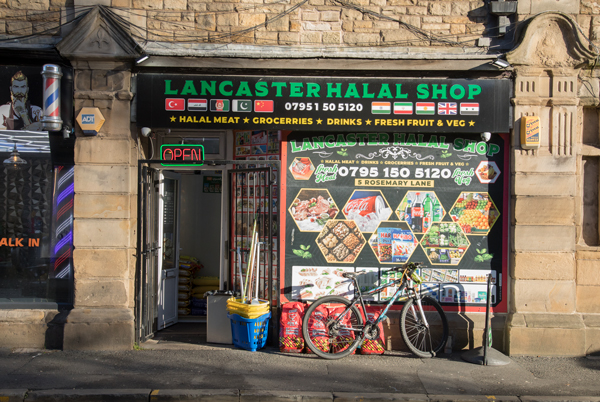
As well as the chain stores there are some small independent shops.
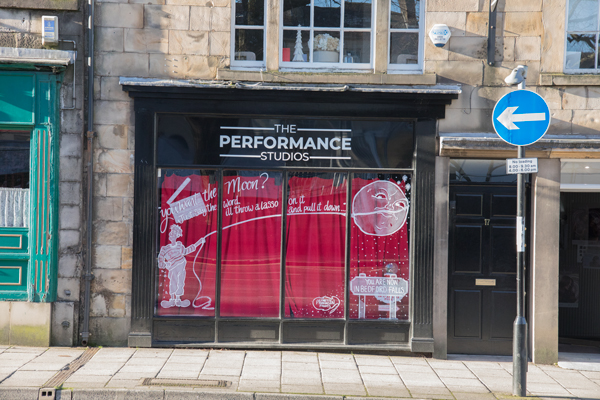
There's a Performance Studio with an artistically-designed storefront.
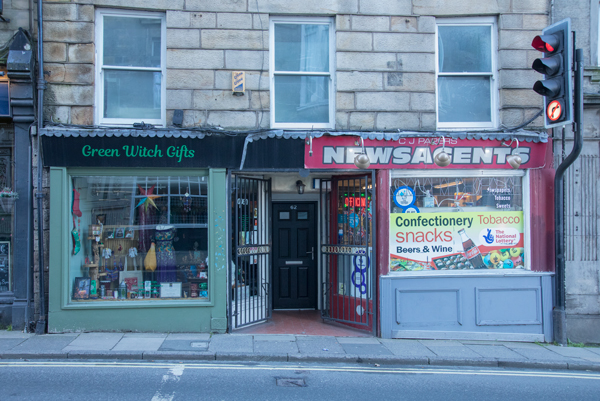
And one shop trades on the town's association with witches.
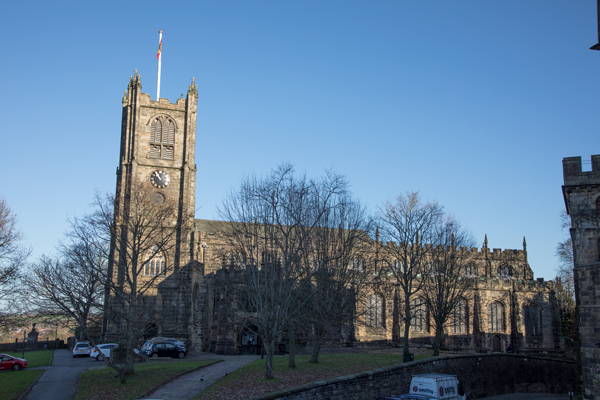
Lancaster Castle is one of the city's main attractions, and it can be visited on a guided tour. It has a Police Museum and a small exhibition on the Pendle Witches.
Lancaster Priory is by the Castle.
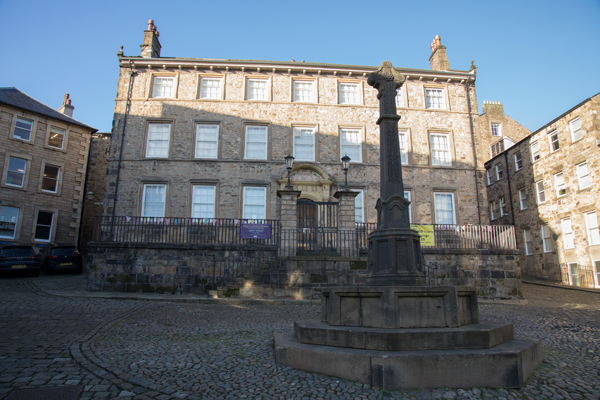
The Judges' Lodgings Museum is at the foot of the Castle, on Church Street.
The Cottage Museum is on Castle Hill.
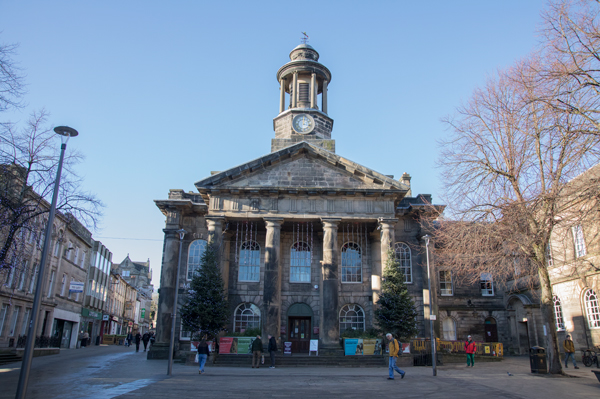
The City Museum is at the Market Square.
As well as the Insus tombstone (see above), it has a Roman milepost.
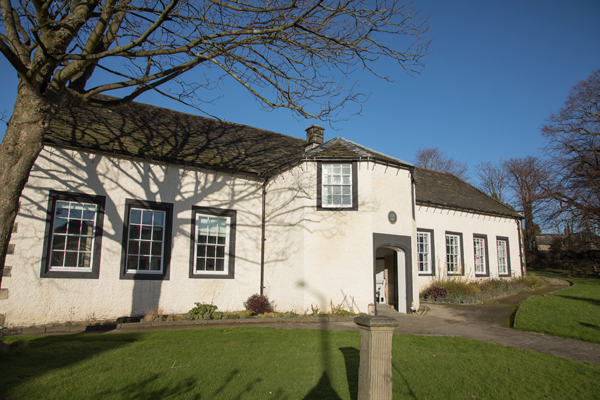
The Friends Meeting House (1708) is near the station.
Lancaster Cathedral is on the other side of the canal to the Castle.
The Ashton Memorial looms over the city ('Lancaster's Taj Mahal').
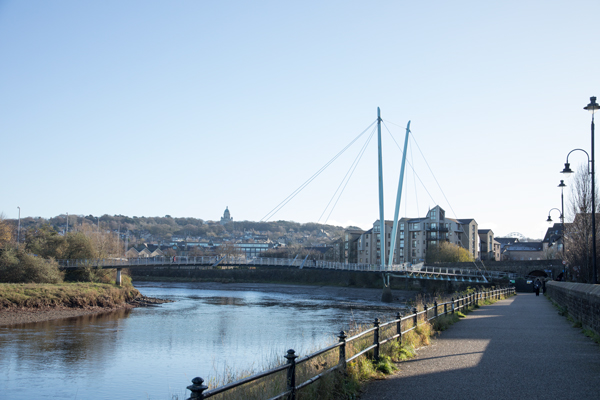
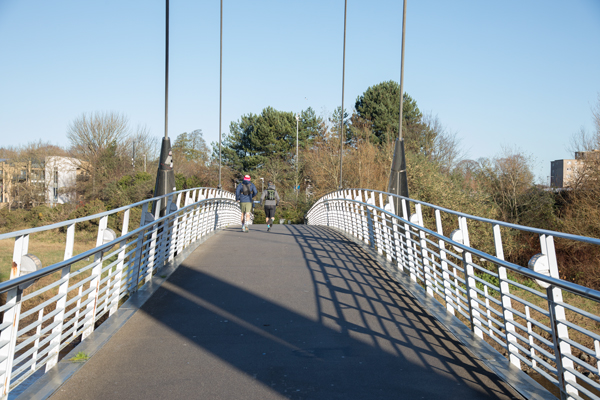
The Millennium Bridge is beautiful and practical for people on foot and on bikes who want to cross the river.
Following the Lancaster Heritage Trail is quite a good way of seeing the highlights of the city.
Artist John Henderson (1770-1853) painted views of Lancaster.
Lancaster has a brass band and a samba drumming band.
John Waite had a hit on both sides of the Atlantic in the 1980s with the song Missing You.
More up-to-date Lancaster bands include The Lovely Eggs and Massive Wagons.
The football club is Lancaster FC.
There's an athletics track at Salt Ayre.
Track cyclist Jason Queally is from Lancaster.
Lancaster people in the world of showbiz include Jim Bowen and Jon Richardson.
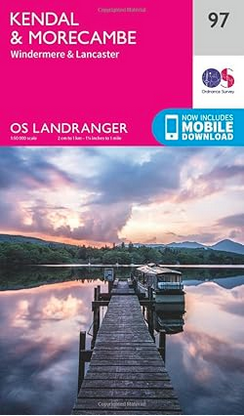
Morecambe is on the 1:50,000 OS Landranger map number 97 Kendal and Morecambe.
OS Landranger 97 on Amazon (affiliate link).
As an Amazon associate I earn from qualifying purchases.

Bike Rides in the Yorkshire Dales is available in colour paperback.
Find out more about Bike Rides in the Yorkshire Dales or buy a copy.

Bike Rides In and Around York features a historical city tour, plus family rides, road rides, and mountain bike rides.
Find out more about Bike Rides In and Around York or buy a copy.

Bike Rides in Harrogate and Nidderdale is a book of family, mountain and road bike rides.
Find out more about Bike Rides in Harrogate and Nidderdale or buy a copy.