Cycling in Yorkshire & Beyond

Cycling in Yorkshire & Beyond
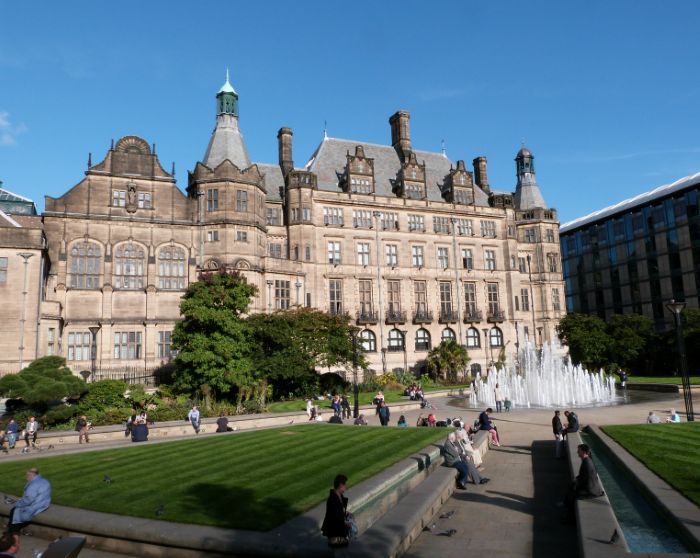
This is a brief guide to the city of Sheffield.
Sheffield is a city of 582,493 people (2024 estimate), the sixth biggest in England. It became a city in 1893.
Sheffield is associated with steel production, an industry which began in 1692.
Innovations developed in Sheffield include the crucible steel process (1742), the Bessemer process (1856), and stainless steel (1913).
In the 1970s and 1980s, international competition caused the decline of the local iron and steel industry, coinciding with the collapse in coal mining. Since the late 1990s, the city has redeveloped and grown.
It is traditionally a Labour city, and in the 1980s under David Blunkett it was sometimes referred to as the 'Socialist Republic of South Yorkshire.' More recently, there have been significant numbers of Liberal Democrat, Green Party, and even Reform Councillors.
Sheffield has an estimated two million trees - the highest ratio of trees to people of any city in Europe. Residents had to engage in a years-long battle to save trees from the council's 2012 Streets Ahead programme, or Sheffield Chainsaw Massacre.
Sheffield has two universities, the University of Sheffield, and Sheffield Hallam University, with 61,000 students altogether.
In the Iron Age, the area was occupied by the Brigantes tribe. After the Romans, it may have been part of the British Celtic kingdom of Elmet.
The settlements that grew into Sheffield, though, were of Anglo-Saxon and Danish origin. The forerunner of Sheffield was probably situated by the river Sheaf, and begun between the 500s and the 800s.
The name Sheffield derives from the river Sheaf.
'Sheaf' is probably a corruption of the Old English shed or sheth, meaning divide or separate, and 'field' comes from the Old English feld, meaning a forest clearing.
Sheffield suburbs ending in ley (a forest clearing) or ton (a farmstead) were probably established by Anglo-Saxons. Examples include Tinsley and Owlerton. After the Norse invasions of the 800s, new hamlets were created, and their names often end in thorpe, a Viking word for a farmstead. This includes Grimesthorpe, and Netherthorpe.
Sheffield Castle was built after the Norman Conquest, to control the local population. (Sheffield Castle was razed during the English Civil War in the 1640s, and its ruins are buried under Castle Market).
By 1296 a market had been established at Castle Square. Sheffield was a small market town at this time.
In the 1300s, Sheffield was already known for knives - we know this from Chaucer. By the early 1600s, it was the main centre of cutlery production in England.
Sheffield expanded during the Industrial Revolution, and back-to-back terraced houses were built. In 1937, George Orwell wrote:
'Sheffield, I suppose, could justly claim to be called the ugliest town in the Old World.'
By 1959, apparently the situation had not improved, as Nikolaus Pevsner wrote that Sheffield was 'architecturally a miserable disappointment.'
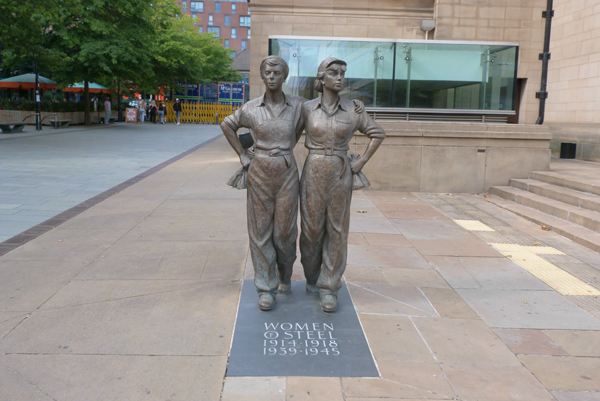
During World War II, Sheffield made weapons and munitions. This made it a bombing target, and there were raids, especially on 12th & 15th December 1940 - known as the Sheffield Blitz.
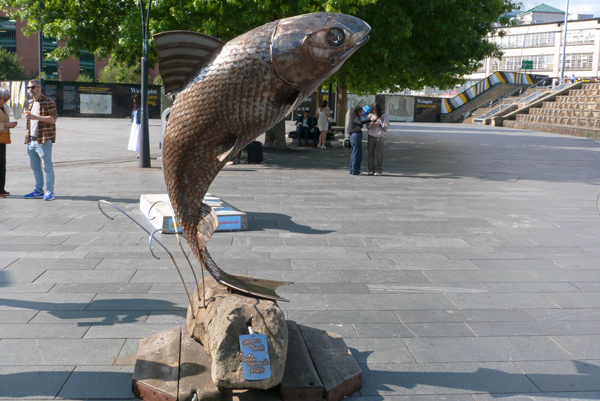
There has been considerable redevelopment following industrial decline, with the building of Meadowhall shopping centre, and venues for the 1991 World Student Games, including the Don Valley stadium (closed in 2013 and demolished), Sheffield Arena and Ponds Forge.
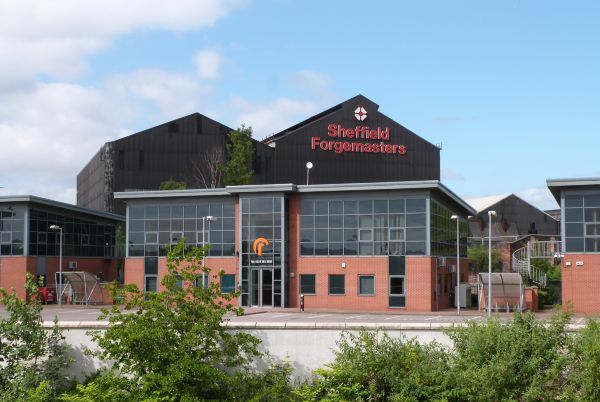
Only one steelworks remains (Forgemasters), and the economy now depends on offices and call centres, as well as public sector employers such as local government, the universities (Sheffield and Hallam), and the hospital.
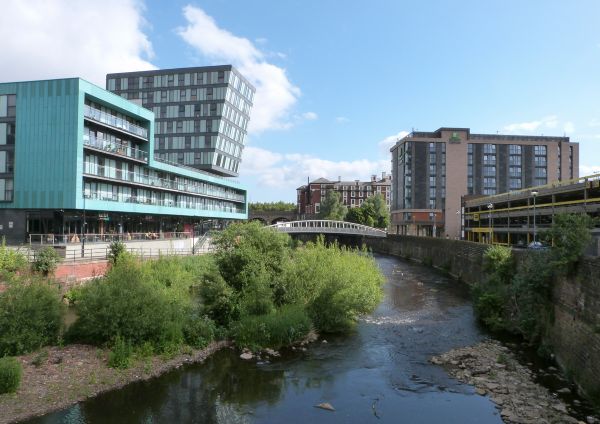
Sheffield is in a natural amphitheatre, created by the hills around the city, and is at the confluence of the rivers Don, Sheaf, Rivelin, Loxley, and Porter.
It is made up of several former villages, which perhaps accounts for the large areas of the city which are green space.
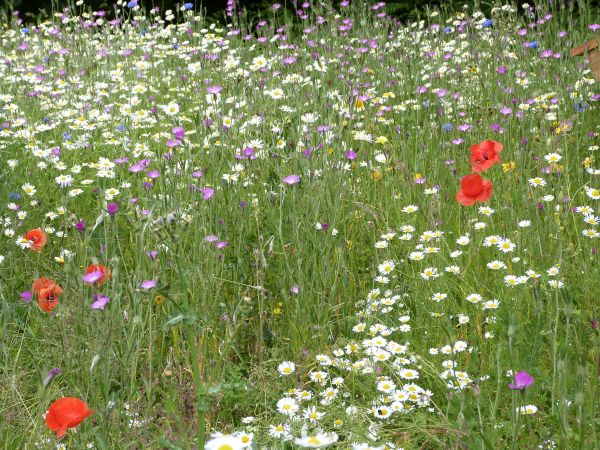
Shopping areas in Sheffield include The Moor, Fargate, Orchard Square, and the Devonshire Quarter.
There's also Meadowhall north east of Sheffield, by the M1's Tinsley Viaduct.
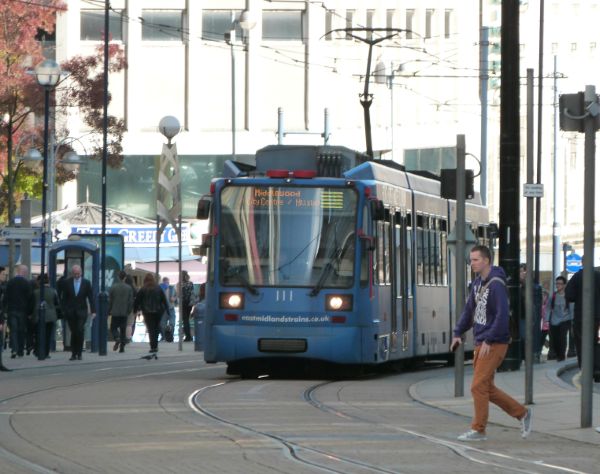
Perhaps the best-known means of transport in Sheffield is the Supertram. It's a light rail tram system which has been running since 1994.
Cycling in Sheffield is promoted by CycleSheffield. They campaign for a cycle-friendly Sheffield where anyone can choose to make their journey by bike.
There is some good cycling infrastructure in Sheffield, including the West Bar Dutch roundabout.
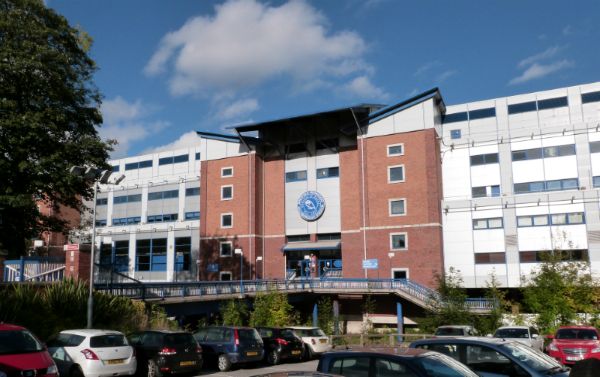
Sheffield has two professional football clubs - Sheffield Wednesday and Sheffield United.
There's a rugby league team, Sheffield Eagles, who won the Challenge Cup in 1998, and an ice hockey team, Sheffield Steelers, who play in the Sheffield Arena.
Some of the city's sports venues were built for the World Student Games in 1991, including the Sheffield Arena, Pond's Forge swimming and diving centre, and the Don Valley Athletics stadium (since closed and demolished). Athletics in Sheffield will now take place at the smaller Woodbourn Road Athletics Stadium.
Also closed is the Sheffield Ski Village since the main building was destroyed by fire on 29th April 2012. This is particularly disappointing because James Woods, a British Olympic competitor at the Sochi 2014 Games, learned to ski there, as did James Machon and Katie Summerhayes - see this BBC report.
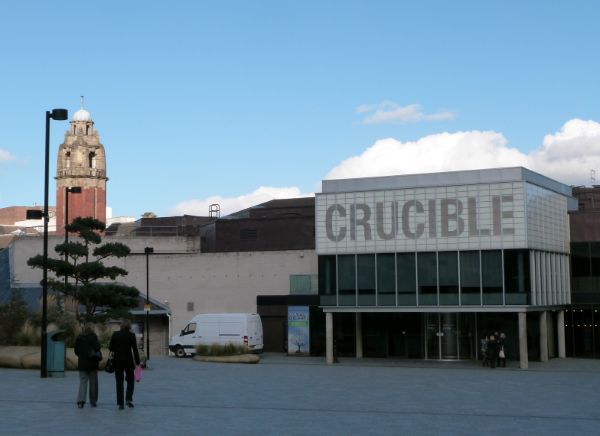
Sheffield Crucible has a long association with snooker, hosting the World Snooker Championships.
There are several cycling clubs in and around Sheffield, including Sheffrec,
Women's Cycling Sheffield, Sharrow Cycling Club, and Rutland.

Bike Rides in the Yorkshire Dales is available in colour paperback.
Find out more about Bike Rides in the Yorkshire Dales or buy a copy.

Bike Rides In and Around York features a historical city tour, plus family rides, road rides, and mountain bike rides.
Find out more about Bike Rides In and Around York or buy a copy.

Bike Rides in Harrogate and Nidderdale is a book of family, mountain and road bike rides.
Find out more about Bike Rides in Harrogate and Nidderdale or buy a copy.
As an Amazon associate I earn from qualifying purchases.