
Active Travel England Design Assurance Service
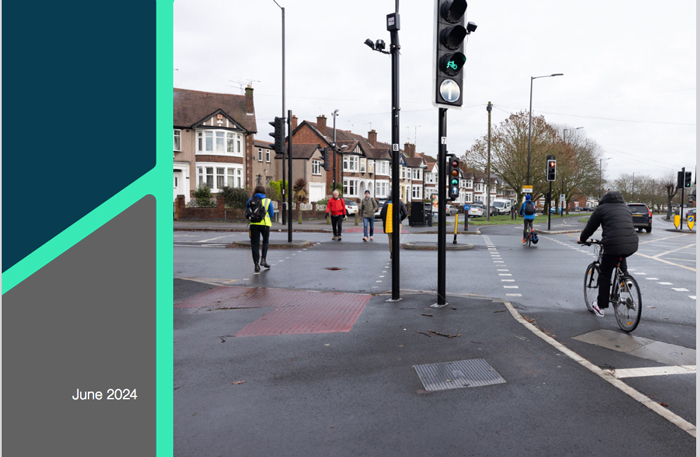
Active Travel England (ATE) has formally launched guidance about their Design Assurance Service to help local authorities.
The aim of the service is to ensure that government-funded active travel or cross-modal schemes follow best practice and are high-quality, safe and accessible.
The Guidance
The guidance says:
‘Design assurance services involve the application of tools, checks and other processes to ensure quality and safety are designed into new and existing infrastructure and comply with current guidance’.
The objective of design assurance is to achieve better outcomes for active travel and accessibility. This is to be done by:
- using the ATE Route Check Tool to ensure there are no conflicts with policy or design guidance, and to identify critical safety issues
- checking the Summary Principles in LTN 1/20 have been applied
- signposting designers to examples of good practice
- giving practical design recommendations
A critical safety issue is a design that creates an increased risk of collision for people walking, wheeling or cycling.
Design assurance can be done through design surgeries or design reviews.
Design Surgeries

A design surgery is somewhat informal. It is a way of resolving issues before or after a design review, or seeking advice on a specific design point.
The council asks for a design surgery, and if the request is granted it should take place within 15 days. The council meets with an ATE Inspector, typically for 30 minutes to 2 hours and often online; the Inspector gives feedback.
Councillors or stakeholders may attend if the council officers agree.
Design Reviews

Design reviews are more formal.
They can take place at feasibility stage or at change control points (when the council asks to amend the scheme). ATE does a desktop design review.
A design review report will be issued by ATE. Policy conflicts and critical safety issues will be highlighted.
Prioritising Requests
ATE prioritise requests according to four criteria, including the value of the scheme and the council’s capability level.
The guidance does not say how the capability level affects the prioritisation of a request. For example, if your local authority has a very low rating, will they get help earlier or later from ATE?
Update: I understand that ATE give the most support to low-capability authorities who are trying something ambitious.
Resolving the Issues Identified
Policy conflicts and critical safety issues will be given reference numbers in design review reports, and councils will be expected to provide evidence that they have been dealt with.
Design review outcomes can inform ATE’s capability assessments of authorities, which in turn affects the level of funding councils receive.
Combined Authorities
There is a cryptic comment about the procedure for councils that are part of a Combined Authority – which applies to York and to North Yorkshire.
‘For local authorities within a combined authority, the route for ATE’s design assurance is via a design review panel or equivalent process held by the combined authority. Please contact your combined authority for more information’.
Area Based Traffic Management Schemes

A note in the guidance explains what a policy conflict is (well, sort of).
Policy conflicts apply to area based traffic management schemes, which can include the use of modal filters to stop rat-running through a residential area.
I speculate, but I don’t know, that this part of the guidance – applying rules on policy conflicts to area based traffic management schemes – may be a hangover from Mr Sunak’s anti-active travel, pro-motor vehicle agenda.