
Cycling UK Getting There With Cycling 2026
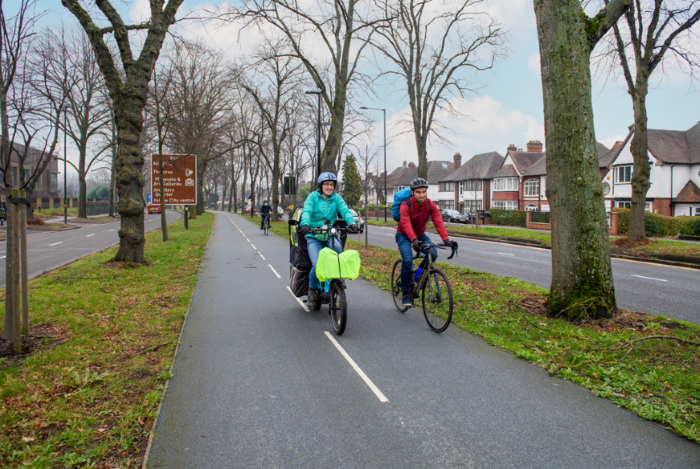
Cycling UK recently published its Getting There With Cycling report 2026, an evidence review of the case for separated cycling infrastructure.
Introduction
The Introduction defines cycling infrastructure, and says that the report is ‘an unashamed sales pitch to national and local government, giving 12 reasons why they must get there with cycling’.
The twelve reasons follow.
1) Boost Safety and Confidence
This section says that 76% of cyclists in London felt safe on designated bike routes, whereas only 40% were confident on other roads.
Protected cycle routes reduce injuries by 40 to 65%, while white line cycle lanes do more harm than good.
20mph zones in London reduce KSIs by 34%.
2) Tackle the Cost of Living
Other than mortgage payments, transport is the largest expense for rural households, and the second largest for urban households.
Average UK families spend only 30p a week, or £15.60 a year, on bicycle maintenance, making it an affordable form of transport.
3) People Want to Cycle
A 2024 More in Common survey found that 63% of respondents agreed with the statement ‘the UK government should invest more in improving public transport and active travel, even if it means taking road space away from cars’.
Only 17% disagreed, giving net +46% support.
The report references other similar polls.
4) People Will Cycle
The report gives several examples of new cycling infrastructure leading to increased cycling rates.
One of them is Glasgow’s South City Way; a year after it opened, cycles outnumber cars.
5) Boost Urban Productivity and Our Economy
In 2025, congestion cost the UK economy an estimated £11 billion. Walking, wheeling and cycling are much more space-efficient than driving, and cut congestion.
Cycling’s health benefits also lead to increased productivity and 27% fewer sick days.
6) Real Returns on Public Investment
The UK government estimates a BCR of 5.62 for cycling and walking schemes, and other estimates are up to 13.
Motorway upgrades and bypasses tend to have BCRs between 3 and 4.
7) Support Local High Streets
In a Leicester study, the vacancy rate of shop premises was 3% on pedestrianised streets, but 15% on streets with 200-500 vehicles per hour.
Reinvigorating high streets means designing them for people not motor vehicles.
8) A Building Block for the Nation’s Health
Cycling is the easiest way to incorporate physical activity into everyday life.
Physical activity is shown to reduce a range of health risks. A large-scale Scottish study found cycling to work is linked with:
- a 45% lower risk of developing cancer and
- a 46% lower risk of cardiovascular disease
9) Set Children Up for a Brighter Future
In 2025, half of all children did not achieve the recommended minimum amount of daily physical activity. This affects their learning and attainment.
10) Help People Age Well
Cycling can enhance quality of life for older people by improving health and well-being, and can extend life expectancy.
11) Cut Air Pollution
Cycling is a zero-emission form of transport, and replacing short car trips with cycling reduces air pollution.
12) Cut Carbon Pollution
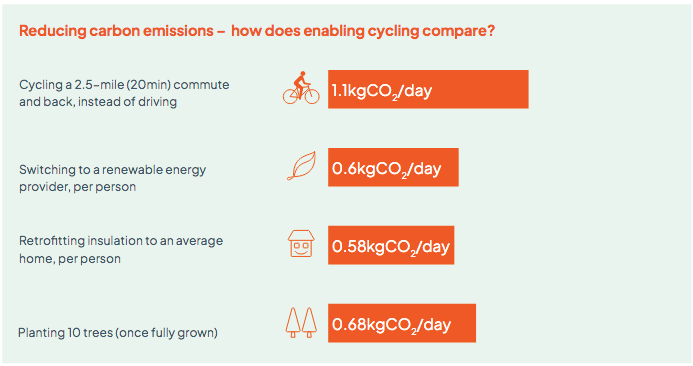
Domestic transport is the UK’s biggest single source of greenhouse gas emissions. Cycling and e-bikes have the capacity to reduce the UK’s emissions.
Recommendations
To unlock the benefits outlined in the report, Cycling UK recommends:
- Sufficient funding – increasing investment in walking, wheeling and cycling to £50 per person per year.
- High-quality standards – design standards and local authority capacity and capability.
- Clear and ambitious targets – government should set stretching targets, backed by monitoring and evaluation.
- Political leadership – leading the cultural change required to put cycling on equal footing with other modes of transport, helping to normalise active travel.
The case for cycling infrastructure is unarguable, and Cycling UK’s recommendations are right – but will the report change anything?