Cycling in Yorkshire & Beyond

Cycling in Yorkshire & Beyond

Ripon is the third smallest city in England, with a population of 17,248 (2024 estimate).
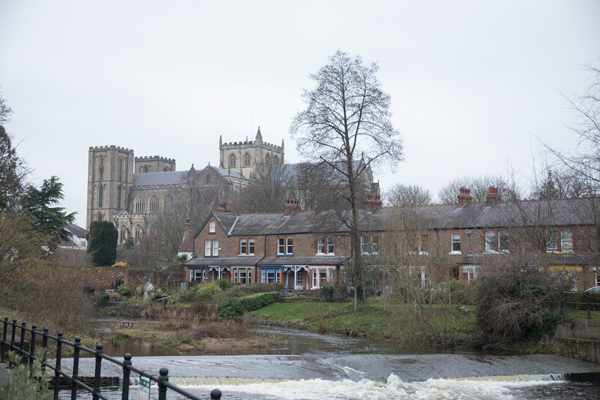
It is a Cathedral city at the confluence of the rivers Laver, Skell, and Ure.
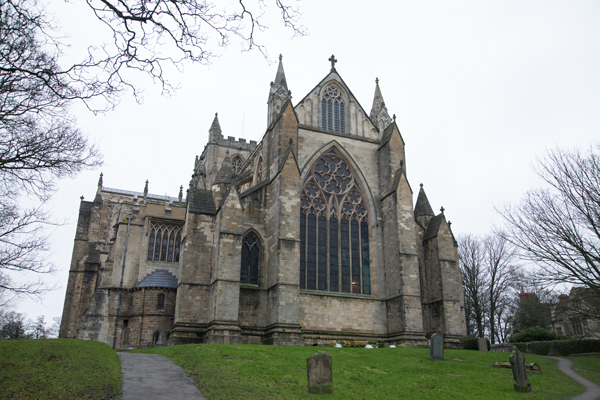
There was no known Roman presence at Ripon (the nearest military camp being at North Stainley).
Ripon was founded during the Angle kingdom of Northumbria in the 650s AD. Sub-King of Deira (part of Northumbria) Alhfrith gave land for a monastery to Eata of Hexham, and Saint Cuthbert was guest-master of Celtic monks.
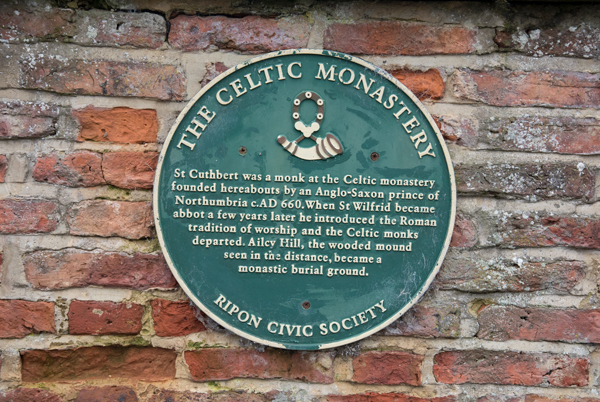
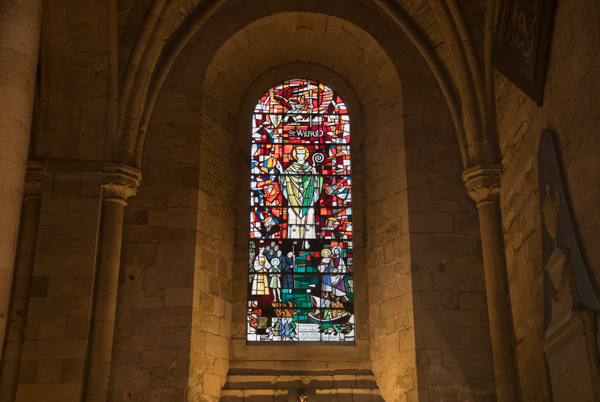
When the sub-King fell out with Eata, the Celtic monks were driven out and the abbey was given to Wilfrid. He brought craftsmen from Lyon and Rome to build the church of St Peter.
The settlement was then known as Inhrypum (Wikipedia).
The area was under Viking rule for a time in the late 800s, following the invasion of the Great Heathen Army in 865.
Following the Norman invasion there was a rebellion in the north in 1069, which was suppressed ('the Harrying of the North'). Ripon suffered at this time, and its population was reduced.
The Liberty of Ripon was given to St Peter's Church York, and Archbishop Roger de Pont l'Evêque (in the post from 1154-1181) began building a grand church on top of Wilfrid's original.
Ripon received a charter to hold a market and fair in 1108, and its Market Place was laid out in 1215.
In the 1100 and 1200s, Ripon developed a wool trade, selling to Florentine merchants. After English people were forbidden to wear foreign cloth (1326), it began making and selling cloth.
Defeat for the English at the Battle of Bannockburn in 1314 led to Scottish raids in the north of England. Ripon appointed a wakeman for security and to ensure residents were home by curfew time.
In the 1500s and 1600s, Ripon became a specialist in spurs - hence the expression, 'as true steel as Ripon rowels.' A rowel is the spiked revolving disc at the end of a spur.
King James I gave Ripon a Royal Charter in 1604, and appointed the first Mayor of Ripon.
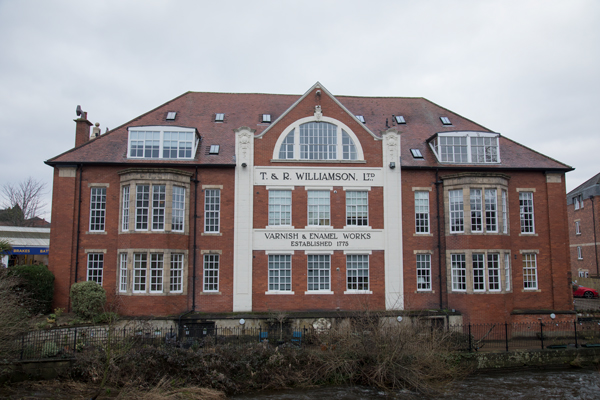
A varnish business was started by brothers Thomas and Robert Williamson in 1775, and Ripon was known as the 'city of varnish'. The business is still going.
The railway came to Ripon in 1848 - the Leeds and Thirsk Railway linked it to Harrogate to the south, Northallerton to the north, and Thirsk to the north east. The railway closed in the 1960s.
Ripon's church became a cathedral in 1836, and there was some confusion about whether that made Ripon a city. It was officially confirmed as a city by Act of Parliament in 1865.
During World War I there were four army camps in Ripon with capacity for 30,000 soldiers. Wilfrid Owen spent a few months here in 1918.
Ripon's association with the Royal Engineers began in World War II, and in 1949 they got the freedom of the city. From 1959 to 2016, Engineering Regiments were stationed in Ripon.
Ripon was part of Harrogate Borough from 1974, then it was governed directly by North Yorkshire Council from 2023 when Harrogate Borough Council was abolished.

The crypt of Ripon Cathedral dates from the mid-600s, when St Wilfrid had the first stone church built here. It was dedicated to St Peter in 672AD.
St Wilfrid was interred in a tomb in the Cathedral, although his remains have been lost.
He is celebrated in the annual St Wilfrid's Procession, which originated in 1108 when King Henry I granted the privilege of holding a fair for him. The central element of the procession is that Wilfrid on a horse returns to Ripon, but there are also floats, costumes, music and dancing.
A subsequent church was destroyed in 948, after the Northumbrians rebelled, by the English King Edred; and the church probably suffered damage following the Norman conquest, during the Harrying of the North in 1069.
Much of the present structure was built in the 1100s and 1200s under Archbishops of York Roger de Pont l'Evêque and Walter de Gray, but the Early English west front dates from the 1200s, and the nave was rebuilt in the 1500s and 1600s in Perpendicular style.
There are interesting carved wooden misericords from the 1480s in the cathedral's choir.
They feature mythical creatures and wild animals, and they may have inspired Lewis Carroll to create the White Rabbit and the Cheshire Cat in Alice in Wonderland, and the Jabberwocky in Alice Through the Looking Glass.
Ripon's church became a Cathedral in 1836.
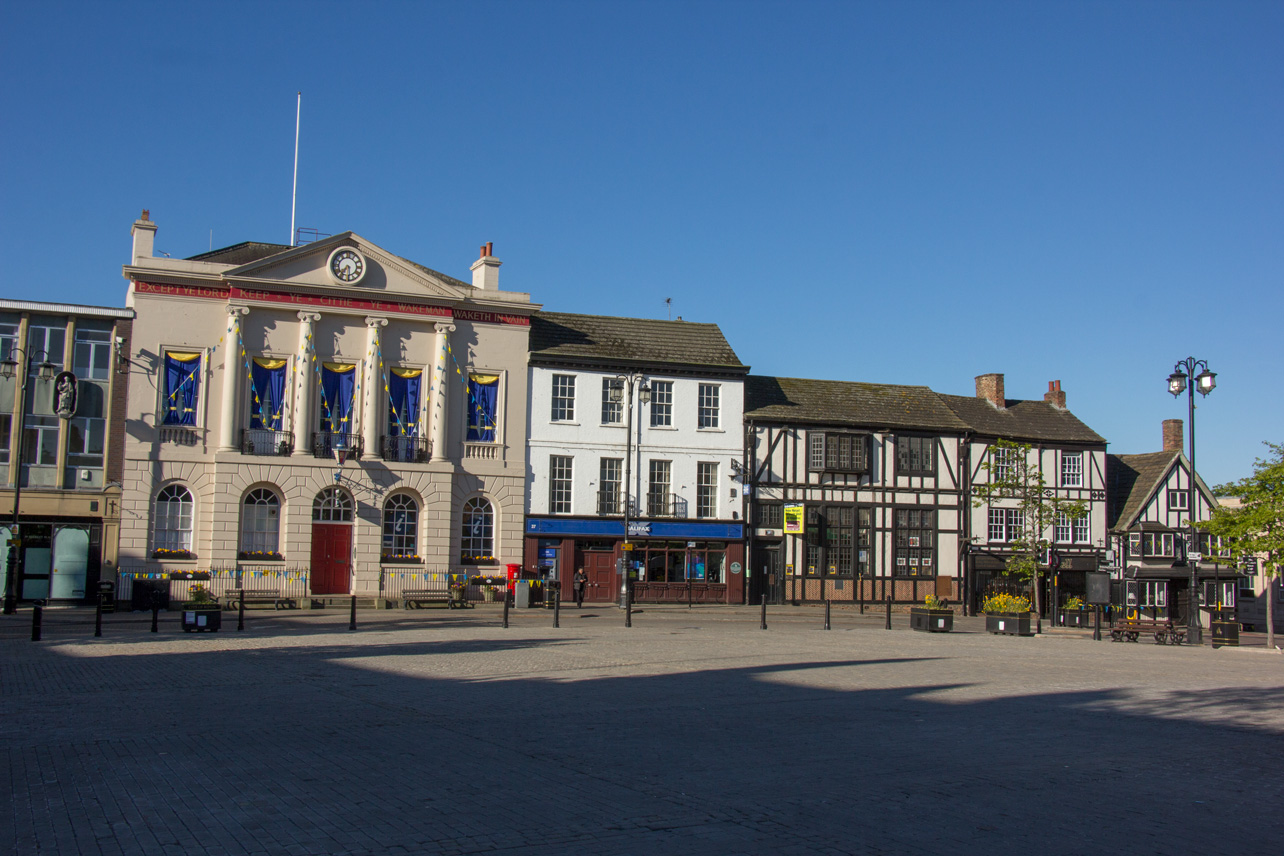
The Archbishops of York organised a market from the early 1100s. Their officers collected tolls, and checked weights and coinage.
The person in charge of the officers was the Ripon Wakeman.
During the time of Edward I and Edward II (1200s and 1300s), there were incursions by invaders from Scotland. These raids increased after the Battle of Bannockburn in 1314.
The Wakeman was responsible for the safety of the city, and he enforced a curfew.
He employed a Hornblower to set the watch by blowing his horn.
The tradition of the Ripon Hornblower goes back a long way.
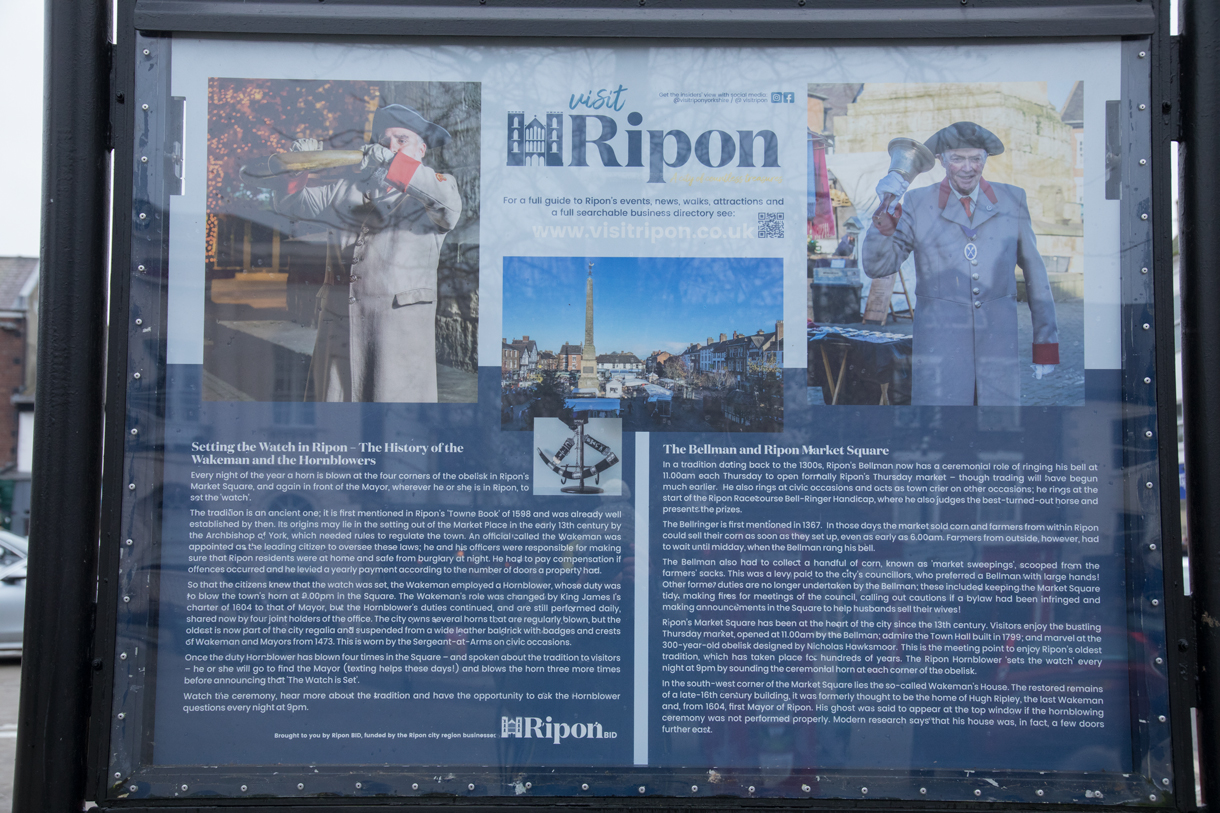
It is claimed that then Hornblower has existed since 886AD, when King Alfred the Great gave the city a Royal Charter and a horn to mark the occasion.
Perhaps more likely, the Hornblower goes back to the 1100s or 1200s
under the Archbishops.
At 9pm every evening, the Hornblower sounds his or her horn from the four corners of the obelisk on market square, in a ceremony known as 'setting the watch.'
Then the Hornblower goes and finds the Mayor and blows the horn in front of him or her.
The Bellman dates back to at least 1367.
Local farmers could sell their corn at Ripon market from first thing in the morning, but outsiders had to wait until noon. The Bellman rang his bell to announce the start of trade for non-Ripon farmers.
Now the bell is rung at 11am on market days.
The market place is at the heart of this small city.
It has an obelisk (1702) that was commissioned by John Aislabie and designed by Nicholas Hawksmoor. There's a weathervane in the form of the wakeman's horn on the top.
A city centre walk starts at Ripon Market Place.
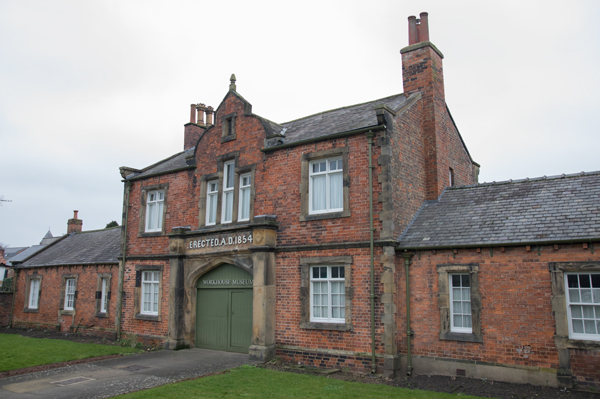
Ripon has three museums - the Courthouse Museum, the Workhouse Museum and the Police and Prison Museum.
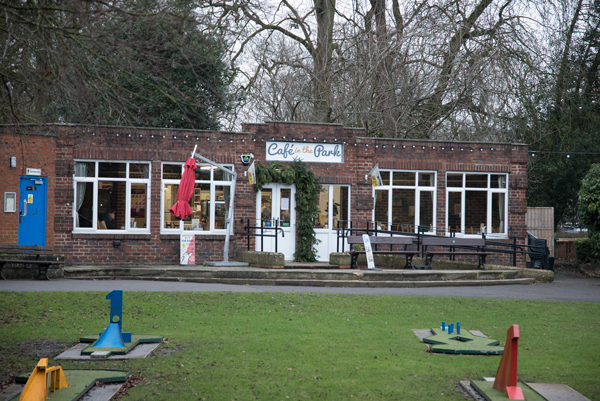
Ripon had Spa Baths from 1905 to 2021. They replaced an earlier more basic spa on Stonebridgegate.
Now the Jack Laugher Leisure and Wellness Centre has been built, and the old spa building is being turned into flats and commercial units.
There's still a popular café in the Spa Gardens.
There has been racing in Ripon since 1664, but the current racecourse dates from 1900.

Close to Ripon are the ruins of the Cistercian Fountains Abbey, and the adjoining Studley Royal water garden and deer park.

Ripon is on the 1:50,000 OS Landranger map number 99, Northallerton and Ripon.

Bike Rides in the Yorkshire Dales is available in colour paperback.
Find out more about Bike Rides in the Yorkshire Dales or buy a copy.

Bike Rides In and Around York features a historical city tour, plus family rides, road rides, and mountain bike rides.
Find out more about Bike Rides In and Around York or buy a copy.

Bike Rides in Harrogate and Nidderdale is a book of family, mountain and road bike rides.
Find out more about Bike Rides in Harrogate and Nidderdale or buy a copy.
As an Amazon associate I earn from qualifying purchases.