Cycling in Yorkshire & Beyond

Cycling in Yorkshire & Beyond
Stage 6 of the Tour de France 2026 is a 186.2km mountain stage from Pau to Gavarnie-Gèdre.
The climbs on this stage are Pyrenean classics, the Col d'Aspin and the Col du Tourmalet. It's a summit finish at Gavarnie-Gèdre, with the final climb long rather than very steep.
The Circque de Gavarnie provides the finishing touch to a scenic day.
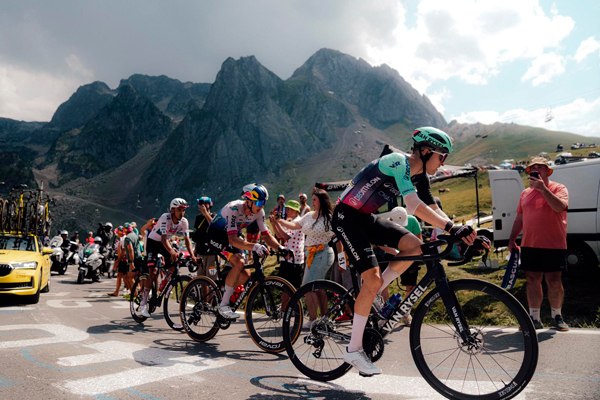
This is the race report for Stage 6 Tour de France 2026.
These are video highlights of Stage 6.
Race Details | Poll | Map & Profile | Timings | Videos | Food & Drink | Route Notes | Favourites
| Date | Thursday 9th July 2026 |
|---|---|
| Stage classification | Mountain |
| Distance | 186.2km |
| Intermediate sprint | Pouzac |
| Climbs | Côte de Loucrup (Cat. 4) Côte de Mauvezin (Cat. 3) Col d'Aspin (Cat. 1) Col du Tourmalet (Hors Cat.) Gavarnie-Gèdre (Cat. 2) |
| Total climbing | 4,100m |
Vote for one of the main contenders to win Stage 6.
This is a map of the route of Stage 6 Tour de France 2026.
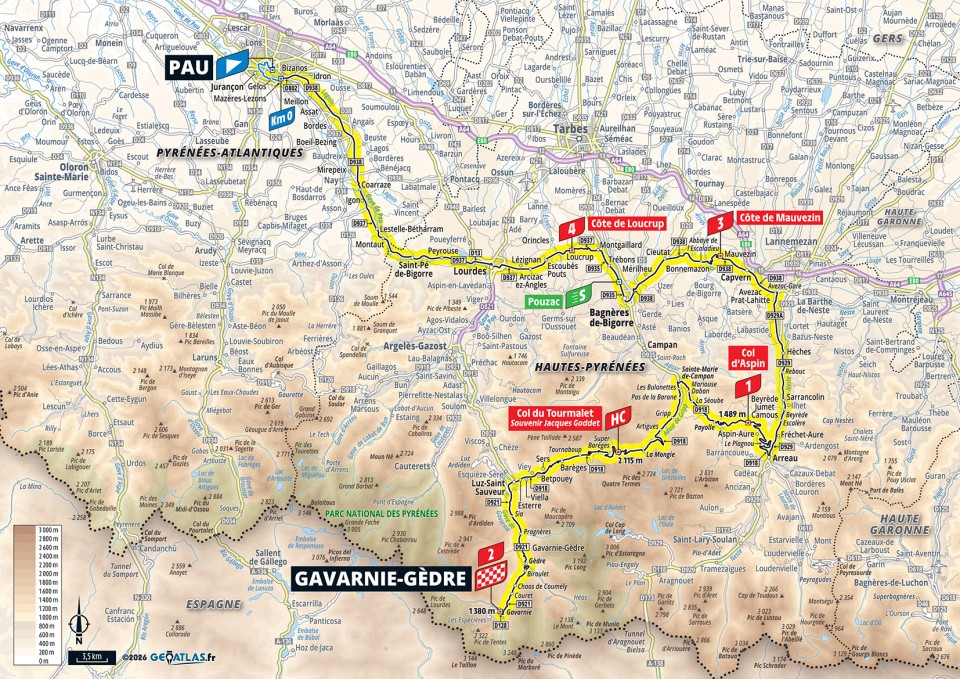
This is a zoom-able map of Stage 6 Tour de France 2026.
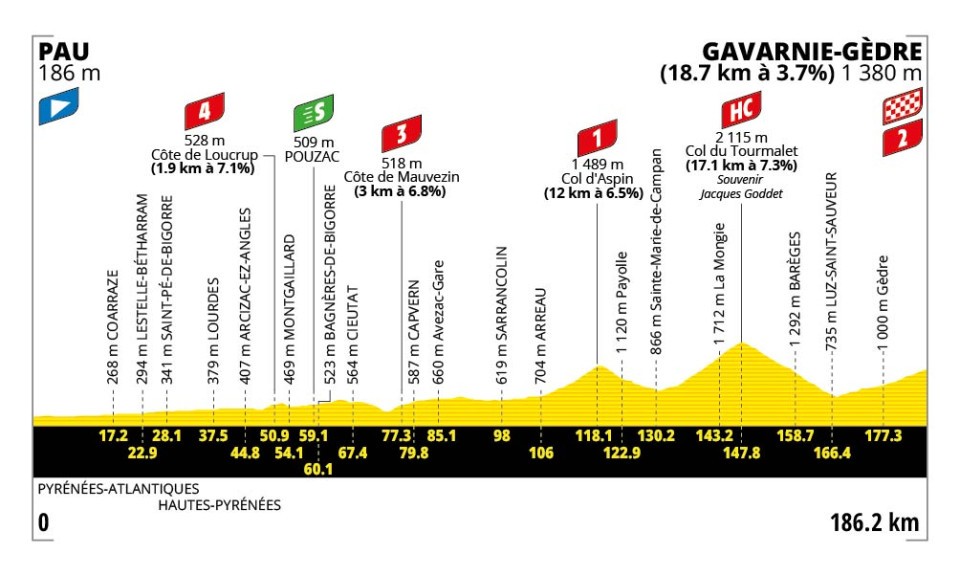
This is the profile of Stage 6 Tour de France 2026.
| Caravan | Fast Schedule | Slow Schedule | |
|---|---|---|---|
| Start Time (départ fictif) | 1000 |
1225 |
1225 |
| Start Time (départ réel) | 1015 |
1240 |
1240 |
| Intermediate Sprint | 1206 |
1407 |
1417 |
| Col d'Aspin Climb | 1356 |
1537 |
1558 |
| Col du Tourmalet Climb | 1452 |
1630 |
1658 |
| Finish Line (186.2km) | 1604 |
1729 |
1805 |

Get the official Tour de France 2026 Race Guide.
The fully authorised guide includes detailed stage maps, team profiles, expert analysis and stunning photography.
Available in Standard and Premium Editions.

Get a bundle with the premium race guide, Cycling Plus Ride Like a Pro, plus socks, coasters and an allen key, for £26.38.

This is a video of the route of Stage 6 Tour de France 2026.
This stage is very similar to Stage 6 of the 2023 Tour de France from Tarbes to Cauterets-Cambasque.

I suggest Madiran wine (affiliate link) to accompany today's stage. These are bold reds made from Tannat and other grapes.
Tourmalet cheese is made from sheep's milk near the Col du Tourmalet. It's chewy, with a nutty taste. It goes well with Madiran wine, or a white Viognier.
The stage starts in Pau (départ fictif).
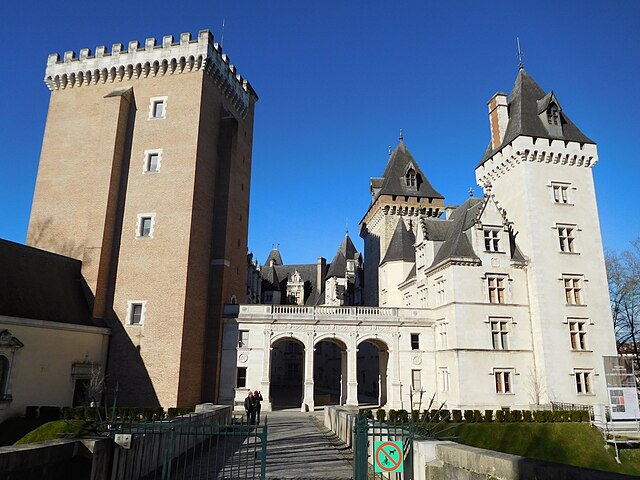
Pau is a city of 78,506 people (the inhabitants are called Palois) on the river Gave de Pau. It's the historic capital of the province of Béarn.
There are views of the Pyrenees from the boulevard des Pyrenées. Alphonse de Lamartine said, 'Pau has the most beautiful view of the earth just as Naples has the most beautiful view of the sea.'
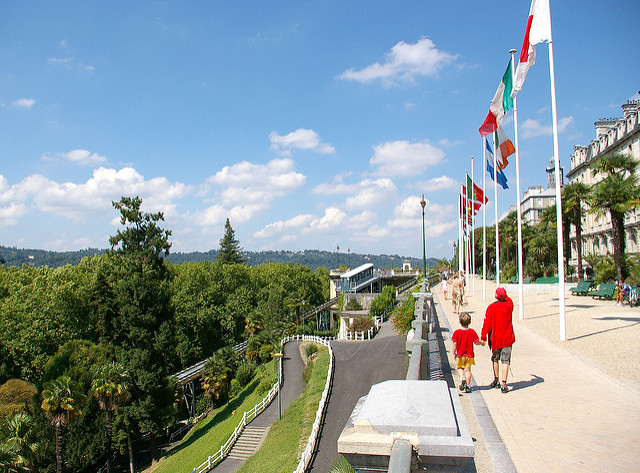
The origin of the name Pau is uncertain. It could come from pal, referring to the palisade or fence around the first castle in Pau. Another possibility is that pal means rockface, and refers to Pau's position at the foot of mountains.
A castle was built by the Viscounts of Béarn, probably in the C11th, to protect a ford of the Gave de Pau. Pau became the capital of Béarn in 1464. It then became the seat of the Kings of Navarre in 1512. Henri of Navarre went on to become King Henri IV of France, in 1589. In 1620, Béarn lost its independence from France, although the Parliament of Navarre continued to govern local matters (with laws in the Occitan dialect).
In the Belle Epoque (usually defined as 1871 to 1914), Pau developed as a tourist destination for the royal, aristocratic, and rich. Scottish doctor Alexander Taylor helped make it a popular destination for a winter cure. Later, aviation and petrochemicals (following the discovery of natural gas in Lacq) were significant industries here, and more recently, the services sector has grown. There's a large student population at the Université de Pau et des Pays de l'Adour.
The Château de Pau is one of the city's main attractions. It was originally a fortification guarding a ford of the Gave de Pau, reinforced in the C14th by Gaston III of Foix-Béarn. In the C16th, as the seat of the Navarre dynasty, it was transformed into a residence.
Henri of Navarre was born in the château. Wikipedia has a garbled explanation of Henri's connection to the castle, which has the hallmarks of a computer translation from French: 'The future Henri IV takes the trouble to be born December 13, 1553, and the story did the rest. The fame of the king...gives the castle, which did not see him grow up or die, a particular taste, and the right to claim honours those who give birth supermen.' Right. I, who not understand all things to men, a special smell, this translation glorious three and a half ten out of.
The départ réel is from the Mazères-Lezons suburb to the south of Pau.
The riders cross the Gave de Pau and follow the D938 south south east, roughly following the course of the Gave de Pau to Coarraze.
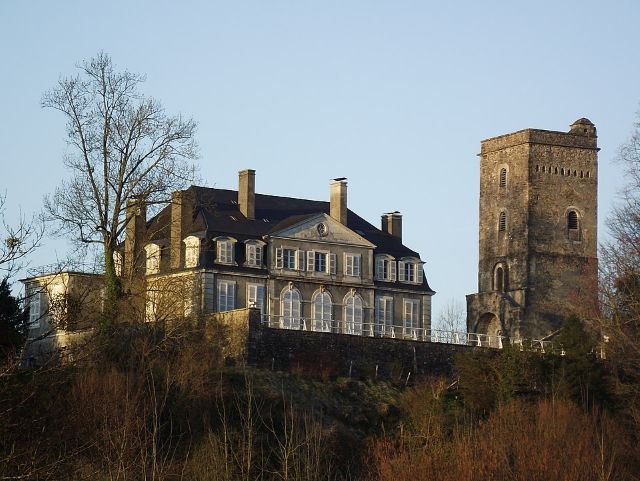
Henri IV spent his childhood spent his childhood in the castle at Coarraze.
Stage 6 crosses the Gave de Pau at Coarraze (to be conf and joins the D937 through Igon, and Lestelle-Bétharram where there is a religious sanctuary.
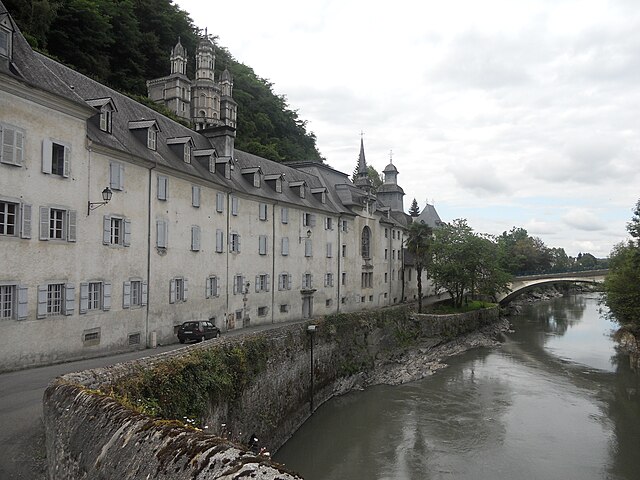
Near Lestelle-Bétharram are the Caves of Bétharram. Back to other side of the Gave de Pau, the riders reach Saint-Pé-de-Bigorre where there's an abbey that welcomes pilgrims en route to Santiago de Compostela
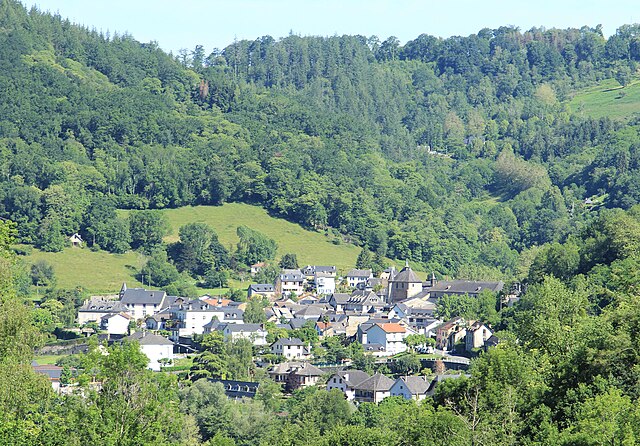
Then it's on to Lourdes.
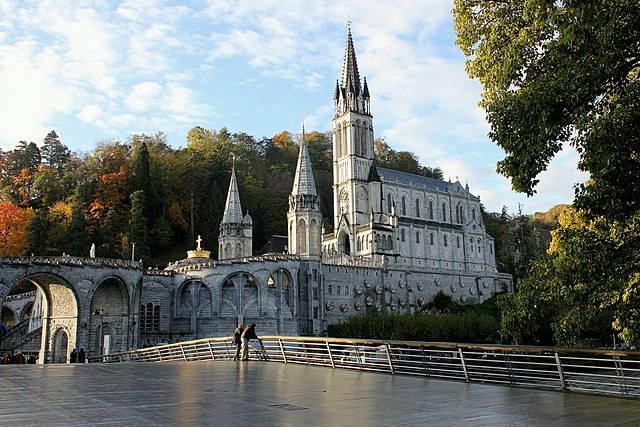
Lourdes is a market town of around 15,000 people, but which receives 6 million visitors every year.
This site was probably inhabited in prehistoric times. Later, there was a Gallo-Roman settlement, and some traces of Roman walls, statues, and votive offerings have been found during works to the fort.
During the One Hundred Years War, the English occupied Lourdes, from 1360 to 1407.
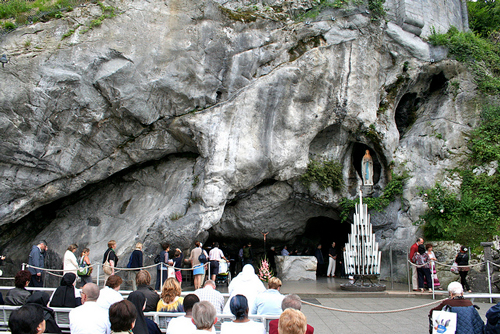
The attraction of Lourdes comes from the apparitions of the Virgin Mary to a 14-year-old girl called Bernadette Soubiros in 1858. Mary appeared to her eighteen times in total.
Soubiros saw a beautiful lady at the Massabielle grotto, and the lady said that she was the Immaculate Conception. Soubiros reported this to her priest, Father Peyremale.
The lady also told Soubiros to drink from a source. This spring still produces water, and pilgrims are able to bathe in it; it is said to have occasioned miracle cures.
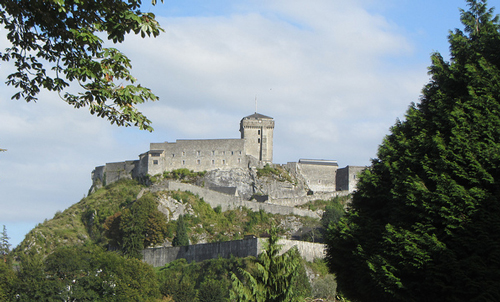
There's a fort in Lourdes, originally built in Roman times; the oldest surviving parts are from the C11th and C12th. The fort houses a Pyrenean museum. The town is overlooked by three peaks: le Béout, Petit Jer, and Grand Jer.
A funicular railway called the Pic du Jer goes up to the Grand Jer.
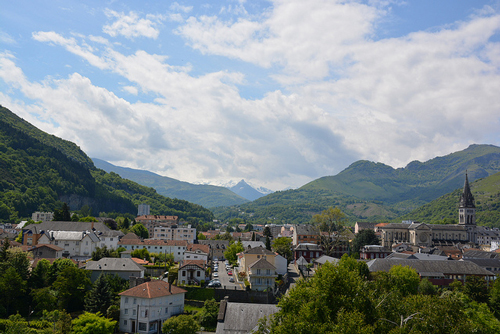
Next Stage 6 follows the D937 towards Loucrup, where the first categorised climb of the stage takes place.
The Côte de Loucrup is 1.9km at an average 7.1%.
The intermediate sprint comes after 59.1km raced.
The intermediate sprint is at Pouzac, a village on the edge of Bagnères-de-Bigorre.
Stage 6 continues into Bagnères-de-Bigorre, in the Adour valley.
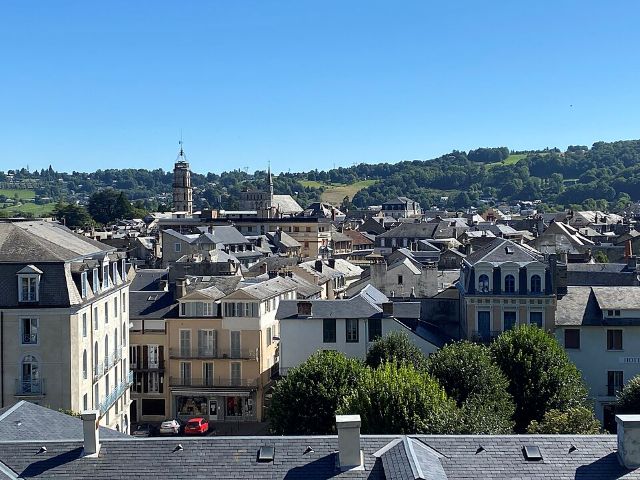
Bagnères-de-Bigorre was in the area of France conquered by Julius Caesar in 56BC. It became Vicus Aquensis, and its natural springs were popular with Romans.
In the Middle Ages, it was governed by the Counts of Bigorre.
Jeanne d'Albret, Queen of Navarre, visited the natural springs. When her son became Henri IV, King of France, in 1589, Bigorre became part of France.
A Grand Thermal Spa was built in 1828, and visitor numbers increased. Marble quarrying was another important local employer.
Later, Bagnères-de-Bigorre manufactured railway rolling stock, and there were other mechanical and textile industries.
British comedian and writer Tony Hawks lives in a village near Bagnères-de-Bigorre.
From Bagnères-de-Bigorre, the race takes the D938 north east. It passes the Abbaye d'Escaladieu.
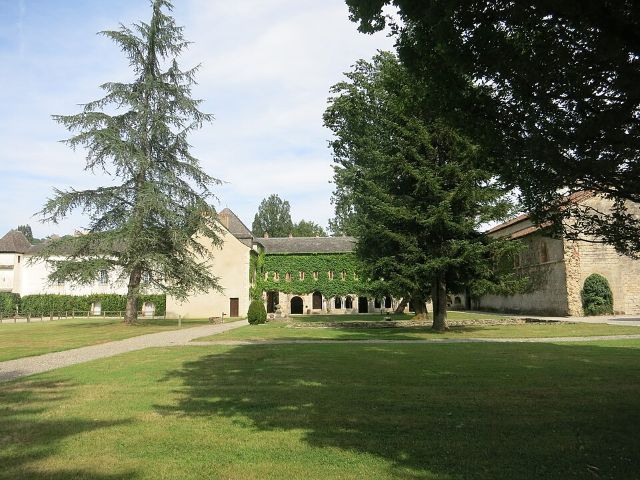
It climbs past the castle at Mauvezin, the second categorised climb.
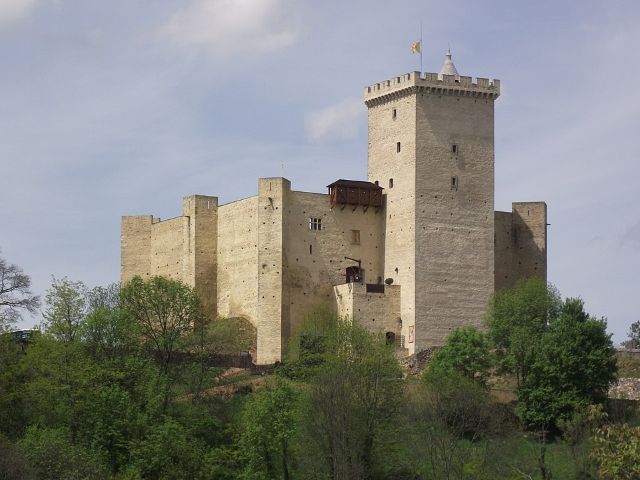
The Côte de Mauvizin is 3km at an average 6.8%. The top comes after 77.3km raced, at a height of 518m.
Now the race makes its way further east to Capvern.
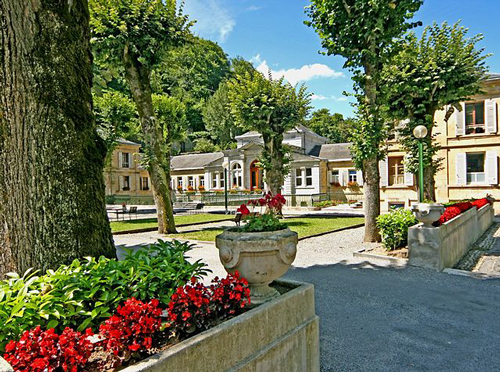
Capvern-les-Bains and Capvern make up a spa resort on the Lène stream and the plateau de Lannemezan. Capvern means 'the green point or peak'.
The spa facilities are centred on Capvern-les-Bains.
The waters of the spa are reputed to cure urinary, digestive and rheumatic complaints, as well as gout. The first people to take the waters were probably Roman soldiers.
The popularity of spa treatments was at its peak in the C19th. From 1875, people were enticed with the slogan, 'Si ta vessie est menacée, Capvern sera la panacée', meaning 'If your bladder is menaced, Capvern is the panacea'.
That was always bound to bring the punters flooding in - who could resist?
From Capvern, the peloton continues south.
The race route reaches the D929, which goes through Hèches then up the Vallée d'Aure, running between the river Neste d'Aure and the Canal de Neste to Sarrancolin.
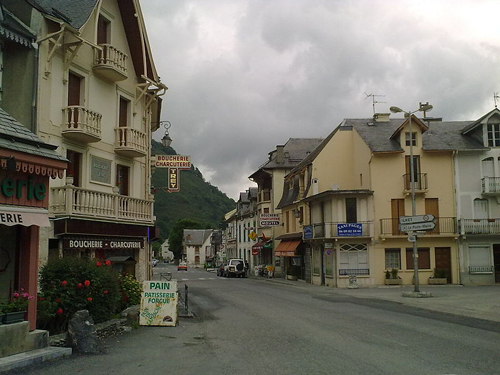
Sarrancolin developed around a Benedictine Priory in the C11th, and became capital of the Quatre Vallées - Aure, Neste, Barousse, and Magnoac.
The village and the Vallée d'Aure are known for marble, which has been quarried since Roman times. The marble has been used in the Petit Trianon at Versailles, the Opéra Charles Garnier in Paris, and in the entrance of the Empire State Building in New York. More recently, there has been paper and glass manufacture, and an Alcan aluminium factory at Beyrède.
Today, tourism is an important part of the economy for this area, with skiing in the winter - for example in the small resort of Nistos, east of Sarrancolin - and walking, mountain biking, fishing, and spa treatments in the summer).
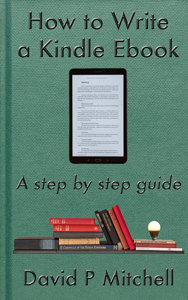
How to Write a Kindle Ebook is a step by step guide to writing and publishing an ebook on Amazon.
It takes you through the process of writing and formatting it using Microsoft Word, then uploading it to Kindle Direct Publishing and selling it on Amazon.
There's advice and guidance at every stage, with examples including screenshots, and tips on how to overcome practical problems you're likely to encounter.
How to Write a Kindle Ebook will be your reliable and trusted companion as you write and publish your own book.
'I find this a really helpful and informative guide to e-book writing and recommend to others' - reviewer on Amazon.
Buy the ebook or the paperback on Amazon (affiliate link).
The route continues to the edge of Arreau.
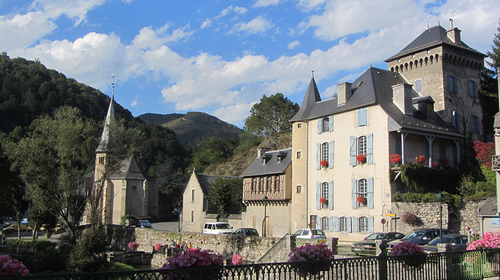
Arreau is a village of 819 people, at the junction of the Aure and Louron valleys, and thus the confluence of the Neste d'Aure and the Neste du Louron. It's the historic capital of the Vallée d'Aure.
The building in the photograph is the Chateau de Ségure, with a C16th square tower, probably on the site of a C12th fortification.
Because Arreau is at the foot of the Col d'Aspin, the Tour de France visits quite often.
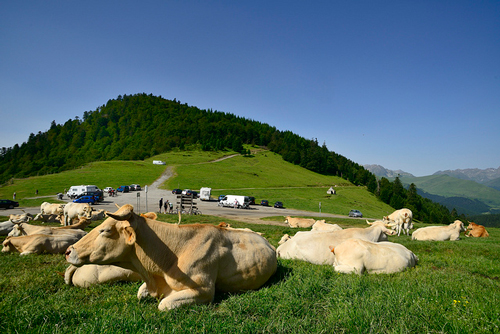
The Col d'Aspin is a 12km climb with a fairly even gradient, at an average of 6.5%.
According to a website called bestofthepyrenees (now no longer online):
'Col d'Aspin, rising next to its neighbour Tourmalet, is a shorter and easier climb that is often featured in the Tour. Along with its bigger brother, it is a classic of enduring fame. Cycling Col d'Aspin is possible from very early until late in the year because it is lower in elevation than most other climbs in the Hautes-Pyrénées. Gradual and without any long sections over 9%, Aspin is a good climb for moderately fit cyclists or to ride in combination with other climbs...'
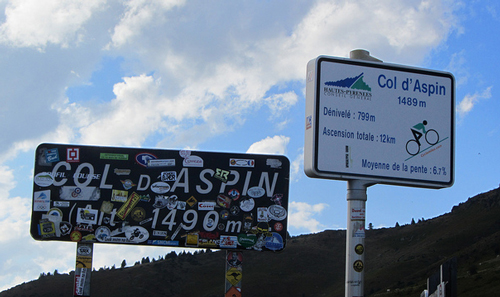
The Col d'Aspin takes the riders from 704m at Arreau to 1,489m at the top of the col, which they reach after 118.1km raced.
This is the official profile of the Aspin climb from a previous edition of the Tour.

After the summit, the riders descend past the Lac de Payolle.
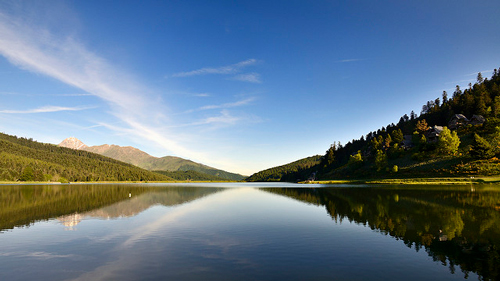
They continue down to Sainte-Marie-de-Campan, where there's a statue of Eugène Christophe.

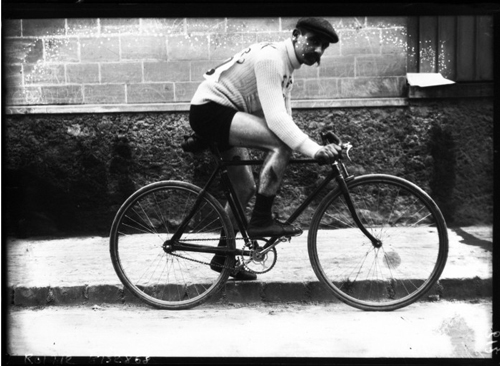
The statue of Eugène Christophe at Sainte-Marie-de-Campan references a famous event in 1913.
Christophe descended the Col du Tourmalet to Sainte-Marie. He was leading the Tour de France by 18 minutes, but his bike's forks broke about 10km from the village.
He walked down the rest of the way, and found a blacksmith's shop, where - because riders had to do all their own repairs - he mended the forks himself, according to the blacksmith's instructions. Christophe lost a lot of time, and was penalised more, because the blacksmith's boy had pumped the bellows for him.
As a result of the incident, Christophe lost his chance of winning the Tour. He finished seventh.
At Sainte-Marie-de-Campan, the climb of the Col du Tourmalet begins.
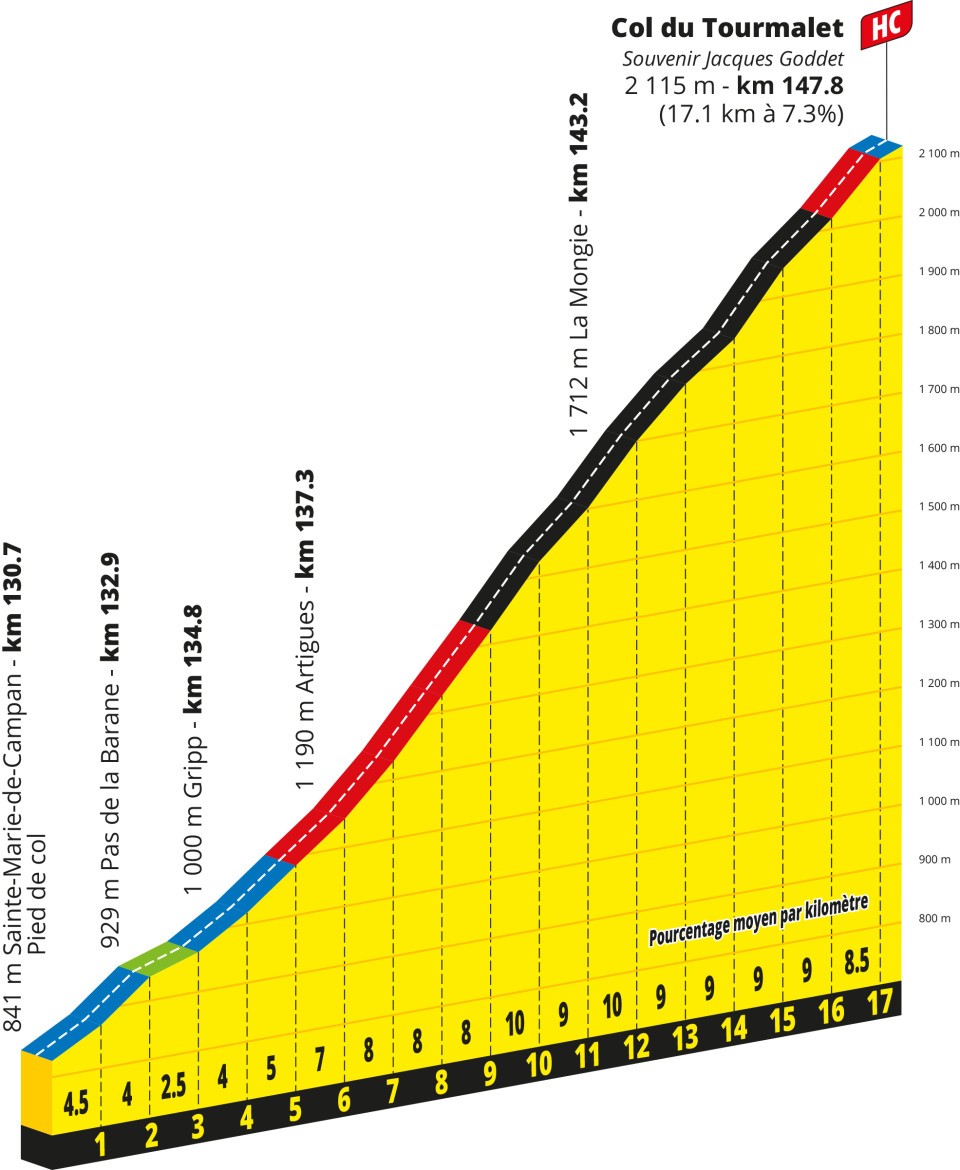
The altitude at the bottom is 866m, and at the top it is 2,115m, giving a height gain of 1,249m over a distance of 17.1km. The average gradient is 7.3%.
The Col du Tourmalet is the highest mountain pass in the Pyrenees with a tarmacked road. (There are higher roads, and higher mountain passes, but no higher mountain pass with a road). It has been included in the Tour de France over 80 times.

Velopeloton says of the climb:
'The first 4.5km are nothing, before it kicks up to over 8% for the remaining 12km...[I]t is said that this 12km is unmatched by any other climb in France for consistent steepness over that distance. There are a few hairpins, but mostly long straight sections of road. The road is well shaded until 7km to go, when it opens up to the high mountain pasture land. After La Mongie [at 5km to go], the gradient eases but remains challenging all the way to the summit. The last kilometre is long and straight before an almost hidden turn to the left, and the summit magically appears.'
Where the road goes through the ski resort of La Mongie, a cable car departs for the Pic du Midi de Bigorre, a summit with an Observatory.

At the top of the Col du Tourmalet, there's a memorial to Jacques Goddet, director of the Tour de France from 1936 to 1987.
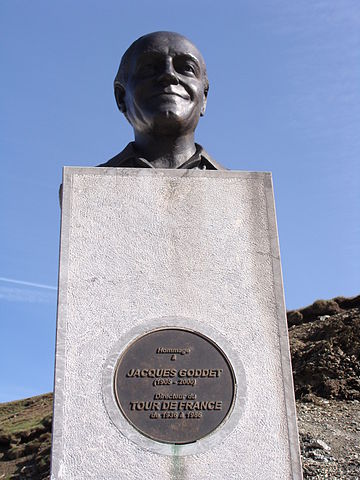
Goddet went to a private school near Oxford in England.
His father Victor was a co-founder of L'Auto, the newspaper that initiated the Tour de France. Goddet became chief reporter. During World War II, L'Auto was too close to Nazi Germany, and it was shut down in 1944. Goddet launched a new paper, L'Equipe, in 1946, but his name was not permitted to be associated with it.
The first rider to get to the top wins the Souvenir Jacques Goddet prize - €5,000. (Total prize money on the Tour de France 2025 was €2,308,200).
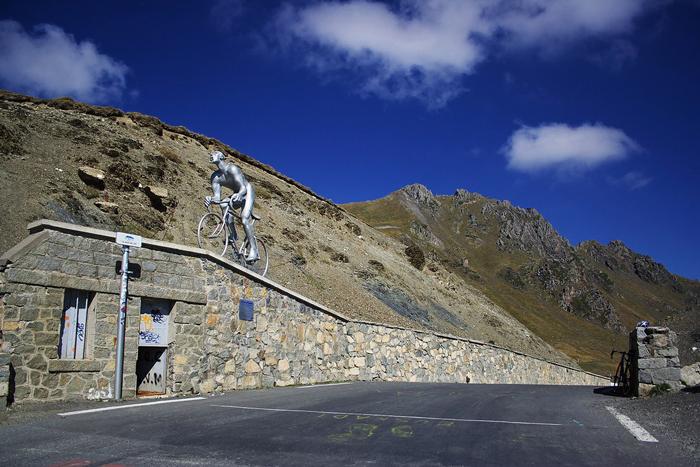
At the Tourmalet there's also a silver statue of a person on a bike, called le Géant du Tourmalet (main image at the top of the page). It could represent Octave Lapize, who was the first rider to get to the top of the Col du Tourmalet in the Tour de France in 1910.
There'll be no time to stop at the bar and restaurant.

Over the top of the Col du Tourmalet, the descent begins through Super-Barèges, a ski resort linked to La Mongie.
It continues through Barèges, and down to Luz-Saint-Sauveur (741m) in the valley.


Luz means 'light' in Spanish.
Luz-Saint-Sauveur is at the junction of two valleys, so that the rays of the sun can reach it from three different directions at different times of the day.
Its position also means that it suffers from floods when the mountain streams meeting here overflow. The last time there were major floods was June 2013. There are also earthquakes from time to time.
Luz-Saint-Sauveur has thermal baths, which have been in use since the C16th. (The person waiting for them to be free is getting pretty fed up now).
Above Luz-Saint-Sauveur, on the slopes to the west, is the ski resort of Luz-Ardiden.
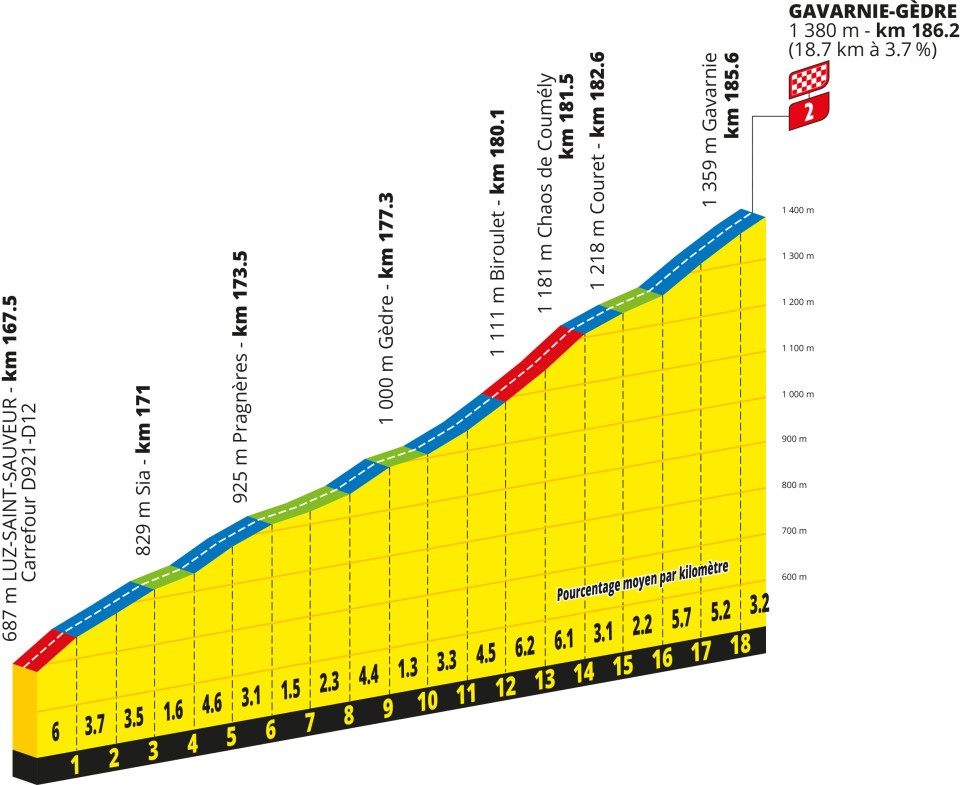
Now all that remains is the final climb to Gavarnie-Gèdre.
The riders follow the D921 Route de Gavarnie south, by the Gave de Gavarnie. They go through Pragnères.
They reach Quartier du Lac/Gèdre and continue past the Cascade de Pich-Gaillard and to the finish line at Gavarnie.
The climb is 18.7km at an average 3.7%. This is the profile of the final climb.
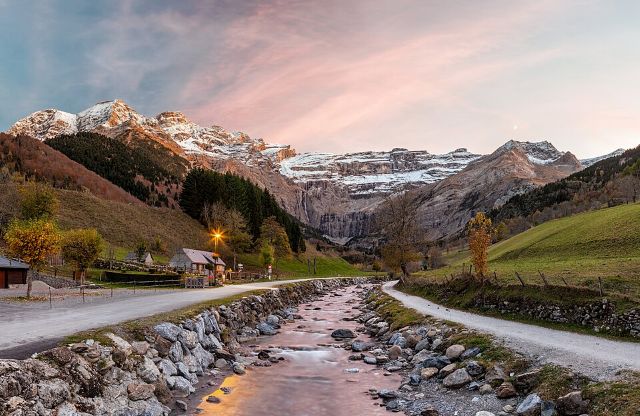
The Stage 6 finish is at Gavarnie.
At the head of the valley is the Cirque de Gavarnie, and behind that is the Mont Perdu/Monte Perdido just over the border in Spain. It is a World Heritage Site, Pyrénées-Mont Perdu.
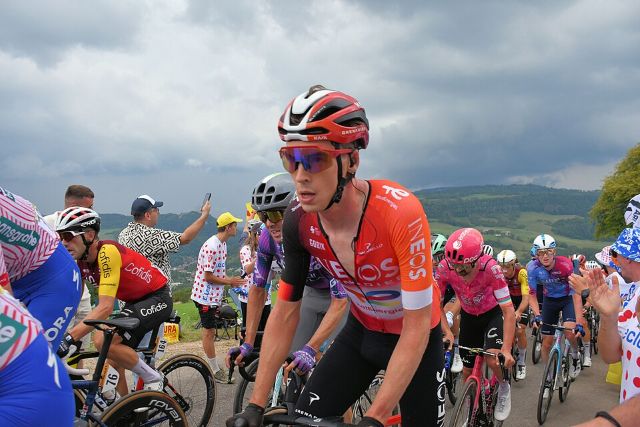
Favourites for Stage 6 of the 2026 Tour de France will include the GC favourites if they decide to take this on, or breakaway riders if not.
It's one that Tadej Pogacar probably could win, or Jonas Vingegaard if he is on form. Otherwise, Thymen Arensman is one of the riders capable of doing well on such a hard stage.
Who do you think will win Stage 6 of the 2026 Tour de France?

Muc-Off dry chain lube, price £7.66 from Amazon at the time of writing (affiliate link).
'Thousands of purchasers can't be wrong'.
As an Amazon Associate, I earn from qualifying purchases.

Bike Rides in the Yorkshire Dales is available in colour paperback.
Find out more about Bike Rides in the Yorkshire Dales or buy a copy.

Bike Rides In and Around York features a historical city tour, plus family rides, road rides, and mountain bike rides.
Find out more about Bike Rides In and Around York or buy a copy.

Bike Rides in Harrogate and Nidderdale is a book of family, mountain and road bike rides.
Find out more about Bike Rides in Harrogate and Nidderdale or buy a copy.

Find out more about Mountain Bike Rides in the Yorkshire Dales.
Buy Mountain Bike Rides in the Yorkshire Dales at £8 + P&P.

Garmin Edge Explore, £197.99 at the time of writing.
Garmin Edge Explore on Amazon (affiliate link).

Faster by Michael Hutchinson on Amazon (affiliate link).


