Cycling in Yorkshire & Beyond

Cycling in Yorkshire & Beyond
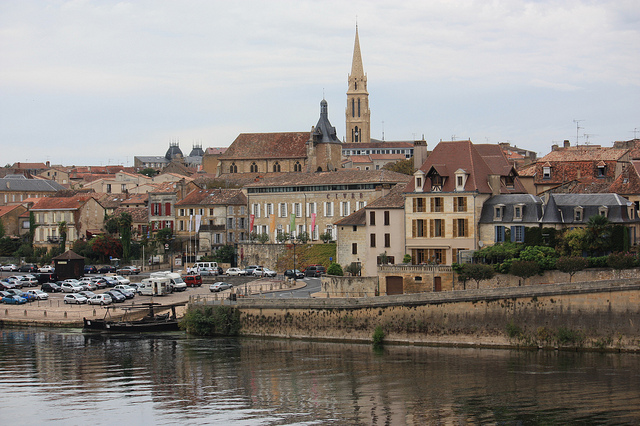
Stage 8 of the Tour de France 2026 is a 180.4km flat stage from Périgueux to Bergerac.
The route is very similar to that of Stage 10 of the 2017 Tour de France.
Today is arguably more about the scenery than the racing. The cycling excitement will probably be concentrated in the finale, which should be a bunch sprint.
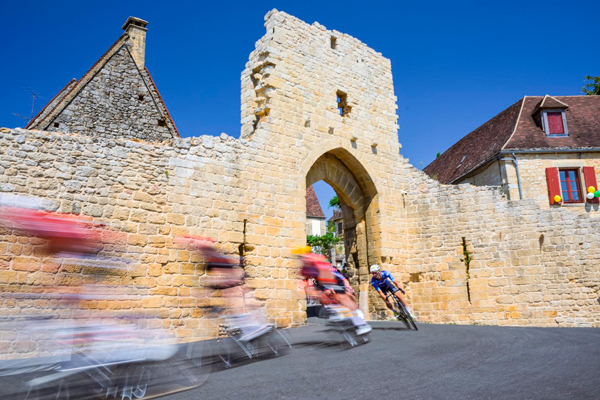
This is the race report for Stage 8 Tour de France 2026.
These are video highlights of Stage 8.
Race Details | Poll | Map & Profile | Timings | Videos | Food & Drink | Route Notes | Favourites
| Date | Saturday 11th July 2026 |
|---|---|
| Stage classification | Flat |
| Distance | 180.4km |
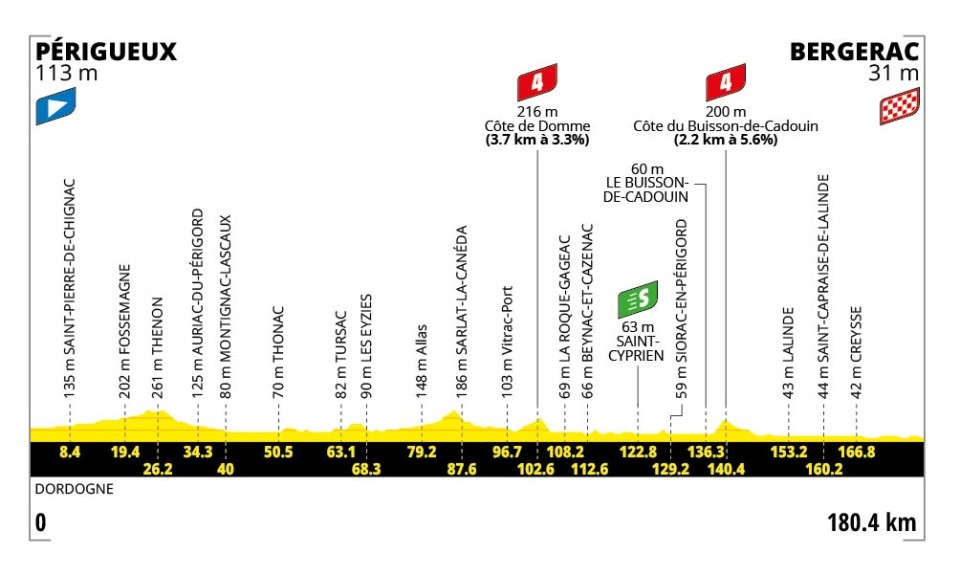
| Intermediate sprint | Saint-Cyprien |
| Climbs | Côte de Domme (Cat. 4) Côte du Buisson-de-Cadouin (Cat. 4) |
| Total climbing | 1,150m |
Vote for one of the main contenders to win Stage 8.
This is a map of the route of Stage 8 Tour de France 2026.
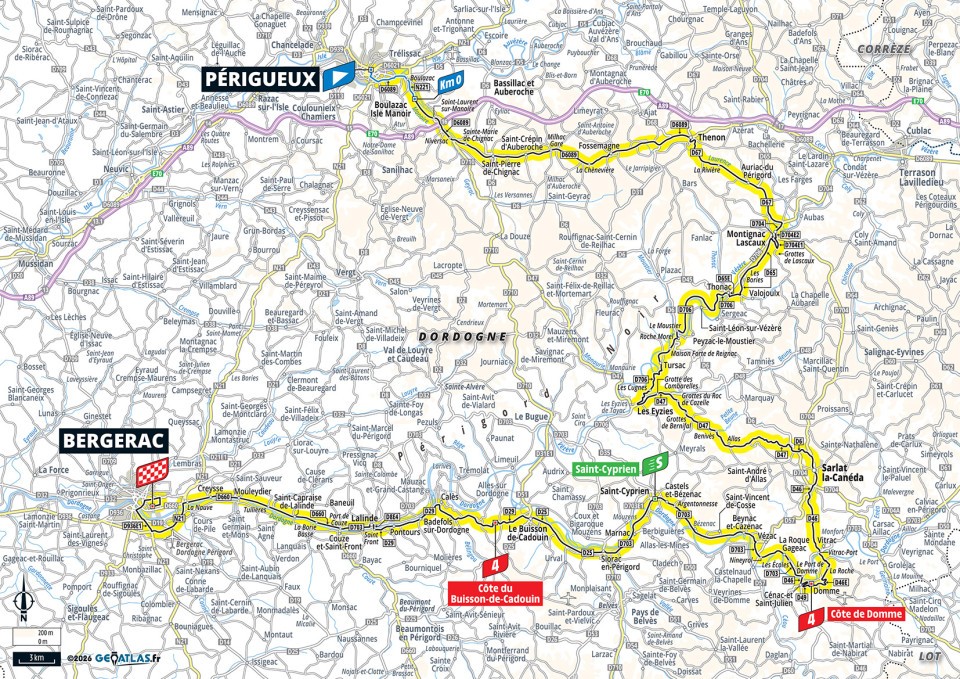
This is a map of the route of Stage 10 Tour de France 2017, which was very similar or identical to Stage 8 in 2026.
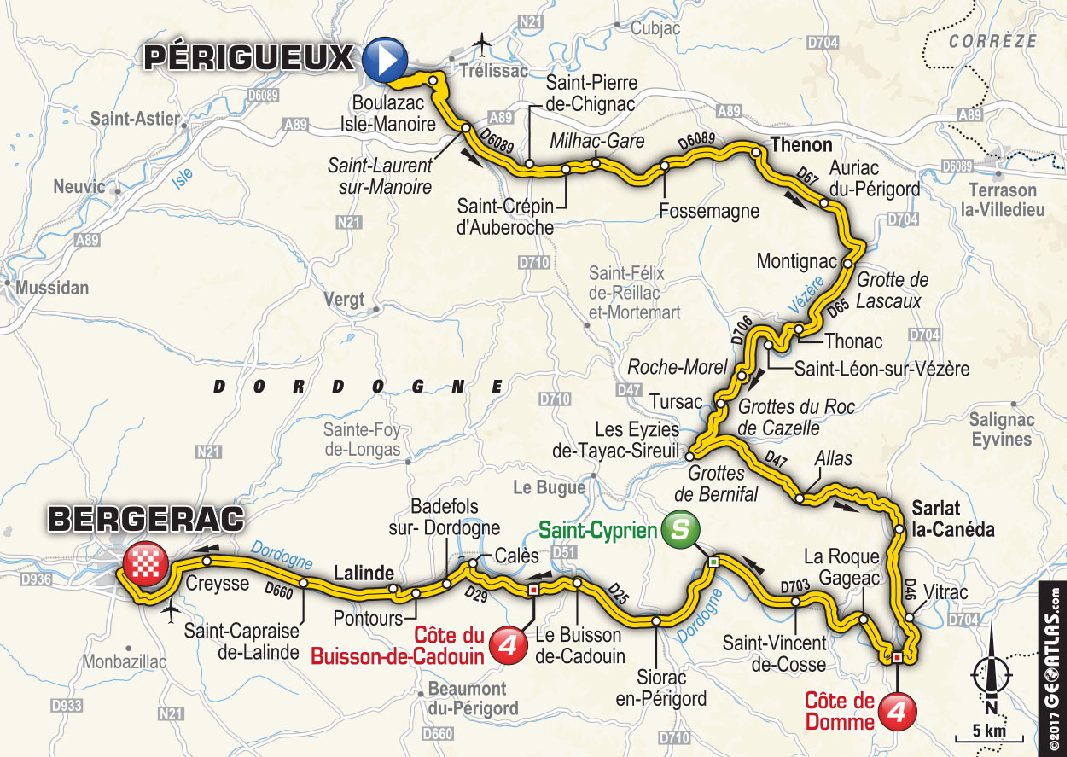
This is a zoom-able map of Stage 8 Tour de France 2026.
This is the profile of Stage 8 Tour de France 2026.
| Caravan | Fast Schedule | Slow Schedule | |
|---|---|---|---|
| Start Time (départ fictif) | 1100 |
1315 |
1315 |
| Start Time (départ réel) | 1110 |
1325 |
1325 |
| Intermediate Sprint | 1405 |
1605 |
1620 |
| Côte du Buisson-de-Cadouin Climb | 1431 |
1628 |
1646 |
| Finish Line (180.4km) | 1528 |
1720 |
1743 |

Get the official Tour de France 2026 Race Guide.
The fully authorised guide includes detailed stage maps, team profiles, expert analysis and stunning photography.
Available in Standard and Premium Editions.

Get a bundle with the premium race guide, Cycling Plus Ride Like a Pro, plus socks, coasters and an allen key, for £26.38.

This is a video of the route of Stage 8 Tour de France 2026.
These are highlights of Stage 10 Tour de France 2017 from Périgueux to Bergerac.
The Dordogne is known for walnuts (la noix du Périgord) used in salads, oil and cakes.
It also produces black truffles, and duck and goose products which many people object to due to cruel treatment of the birds.
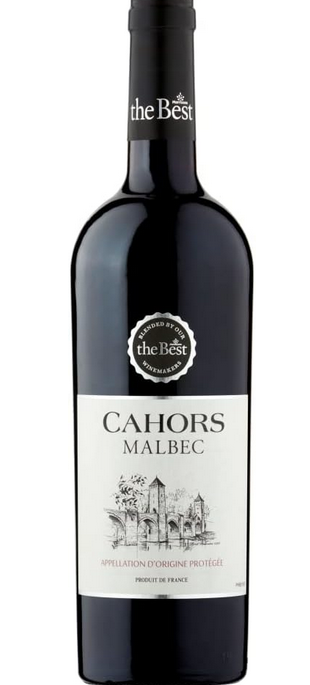
Cahors is just a few kilometres south of today's route. Cahors wine is a red with its own AOC. The dominant grape variety is Malbec. The wine is typically dark in colour with notes of spiced black cherries and cedar.
Buy a bottle of Cahors wine on Amazon (affiliate link).
The stage starts in Périgueux (départ fictif).
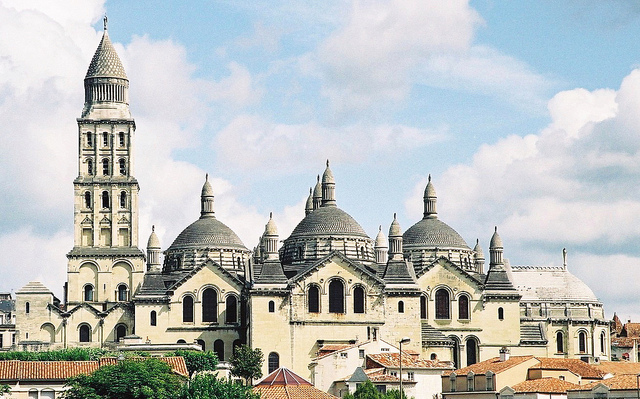
Périgueux is the capital of the Dordgne département. The name Périgueux comes from the Celtic tribes who lived here before the Roman invasion, the Petrocorii. The Gallo-Roman settlement here was called Vesunna.
Périgueux is on the river Isle (which translates as the river Island - a daft name for a river; it would be a good name for a shop, though, someone should do that). L'Isle is a tributary of the river Dordogne.
Sights in Périgueux include the remains of the Roman amphitheatre, and other Roman ruins including a temple and a Roman villa.
The Cathedral is dedicated to Saint Front - built from 1120, and restored in the 1800s.
Périgueux is twinned with Amberg, Germany.
The départ réel is in the outskirts of Périgueux, at Parc de Lamoura.
The peloton takes the D6089 to Saint-Laurent-sur-Manoire, Sainte-Marie-de-Chignac, Saint-Pierre-de-Chignac, Saint-Crépin-d'Auberoche, Fossemagne and Thenon, then the D67 to Auriac-de-Périgord, Montignac and the Lascaux Cave.
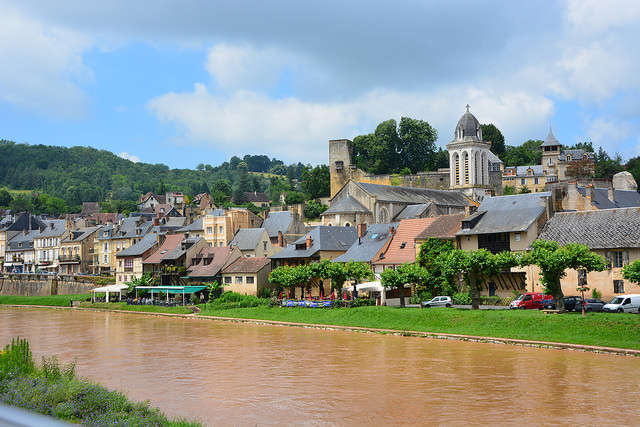
Montignac is a little town on the banks of the river Vézère, which has been occupied by man since Paleolithic times.
The Romans had a settlement here, and in the Middle Ages there was a fortress belonging to the Counts of Périgord (destroyed 1825).
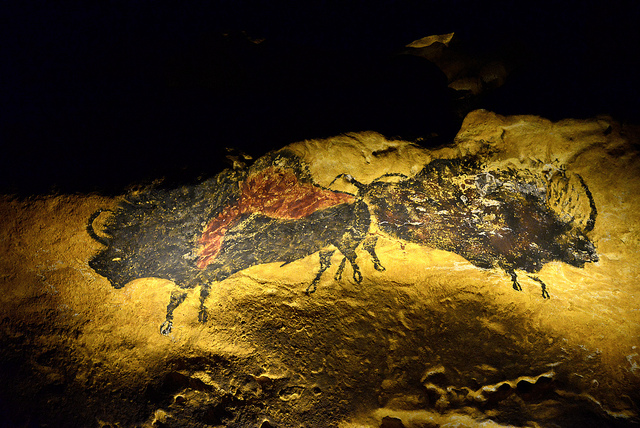
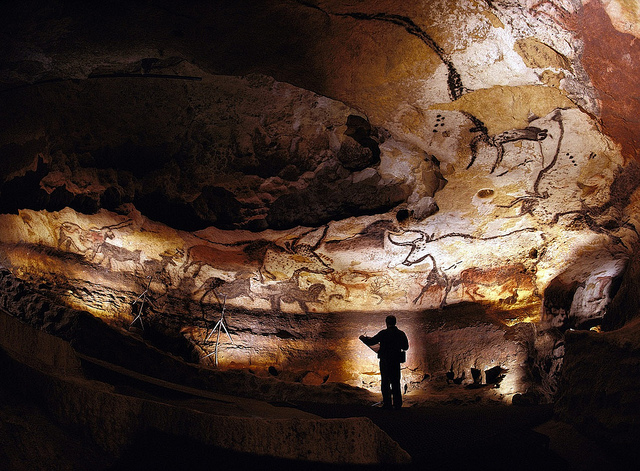
Lascaux is famous because of the number and quality of cave paintings.
It was discovered on 12th September 1940 by four boys who were looking for their dog, which had fallen down a hole that led into the cave. With a lamp, they looked in and saw some of the paintings on the wall of the gallery. They made a vow to each other to keep it secret, but they told their teacher. The teacher told Abbé Breuil, an expert on prehistory, and the Abbot baptized the cave 'the Sistine Chapel of the Périgord'.
In 1949, the cave was opened to the public, but the paintings soon suffered from two damaging effects:
In 1963, they closed the cave, and allowed just a few researchers to visit it.
Around 1973, they proposed to build a replica, and it was opened in 1983 (Lascaux 2). It's about 200m away from the original cave.
The IGN (Institut Géographique National, the map people) made a 3 dimensional survey of the cave and the paintings, and they used it to make a shell, reinforced in concrete, which was put in an old quarry. A team of painters, led by Monique Peytral, did the paintings, using the same sort of tools and materials the original painters used.
The cave is limestone. There were four galleries in the original cave, with 1,500 representations.
The paintings were created about 15,000BC, during the Magdelanian culture. At the time, the entrance to the cave was open to the air, but then the opening collapsed, and clay closed it off tightly. That's the reason for the excellent preservation of the art.
The animals depicted include aurochs (cattle), horses, reindeer, bison, ibexes, bears and woolly rhinos.
There's a definite Lascaux style, with the animals given swollen stomachs and short legs. The artists used the wall contours to give relief to the subject matter.
From Montignac, the riders follow the river Vézère south via Thonac, Saint-Léon-sur-Vézère, Peyzac-le-Moustier and Tursac to Les Eyzies-de-Tayac.
At Les Eyzies-de-Tayac, they turn to head east along the D47 to Sarlat-le-Canéda.
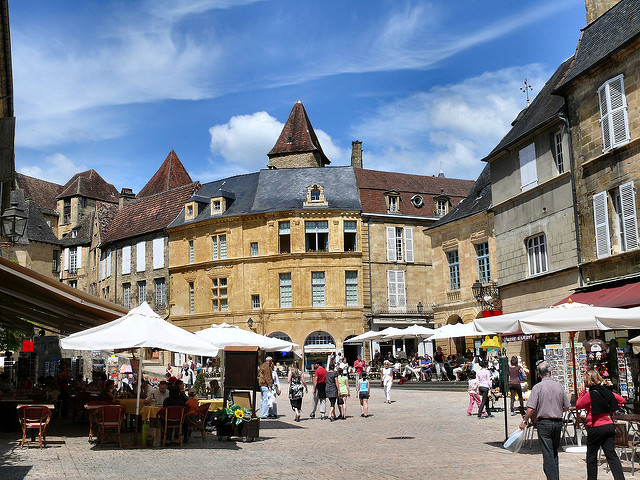
Sarlat-le-Canéda was built in a hollow surrounded by wooded hills, and is a well-preserved market town, with narrow Medieval streets, and town houses which are a mixture of Gothic and Renaissance.
It is sometimes called Sleeping Beauty, because after centuries of prosperity, it remained a backwater for 150 years, too deep in the countryside to be modernised or developed.
In 1962, it was chosen for a new national restoration project.
Sarlat grew up around a Benedictine Abbey founded in the 800s. The Abbots of the Abbey ruled the town until 1299, when the citizens of the town revolted against their corruption. The Abbot was made to sign the Book of Peace, which gave the townspeople the right to administer the town through consuls. Thereafter, the town prospered.
Houses in Sarlat are built of golden-hued limestone, and have steep pitched rooves. Many of them have different floors added at different times (and curiously, the upper floors were almost always built later than the lower ones).
The architecture is shown to good effect at night, when it is illuminated by natural gas lamps (plus some LED lights).
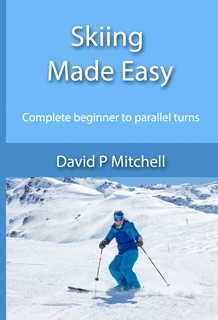
Skiing Made Easy is a practical guide to learning to ski based on many happy seasons of ski teaching.
It takes you through the beginner's progression from snowplough to parallel turns, starting at the very beginning and not assuming any prior knowledge.
The book suggests relevant exercises to develop and improve your skills. Common faults are identified, along with the best ways to correct them.
'By the way' sections contain information about many of the little things that people assume you just know, but you may not.
'This is the book I wish I'd had when I started skiing' - reviewer on Amazon.
How to buy:

Skiing Made Easier is the follow-up to Skiing Made Easy, and picks up from where the first book left off.
The first chapter is Refining Your Parallel Turns.
The chapters on ski technique beyond basic parallel turns are Carving, Short Turns, Bumps and Off Piste.
There are then further chapters on Avalanche and Mountain Safety, Ski Psychology, Physical Preparation, Ski Servicing and Alpine Wildlife.
As in Skiing Made Easy, common faults are identified and exercises suggested to correct them and to develop your skills.
'By the way' passages contain bits of skiing knowhow that could otherwise take years to pick up.
How to buy:
The Amazon URLs are affiliate links.
From Sarlat, the race goes south to Vitrac and Domme.
The climb from the Dordogne river to Domme is Category 4, 3.5km at an average gradient of 3.3%.
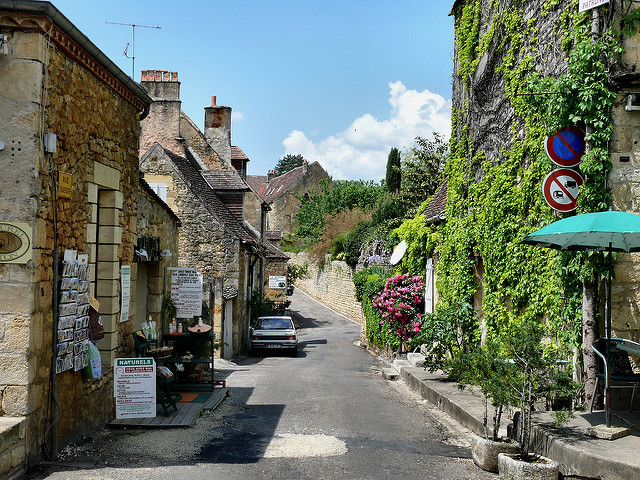
Domme is classified as one of the most beautiful villages in France. It is perched above the Dordogne, giving great views over the river. Amongst the attractions is the Grotte de Domme, a stalactite-filled cave.
From Domme, the stage heads west along the Dordogne to La Roque-Gageac.
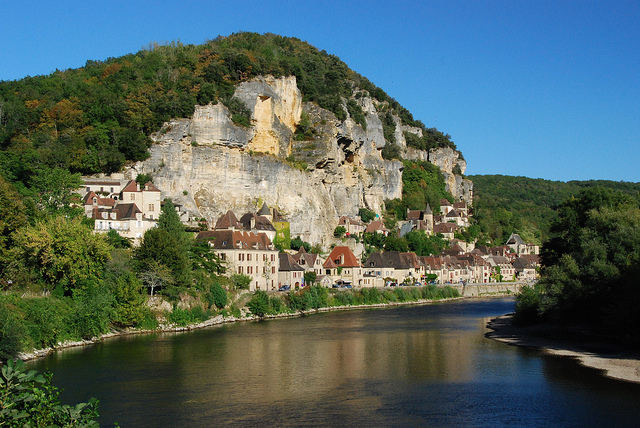
La Roque-Gageac is a village on the bank of the Dordogne river, under a river cliff. It is one of the most beautiful villages in France.
The village flourished in the Middle Ages, when it was home to fishermen and pilots of the gabares (boats used to transport goods).
In 1957, a large stone block fell down from the cliff, and destroyed six houses, killing three people.
A little further along the river are Beynac-et-Cazenac.
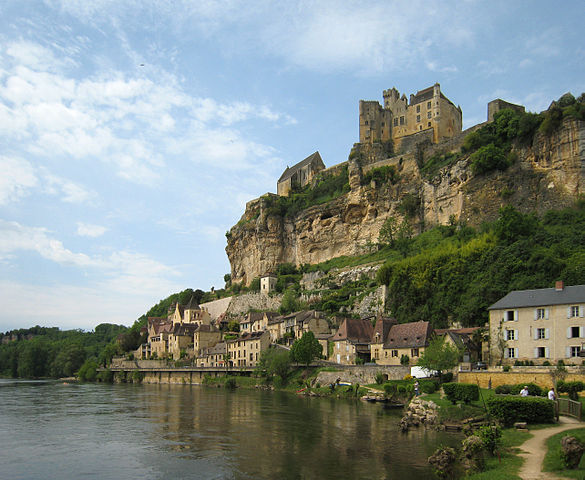
Beynac-et-Cazenac is another of the most beautiful villages in France. It is perched above the river Dordogne.
The first mention of Beynac is in 1115. The château belonging to the Beynac family was seized by Simon de Montfort during the Albigensian Crusades, but returned to the family by King Philippe Auguste a few years later.
From Beynac-et-Cazenac, Stage 8 follows the Dordogne west, downstream. If there's a headwind, it will limit opportunities for breakaway riders.
The route is via Saint-Cyprien, which in 2017 was the location of the day's intermediate sprint, and reprises its role in 2026.
The intermediate sprint is at Saint-Cyprien.
The race continues towards Buisson-de-Cadouin.
The second and final climb on the stage is la Côte du Buisson-de-Cadouin.
Back by the river, the riders go through Calès and Badefols-sur-Dordogne, then they cross the river to Lalinde.
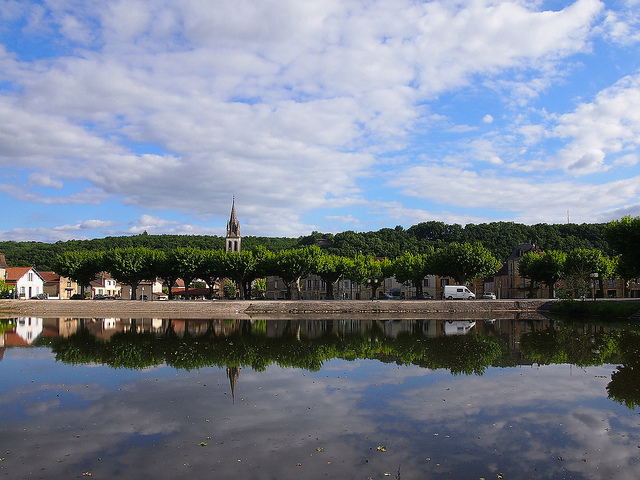
Lalinde was the first English bastide town, built in 1261. Bastides were fortified new towns, with a grid pattern of streets, and a town wall for protection. There was a church and a castle in the middle.
There have been a couple of notable tragic events in Lalinde's history. Towards the end of World War II, on 21st June 1944, the Nazis killed many of the town's young men as retribution against Resistance activities, in the Mouleydier massacre.
On 11th July 1964, during the Tour de France, a tanker driven by a gendarme ploughed into spectators at a narrow bridge, killing nine people.
Stage 8 follows the Dordogne from Lalinde. It goes through Mouleydier and Creysse on the north bank, then crosses back over to Cours-de-Pile and the Bergerac-Dordogne-Périgord airport.
The race is now on the approach to Bergerac.
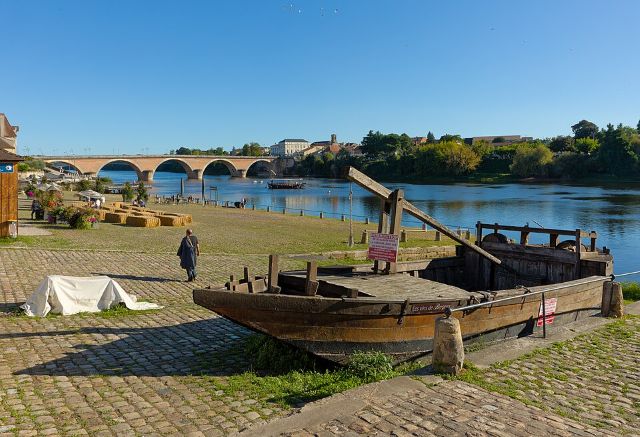
Stage 8 approaches from the south and the Aéroport de Bergerac-Dordogne-Périgord. It takes Route d'Agen and Avenue Paul Painlevé, then crosses the river on the D936e1.
On the other side of the river, the race is on Boulevard Katherine Traissac, then turns right on Rue du Professeur Calmette. Then it turns right on Allée des Grands Ducs, before turning right again on Allée Fernand Cousteille. Part-way along it changes name to Allée Lucien Videau.
The finish line is on Allée Lucien Videau by the Plaine de Jeux de Picquecailloux, and near the Stade Gaston-Simounet.
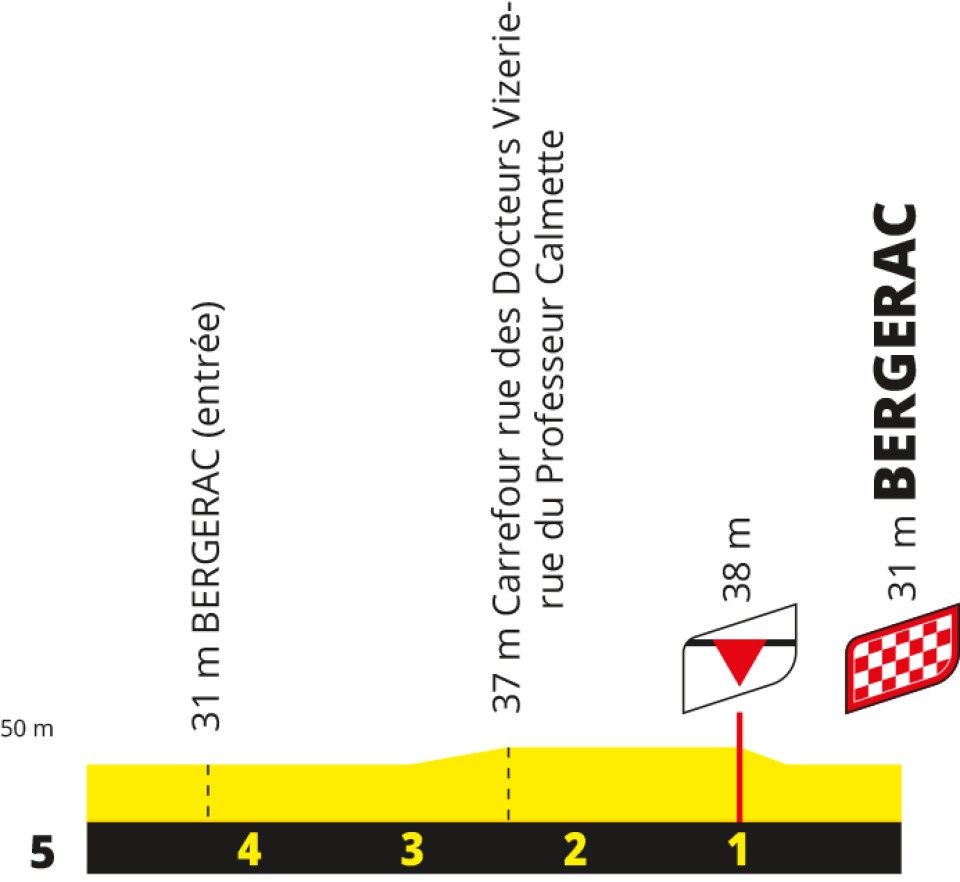
This is the profile of the finale of Stage 8.
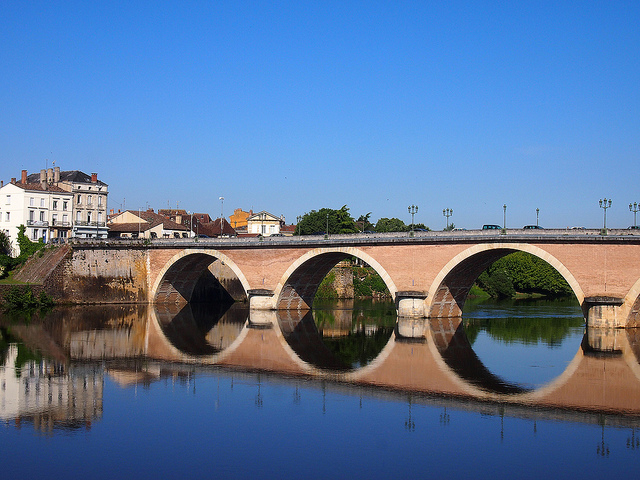
Bergerac is a town on the Dordogne river, and in the Dordogne département. It's known for its Bergerac wines, which fall within the Bordeaux region, and for tobacco-growing.
There are two statues of Cyrano de Bergerac in the town. He was the subject of a play, Cyrano de Bergerac, by Edmond Rostand. In the play, Cyrano de Bergerac is a nobleman serving as a soldier in the French army. He is a gifted duelist, poet, and musician, but his large nose makes him doubt himself. He loves Roxane, but she falls for another.
The play is fiction, but it follows the broad outlines of the life of a real Cyrano de Bergerac (who actually never lived in Bergerac).
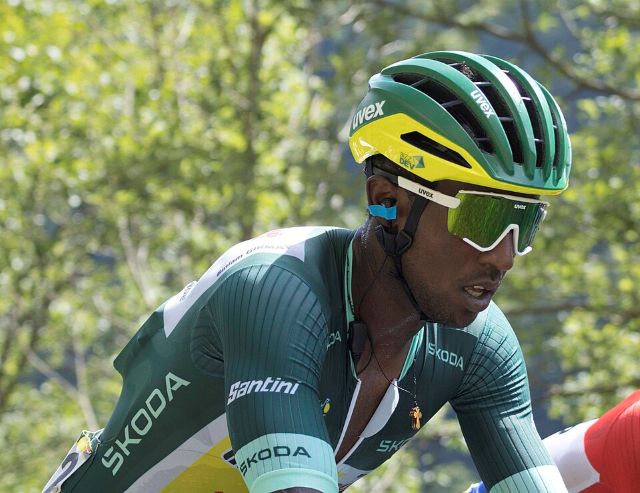
Favourites for Stage 8 of the 2026 Tour de France are likely to be the top sprinters such as Jasper Philipsen and Tim Merlier. Biniam Girmay is now riding for NSN Cycling, and will be a contender if he can find his form again.
Who do you think will win Stage 8 of the 2026 Tour de France?

Massage gun deep tissue, price £19.99 from Amazon at the time of writing (affiliate link).
As an Amazon Associate, I earn from qualifying purchases.

Bike Rides in the Yorkshire Dales is available in colour paperback.
Find out more about Bike Rides in the Yorkshire Dales or buy a copy.

Bike Rides In and Around York features a historical city tour, plus family rides, road rides, and mountain bike rides.
Find out more about Bike Rides In and Around York or buy a copy.

Bike Rides in Harrogate and Nidderdale is a book of family, mountain and road bike rides.
Find out more about Bike Rides in Harrogate and Nidderdale or buy a copy.

Find out more about Mountain Bike Rides in the Yorkshire Dales.
Buy Mountain Bike Rides in the Yorkshire Dales at £8 + P&P.

Garmin Edge Explore, £197.99 at the time of writing.
Garmin Edge Explore on Amazon (affiliate link).

Faster by Michael Hutchinson on Amazon (affiliate link).


