Cycling in Yorkshire & Beyond

Cycling in Yorkshire & Beyond
Stage 1 of the Tour de France 2026 is a 19.6km Team Time Trial in Barcelona.
It is the first TTT in the Tour since Brussels in 2019.
The parcours starts by the beaches, and there's an 'out and back' along the seafront. Next, there's a series of flat, straight streets at the foot of the Sagrada Familía.
The stage finishes with two climbs near the Olympic Stadium - the Côte de Montjuïc and the Côte du Stade Olympique.
The team's time for the purposes of the stage win will be taken when the first rider crosses the line.
Times will be recorded individually for the General Classification, so if a rider drops off the back of their team before the line, they will lose time. Traditionally, riders were all given the time of the fifth rider of their team for GC purposes.
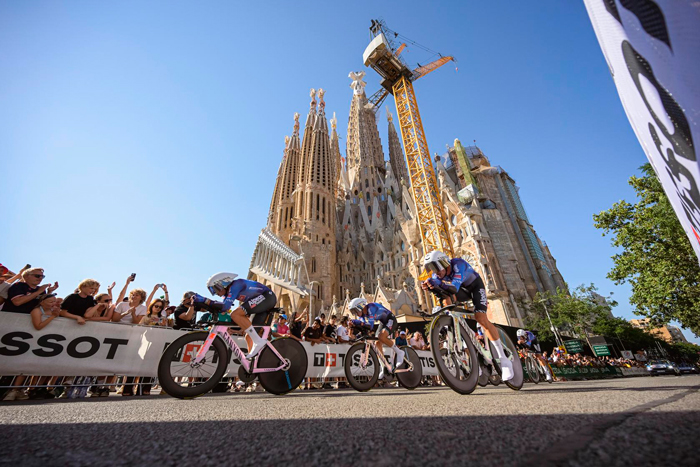
This is the race report for Stage 1 Tour de France 2026.
These are video highlights of Stage 1.
Race Details | Poll | Map & Profile | Timings | Videos | Food & Drink | Route Notes | Favourites
| Date | Saturday 4th July 2026 |
|---|---|
| Stage classification | Team Time Trial |
| Distance | 19.6km |
| Intermediate sprint | N/A |
| Climbs | Côte de Montjuïc Côte du Stade Olympique |
| Total climbing | 200m |
Vote for one of the main contenders to win Stage 1.
This is a map of the route of Stage 1, Tour de France 2026.

This is a zoom-able map of Stage 1 Tour de France 2026.
This is the profile of Stage 1 Tour de France 2026.

| Caravan | First Team | Last Team | |
|---|---|---|---|
| Start Time | 1535 |
1705 |
1855 |
| 1st Time Check, Carrer de Llull | 1545 |
1711 |
1901 |
| 2nd Time Check, Sagrada Familia | 1556 |
1716 |
1906 |
| 3rd Time Check, Passeig de Santa Madrona | 1607 |
1722 |
1912 |
| Finish Line (19.6km) | 1614 |
1726 |
1916 |
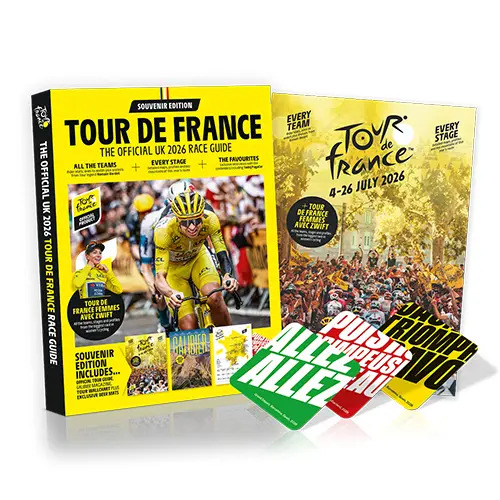
Get the official Tour de France 2026 Race Guide.
The fully authorised guide includes detailed stage maps, team profiles, expert analysis and stunning photography.
Available in Standard and Premium Editions.

Get a bundle with the premium race guide, Cycling Plus Ride Like a Pro, plus socks, coasters and an allen key, for £26.38.

This is a video of the route of Stage 1 Tour de France 2026.
These are highlights of the Team Time Trial in Brussels on Stage 2 of the 2019 Tour de France.
Stage 7 of the 2026 Volta Catalunya featured a circuit that went up to the Montjuïc area of Barcelona.
Stage 1 is in Barcelona.
Food in Barcelona includes fresh fish and shellfish. Among the seafood dishes is suquet de peix, a fish and shellfish soup, sarsuela, a fish stew, and graellada de peix, a mixed grill of fish.
Desserts include flan, and crema catalana (egg custard with caramalised sugar on top).
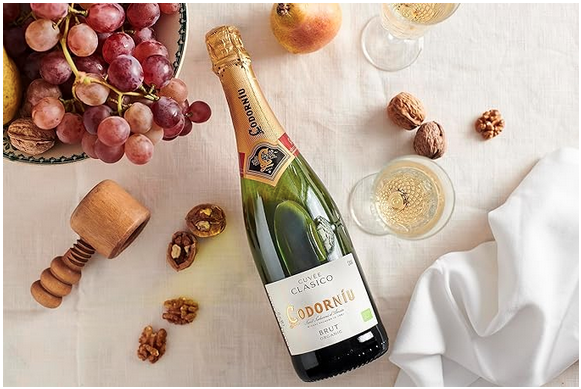
Cava, a sparkling white wine that use the méthode Champenoise, is made in Catalonia. Much of it comes from Penedès.
Buy a bottle of Cava (affiliate link).
The stage is in Barcelona.
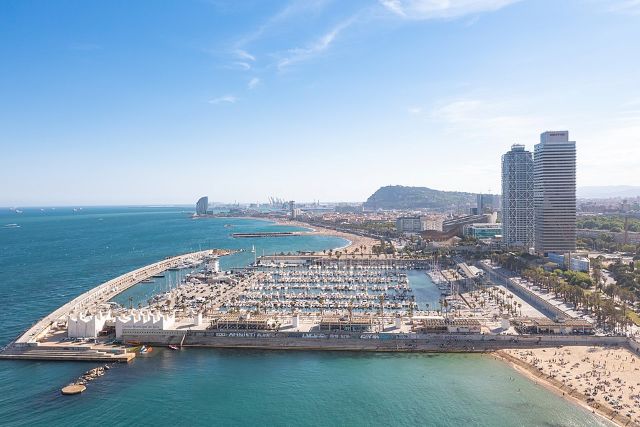
Barcelona is a city in Catalonia, north eastern Spain, with a population of 1.6 million. It is one of the most densely populated cities in Europe.
It stands between the mouths of the rivers Llobregat and Besòs, on the Mediterranean coast. To the west is the Serra de Collserola mountain range.
Barcelona is said to have been founded by either the Phoenicians or the Carthaginians. It could possibly be named after the Carthaginian general Hamilcar Barca, father of Hannibal, who is said to have founded the city in the 3rd century BC.
The Romans had a military camp here, which became a colony.
Barcelona came under Visigoth control from the early 400s, and it was captured by Charlemagne's son Louis in 801.
In 1137 it became the capital of the County of Aragon, then the most important city in the Kingdom of Aragon.
In 1516, the Crown of Aragon merged with the Crown of Castile.
In the 1700s, Barcelona became one of the key mercantile centres in the western Mediterranean, with a thriving port.
In the mid-1850s the city expanded outside its Medieval walls. A civil engineer called Ildefons Cerdà proposed a plan for a new district called Eixample. He built octagonal superblocks with wide streets, gardens in the centre of each street block, and integration of rich and poor.
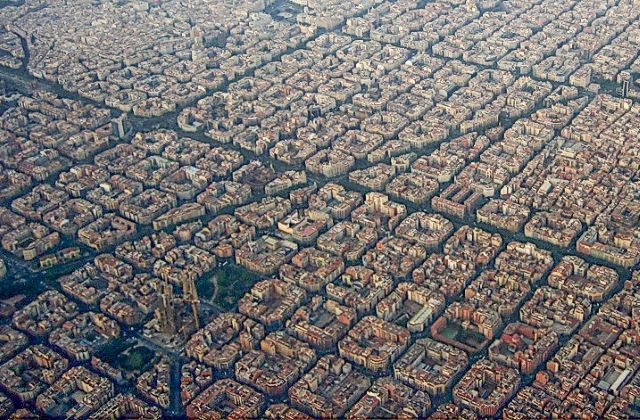
In 1931, Barcelona became the capital of autonomous Catalonia within the second Spanish Republic. In 1939, the city fell to the dictator Franco, who ruled until he died in 1975.
Today Barcelona is an important cultural centre and a tourist destination.
It's famous for the architectural works of Antoni Gaudí and Lluis Domènech i Montaner. It has two prestigious universities, and is the main biotech hub in Spain.
The race route starts at the Marine Platform (Recinte Plataforma Marina) which is by the Forum (Fòrum Universal de les Cultures).
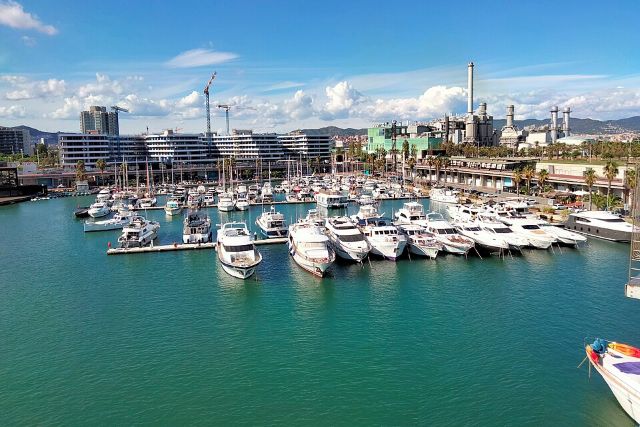
The teams ride south west along the Avinguda del Litoral, past Nova Mar Bella beach to the Port Olimpic.
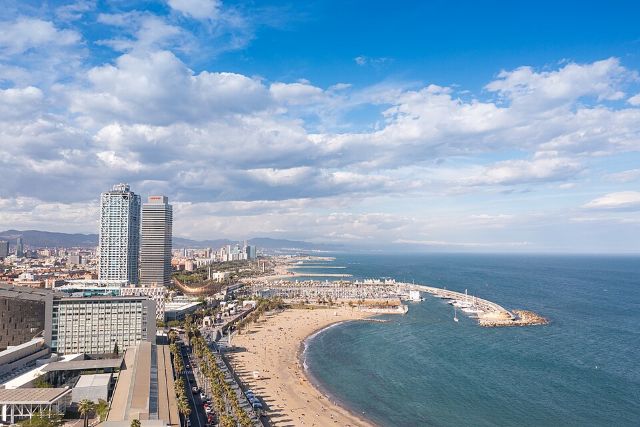
They turn 180 degrees, heading back they way they came on Avinguda d'Icaria, past the Olympic village.
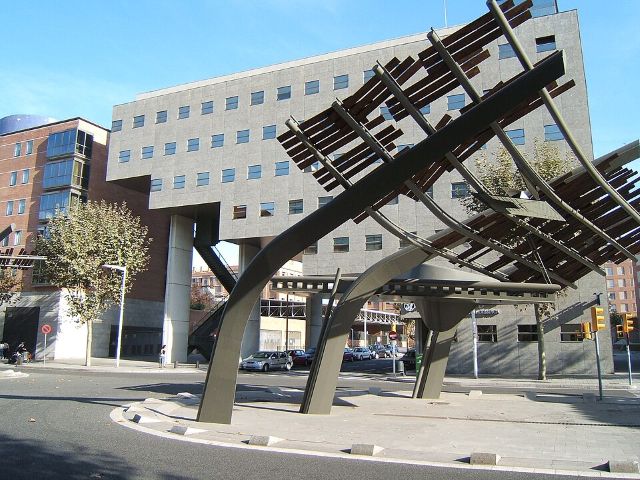
Then they are on Carrer Carmen Amaya and Passeig de Calvell/Passeig Garcia Fària.
When they get back to the Marine Platform, they turn left up the Carrer de Josep Pla, heading north west past the Hotel Hilton Diagonal Mar (with the Convention Centre just behind it) and the Parc de Diagonal Mar.
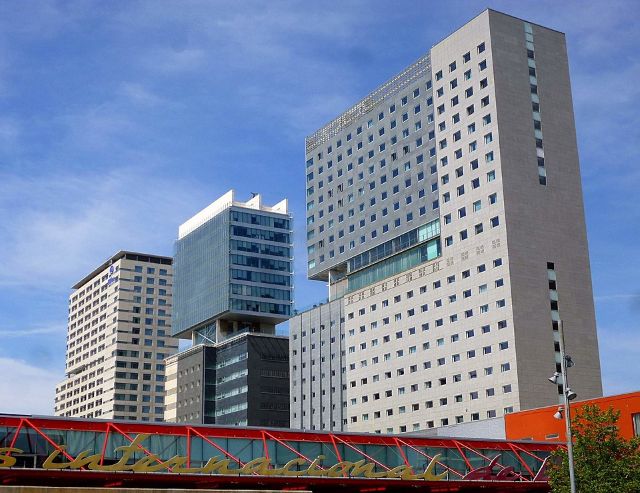
The road becomes the Carrer de Cantabria. The teams turn left onto Rambla de Guipuscoa/Carrer d'Arago.
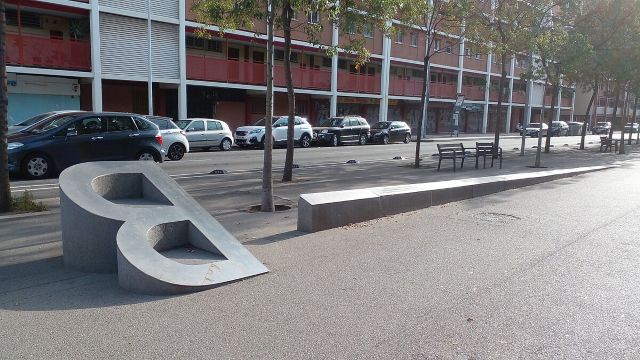
There's a right turn onto Carrer de Padilla, then a left on Carrer de Mallorca. This takes the teams past the the Sagrada Família.
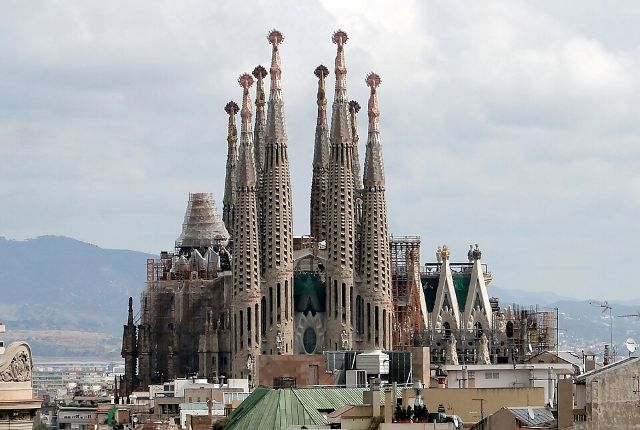
The Sagrada Família is the largest unfinished Catholic church in the world. The architect was Antoni Gaudí.
It is in the Eixample district of Barcelona.
Construction began in 1882, and Gaudí worked on it until his death in 1926. Progress was slow because funding was via private donations, and building was interrupted in 1936 by the Spanish Civil War.
The central tower was finished in February 2026, although there is still another 10 years' work to do on other parts of the basilica.
It is regarded as an extraordinary personal interpretation of Gothic architecture, or as in the Catalan Modernism style.
Its central tower is 172.5m, which makes it the tallest church in the world.

Skiing Made Easy is a practical guide to learning to ski based on many happy seasons of ski teaching.
It takes you through the beginner's progression from snowplough to parallel turns, starting at the very beginning and not assuming any prior knowledge.
The book suggests relevant exercises to develop and improve your skills. Common faults are identified, along with the best ways to correct them.
'By the way' sections contain information about many of the little things that people assume you just know, but you may not.
'This is the book I wish I'd had when I started skiing' - reviewer on Amazon.
How to buy:

Skiing Made Easier is the follow-up to Skiing Made Easy, and picks up from where the first book left off.
The first chapter is Refining Your Parallel Turns.
The chapters on ski technique beyond basic parallel turns are Carving, Short Turns, Bumps and Off Piste.
There are then further chapters on Avalanche and Mountain Safety, Ski Psychology, Physical Preparation, Ski Servicing and Alpine Wildlife.
As in Skiing Made Easy, common faults are identified and exercises suggested to correct them and to develop your skills.
'By the way' passages contain bits of skiing knowhow that could otherwise take years to pick up.
How to buy:
The Amazon URLs are affiliate links.
The Carrer de Mallorca leads the teams towards (but not quite past) the Casa Milà.
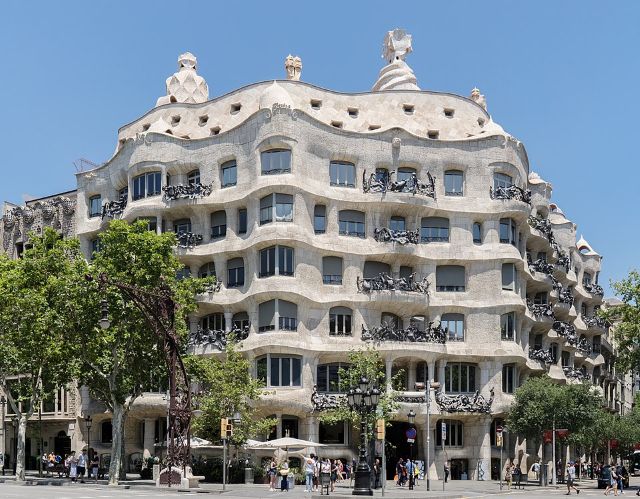
Then they go left on Carrer de Pau Claris, and right on Carrer d'Aragó. There's a fairly long, straight stretch heading south west on Carrer d'Aragó until the teams get to the Parc de Joan Miró.
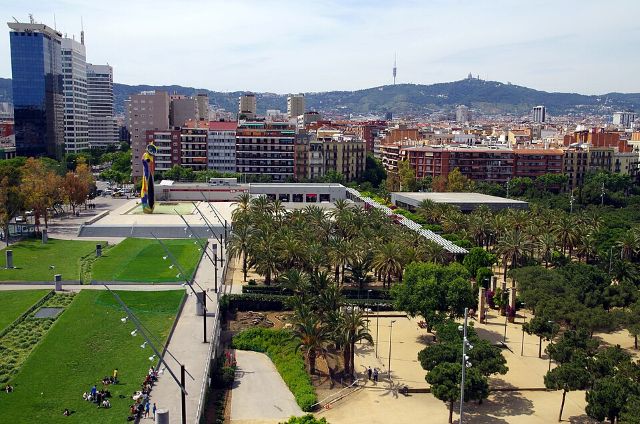
There, they turn left on Carrer de Tarragona to reach Plaça Espanya.
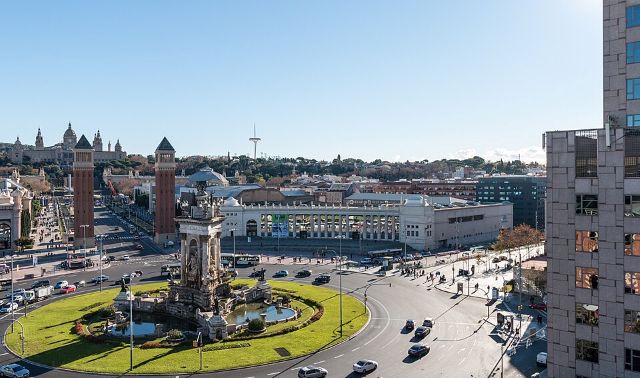
From the Plaça, the teams take Avinguda de la Reina Maria Cristina to the Font Màgica de Monjuïc.
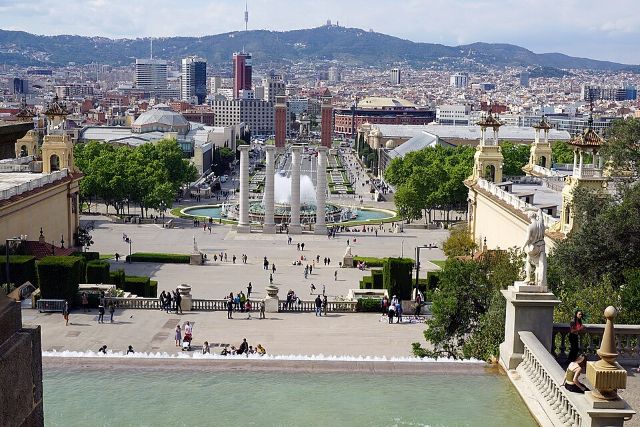
At the fountain, it's left on Avinguda de Rius i Taulet, and right on Carrer de Lleida. The teams are starting to climb.
At the Plaça de Margarida Xirgu and the Catalan Archeological Museum, the teams join Passeig de Santa Madrona. This is the official start of the Côte de Montjuïc climb.
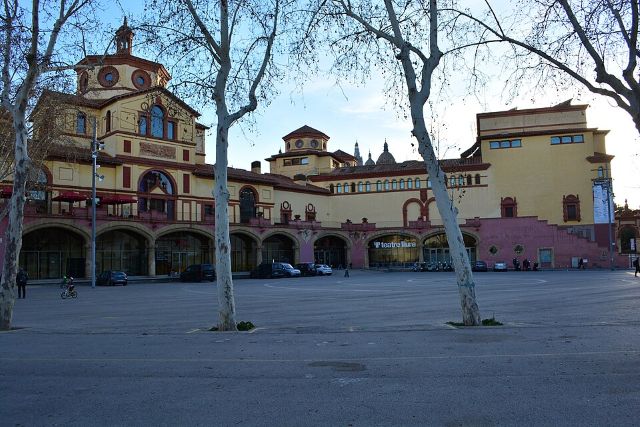
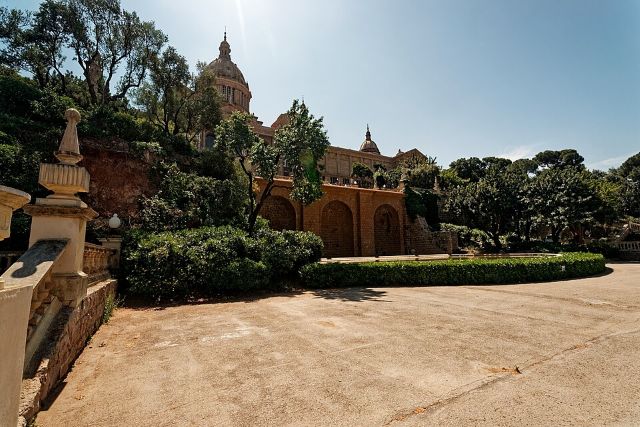
The Côte de Montjuïc climb takes the teams up past the Jardins de Laribal and the National Museum of Catalan Art. Where they meet the Avinguda de l'Estadi is the top of the climb.
It is 1.1km at an average 5.1% to a height of 100m above sea level.
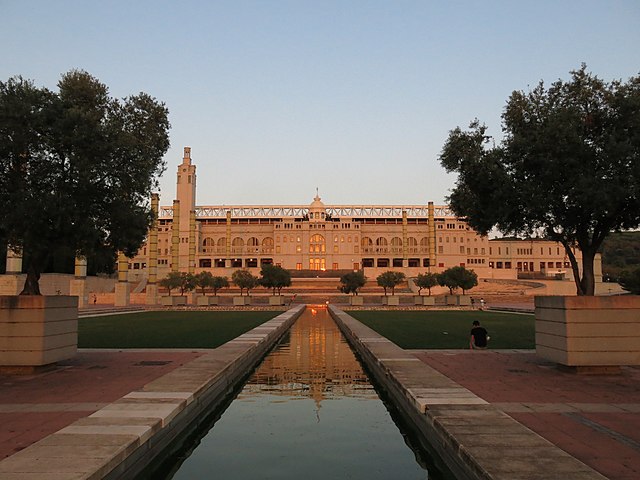
The teams go past the Olympic Stadium.
They bear left on the Carrer dels Jocs del 92, and left again on the Carrer del Foc. Now they are on the other (south) side of the Olympic stadium. Here, the second official climb starts.
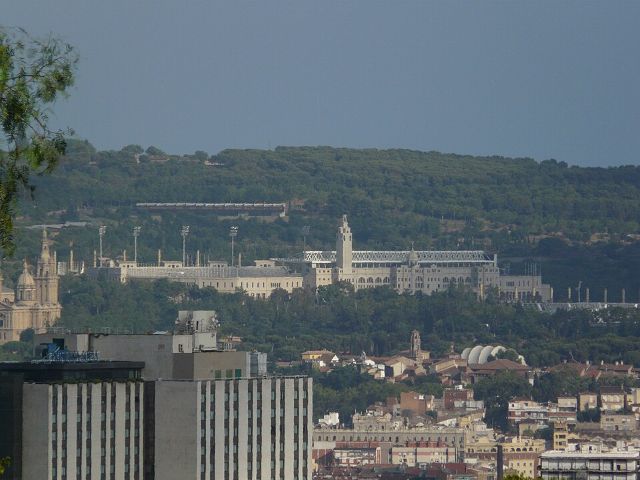
The Côte du Stade Olympique climb takes the teams up Passeig Olimpic, overlooking the Botanical Gardens of Barcelona.
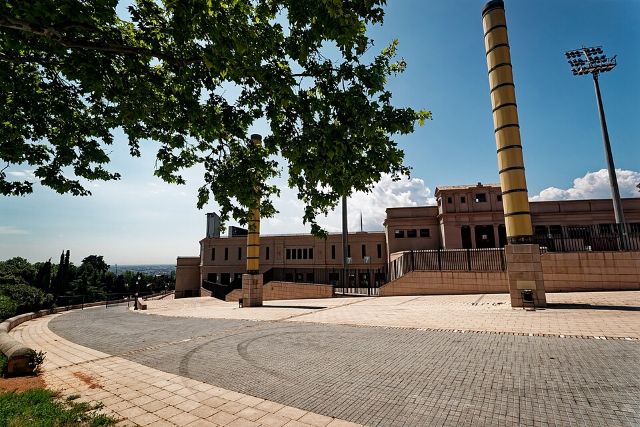
The climb is 800m at an average 7%, to a height of 104m.
The finish line is by the Olympic stadium.
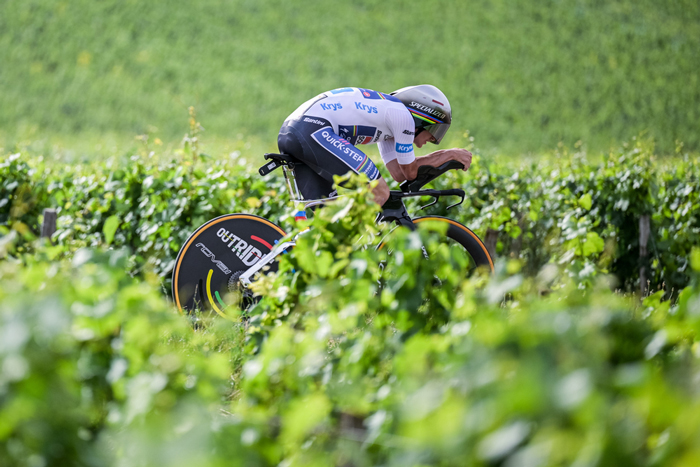
At the time of writing it's hard to say which team is the favourite for Stage 1 of the 2026 Tour de France.
UAE and Visma Lease-a-Bike can both be expected to have strong time triallists in their teams, and Remco Evenepoel's Red Bull-Bora Hansgrohe should do well.
Netcompany Ineos were only just behind Visma in the TTT on Stage 3 of the Tour de l'Auvergne Rhône-Alpes.
Which team do you think will win Stage 1 of the 2026 Tour de France?

Amazon Fire TV Stick Lite, £34.99 at the time of writing (affiliate link).
As an Amazon Associate, I can theoretically earn a small commission from qualifying purchases.

New in 2023, Bike Rides in the Yorkshire Dales is available in colour paperback.
Find out more about Bike Rides in the Yorkshire Dales or buy a copy.

Bike Rides In and Around York features a historical city tour, plus family rides, road rides, and mountain bike rides.
Find out more about Bike Rides In and Around York or buy a copy.

Bike Rides in Harrogate and Nidderdale is a book of family, mountain and road bike rides.
Find out more about Bike Rides in Harrogate and Nidderdale or buy a copy.

Find out more about Mountain Bike Rides in the Yorkshire Dales.
Buy Mountain Bike Rides in the Yorkshire Dales at £8 + P&P.

Garmin Edge Explore, £197.99 at the time of writing.
Garmin Edge Explore on Amazon (affiliate link).

Faster by Michael Hutchinson on Amazon (affiliate link).


