Cycling in Yorkshire

Cycling in Yorkshire
Stage
11 | Stage
12 | Stage
13

Stage 12 of the Tour de France 2023 is a 168.8km hilly stage from Roanne to Belleville-en-Beaujolais. This is a Beaujolais stage, racing through the vineyards that produce Beaujolais wine.
Today is probably an opportunity for a breakaway. Climbs include the Col de la Croix Montmain and the Col de la Croix Rosier. The finish is an uphill sprint.

Stage 12 is best accompanied by a glass of Beaujolais. Buy 6 bottles of Louis Jadot Beaujolais-Villages from Amazon.
These are video highlights of Stage 12 Tour de France 2023.
This is the Stage 12 TDF 2023 Blog.
Race Details | Poll | Map & Profile | Timings | Videos | Food & Drink | Route Notes | Favourites
| Date | Thursday 13th July 2023 |
|---|---|
| Stage classification | Hilly |
| Distance | 168.8km |
| Intermediate sprint | Régnié-Durette |
| Climbs | Cote de Thizy-les-Bourgs (Cat. 3) Col des Ecorbans (Cat. 3) Col de la Casse Froide (Cat. 3) Col de la Croix Montmain (Cat. 2) Col de la Croix Rosier (Cat. 2) |
This is a poll with some of the possible candidates to win Stage 12. Vote here.
This is a map of the route of Stage 12, Tour de France 2023.
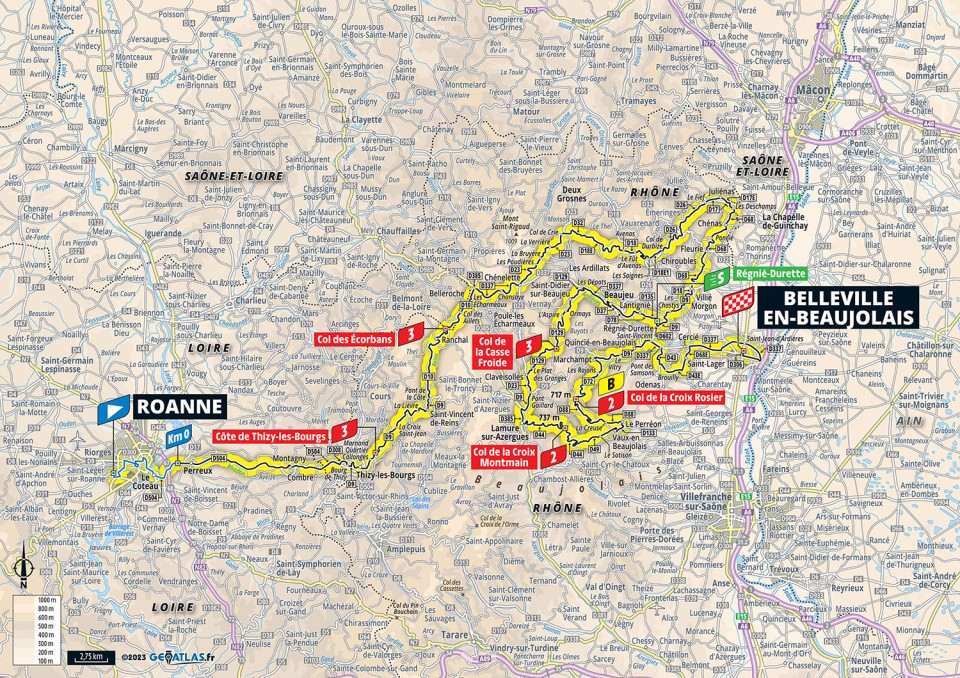
This is a zoom-able map of the route of Stage 12 Tour de France 2023.
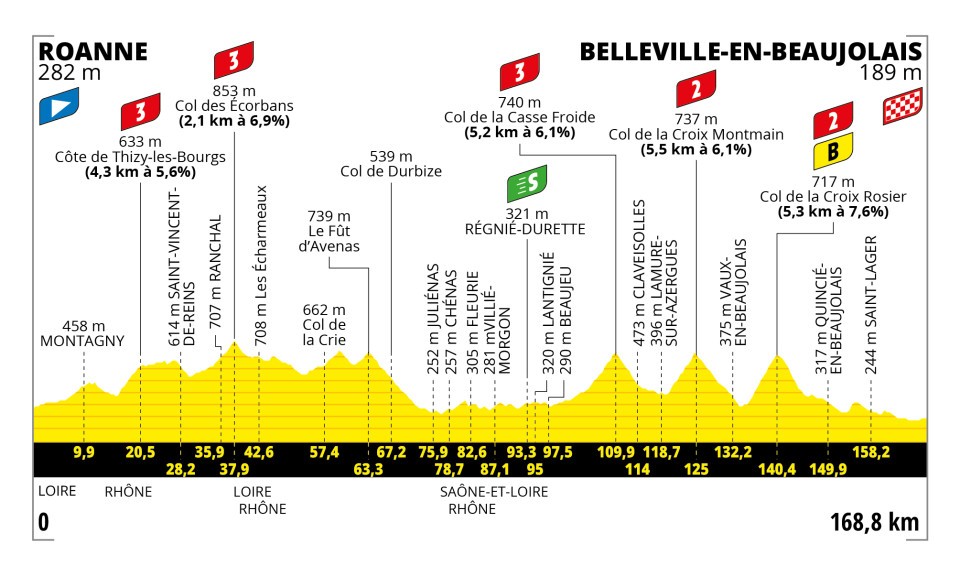
This is the profile of Stage 12 Tour de France 2023.
| Caravan | Fast Schedule | Slow Schedule | |
|---|---|---|---|
| Start Time (départ fictif) | 1105 |
1305 |
1305 |
| Start Time (départ réel) | 1120 |
1320 |
1320 |
| Intermediate Sprint | 1347 |
1533 |
1547 |
| Col de la Croix Rosier Climb | 1502 |
1640 |
1702 |
| Finish Line (168.8km) | 1546 |
1721 |
1746 |
Note: these are local (French) times.
This is a video of the route of Stage 12.
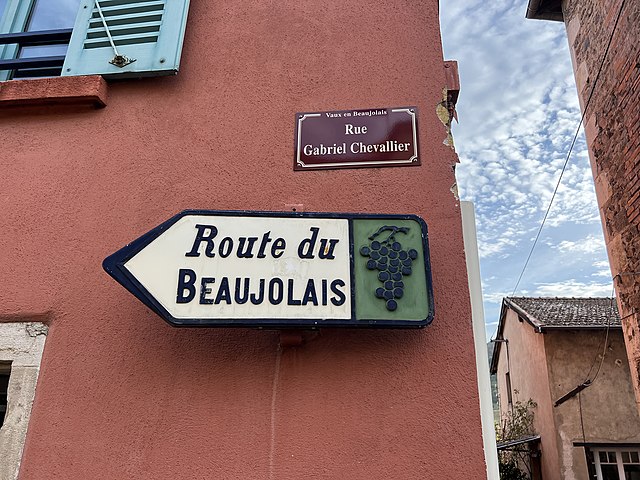
Stage 12 finishes at Belleville-en-Beaujolais, so Beaujolais wine is the obvious accompaniment to the stage.
Beaujolais is a light red wine made from the Gamay grape, and typically has quite high levels of acidity.
Beaujolais can be matched with brie or camembert, or with charcuterie.
Stage 12 starts in Roanne (départ fictif).
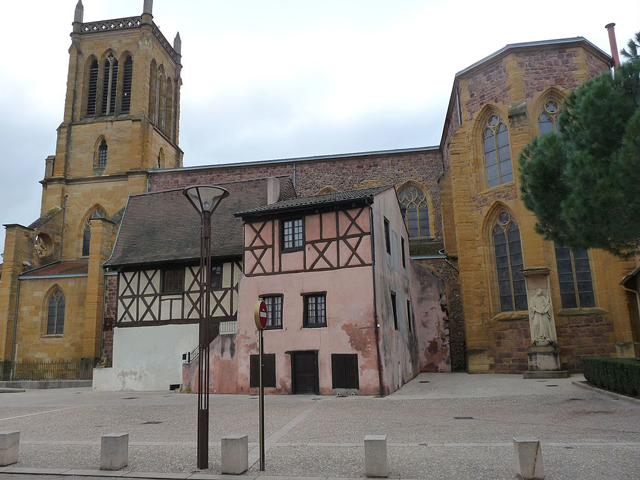
Roanne is a town of 35,000 people in the Loire département. It is twinned with Nuneaton and Bedworth.
The name comes from the Celtic rod-onna, meaning 'flowing water'. Roanne is on the river Loire.
It developed because of its site on the Loire. Roanne was the 'head of navigation' of the river - as far as boats could go because further upriver there are narrow gorges.
In the 1100s under the Comte du Forez it developed its role in navigation further. Boats coming from the Atlantic could reach Roanne on the Loire, then there was an overland route to Lyon where they could set sail on the Rhône and reach the Mediterranean.
Goods shipped via Roanne included casks of Beaujolais, ceramics, textiles and - after 1785 - coal from Saint-Etienne.
In 1838, the Canal de Roanne à Digoin opened. It runs north from Roanne to Digoin, and is effectively the river Loire on that stretch, but canalised.
Much of Roanne's industry has gone, but there are still factories making armoured cars, Michelin tyres, material for clothing, and paper towels.
The house pictured above is called the Maison à Pans de Bois (the half-timbered house), or the Maison Bourbonnaise. It dates from the 1400s. For a long time it was used for tasting local wines, but now it houses an Association of the Friends of Roanne Museum.
Roanne has a large number of Michelin-starred chefs, with the Troisgros family the most prominent pan-wielders and grub rustler-uppers.
The first stage of the first Tour de France (1903) was 467km from Paris to Lyon, and passed through Roanne.
Roanne hosted the start of Stage 19 of the 2008 Tour. Sylvan Chavanel won that day, the last Cofidis stage win before 2023, and Carlos Sastre was the overall winner that year.
The neutralised section starts from an exhibition hall called Le Scarabée.
The procession goes along Route d'Ouches, Rue Marguerite Duras, Rue Henri Desroche, Rue Joanny Augé, and Rue Muisant to Place des Promenades Populle.
It continues on Cours de la République, Avenue Gambetta, then past the church and castle, before taking Avenue de Lyon towards the river.

It crosses the Loire to the suburb of Le Coteau, then picks up the D504 to go under the Rocade Est.
The départ réel is on the D504 Route de Roanne between Roanne
and Perreux.
The race now follows the Rhodon upstream. It leaves the Loire département and enters the Rhône, then reaches Thizy-les-Bourgs.
Leaving Thizy-les-Bourgs, the riders tackle the first categorised climb of the stage.
It is 4.3km at an average gradient of 5.6%, to a height of 633m at the top after 20.5km raced.
Next its north east on minor and hilly roads to Saint-Vincent-de-Reins, on the Reins river.
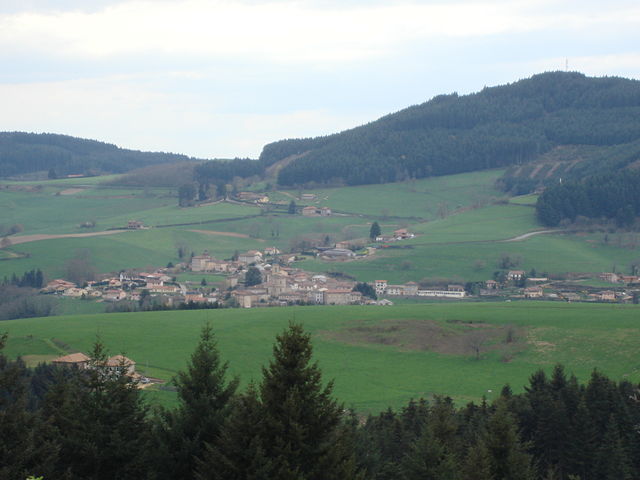
From there, Stage 12 follows the Reins upstream and north, then leaves the valley to head NNE up to Ranchal and the Col des Ecorbans. This is the next categorised climb.

The Col des Ecorbans climb is 2.1km at an average 6.9% gradient to a height of 853m after37.9km raced.
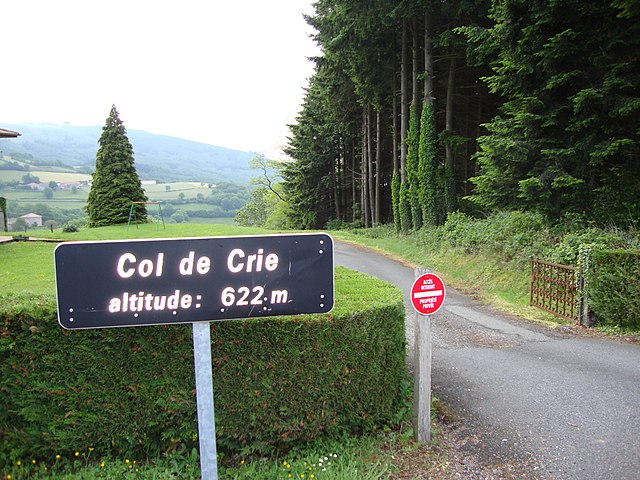
Then the riders continue to Les Echarmeaix and Chénelette. There's an uncategorised climb to the Col de Crie (622m), and another to the Col du Fût d'Avenas (739m).
After that, there's a descent via the Col de Durbize (543m), and the race drops down further to a little river called la Mauvaise.
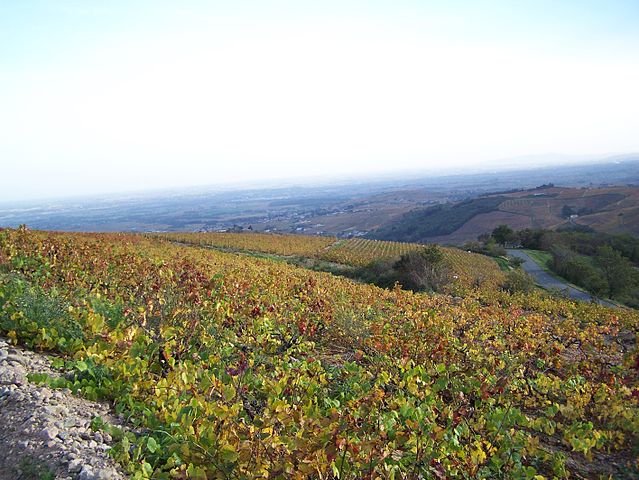
Stage 12 is now very much in Beaujolais wine country. It sticks to the valley of the Mauvaise for a while, passing Juliénas, before leaving the river and heading via Chénas to Fleurie. Fleurie is where the Queen of Beaujolais wines is made.
The race route then crosses the Douby river to Villié-Morgon and Regnié-Durette, where the intermediate sprint takes place.

Skiing Made Easy is a practical guide to learning to ski based on many happy seasons of ski teaching.
It takes you through the beginner's progression from snowplough to parallel turns, starting at the very beginning and not assuming any prior knowledge.
The book suggests relevant exercises to develop and improve your skills. Common faults are identified, along with the best ways to correct them.
'By the way' sections contain information about many of the little things that people assume you just know, but you may not.
'This is the book I wish I'd had when I started skiing' - reviewer on Amazon.
How to buy:
The intermediate sprint takes place at Regnié-Durette. It seems likely that at least some of the green jersey points will be mopped up by breakaway riders.
Next the race drops into the valley of the Ardière at Beaujeu.

It's Beaujeu that gives its name to the Beaujolais wine and region. The name means something like 'beautiful hilltop'.
It belonged to the Lords of Beaujeu from 966 until 1400. After that the title of Lord of Beaujeu passed to the Dukes of Bourbon.
The Fête des Sarmentelles takes place on the third Wednesday in November, and is the day when the year's Beaujolais Nouveau can be sold.
Next on the route is Saint-Didier-sur-Beaujeu.

The riders are soon climbing again, this time to the Col de la Casse Froide (740m).
The Col de la Casse Froide is 5.2km at an average 6.1% to a height of 740m after 109.9km raced.
From the top of the col it's down to Claveisolles, Pont-Gaillard, and Lamure-sur-Azergues.
After that the route goes east to the Col de la Croix Montmain.
The Col de la Croix Montmain is 5.5km at an average 6.1%, reaching a height of 737m at the top after 125km raced.
The descent is to Vaux-en-Beaujolais and Le Perréon, on the Ruisseau de la Ponsonnìere.

Now the riders head up via the Col de la Pierre Plate (593m) to the Col de la Croix Rosier.
The Col de la Croix Rosier is 5.3km at an average 7.6% to a height of 717m after 140.4km raced.
Time bonuses are available at the top - 8, 5 and 2 seconds.
The riders descend to the Ruisseau des Samsons at Marchampt. Immediately after Marchampt they pass the Château de Varennes.
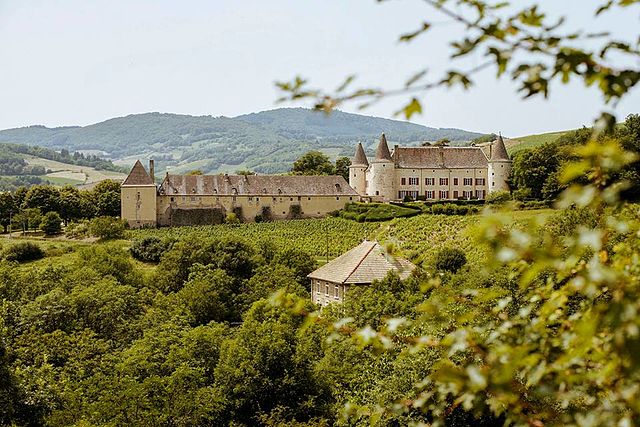
The Château de Varennes dates from the 1500s and is called the Jewel of the Beaujolais. It's a wedding venue and winery that offers tours and tastings.
Stage 12 then takes the riders to Quincié-en-Beaujolais.
From there, the peloton drops down to the Ruisseau des Samsons again, crosses it, and heads over another lump to Saint Lager - patron saint of British drinkers (probably).

The race is in the outskirts of Belleville-en-Beaujolais now, circling it to the north on the D337 ring road. Once the riders get to the eastern side of the town, they head through the centre on Rue de la République.
The Rue de République is straight and slightly uphill.
At a crossroads, there's a right turn onto Avenue de l'Europe, and the finish line is on Avenue de l'Europe, just short of the junction with Rue des Freres Lumiere

Belleville-en-Beaujolais is a town of around 13,000 people on the river Saône and in the Rhône département.
The area has been inhabited since prehistoric times. There was a Celtic village called Aiguerande at the confluence of the Ardière and the Saône. A Roman settlement here, on the road between Lyon and Mâcon, was known as Luuna.
In the 1100s, the Lord of Beaujeu Humbert III put up town walls and founded an abbey. Belleville became the place where members of the ruling family were buried.
Until the advent of the railway, Belleville thrived on trade by river.
In 1854, the railway from Paris to Marseille was built, passing to the west of Belleville. The town expanded westwards, with industries connected with modern wine-making springing up.
The A6 autoroute was built in the 1960s.
The Maison des Beaujolais, set up by wine-makers to promote local wines, is one of the attractions of Belleville.

Stage 12 of the Tour de France 2023 is designed with a breakaway in mind.
Who might be in it? Candidates could include Mads Pedersen, Tom Pidcock, Thibaut Pinot, James Shaw, Rémi Cavagna, Mathieu van der Poel, Rui Costa, Matteo Jorgenson, Hugo Houle, Simon Gugliemi, Jonas Gregaard, Edvald Boasson Hagen and Fred Wright (in his British champion's jersey).
Who do you think will win Stage 12?

Tour de Force by Mark Cavendish available on Amazon.

Beaujolais is a wine made with Gamay grapes in the Beaujolais region. The region gets its name from the town and Lords of Beaujeu.
Gamay grapes are thin-skinned and low in tannins. They make light wines with relatively high acidity.
The Romans were the first to plant vines here, along their trading route up the Saône valley. Later, Benedictine monks did much of the wine-making.
Beaujolais Nouveau became very popular in the 1980s, with easy-drinking, fruity wines. In the late 1990s that popularity faded, and Beaujolais producers are now concentrating on more complex wines that are aged longer in oak barrels.
Fleurie is called the Queen of Beaujolais. It has floral notes, and aromas of blueberries and red fruits.
It doesn't get its name from flowers, though, but from a Roman General, Floricum.
Fleurie vineyards are on the west side of the Saône valley, facing south or south east. The soil is on pink granite, and is sandy higher up, with more clay content lower down.
La Madone is one of the best-known Fleurie wines, taking its name from a chapel on top of the hill.
Buy a Fleurie La Madone gift set.

New in May 2023, Bike Rides in the Yorkshire Dales is available in colour paperback.
Find out more about Bike Rides in the Yorkshire Dales or buy a copy.

Bike Rides In and Around York features a historical city tour, plus family rides, road rides, and mountain bike rides.
Find out more about Bike Rides In and Around York or buy a copy.

Bike Rides in Harrogate and Nidderdale is a book of family, mountain and road bike rides.
Find out more about Bike Rides in Harrogate and Nidderdale or buy a copy.


