Cycling in Yorkshire

Cycling in Yorkshire
Stage
12 | Stage
13 | Stage
14

Stage 13 of the Tour de France 2023 is a 138km mountain stage from Châtillon-sur-Chalaronne to the Grand Colombier.
The first half of the stage is relatively flat, but the climbs start after Ambérieu and include the Plateau d'Hauteville. The summit finish on the Grand Colombier should provide some Bastille Day excitement.
Stage 13 is a set piece based almost entirely on the Grand Colombier at the end. A breakaway has a small chance of winning, but it's more likely that we'll see a Vingegard-Pogacar battle.
These are video highlights of Stage 13 Tour de France 2023.
This is the Stage 13 TDF 2023 Blog.
Race Details | Poll | Map & Profile | Timings | Videos | Food & Drink | Route Notes | Favourites
| Date | Friday 14th July 2023 |
|---|---|
| Stage classification | Mountain |
| Distance | 137.8km |
| Intermediate sprint | Hauteville-Lompnes |
| Climbs | Grand Colombier (HC) |
This is a poll with the names of some of the main contenders to win Stage 13.
This is a map of the route of Stage 13, Tour de France 2023.
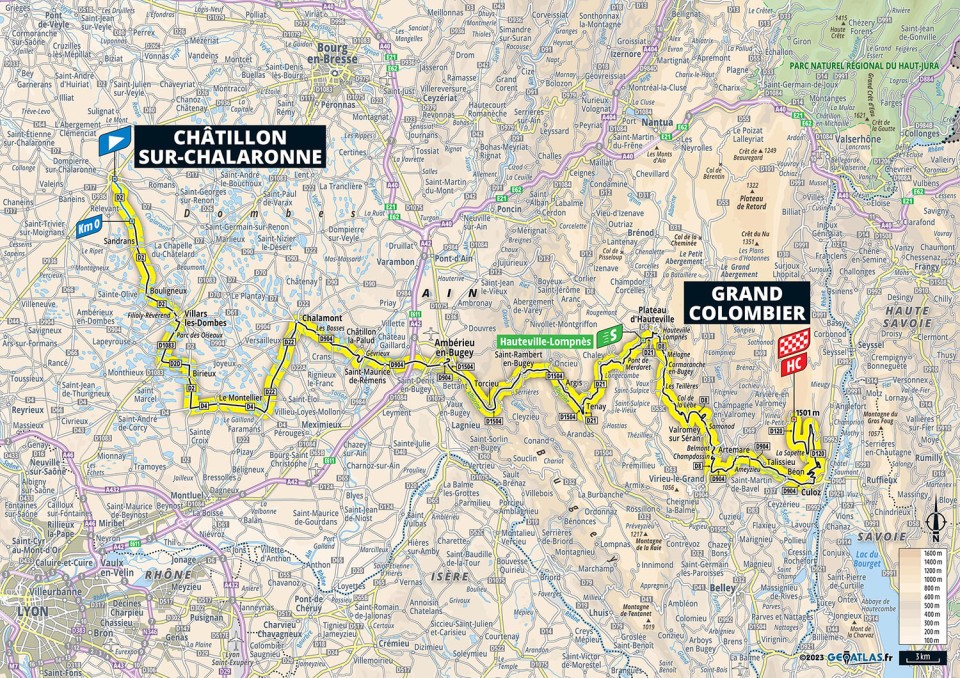
This is a zoom-able map of Stage 13 of the 2023 Tour de France.
This is the profile of Stage 13 Tour de France 2023.
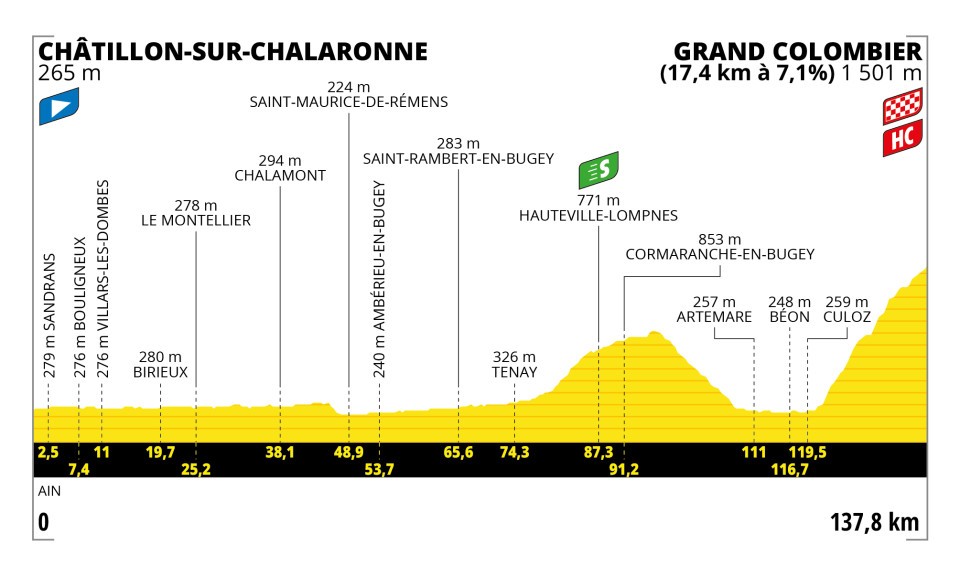
| Caravan | Fast Schedule | Slow Schedule | |
|---|---|---|---|
| Start Time (départ fictif) | 1145 |
1345 |
1345 |
| Start Time (départ réel) | 1155 |
1355 |
1355 |
| Intermediate Sprint | 1413 |
1600 |
1613 |
| Culoz | 1504 |
1646 |
1704 |
| Finish Line (137.8km) | 1532 |
1712 |
1732 |
This is a video overview of the route of Stage 13.
These are video highlights of Stage 15 of the 2020 Tour de France, when the race finished on top of the Grand Colombier.

Stage 13 finishes on top of the Grand Colombier, close to the Lac du Bourget and Aix-les-Bains and Chambéry.
Chambéry is known for its Vermouth.
Vermouth is a fortified wine (more alcohol added), flavoured with botanicals (roots, flowers, herbs, spices etc). The modern version originated in Turin, but Chambéry has strong connections to Turin because they were both part of Savoie until 1860.
Artemisia plants like wormwood have long been used to flavour the drink. The German for wormwood is Vermut, and Vermouth is its French pronunciation. (Wormwood also flavours Absinthe).
Vermouth is a key ingredient in cocktails such as Martini.
Buy a bottle of Vermouth de Chambéry.
The Grand Colombier is at the southern tail of the Jura massif. The Jura mountains are known for Comté cheese.
Stage 13 starts (départ fictif) in Châtillon-sur-Chalaronne, which is looking forward to hosting the race on Bastille Day.
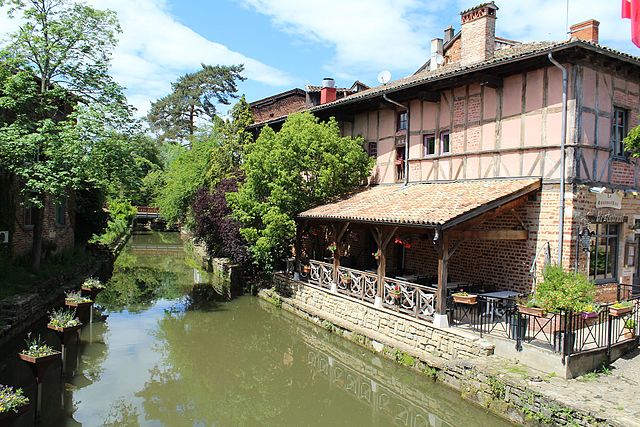
Châtillon-sur-Chalaronne is a town of 5,000 people in the Ain département. It stands on the Chalaronne river.
The name Châtillon comes from the Latin castellum, and refers to a castle built around the year 1,000.
Châtillon was at a crossroads in Roman times. After the fall of the Roman Empire, it belonged to the Burgundian Kings. From 1023, it was a small independent territory under Hugo de Châtillon. In the 1200s, it became part of Savoie. Much of Châtillon's castle was destroyed when Henri IV of France waged war on Savoie in 1598. After the French Revolution it became part of France.
The Musée de Tradition et Vie is based in the Hospice, a hospital built in 1727.
The neutralised section begins on Place de la République, then the riders roll out along Rue Pasteur. Then it's on to Rue Barrit and the D2 Route de Sandrans, passing the ponds of Les Prés Gaudet.
The départ réel is by the Etang de Bessay.
The race heads south on the D2, travelling via Sandrans and a watery landscape of ponds to Bouligneux.

The riders continue to Villars-les-Dombes, where Stage 14 of the 2016 Tour de France finished. Mark Cavendish won that day.

Villars-les-Dombes is a village in the Dombes area of the Ain département, set in a watery landscape of many ponds and lakes.
Silver medals found here, dating from the Roman period, show that it was inhabited at that time. In the Middle Ages, Villars-les-Dombes developed around its church, within circular defensive walls.
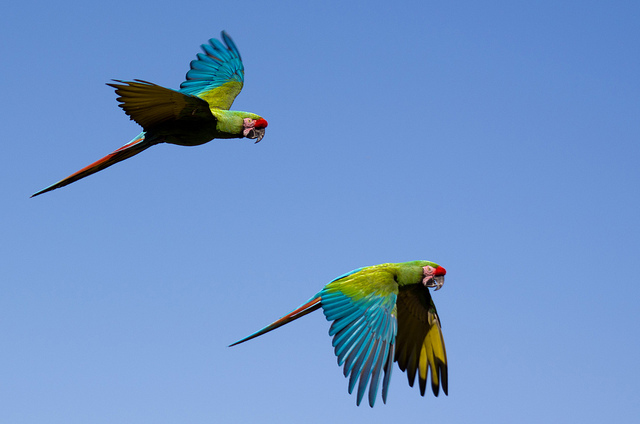
The lakes are excellent habitat for birds. The bird park, le Parc des Oiseaux, was opened in 1970,
and is a protected reserve for birds. It also has a collection of
more than 600 species, and 3,000 birds, for visitors to the park to
see; and it plays a role in breeding endangered species.
Stage 13 continues on minor roads via Birieux and Le Montellier to Chalamont.
From Chalamont, the stage heads east via Châtillon-la-Palud (where they have a greyhound racing circuit) to Saint-Maurice-de-Rémens and Ambérieu-en-Bugey.

Ambérieu may get its name from the Celtic Ambarri tribe. Their name means 'living on both sides of the river'.
Being at the junction of the Mâcon-Ambérieu and Lyon-Geneva lines, Ambérieu is known for being an important railway junction. Then again if you live there, that's not necessarily what you want your town to be known for. It used to be an even more important junction than it is now, but some lines are now disused.
In June 1944, railway workers in the Résistance disabled 52 locomotives, as well as other equipment. This reduced Ambérieu's usefulness to the German army, and meant that the Allies decided not to bomb it.
After World War II, Ambérieu was given the Croix de Guerre for its resistance activities.
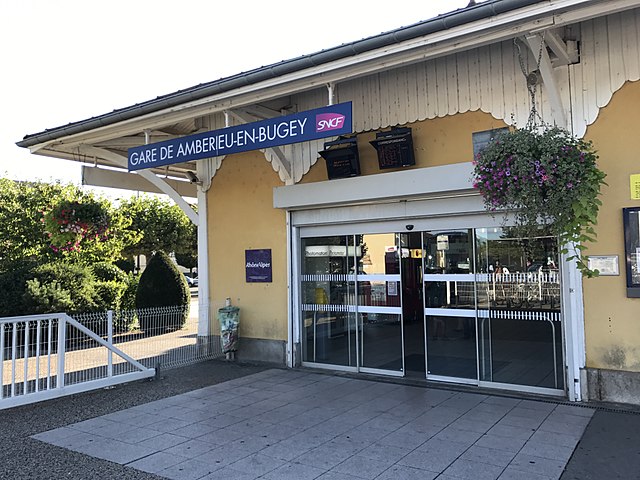
Ambérieu marks the boundary between the flatter terrain of the first part of the stage to the west, and the hills and mountains to come in the east.
The riders leave Ambérieu on the D1504, in the Cluse de l'Albarine, to Torcieu and Saint-Rambert-en-Bugey.

They continue to Tenay.
From there, the race is in the Gorges de l'Albarine, climbing gradually reaching Hauteville-Lompnes - which since 2019 has been called Plateau d'Hauteville, after the plateau that surrounds it.

How to Write a Kindle Ebook is a step by step guide to writing and publishing an ebook on Amazon.
It takes you through the process of writing and formatting it using Microsoft Word, then uploading it to Kindle Direct Publishing and selling it on Amazon.
There's advice and guidance at every stage, with examples including screenshots, and tips on how to overcome practical problems you're likely to encounter.
How to Write a Kindle Ebook will be your reliable and trusted companion as you write and publish your own book.
'I find this a really helpful and informative guide to e-book writing and recommend to others' - reviewer on Amazon.
Buy the ebook or the paperback on Amazon.
The intermediate sprint is at Hauteville-Lompnes.
Next the race continues to Cormaranche-en-Bugey, followed by an uncategorised climb to the Col de la Lèbe (914m).
The race comes back down to the Séran valley near Champagne-en-Valromey. It continues to Artemare.

From Artemare the race goes to Culoz, where Stage 15 of the 2016 Tour de France finished. Jarlinson Pantano won that day, but like Bruno we don't talk about Panto any more.
The climb to the finish on the Grand Colombier begins at Culoz.

The riders set off up the D120 from Culoz. The first section is known as 'les Lacets du Grand Colombier' because the series of hairpin bends make the road look like shoelaces.

The gradient eases at the D120/D120A junction, then steepens again until La Sapette (1,218m).
The finish line is at the top of the Grand Colombier, at 1,501m.
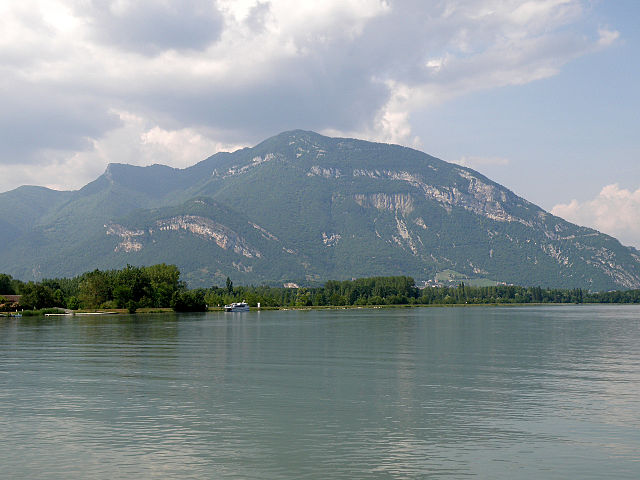
The Grand Colombier is climbed quite often in the Tour de l'Ain, but its first appearance in the Tour de France was on Stage 10 in 2012, when it was tackled from Culoz and Thomas Voeckler was first to the top. Since then it has featured
The various routes up the Grand Colombier are detailed on the website of the Brotherhood of Grand Colombier Nuts (Confrérerie des Fêlés du Grand Colombier).

The top of the climb is the Col du Grand Colombier, at 1,501m. This is where the road crosses the Montagne du Grand Colombier between its highest point (1,534m), to the south of the Col, and the Croix du Grand Colombier (1,525m), to the north of the Col.
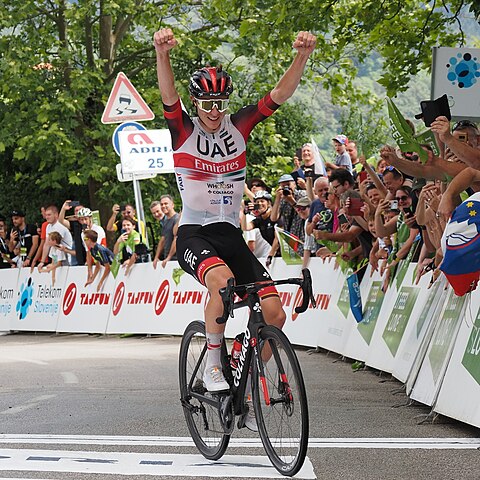
Stage 13 of the Tour de France 2023 is a summit finish. There's a slim chance that a breakaway will survive and take the win, in which case it could be Neilson Powless. Thibuat Pinot could be in the break, but won't be allowed too much leeway unless he has already lost time in the Pyrenees.
Assuming the race comes back togther, naturally the best climbers are likely to win. Pogacar won ahead of Roglic in 2020.
Who else stands a chance? Jonas Vingegaard of course, then Simon Yates, Adam Yates, Egan Bernal, David Gaudu, Jai Hindley, Mattias Skjelmose and Romain Bardet.
Who do you think will win Stage 13?

Price £10.11 from Amazon at the time of writing.

Beaujolais is a wine made with Gamay grapes in the Beaujolais region. The region gets its name from the town and Lords of Beaujeu.
Gamay grapes are thin-skinned and low in tannins. They make light wines with relatively high acidity.
The Romans were the first to plant vines here, along their trading route up the Saône valley. Later, Benedictine monks did much of the wine-making.
Beaujolais Nouveau became very popular in the 1980s, with easy-drinking, fruity wines. In the late 1990s that popularity faded, and Beaujolais producers are now concentrating on more complex wines that are aged longer in oak barrels.
Fleurie is called the Queen of Beaujolais. It has floral notes, and aromas of blueberries and red fruits.
It doesn't get its name from flowers, though, but from a Roman General, Floricum.
Fleurie vineyards are on the west side of the Saône valley, facing south or south east. The soil is on pink granite, and is sandy higher up, with more clay content lower down.
La Madone is one of the best-known Fleurie wines, taking its name from a chapel on top of the hill.
Buy a Fleurie La Madone gift set.

New in May 2023, Bike Rides in the Yorkshire Dales is available in colour paperback.
Find out more about Bike Rides in the Yorkshire Dales or buy a copy.

Bike Rides In and Around York features a historical city tour, plus family rides, road rides, and mountain bike rides.
Find out more about Bike Rides In and Around York or buy a copy.

Bike Rides in Harrogate and Nidderdale is a book of family, mountain and road bike rides.
Find out more about Bike Rides in Harrogate and Nidderdale or buy a copy.


