Cycling in Yorkshire

Cycling in Yorkshire
Stage
16 | Stage
17 | Stage
18

Stage 17 of the Tour de France 2023 is a 165.7km mountain stage from Saint-Gervais-Mont-Blanc to Courchevel.
The climbs include the Col des Saisies, the Cormet de Roselend, the Côte de Longefoy, and the Col de la Loze. There's a short downhill to the finish at the Altiport in Courchevel, then an 18% ramp up the runway of the Altiport.
These are video highlights of Stage 17 Tour de France 2023.
This is the Stage 17 TDF 2023 Blog.
Race Details | Poll | Map & Profile | Timings | Videos | Food & Drink | Route Notes | Favourites
| Date | Wednesday 19th July 2023 |
|---|---|
| Stage classification | Mountain |
| Distance | 165.7km |
| Intermediate sprint | Beaufort |
| Climbs | Col des Saisies (Cat. 1) Cormet de Roselend (Cat.1) Côte de Longefoy (Cat. 2) Col de la Loze (HC) |
This is a poll where you can vote for some of the main contenders to win Stage 17.
This is a map of the route of Stage 17, Tour de France 2023.

This is a zoom-able map of the route of Stage 17 of the 2023 Tour de France.
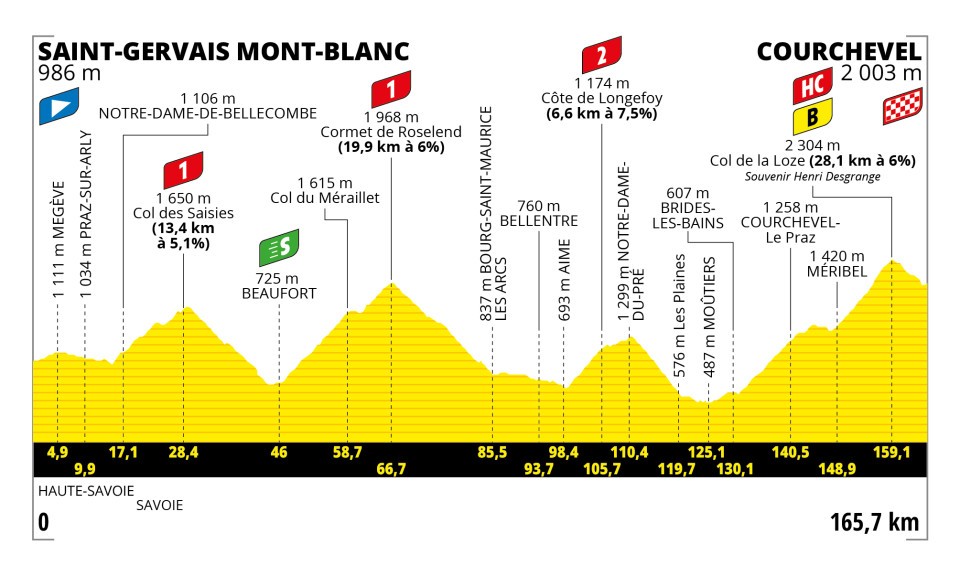
This is the profile of Stage 17 Tour de France 2023.
| Caravan | Fast Schedule | Slow Schedule | |
|---|---|---|---|
| Start Time (départ fictif) | 1020 |
1220 |
1220 |
| Start time (départ réel) |
1030 |
1230 |
1230 |
| Beaufort | 1156 |
1337 |
1345 |
| Cormet de Roselend | 1235 |
1427 |
1446 |
| Col de la Loze | 1528 |
1656 |
1738 |
| Finish Line Courchevel (165.7km) | 1541 |
1703 |
1745 |
This is a video overview of the route of Stage 17 of the 2023 Tour de France.
Here's the Col de la Loze in a video the Tour de France put together
before the 2020 edition of the race.
And here's Primoz Roglic cracking Tadej Pogacar on the Col de la Loze in 2020.
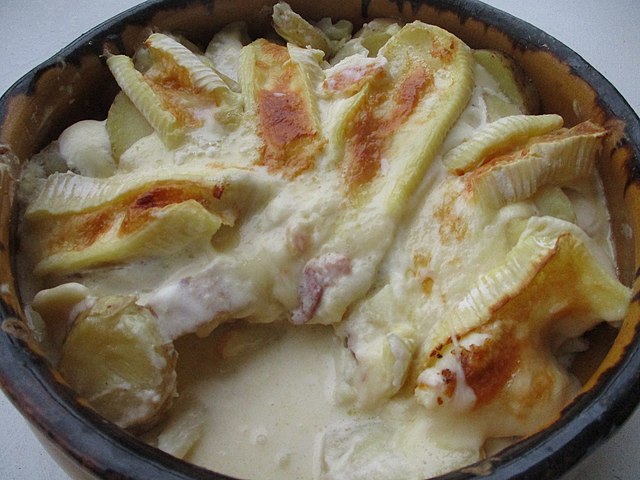
A good rule of thumb is never eat Savoyarde specialities - fondue, raclette, pierrade and tartiflette - more than once a week. As we're now on the fourth day in the Alps, cheesey mountain dishes may be starting to overwhelm you and feel like torture. You could be crying out for mercy, and a simple salad. But never mind.
Tartfilette is made with potatoes, reblochon cheese, lardons and onions.
The name reblochon comes from the verb reblocher, to milk again. This practice developed as a way of avoiding rent to the landowner, since the sum payable was based on the amount of milk a herd produced. The second milking was only done after the amount of milk produced had been measured.
The second milking produces a richer milk, used to make reblochon cheese.
Vin de Savoie is often drunk with a traditional Savoyarde meal. The relatively high acidity is said to go well with cheese-based dishes and help digest them. Vin de Savoie is not the very best wine France can offer, though.
Sancerre, on the other hand, is reliably delicious.
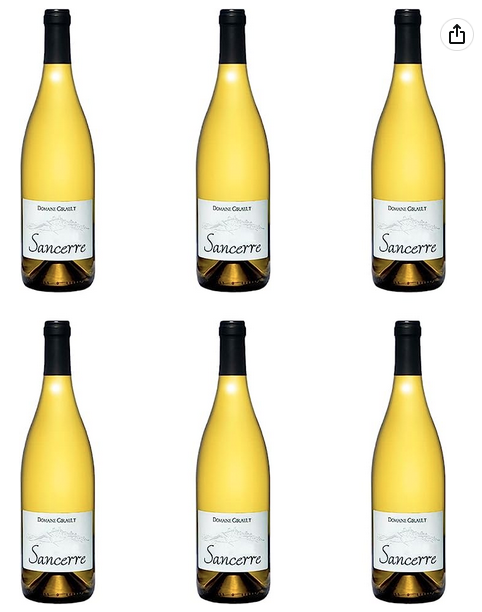
Sancerre is an AOC wine region in the eastern Loire valley, not far from Orléans. It is made primarily with Sauvignon blanc grapes. The result is a dry but aromatic wine, with intense flavours of peaches and gooseberries.
Stage 17 starts in Saint-Gervais-Mont-Blanc (départ fictif).
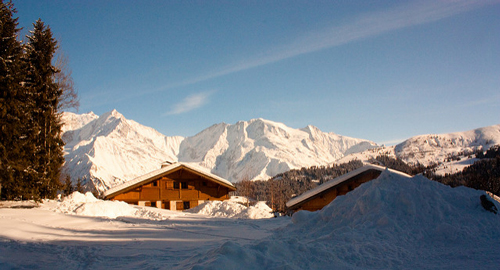
St-Gervais is the highest Commune in France and in Europe, since the summit of Mont Blanc is within its territory (although the Italians on the other side of the mountain dispute this).
The town is referred to as St-Gervais-les-Bains, or St-Gervais-Mont-Blanc. The stream or torrent running down le Val Montjoie and through St-Gervais is called le Bon Nant. The inhabitants are called St-Gervolains.
The St Gervais after whom the town is named was a Christian who was martyred together with his twin brother Protais in the reign of the Roman Emporer Nero.
Val Montjoie has been inhabited since Neolithic times. A Celtic people called the Ceutrons lived here immediately before the arrival of the Romans in the C1st AD. Val Montjoie became part of Savoie in 1355.
Hot springs were discovered at Le Fayet in 1806, and St-Gervais subsequently developed as a spa town. It is still popular with valetudinarians seeking a cure, and in 2011, a new spa area called 'les Bains du Mont Blanc' was opened.
The most popular route to the top of Mont Blanc (4810m) is from St-Gervais, on the Tramway du Mont Blanc to the Nid d'Aigle, then to the Dôme du Goûter and past the Vallot cabin and the Arête des Bosses. The route up Mont Blanc from St-Gervais is called the Voie des Cristalliers, or the Voie Royale.
Marie Paradis, the first woman to reach the summit of Mont Blanc (1808) was from St-Gervais.
St-Gervais is a ski resort, with skiing on the Mont d'Arbois, and le Prarion.
There's bungee jumping from the St-Gervais viaduct, with a 65m fall into the Gorges du Bonnant.
The riders head up the D909 from Saint-Gervais, and the départ réel is near Les Choseaux. They continue to Demi-Quartier and Megève.

From Megève Stage 17 continues on the D1212 via Praz-sur-Arly towards Flumet.
Just before Flumet the race forks off left on the D218B to Notre-Dame-de Bellcombe.

Notre-Dame-de-Bellecombe is the start of the first climb, to the Col des Saisies.
The ascent of the Col des Saisies is 13.4km at an average 5.1% gradient. Les Saisies is at the top, at a height of 1,650m and after 28.4km raced.

The name Les Saisies refers to seizures of contraband which were made at a time when it was at the frontier between Savoie and Haute Savoie, in the 1860s.
Les Saisies is a family ski resort, with views of the Mont Blanc range. Although its altitude is modest, the snow record is very good.
An Austrian ski instructor, Erwin Eckl, was central to the development of the resort between 1937 and 1961. He thought the landscape was similar to the Tyrol, and called it 'le Tyrol français'.
The descent from Les Saisies is on the D218B, then Stage 17 continues on the valley road, the D925 to Beaufort.


Beaufort, or Beaufort-sur-Doron, is a village in the Beaufortain area of Savoie. It's close to the winter and summer resort of Arêches-Beaufort.
Other than tourism, the main occupation is agriculture. The village of Beaufort gives its name to Beaufort cheese (a firm, raw cow's milk cheese similar to Gruyère).

Leaving Beaufort, the road begins to pitch up.
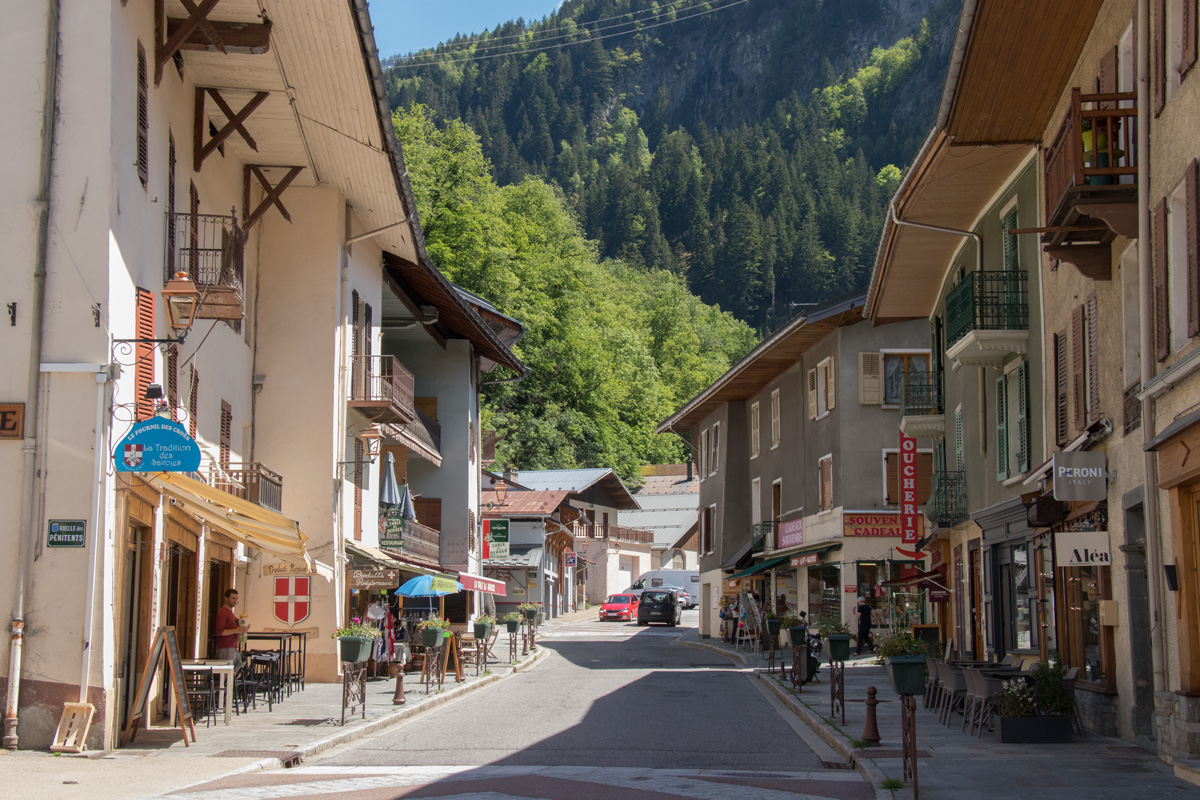
This is the start of the climb of the Col du Méraillet, which leads on to the Cormet de Roselend.
At first the road shadows the stream, the Doron de Beaufort, and the gradient is quite easy. The second half of the climb is steeper, with hairpin bends.
It's wooded all the way, but because the road is wide, the trees don't provide shade when the sun's high in the sky.
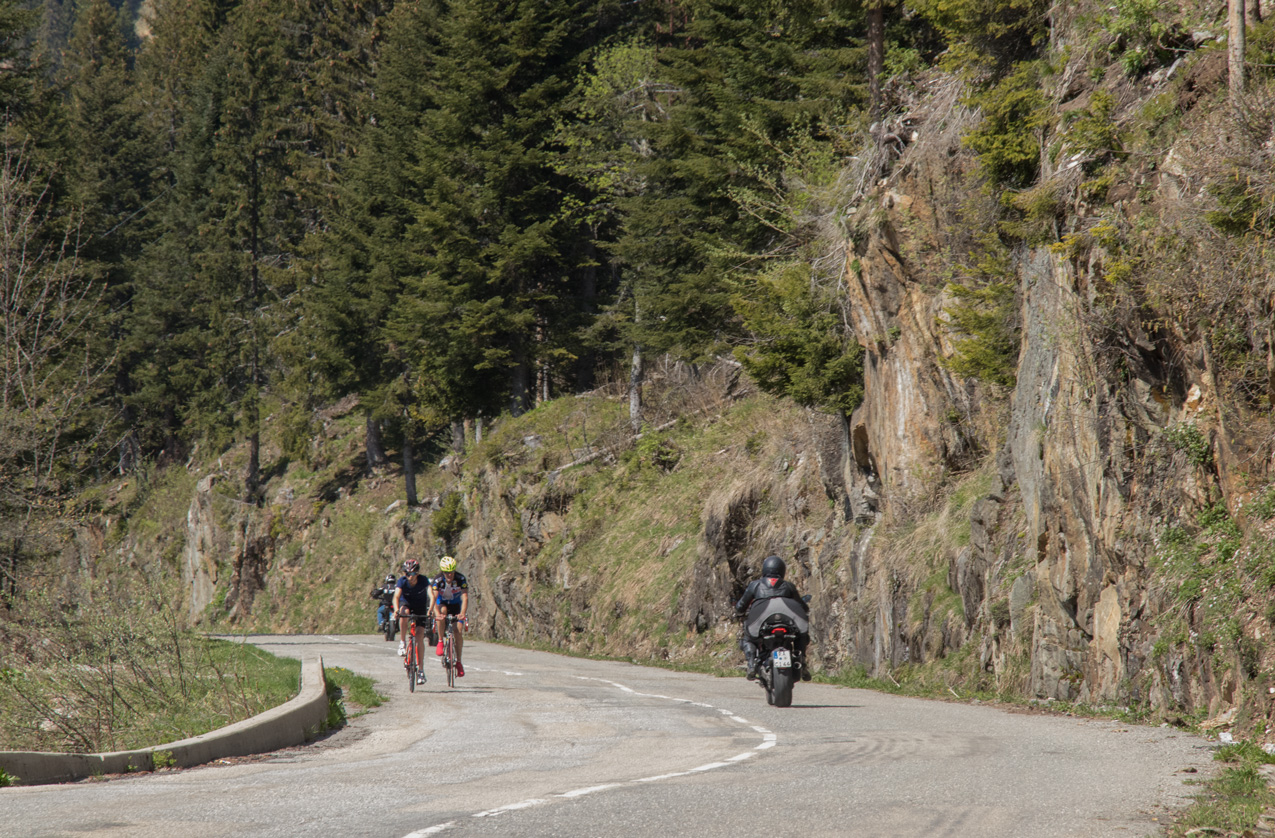
The top of the Col du Méraillet (1615m) is at the Chalet de Roselend Hotel, overlooking the Lac de Roselend.

Now the D925 skirts the Lac de Roselend.

After going around the north end of the lake, the road rises up to the Cormet de Roselend.
Cormet is just another word for 'col' in the local Beaufortain patois.
This climb is exposed and tree-less, but for low-growing, avalanche-resistant alder. The steeper part comes first.

The gradient eases once a barren plateau is reached.

After a couple of hairpins, the riders will reach the top of the Cormet de Roselend.

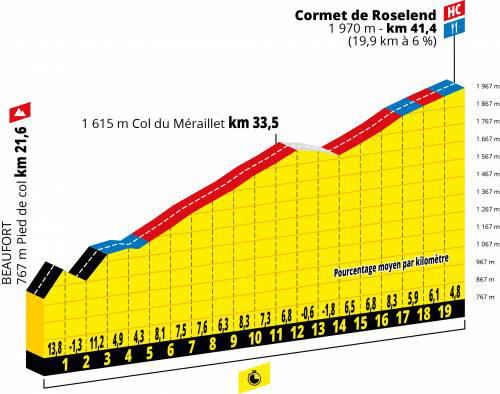
The climb details include the Col du Méraillet and the Cormet de Roselend: Category 1, 19.9km at 6%, 1,968m at the top after 66.7km raced.
The graphic below is from the 2019 Tour.
The other side of the col, the road becomes the D902. It's a long descent to Bourg-Saint-Maurice, losing 1,156m height over a distance of 18.5km.
At first, the downhill is neither technical nor particularly steep.

There are four hairpins, then more straight road alongside the Torrent de Glaciers.
It's lower down that matters get trickier, with a series of tight hairpin bends in the woods.

The D902 brings the peloton to Bourg-Saint-Maurice.

From Bourg-Saint-Maurice, the route is down the Isère valley to Aime/Mâcot-la-Plagne. There, the next climb begins, the Côte de Longefoy.
The Côte de Longefoy was included on the route of Stage 20 of the 2019 Tour de France, in between the Cormet de Roselend and the Montée de Val Thorens. This was the day after the landslide that stopped the race going up to Tignes.
It was still bad weather on the Val Thorens day, and the Côte de Longefoy was removed from the parcours and the stage shortened.
The road heads up through woods, with part of the La Plagne ski area, Montalbert, just up to the left.

It would probably be a pleasant ascent in isolation; since it is sandwiched between the Cormet de Roselend and the Col de la Loze, climbing it is likely to be dolorous. To some lesser climbers it may seem gratuitous, cruel, and unusual to take this detour. 'Why can't we just go straight to the climb to Courchevel?' would be a fair question.
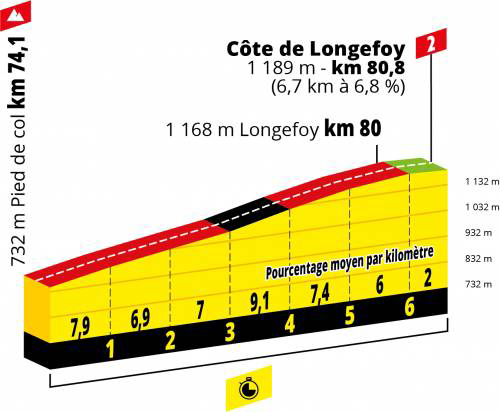
The top of the climb, where the mountains points are awarded, comes at Longefoy (1174m).

The graphic below from the 2019 Tour shows the climb details. In 2023, the top is at 1,174m after 105.7km raced, and the gradient comes out at 6.6km at 7.5%.
After the King of the Mountains points in Longefoy, the D88 leaves the village. The prospect is an idyllic pastoral Alpine scene.

The route enters woods, and drops down to cross a stream, Nant Thiéret. It then rises to 1311m at Notre-Dame-du-Pré.
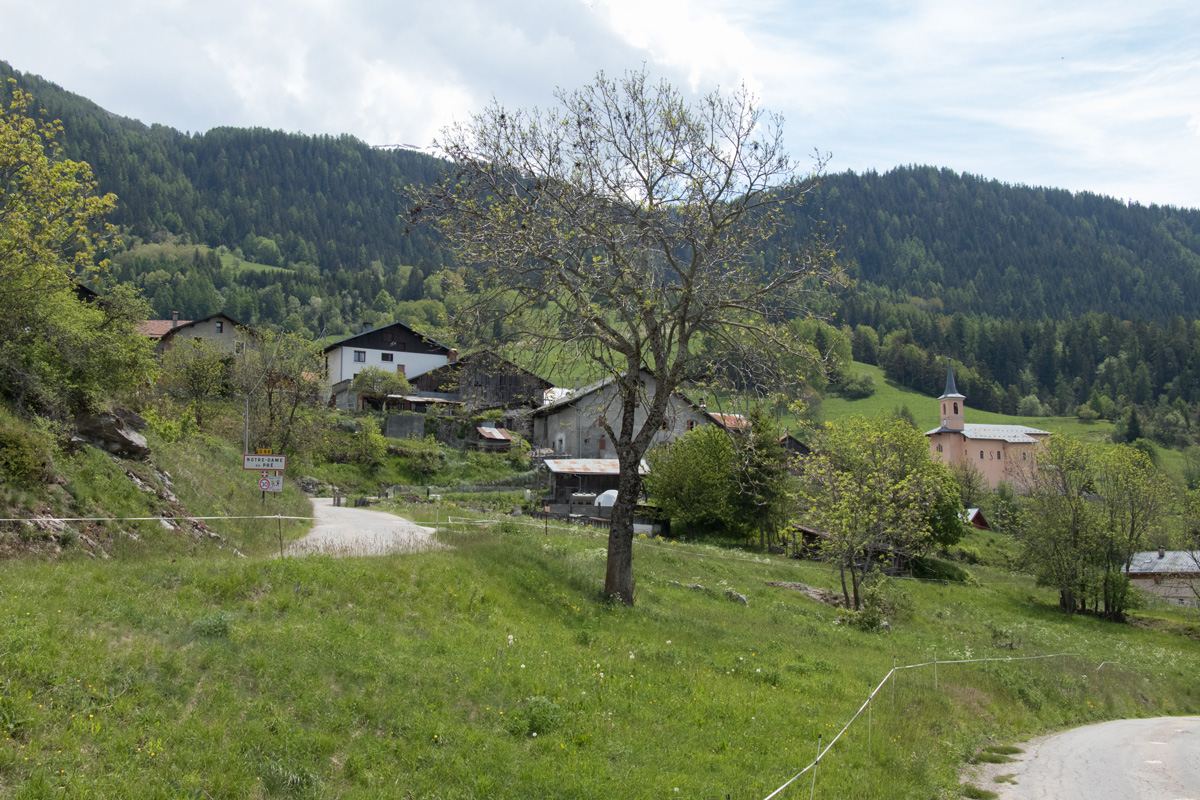
The descent from Notre-Dame-du-Pré is a series of steep hairpins through a forest.
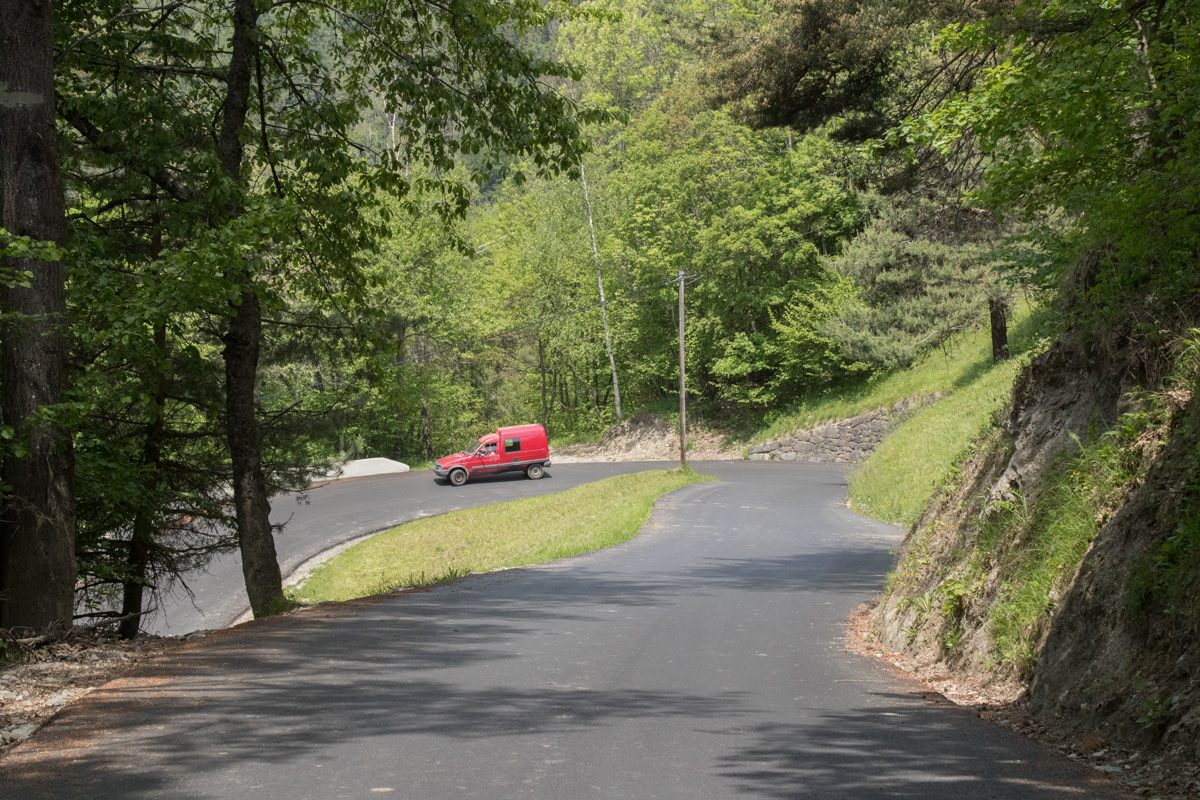
It's a tricky descent that might suit a rider like Romain Bardet. If it's raining, it will be treacherous.
Les Plaines marks the end of the descent.
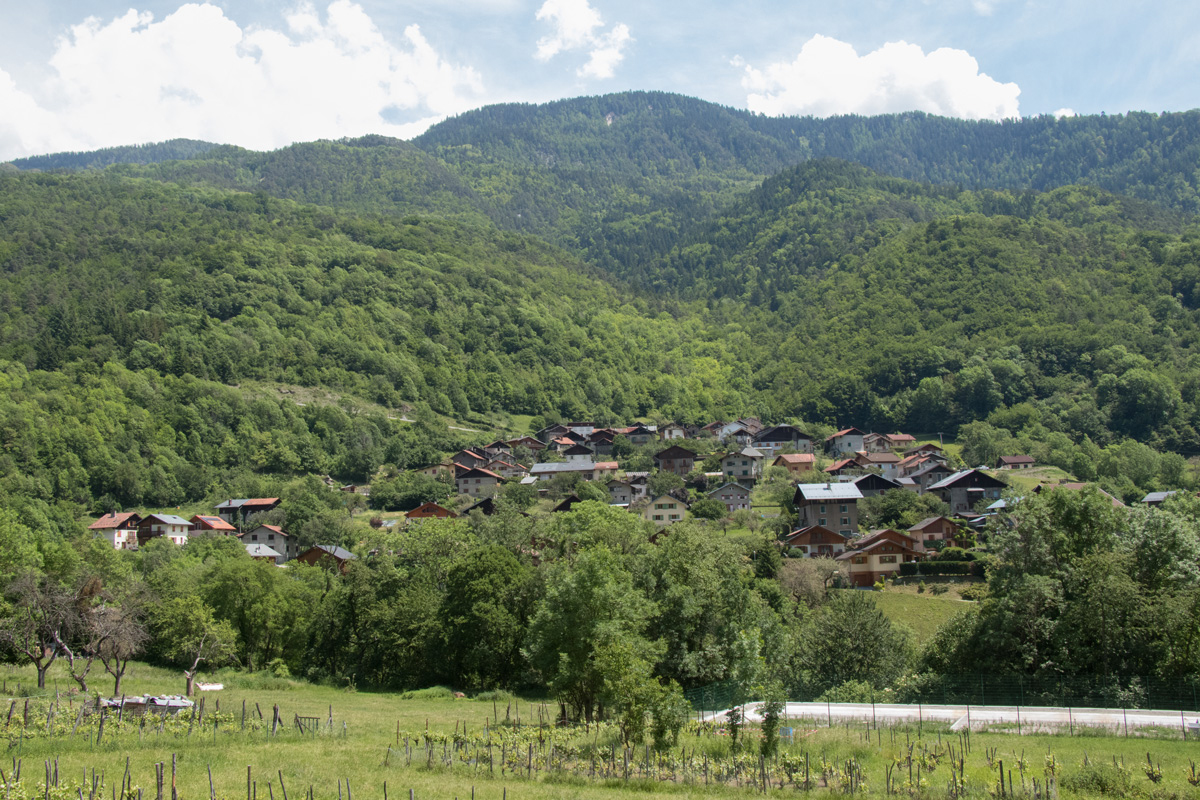
Beyond Les Plaines, the route crosses the Isère, overlooked by the Chapelle Saint-Jacques perched on a rock.

The race route goes under the main D90 valley road, over a level crossing, then joins the D90. It reaches a roundabout at Moûtiers, and takes the D915 to Salins-les-Thermes and Brides-les-Bains.
The riders fork right onto the D91A. They now tackle the climb to the Col de la Loze.

Stage 17 goes to the lowest village in the Courchevel ski area, Le Praz, where the ski jump built for the 1992 Winter Olympics in Albertville still stands.
Next it continues on the D98 to La Tania and Méribel.
From Méribel the riders tackle the Col de la Loze (2,304m). This is where the Souvenir Henri Desgrange prize is awarded, worth €5,000.
The Col de la Loze climb is 28.1km at an average 6% gradient, but the steepest part near the top of the col is 24%.
There's a descent to the finish at the Courchevel Altiport, followed by an 18% climb at the altiport itself.

Stage 17 of the Tour de France 2023 is a major mountain stage.
Candidates for the win include Tadej Pogacar and Jonas Vingegaard. Maybe Egan Bernal will be back on form and vying for victory on Stage 17. Other GC contenders who can climb include Mattias Skjelmose, Carlos Rodriguez, Giulio Ciccone, Simon and Adam Yates, Tom Pidcock and Jai Hindley.
Finally, perhaps one of the Groupama-FDJ climbers will win - David Gaudu or Thibaut Pinot.
Who do you think will win Stage 17?

Tour de Force by Mark Cavendish available on Amazon.

New in May 2023, Bike Rides in the Yorkshire Dales is available in colour paperback.
Find out more about Bike Rides in the Yorkshire Dales or buy a copy.

Bike Rides In and Around York features a historical city tour, plus family rides, road rides, and mountain bike rides.
Find out more about Bike Rides In and Around York or buy a copy.

Bike Rides in Harrogate and Nidderdale is a book of family, mountain and road bike rides.
Find out more about Bike Rides in Harrogate and Nidderdale or buy a copy.
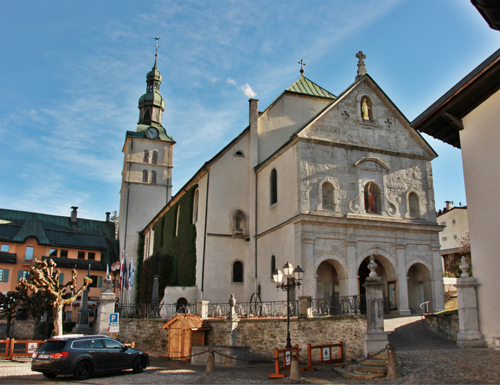
Megève is a fashionable ski resort - perhaps better known for celebrity clients and expensive restaurants than for extreme skiing. It is at an altitude of 1,113m, so not one of the higher resorts.
The name Megève comes from the Celtic Mageva, meaning village in the middle of waters. Before winter sports tourism, it was a peaceful agricultural village. The first tourists came in the C19th - pilgrims who came to visit the Stations of the Cross erected by Reverend Ambroise Martin from 1840, then tourists hoping to profit from the pure air.
The first ski competition took place in 1914. Local farmers created ski tows, and the arrival of the Rothschild family at Mont d'Arbois hastened the development of the town and ski resort. The first téléphérique was built in 1933.
Megève is known as the home town of famous skier Emile Allais, born here in 1912 (and who died in Sallanches in 2012). He learnt to ski when helping Baron Rothschild's Austrian ski instructor, as a porter. He broke a leg in 1933, while doing his military service with the chasseurs alpins, and it was then slightly shorter than the other; when he later broke the other leg, the doctor was able to make it the same length as the first.
He was the first Frenchman to win a medal in downhill skiing, and he won gold in downhill, slalom and combined at the 1937 World Championships in Chamonix.
He invented the 'French skiing method', published with Paul Gignoux at the end of 1937, and taught at the French ski schools (Ecoles du Ski Francais) throughout ski resorts in France. In December 1937, he became the first French ski instructor, with medal number 1. After the Second World War, he became technical director at ENSA (Ecole Nationale de Ski et d'Alpinisme, which trains instructors). He was still skiing at the age of 100.
Amongst Megève's attractions other than skiing, there's a museum (Musée du Haut Val d'Arly); a replica of the Stations of the Cross in Jerusalem, with fifteen oratories and chapels; and plane trips from the altiport at Côte 2000.
There are also plenty of high-end shops, like A Allard. Armand Allard was a tailor in Megève from 1926, and Emile Allais asked him to create ski trousers which would be practical for competition. The result was the fuseau: tight-fitting trousers, which Allais wore when winning his gold medals in 1937.
Notre-Dame-de-Bellecombe is a village and ski resort in the Val d'Arly.
Until 1471, it was called Sainte-Marie-des Déserts, and was home to monks.
The first hotel, the Mont Charvin, opened in 1902, and welcomed tourists in the summer.
Winter sports began to be developed from the 1920s, and the first mechanical ski lift in Notre-Dame-de-Bellecombe was built in 1948.
The ski area is now part of the Espace Diamant, which includes 5 resorts and 84 lifts.

Bourg-Saint-Maurice is a town in the Tarentaise valley, on the river Isère.
It is surrounded by ski resorts, and there's a funicular railway link to Arc 1600, part of Les Arcs.
Bourg-Saint-Maurice is also popular in the summer as a base for walking, mountain biking, and road cycling.
There's a whitewater canoe and kayak slalom course on the Isère at Bourg, used for training and competitions.
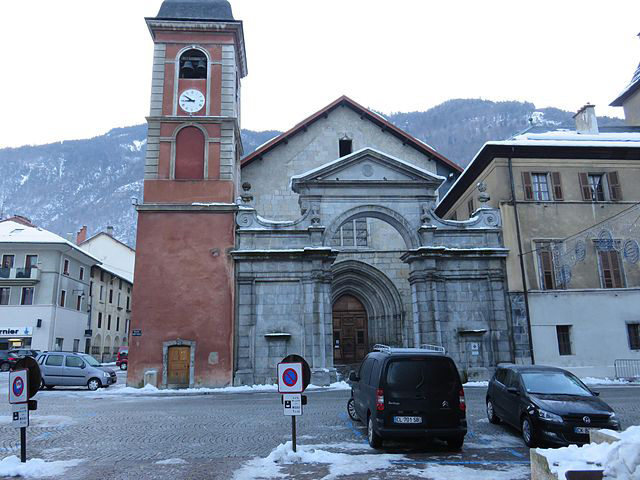
Moûtiers is a modest-sized town at a bend in the river Isère, roughly half-way between Bourg-Saint-Maurice and Albertville. It serves as a hub for the ski resorts of the 3 Vallées (Courchevel, Méribel, and Les Menuires/Val Thorens).
The settlement here was called Darantasia in the Gallo-Roman period. The name Moûtiers comes from 'monastery'.
There's a small historic centre near the Cathedral Saint-Pierre.

Rough Guide to France.
Price £17.99 from Amazon at the time of writing.

Beaujolais is a wine made with Gamay grapes in the Beaujolais region. The region gets its name from the town and Lords of Beaujeu.
Gamay grapes are thin-skinned and low in tannins. They make light wines with relatively high acidity.
The Romans were the first to plant vines here, along their trading route up the Saône valley. Later, Benedictine monks did much of the wine-making.
Beaujolais Nouveau became very popular in the 1980s, with easy-drinking, fruity wines. In the late 1990s that popularity faded, and Beaujolais producers are now concentrating on more complex wines that are aged longer in oak barrels.
Fleurie is called the Queen of Beaujolais. It has floral notes, and aromas of blueberries and red fruits.
It doesn't get its name from flowers, though, but from a Roman General, Floricum.
Fleurie vineyards are on the west side of the Saône valley, facing south or south east. The soil is on pink granite, and is sandy higher up, with more clay content lower down.
La Madone is one of the best-known Fleurie wines, taking its name from a chapel on top of the hill.
Buy a Fleurie La Madone gift set.


