Cycling in Yorkshire

Cycling in Yorkshire
Stage
17 | Stage
18 | Stage
19

Stage 18 of the Tour de France 2023 is a 184.9km hilly stage from Moûtiers to Bourg-en-Bresse.
Despite the stage being classified as hilly, Christian Prudhomme says the route largely avoids the hills. This means Stage 18 should result in a bunch sprint on the straight final kilometre, involving those sprinters who have survived the Alps.
These are video highlights of Stage 18 Tour de France 2023.
This is the Stage 18 TDF 2023 Blog.
Race Details | Poll | Map & Profile | Timings | Videos | Food & Drink | Route Notes | Favourites
| Date | Thursday 20th July 2023 |
|---|---|
| Stage classification | Hilly |
| Distance | 184.9km |
| Intermediate sprint | Saint-Rambert-en-Bugey |
| Climbs | Côte de Chambéry-le-Haut (Cat. 4) Côte de Boissieu (Cat. 4) |
This is a poll where you can vote for some of the main contenders to win Stage 18.
This is a map of the route of Stage 18, Tour de France 2023.

This is a zoom-able map of the route of Stage 18 of the 2023 Tour de France.
This is the profile of Stage 18 Tour de France 2023.

| Caravan | Fast Schedule | Slow Schedule | |
|---|---|---|---|
| Start Time (départ fictif) | 1105 |
1305 |
1305 |
| Start time (départ réel) |
1135 |
1335 |
1335 |
| Côte de Chambéry-le-Haut Climb | 1302 |
1454 |
1502 |
| Côte de Boissieu Climb | 1402 |
1549 |
1602 |
| Finish Line Bourg-en-Bresse (184.9km) | 1553 |
1731 |
1753 |
This is a video overview of the route of Stage 18 Tour de France 2023.
It's a long time since there was a stage finish in Bourg-en-Bresse. On Stage 6 of the 2007 Tour de France, Tom Boonen riding for Quick-Step was the fastest.
Bourg-en-Bresse is known for farming chickens and other poultry.
Crème de Bresse is said to be a slightly acidic cream with notes of butter, vanilla and sweet biscuits.
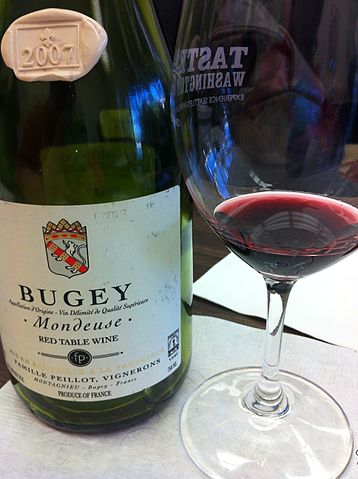
The Revermont mountain east of Bourg-en-Bresse is included in the Bugey AOC wine region.
Bugey produces red, white and rosé wines from a multitude of grape varieties including Chardonnay, Pinot Noir, Altesse, Gamay and Mondeuse.
The prince of Bugey wines is Bugey Cerdon, a sparkling white.
Sancerre remains a delicious alternative (albeit irrelevant to today's stage).
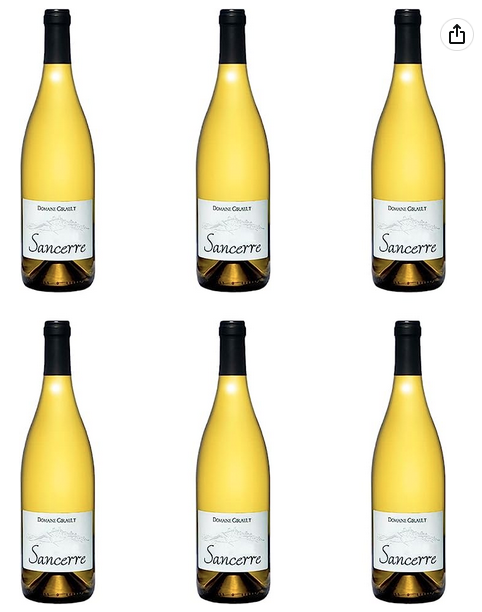
Sancerre is an AOC wine region in the eastern Loire valley, not far from Orléans. It is made primarily with Sauvignon blanc grapes. The result is a dry but aromatic wine, with intense flavours of peaches and gooseberries.
Stage 18 starts in Moûtiers (départ fictif).
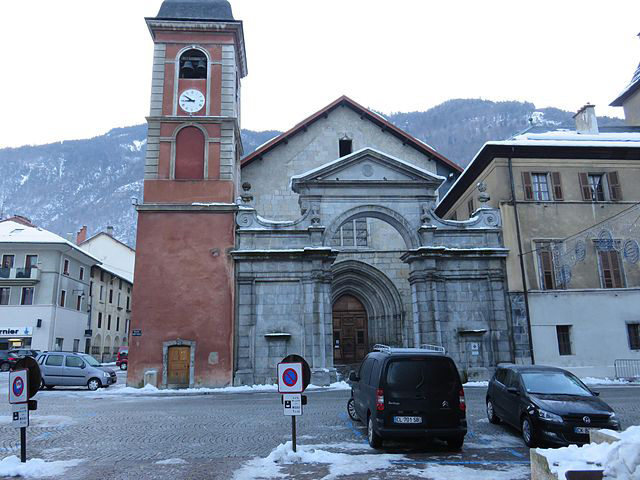
Moûtiers is a modest-sized town at a bend in the river Isère, roughly half-way between Bourg-Saint-Maurice and Albertville. It serves as a hub for the ski resorts of the 3 Vallées (Courchevel, Méribel, and Les Menuires/Val Thorens).
Moûtiers may be uninspiring, but for ski resort workers it's the place where you get Winter tyres at the start of the season, and where you go for a big supermarket shop if you can be bothered to drive down the hill.
The settlement here was called Darantasia in the Gallo-Roman period. The name Moûtiers comes from 'monastery'.
There's a small historic centre near the Cathedral Saint-Pierre.
Stage 18 leaves Moûtiers on the minor roads that shadow the N90 dual carriageway. The départ réel is at Feissons-sur-Isère, and the race is heading for Albertville.

The race route continues via Sainte-Hélène-sur-Isère (best-known for its autoroute péage), along the river Isere to Montmélian, and past the vineyards of Chignin.
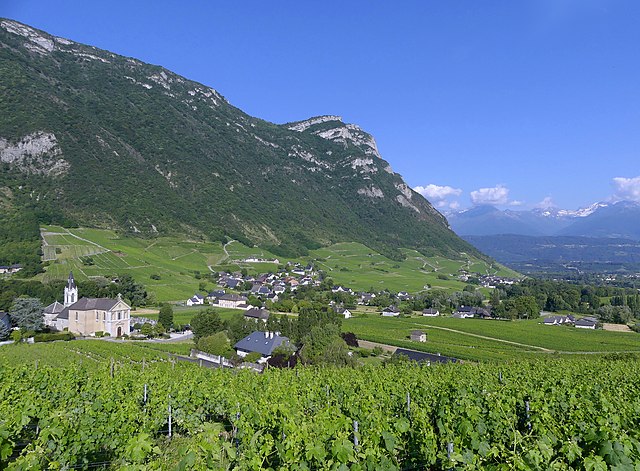
The vines at Chignin grow on the south-facing slopes at the foot of the Bauges mountains. Chignin is on the edge of Chambéry.
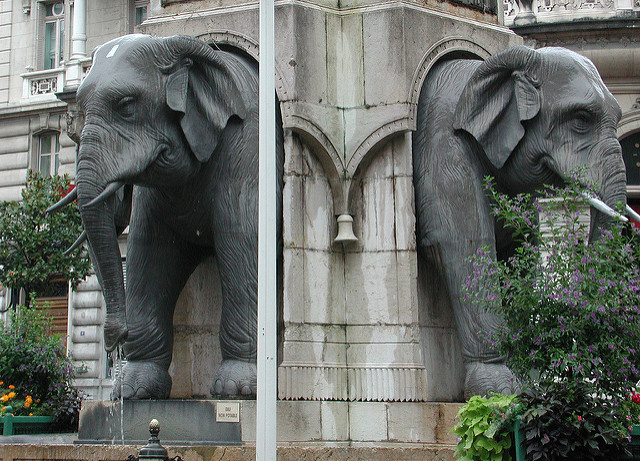
Chambéry is an important town in the Savoie département. It was the historic capital of the counts, later dukes, of Savoie.
It was in 1295 that the counts of Savoie made Chambéry their capital, and that lasted until 1563, when they moved to Turin. The House of Savoy went on to become kings of Italy. In 1860, the former lands of the House of Savoie on the French side of the Alps became part of France, under Napoléon III. Italy became a Republic at the end of World War II.
The château of the counts of Savoie still stands in Chambéry. It is used for the administration of the département of Savoie.
Chambéry has a large student population. Olivier Giroud is from Chambéry.
Leaving Chambéry the race goes through the suburb of Chambéry-le-Haut. This is the first categorised climb of the day, the Côte de Chambéry-le-Haut.
It is 1.6km at an average gradient of 4.1%. The summit comes after 62.1km raced, and the height is 349m.
The riders continue north via Voglans and alongside Chambéry airport the south end of the Lac du Bourget where there is a nature reserve - the Site Naturel Protégé du Domaine de Buttet. 320 plant species and 200 types of bird are found there.
Le Bourget-du-Lac is right next to the Domaine de Buttet and on the shore of the Lac du Bourget.
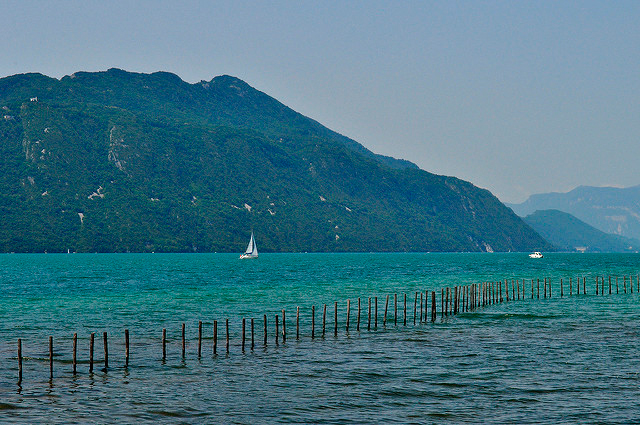
Le Bourget-du-Lac is a small town at the southern end of the Lac du Bourget.
Bourget is the diminutive of 'bourg', and means small village or hamlet. The site has been inhabited since Neolithic times. The counts of Savoie had a château here, which was their main residence from 1285 to 1434. Known as the château of Thomas II, it is now in ruins. The town was linked by railway to Chambéry in 1838.
Le Bourget-du-Lac has one of the campuses of the University of Savoie-Mont-Blanc, and therefore has a significant student population. On the same site as the campus is Savoie Technolac, which is home to innovative technology enterprises, including the national institute for solar energy, and Energy Pool, which specialises in energy management services.
Le Bourget-du-Lac has a beach on the shore of the Lac du Bourget.
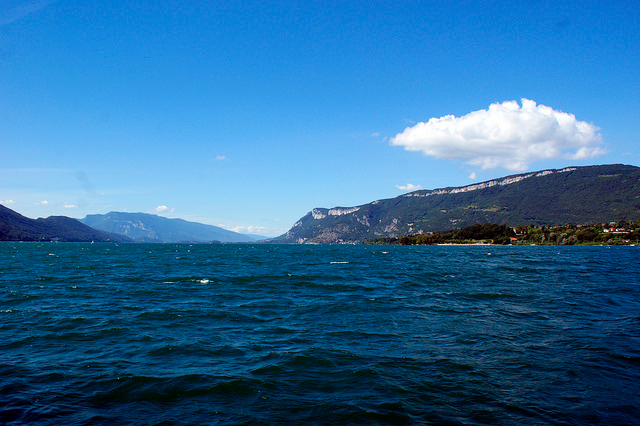
The Lac du Bourget is the largest natural glacial lake in France (not counting Lac Léman, which is partly in Switzerland). It was formed at the end of the last ice age, around 19,000 years ago.
The lake is 44.5km2 in surface area, 18km long, and between 1.6 and 3.5km wide. The maximum depth is 145m.
The Lac du Bourget became very polluted, and from the 1970s, action was taken to clean it up.
The lake is of major ecological interest, and home to many species of fish and birds, as well as being a haven for migrating birds. Reed beds have been restored at the southern end of the lake, and the European pond turtle has been successfully reintroduced. The kingfisher also prospers amongst the reeds.
Next the race heads up to Bourdeau, which has a chateau that dates from the C11th. It was built on earlier Roman ruins. Now it is a hotel and restaurant.

At Bourdeau Stage 18 leaves the lake and goes through the Tunnel du Chat. This is uphill, but not a categorised climb.
The tunnel spares the riders the hairpins of the minor road to the Col du Chat, which is at the northern end of the Mont du Chat and near the Dent du Chat (the rocky knoll shown in the photo below).

The race continues to Yenne, crosses the Rhône, and reaches Belley.
Leaving Belley, the race crosses a river called le Furans. Soon after, the second and last categorised climb of the day is tackled - the Côte de Boissieu.
The Côte de Boissieu climb is 2.4km at an average 4.7%. The top of the climb at 362m is reached after 105.2km raced.
Then it's on to Contrevoz and into the valley of the Furans. Here the villages include Cheignieu-la-Balme, Rossillon, La Burbanche and Tenay.

Skiing Made Easy is a practical guide to learning to ski based on many happy seasons of ski teaching.
It takes you through the beginner's progression from snowplough to parallel turns, starting at the very beginning and not assuming any prior knowledge.
The book suggests relevant exercises to develop and improve your skills. Common faults are identified, along with the best ways to correct them.
'By the way' sections contain information about many of the little things that people assume you just know, but you may not.
'This is the book I wish I'd had when I started skiing' - reviewer on Amazon.
How to buy:
The race passes through Argis on the way to Saint-Rambert-en-Bugey where the intermediate sprint takes place after 132.9km raced.
The next significant town is Ambérieu-en-Bugey, which the 2023 Tour de France will have already visited on Stage 13.
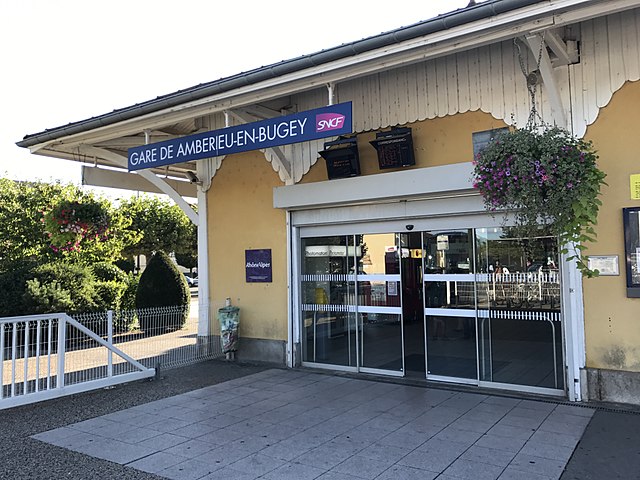
Next the race goes north on the D1075 to cross guess which river at Pont-d'Ain? Yes, the Ain.
The D1075 leads straight to Bourg-en-Bresse, but Stage 18 forks off on minor roads to Tossiat, Journans, Revonnas and Ceyzériat. It is uphill to Ceyzériat (2km at an average 3.2%), but this is not enough to be a classified climb and probably not sufficient to drop any sprinters.
Grapes are grown on these slopes.
From Ceyzériat the riders are on the D979, crossing the A40 autoroute to Saint-Just. They pick up the D1079 Boulevard John Kennedy and follow it round to the north of Bourg-en-Bresse.
There's a sharp left on avenue Maginot, left again on rue du 4 Septembre, and a sharp right on Boulevard de Brou.
From here on there are no more bends, and Boulevard de Brou leads to the finish line in front of the Monastère Royal de Brou.

Bourg-en-Bresse is a town of 40,490 people on the river Reyssouze, and in the Ain département.
It seems that during the Gallo-Roman period, Bourg-en-Bresse had a farm or rural dwelling, but no major settlement.
In the Middle Ages, Bourg-en-Bresse belonged to the House of Savoie, and was chosen by the Dukes of Savoie to be capital of the Bresse region. It became part of France in 1601.
The economy takes advantage of Bourg's good transport links, and is based on agriculture (including breeding poulet de Bresse chickens), food processing, and manufacturing (including Renault trucks).
Bourg-en-Bresse is twinned with Aylesbury (UK).
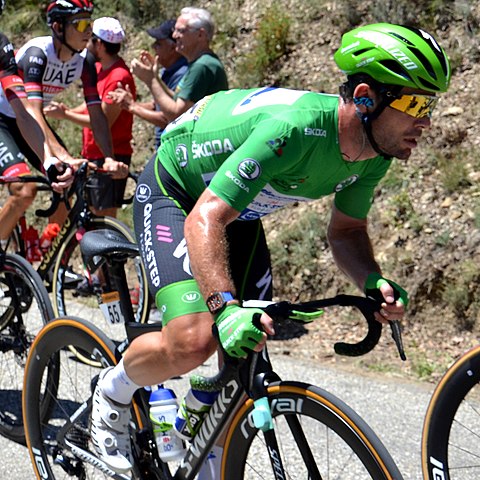
Despite being categorised hilly, Stage 18 of the Tour de France 2023 looks to be one for the sprinters.
Who could win? Mark Cavendish might have been in with a chance, but unfortunately he crashed out of the Tour on Stage 8.
Phil Bauhaus has abandoned, and Wout van Aert has gone home to be with his wife who is expecting a baby.
Instead, it could be Jasper Philipsen, Dylan Groenewegen, Bryan Coquard or Mads Pedersen.
Who do you think will win Stage 18?

'The bicycle saves my life every day', says Robert Penn in the Prologue to It's All About the Bike.
Buy It's All About the Bike on Amazon.

New in May 2023, Bike Rides in the Yorkshire Dales is available in colour paperback.
Find out more about Bike Rides in the Yorkshire Dales or buy a copy.

Bike Rides In and Around York features a historical city tour, plus family rides, road rides, and mountain bike rides.
Find out more about Bike Rides In and Around York or buy a copy.

Bike Rides in Harrogate and Nidderdale is a book of family, mountain and road bike rides.
Find out more about Bike Rides in Harrogate and Nidderdale or buy a copy.

Albertville is a town on the river Arly, near its confluence with the river Isère. It is surrounded by mountains - the Bauges to the west, the Beaufortain to the north, and the Chaine de la Lauzière to the south.
Albertville was on the Roman route from Milan to Vienna (which crossed the Alps via the Col du Petit St-Bernard). Because of the confluence of the Arly and the Isère, the Romans called the higher part of the town ad confluentes. (This part of Albertville is called Conflans today). There was a customs post lower down, referred to as ad publicanos.
At the end of the C12th, the Knights Hospitaller of St John of Jerusalem founded a hospital for travellers and pilgrims down near the river, and the village which developed around it was called l'Hôpital.
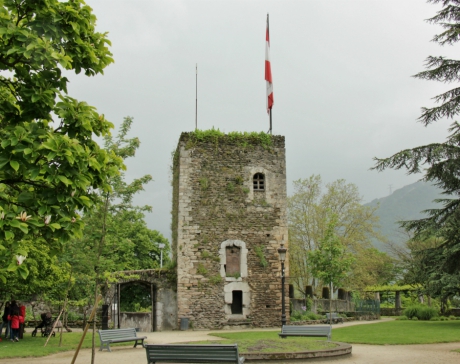
Modern Albertville was formed in 1836 by King Charles Albert of Sardinia (of the House of Savoie). He merged the medieval town of Conflans with the town of l'Hôpital.
Albertville's economy is largely industrial, with hydroelectricity and paper mills. Kassbohrer, who make piste bashers, have premises here.

Albertville hosted the 1992 Winter Olympics. Many of the events took place in nearby ski resorts, including Le Praz (ski jumping), Val d'Isère (men's giant slalom, Super G, downhill, and combined), Méribel (women's Alpine skiing events), and Les Menuires (men's slalom). The skating took place in Albertville: the ice rink (Halle de Glace Olympique) remains; the speed skating venue (l'anneau de vitesse) has been given over to athletics.
There's a travel festival in Albertville at the end of October, for travel writers and photographers, called Le Grand Bivouac. Albertville Jazz Festival is at the end of July.
There's a cycle path most of the way from Albertville to Annecy.

Rough Guide to France.
Price £17.99 from Amazon at the time of writing.

Beaujolais is a wine made with Gamay grapes in the Beaujolais region. The region gets its name from the town and Lords of Beaujeu.
Gamay grapes are thin-skinned and low in tannins. They make light wines with relatively high acidity.
The Romans were the first to plant vines here, along their trading route up the Saône valley. Later, Benedictine monks did much of the wine-making.
Beaujolais Nouveau became very popular in the 1980s, with easy-drinking, fruity wines. In the late 1990s that popularity faded, and Beaujolais producers are now concentrating on more complex wines that are aged longer in oak barrels.
Fleurie is called the Queen of Beaujolais. It has floral notes, and aromas of blueberries and red fruits.
It doesn't get its name from flowers, though, but from a Roman General, Floricum.
Fleurie vineyards are on the west side of the Saône valley, facing south or south east. The soil is on pink granite, and is sandy higher up, with more clay content lower down.
La Madone is one of the best-known Fleurie wines, taking its name from a chapel on top of the hill.
Buy a Fleurie La Madone gift set.
Ambérieu may get its name from the Celtic Ambarri tribe. Their name means 'living on both sides of the river'.
Being at the junction of the Mâcon-Ambérieu and Lyon-Geneva lines, Ambérieu is known for being an important railway junction. Then again if you live there, that's not necessarily what you want your town to be known for. It used to be an even more important junction than it is now, because some lines are now disused.
In June 1944, railway workers in the Résistance disabled 52 locomotives, as well as other equipment. This reduced Ambérieu's usefulness to the German army, and meant that the Allies decided not to bomb it.
After World War II, Ambérieu was given the Croix de Guerre for its resistance activities.


