Cycling in Yorkshire

Cycling in Yorkshire

Stage 5 of the Tour de France 2023 is the first day in the mountains, with a 162.7km ride from Pau to Laruns in the Pyrenees.
The climbs include the Col de Soudet and the Col de Marie Blanque. This is a modest climbing day, with the hardest mountain stages still to come.
It echoes Stage 9 of the 2020 Tour de France, when Tadej Pogacar beat Primoz Roglic in a sprint to the line.
This time, it could be a breakaway rider who wins, or it might once again be a GC and stage win battle.
These are video highlights of Stage 5 Tour de France 2023.
This is the Stage 5 TDF 2023 Blog.
Race Details | Poll | Map & Profile | Timings | Videos | Food & Drink | Route Notes | Favourites
| Date | Wednesday 5th July 2023 |
|---|---|
| Stage classification | Mountain |
| Distance | 162.7km |
| Intermediate sprint | Lanne-en-Barétous |
| Climbs | Col de Soudet (HC) Col d'Ichere (Cat. 1) Col de Marie Blanque (Cat. 1) |
This is a map of the route of Stage 5, Tour de France 2023.
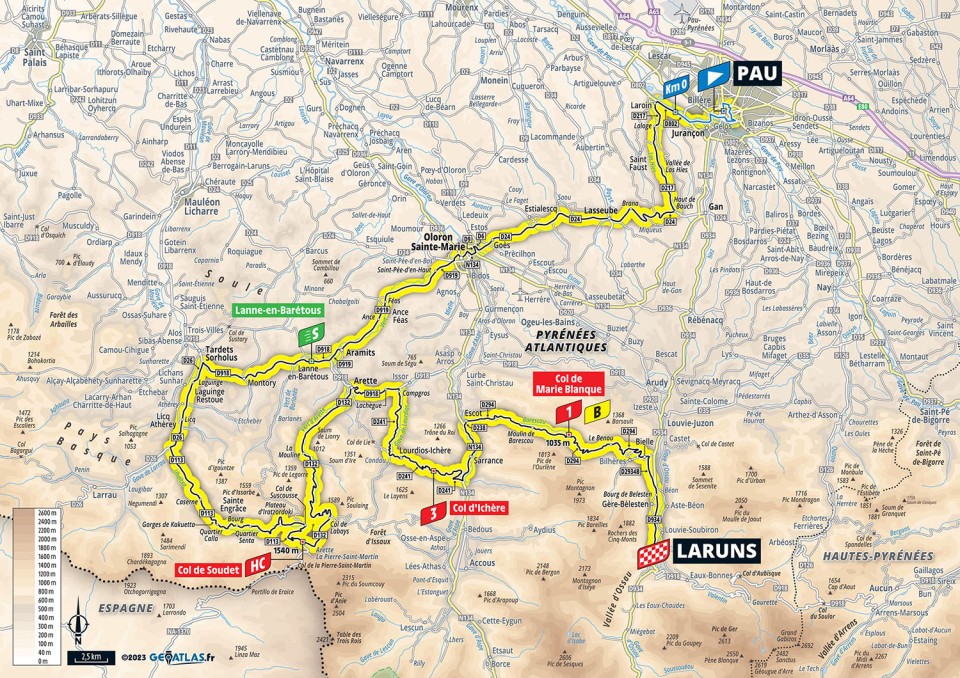
This is a zoom-able map of Stage 5 of the 2023 Tour de France.
This is the profile of Stage 5 Tour de France 2023.
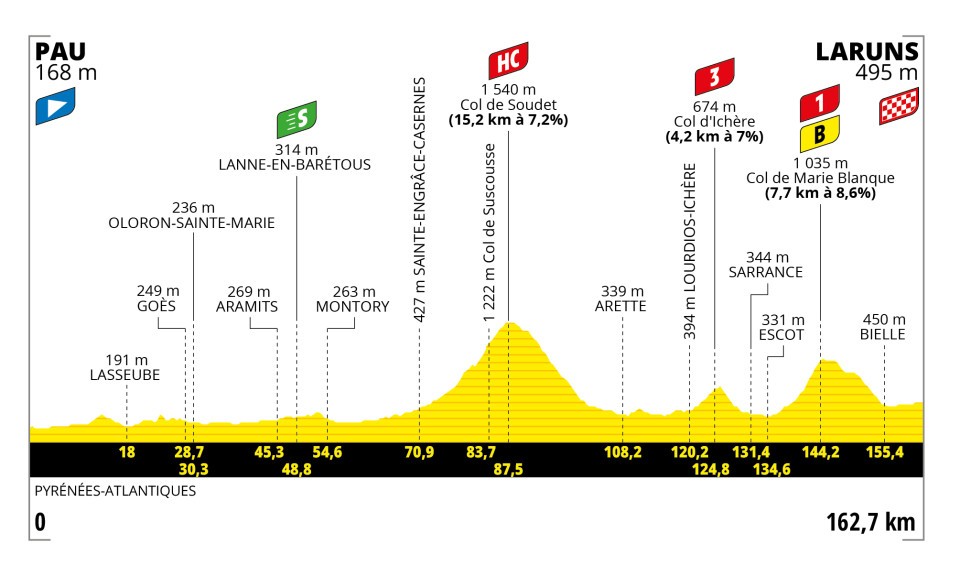
| Caravan | Fast Schedule | Slow Schedule | |
|---|---|---|---|
| Start Time (départ fictif) | 1105 |
1305 |
1305 |
| Start Time (départ réel) | 1125 |
1325 |
1325 |
| Intermediate Sprint | 1244 |
1427 |
1433 |
| Col de Soudet Climb | 1347 |
1539 |
1556 |
| Finish Line (162.7km) | 1549 |
1721 |
1751 |
This is a video overview of Stage 5 Tour de France 2023:
These are video highlights of Stage 9 of the Tour de France 2020, which was a very similar parcours to Stage 5 of the 2023 race.

Stage 5 sets off from Pau. On leaving the city, it goes through the wine region of Jurançon. Jurançon is known for a sweet white wine, golden in colour and with fruity flavours.
Madiran wine is also local to Pau. It's a powerful red wine with notes of cherry and blackberry.
Ossau-Iraty is a cheese made from sheep's milk in and around Oloron-Sainte-Marie.


Stage 5 starts at Place de Verdun in Pau (départ fictif).
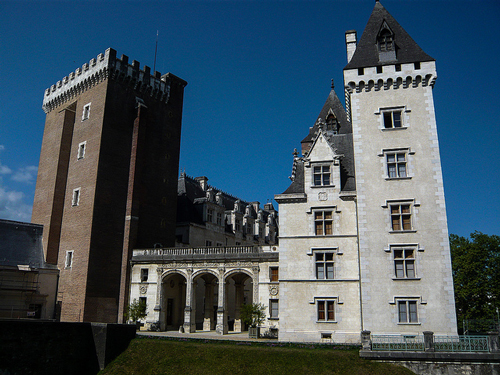
Pau is a city of 78,506 people (the inhabitants are called Palois) on the river Gave de Pau. It's the historic capital of the province of Béarn.
There are views of the Pyrenees from the boulevard des Pyrenées. Alphonse de Lamartine said, 'Pau has the most beautiful view of the earth just as Naples has the most beautiful view of the sea.'

The origin of the name Pau is uncertain. It could come from pal, referring to the palisade or fence around the first castle in Pau. Another possibility is that pal means rockface, and refers to Pau's position at the foot of mountains.
A castle was built by the Viscounts of Béarn, probably in the C11th, to protect a ford of the Gave de Pau. Pau became the capital of Béarn in 1464. It then became the seat of the Kings of Navarre in 1512. Henri of Navarre went on to become King Henri IV of France, in 1589. In 1620, Béarn lost its independence from France, although the Parliament of Navarre continued to govern local matters (with laws in the Occitan dialect).
In the Belle Epoque (usually defined as 1871 to 1914), Pau developed as a tourist destination for the royal, aristocratic, and rich. Scottish doctor Alexander Taylor helped make it a popular destination for a winter cure. Later, aviation and petrochemicals (following the discovery of natural gas in Lacq) were significant industries here, and more recently, the services sector has grown. There's a large student population at the Université de Pau et des Pays de l'Adour.
The Château de Pau is one of the city's main attractions. It was originally a fortification guarding a ford of the Gave de Pau, reinforced in the C14th by Gaston III of Foix-Béarn. In the C16th, as the seat of the Navarre dynasty, it was transformed into a residence.
Henri of Navarre was born in the château. Wikipedia has a garbled explanation of Henri's connection to the castle, which has the hallmarks of a computer translation from French: 'The future Henri IV takes the trouble to be born December 13, 1553, and the story did the rest. The fame of the king...gives the castle, which did not see him grow up or die, a particular taste, and the right to claim honours those who give birth supermen.' Right. I, who not understand all things to men, a special smell, this translation glorious three and a half ten out of.
The neutralised section is a tour of Pau: past the Palais Beaumont; along the Boulevard des Pyrenées and past the Eglise Saint-Martin and the Château de Pau; over the Gave de Pau on the Pont d'Espagne; and west on the Avenue du Corps Franc Pommiès/Avenue du 18 Juin 1940.
The départ réel is on the D802 Route du Jurançon.
Now the race heads south on the Route de la Vallée de Las Hies. Then it's west via Lasseube to Oloron-Sainte-Marie.
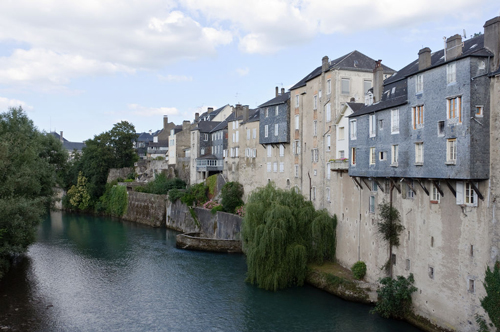
Oloron-Sainte-Marie is a town of 10,000 people at the confluence of the Gave d'Aspe and the Gave d'Ossau. Together the two rivers make the Gave d'Oloron, which flows north west towards the Adour and the Atlantic.
Oloron is on the site of the Roman settlement of Illoronensium, on the road between Dax and Saragossa.
Gratus of Oloron became Oloron's first Archbishop in 506. The buildings related to the bishopric formed a town known as Sainte-Marie.
In 1080, Centule V, Viscount of Béarn, built the new town of Oloron, on the opposite side of the river to Sainte-Marie. From this time, there was a distinction between the viscountal town of Oloron and the episcopal town of Sainte-Marie.
Centule restored the Roman walls. The viscountal town prospered through textiles and commerce with neighbouring Spain.
In 1858, Empress Eugénie (wife of Napoléon III) ordered the unification of the two towns.
Oloron was a centre of Basque beret-making, but only one manufacturer remains.
Swiss chocolate-maker Lindt has a factory here. Oloron also produces a sheep's cheese called Ossau-Iraty.
The riders continue south west on the D919 Route de Barétous, which follows the course of Le Vert river to Aramits.
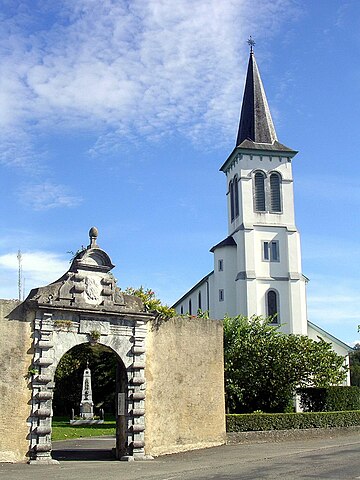
Henri d'Aramitz lived here in the 1600s, and was a black musketeer of the Maison du Roi; Alexandre Dumas' character Aramis in the d'Artagnan Romances was based on Henri d'Aramitz.
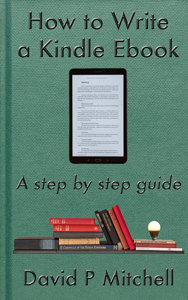
How to Write a Kindle Ebook is a step by step guide to writing and publishing an ebook on Amazon.
It takes you through the process of writing and formatting it using Microsoft Word, then uploading it to Kindle Direct Publishing and selling it on Amazon.
There's advice and guidance at every stage, with examples including screenshots, and tips on how to overcome practical problems you're likely to encounter.
How to Write a Kindle Ebook will be your reliable and trusted companion as you write and publish your own book.
'I find this a really helpful and informative guide to e-book writing and recommend to others' - reviewer on Amazon.
Buy the ebook or the paperback on Amazon.
The race continues a little further west up the Vert valley to Lanne-en-Barétous, where the intermediate sprint takes place.
Stage 5 follows the D918 west to Montory and Abense-de-Haut.
It then goes south on the D26 in the valley of le Saison, before taking the D113 and following the Uhaitxa south east to the Barrage de Sainte-Engrâce.

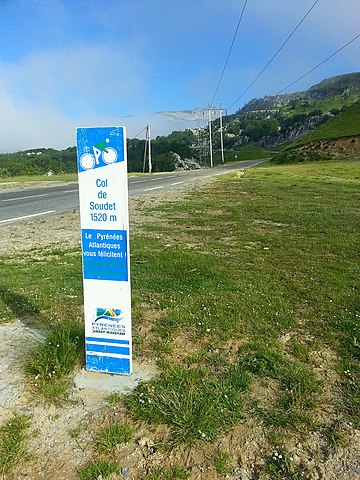
The climb of the Col de Soudet begins at the Barrage de Sainte-Engrâce and passes through Sainte-Engrâce before getting steeper.
Then there's a flatter section, the Plateau d'Iratzordoky. The gradient steepens once more after the plateau, as the riders head up to the Col de Suscousse. There's not much respite after that until the summit of the Soudet at 1,540m.
Overall, the climb is 15.2km at an average 7.2%.

Next there's a descent to Arette, where the riders don't get to stop and have a rest. (This is an arrête joke).
They continue to Lourdios-Ichère, then the road rises towards the Col d'Ichère (674m).

The Col d'Ichère is 4.2km at an average 7%. The top is at 674m, after 124.8km raced.
'The beginning rolls nicely uphill and then it gets steeper and steeper...and the views are better. And so wonderfully quiet.'
Review on Climbfinder
There's a descent to Pont-Suzon, Sarrance and Escot.
From Escot, the race takes the D294 east by the Barescou. This is the approach to the final climb, the Col de Marie Blanque.
Climb by Bike says:
'The road to the pass is a winding, narrow and steep climb often used in the Tour de France. The summit is marked by a series of hairpin turns and the views of the surrounding landscape are spectacular.'
Carl from St Peter Port comments, 'Be prepared if you want to take on this one - the last 4k or so are brutal.' Hedley Thorne adds, 'Did I enjoy it? Definitely. Would I do it again? No.' He says that the descent down the other side is incredible.
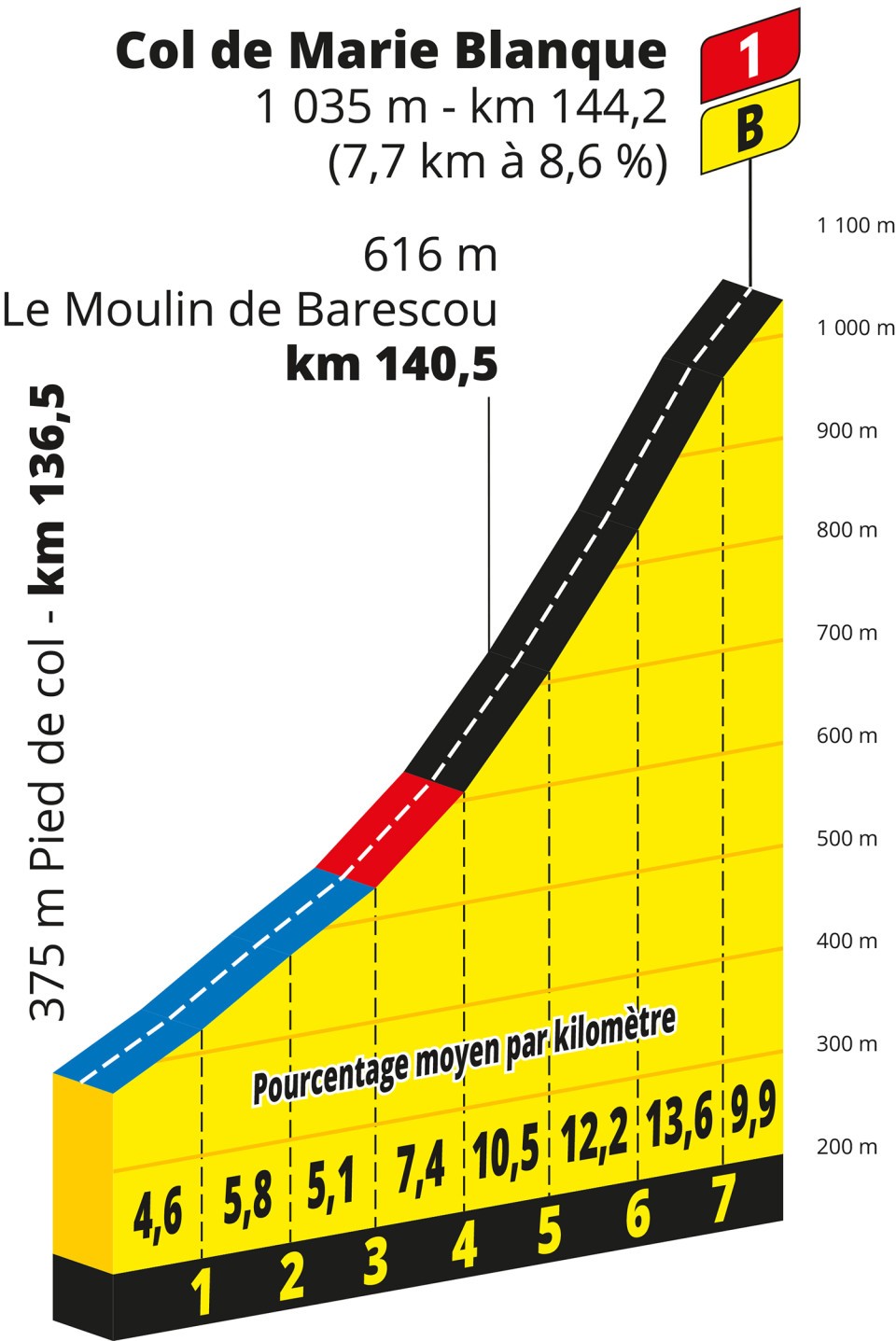
The Col de Marie Blanque is 7.7km at an average gradient of 8.6%, reaching 1,035m
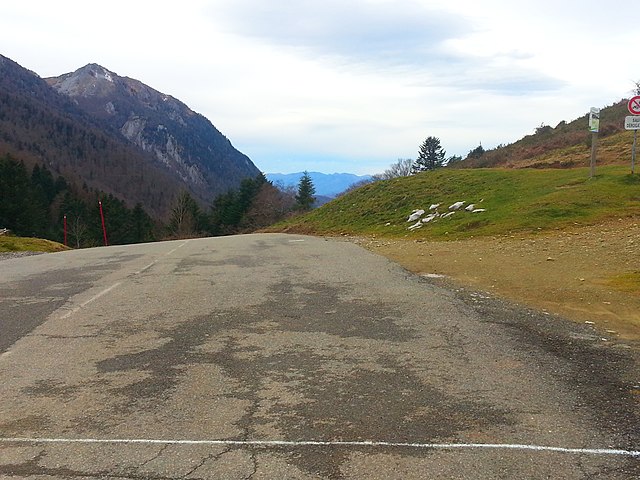
The top of the Col de Marie Blanque is also the Bonus point on the stage, with time bonuses of 8, 5 and 2 seconds available for the first three riders over the top.
The stage ends with a descent via the Col du Porteight (875m) to Bielle, in the Vallée d'Ossau, then an uphill drag to the finish line at Laruns.

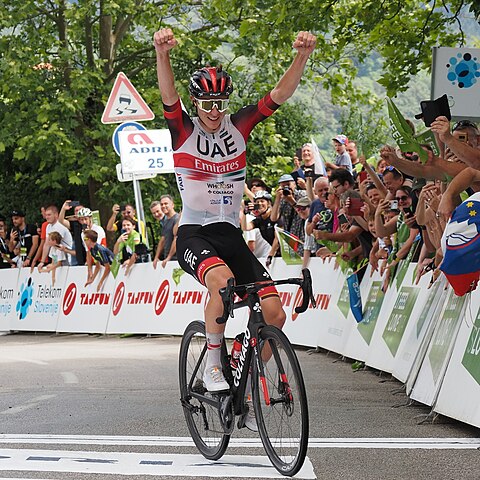
Stage 5 of the Tour de France 2023 is the first mountain test, but by Tour de France standards the amount of climbing is modest, and it's not a summit finish.
If it follows the same pattern as Stage 9 of the 2020 Tour, a small group of GC favourites and breakaway survivors will approach the finish together. The winner will be a climber who can also sprint. Tadej Pogacar is probably the favourite.
Alternatively, if there's a breakaway that stays away, the winner could be Julian Alaphilippe, Dylan Teuns or Matteo Jorgenson.
Who do you think will win Stage 5?

The Tour According to G, Geraint Thomas's account of winning the Tour de France.
Price £9.99 from Amazon at the time of writing.

Garmin Edge Explore on Amazon.

New in May 2023, Bike Rides in the Yorkshire Dales is available in colour paperback.
Find out more about Bike Rides in the Yorkshire Dales or buy a copy.

Bike Rides In and Around York features a historical city tour, plus family rides, road rides, and mountain bike rides.
Find out more about Bike Rides In and Around York or buy a copy.

Bike Rides in Harrogate and Nidderdale is a book of family, mountain and road bike rides.
Find out more about Bike Rides in Harrogate and Nidderdale or buy a copy.

Rough Guide to France.
Price £17.99 from Amazon as at 21st December 2022.


