Cycling in Yorkshire

Cycling in Yorkshire
Stage 6 of the Tour de France 2023 is the second day in the Pyrenees, with a 144.9km ride from Tarbes to Cauterets-Cambasque. It includes the Pyrenean classics, the Col d'Aspin and the Col du Tourmalet.
The final climb to Cauterets-Cambasque is only 5.4% over 16km, so could suit a puncheur such as Alaphilippe or van Aert. On the other hand, there is a short steep section just before the finish line, so maybe it will come down the usual suspects, Pogacar, Vingegaard, or Romain Bardet.
Finally, could it be a course that suits Michael Woods?
These are video highlights of Stage 6.
This is the Stage 6 TDF 2023 Blog.
Race Details | Poll | Map & Profile | Timings | Videos | Food & Drink | Route Notes | Favourites
| Date | Thursday 6th July 2023 |
|---|---|
| Stage classification | Mountain |
| Distance | 144.9km |
| Intermediate sprint | Sarrancolin |
| Climbs | Côte de Capvern-les-Bains (Cat. 3) Col d'Aspin (Cat. 1) Col du Tourmalet (HC) Cauterets-Cambasque (Cat. 1) |
This is a map of the route of Stage 6, Tour de France 2023.

This is a zoom-able map of Stage 6 of the 2023 Tour de France.
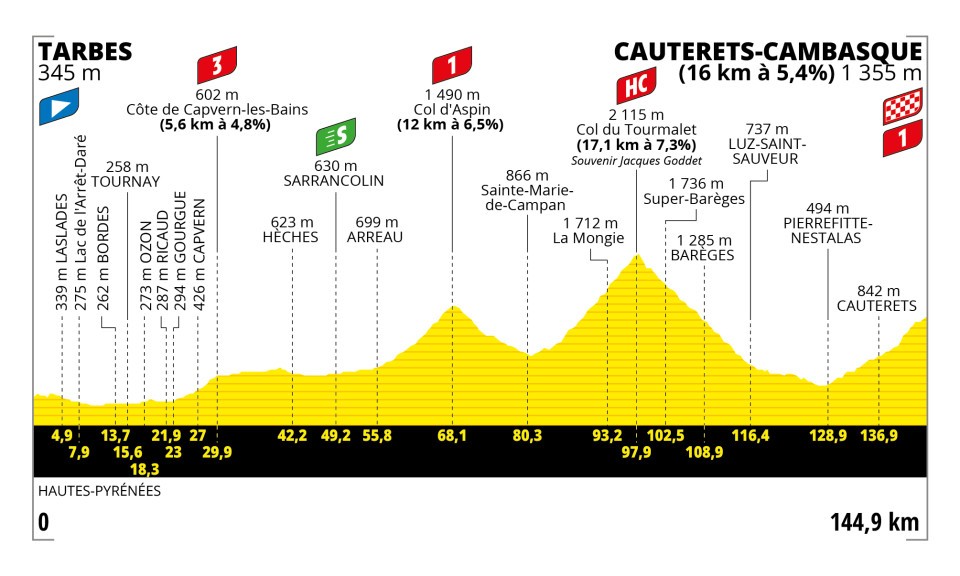
This is the profile of Stage 6 Tour de France 2023.
| Caravan | Fast Schedule | Slow Schedule | |
|---|---|---|---|
| Start Time (départ fictif) | 1110 |
1310 |
1310 |
| Start Time (départ réel) | 1125 |
1325 |
1325 |
| Col d'Aspin | 1322 |
1510 |
1522 |
| Col du Tourmalet | 1413 |
1555 |
1613 |
| Finish Line (144.9km) | 1533 |
1708 |
1733 |
This is a video overview of the route of Stage 6 Tour de France 2023.
Miguel Indurain won Stage 9 of the 1989 Tour de France on the Cambaque plateau above Cauterets. These are Channel 4's highlights of that race.
The last time the Tour went to Cauterets was on Stage 11 of the 2015 edition. The finish line was in Cauterets, not higher up on the Plataeau du Cambasque as in 2023. Rafal Majka won ahead of Dan Martin, and Chris Froome was in yellow.
Here's Christian Prudhomme at Cambasque, talking about Stage 6.
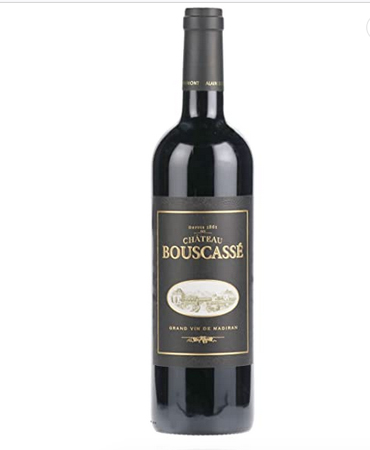
Stage 6 sets off from Tarbes, and here we're still in Madiran wine country. These are bold reds, made from Tannat and other grapes.
Chateau Bouscassé is made not far from Tarbes.
Tourmalet is a cheese made from sheep's milk near the Col du Tourmalet. It is chewy, with a nutty taste.
Stage 6 starts in Tarbes (départ fictif).
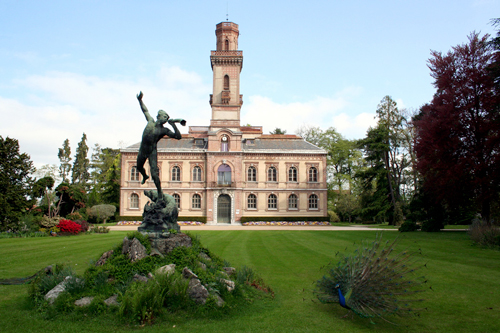
Tarbes is a town of 43,000 people on the Adour and Echez rivers.
The town first developed because there was a ford of the Adour here. That was in the 200s BC.
The Romans colonised the town, and built villas connected to large agricultural estates. There were also craft workshops for weaving and pottery. Tarbes was an important town in the Roman Province of Novempopulania.
As the Roman Empire crumbled there were Barbarian invasions, then a devastating Viking raid around 840AD.
At the end of the 1100s, the Count of Bigorre made Tarbes his capital, and lived in a castle here. Various monastic institutions were founded during the Middle Ages, resulting in six separate fortified towns.
In 1569, during the Wars of Religion, the Cathedral and many of the convents and churches were burned to the ground.
After the Franco-Prussian War of 1870-71, an artillery manufacture and arsenal was transferred to Tarbes, and barracks were built. A large number of military units are still based in Tarbes.
Today Tarbes is also a university and services city.
The Massey Museum hosts the Museum of the Hussars (cavalry troops).
The neutralised section in Tarbes starts from Place Marcadieu and heads along Rue Maréchal Foch to Place de Verdun, then along Rue Massey past the Jardin and Musée Massey. It continues on Boulevard Pierre Redaudet, over the river Adour, along Rue Guesde and Avenue Jean Jaurès.
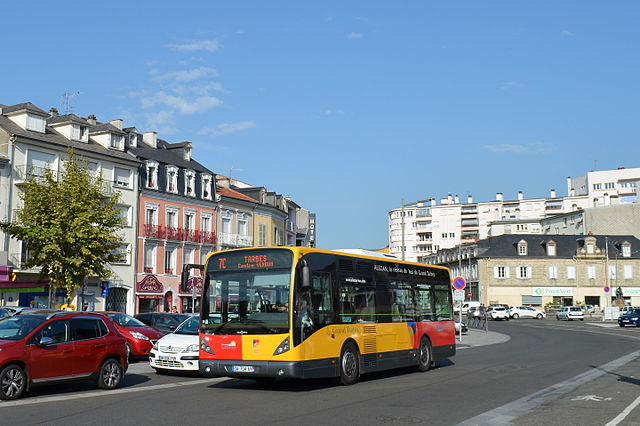
Rue des Pyrenées leads the riders past the Stade Jules Soulé, Stade Municipal and Stade André Nogués, the Rue de la République takes them east out of town to the Forêt Communale d'Aureilhan and the départ réel.
The riders head east on the Route de Laslades to Laslades, then on the Route du Lac past the Lac de l'Arrêt Darré. It's an enjoyable 10km walk right around the lake. 'Les personnes que l'on recontre font spontanément un brin de causette', according to one Tripadvisor reviewer.
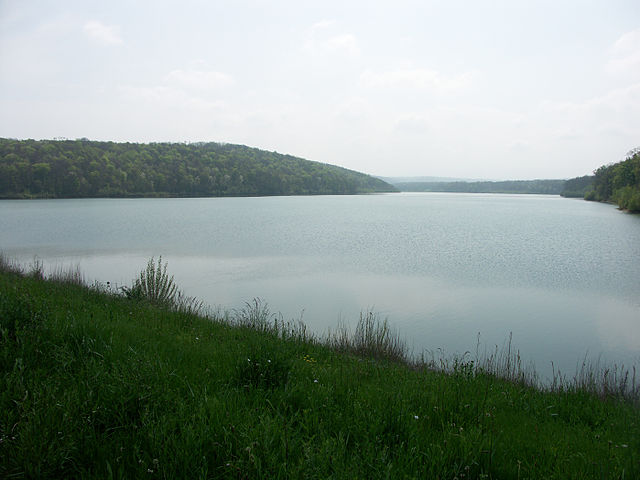
Then the race turns south to Bordes and Tournay. It continues south in the Arros valley to Ozon, Ricaud and Gourgue.
Now Stage 6 takes the Route de Capvern-les-Bains to Capvern-les-Bains and Capvern.
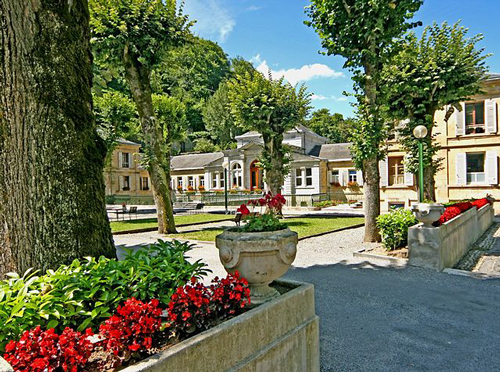
Capvern-les-Bains and Capvern make up a spa resort on the Lène stream and the plateau de Lannemezan. Capvern means 'the green point or peak'.
The spa facilities are centred on Capvern-les-Bains, which the race reaches first.
The waters of the spa are reputed to cure urinary, digestive and rheumatic complaints, as well as gout. The first people to take the waters were probably Roman soldiers.
The popularity of spa treatments was at its peak in the C19th. From 1875, people were enticed with the slogan, 'Si ta vessie est menacée, Capvern sera la panacée', meaning 'If your bladder is menaced, Capvern is the panacea'. That was always bound to bring the punters flooding in - who could resist?
Between Capvern-les-Bains and Capvern is a Category 3 climb. It's 5.6km at an average 4.8% to a height of 602m after 29.9km raced.
From Capvern, the peloton continues south. The race route reaches the D929, which goes through Hèches then up the Vallée d'Aure, running between the river Neste d'Aure and the Canal de Neste to Sarrancolin.

Skiing Made Easy is a practical guide to learning to ski based on many happy seasons of ski teaching.
It takes you through the beginner's progression from snowplough to parallel turns, starting at the very beginning and not assuming any prior knowledge.
The book suggests relevant exercises to develop and improve your skills. Common faults are identified, along with the best ways to correct them.
'By the way' sections contain information about many of the little things that people assume you just know, but you may not.
'This is the book I wish I'd had when I started skiing' - reviewer on Amazon.
How to buy:
As on Stage 19 of the 2018 Tour, the intermediate sprint is at Sarrancolin.
Further up the river valley is Arreau, which marks the start of the Category 1 climb of the Col d'Aspin.
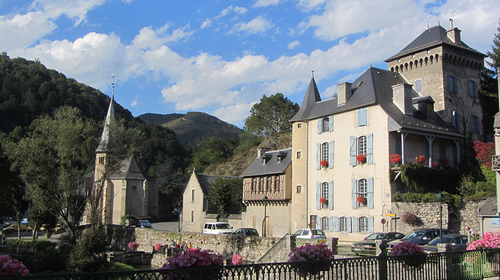
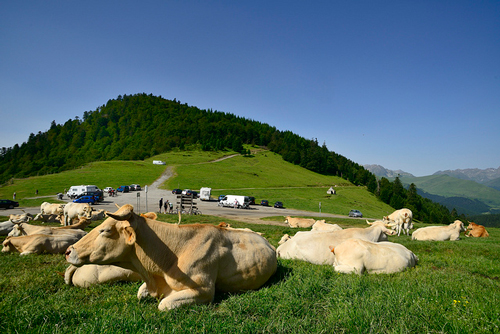
The Col d'Aspin is a 12km climb with a fairly even gradient, at an average of 6.5%.
According to a website called bestofthepyrenees (now no longer online):
'Col d'Aspin, rising next to its neighbour Tourmalet, is a shorter and easier climb that is often featured in the Tour. Along with its bigger brother, it is a classic of enduring fame. Cycling Col d'Aspin is possible from very early until late in the year because it is lower in elevation than most other climbs in the Hautes-Pyrénées. Gradual and without any long sections over 9%, Aspin is a good climb for moderately fit cyclists or to ride in combination with other climbs...'
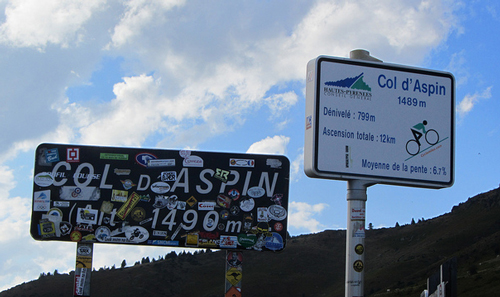
The Col d'Aspin takes the riders from 705m at Arreau to 1,490m at the top of the col, which they reach after 68.1km raced.
This is the official profile of the Aspin climb from a previous edition of the Tour.

After the summit, the riders descend past the Lac de Payolle.
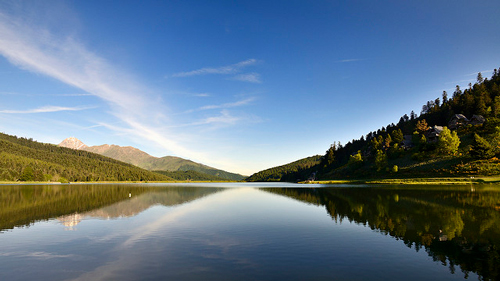
They continue down to Sainte-Marie-de-Campan, where there's a statue of Eugène Christophe.

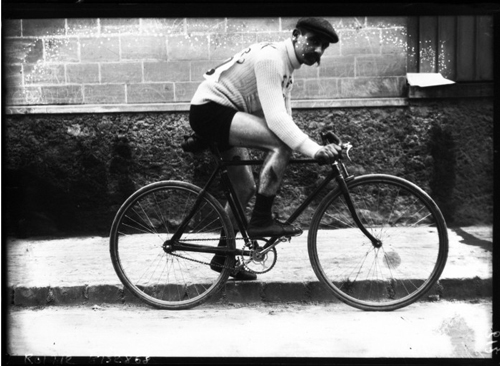
The statue of Eugène Christophe at Sainte-Marie-de-Campan references a famous event in 1913.
Christophe descended the Col du Tourmalet to Sainte-Marie. He was leading the Tour de France by 18 minutes, but his bike's forks broke about 10km from the village.
He walked down the rest of the way, and found a blacksmith's shop, where - because riders had to do all their own repairs - he mended the forks himself, according to the blacksmith's instructions. Christophe lost a lot of time, and was penalised more, because the blacksmith's boy had pumped the bellows for him.
As a result of the incident, Christophe lost his chance of winning the Tour. He finished seventh.
At Sainte-Marie-de-Campan, the climb of the Col du Tourmalet begins.
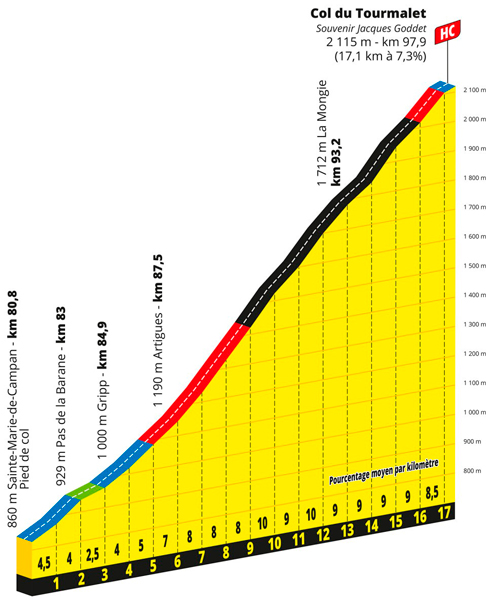
The altitude at the bottom is 841m, and at the top it is 2,115m, giving a height gain of 1,274m over a distance of 17.1km. The average gradient is 7.3%.
The Col du Tourmalet is the highest mountain pass in the Pyrenees with a tarmacked road. (There are higher roads, and higher mountain passes, but no higher mountain pass with a road). It has been included in the Tour de France over 80 times.

Velopeloton says of the climb:
'The first 4.5km are nothing, before it kicks up to over 8% for the remaining 12km...[I]t is said that this 12km is unmatched by any other climb in France for consistent steepness over that distance. There are a few hairpins, but mostly long straight sections of road. The road is well shaded until 7km to go, when it opens up to the high mountain pasture land. After La Mongie [at 5km to go], the gradient eases but remains challenging all the way to the summit. The last kilometre is long and straight before an almost hidden turn to the left, and the summit magically appears.'
Where the road goes through the ski resort of La Mongie, a cable car departs for the Pic du Midi de Bigorre, a summit with an Observatory.

At the top of the Col du Tourmalet, there's a memorial to Jacques Goddet, director of the Tour de France from 1936 to 1987.
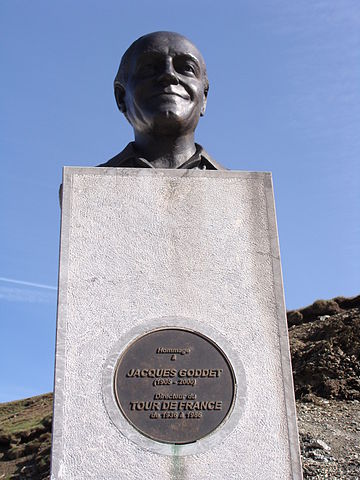
Goddet went to a private school near Oxford in England.
His father Victor was a co-founder of L'Auto, the newspaper that initiated the Tour de France. Goddet became chief reporter. During World War II, L'Auto was too close to Nazi Germany, and it was shut down in 1944. Goddet launched a new paper, L'Equipe, in 1946, but his name was not permitted to be associated with it.
The first rider to get to the top wins the Souvenir Jacques Goddet prize - €5,000. (Total prize money on the Tour de France is €2,308,200).
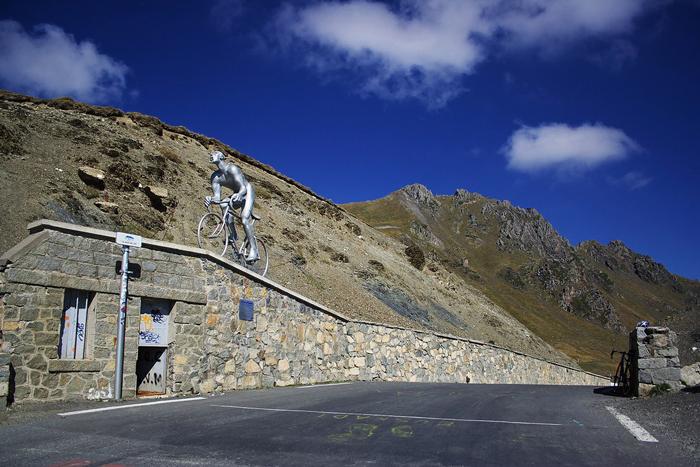
At the Tourmalet there's also a silver statue of a person on a bike, called le Géant du Tourmalet (main image at the top of the page). It could represent Octave Lapize, who was the first rider to get to the top of the Col du Tourmalet in the Tour de France in 1910.
There'll be no time to stop at the bar and restaurant.

Over the top of the Col du Tourmalet, the descent begins through Super-Barèges, a ski resort linked to La Mongie.
It continues through Barèges, and down to Luz-Saint-Sauveur (741m) in the valley.

The riders lose a little more height following the Gorge de Luz downstream. At Pierrefitte-Nestalas, there's a sharp left turn and the final climb begins.
The final climb is to Cauterets-Cambasque.
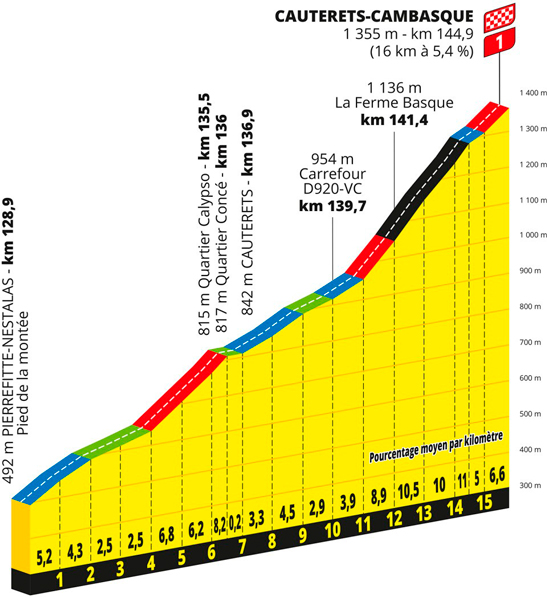
The Cauterets-Cambasque climb is relatively easy, averaging 5.4% over is 16km.
The climb to the village of Cauterets, to 842m after 136.9km raced, is not very steep.
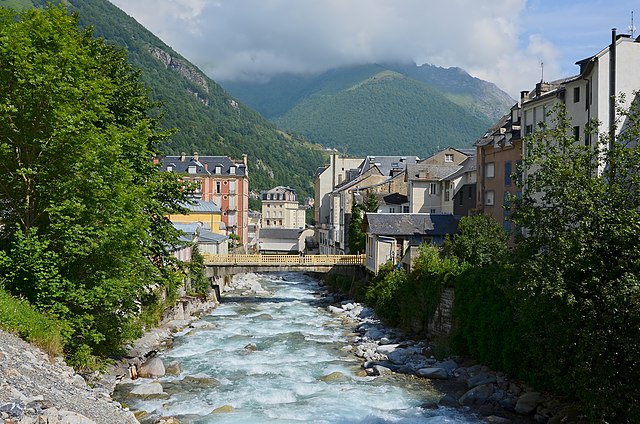
When the riders reach Cauterets, that's not the end of it.
The last 5km are steep, heading past a restaurant called La Ferme Basque to the Plateau du Cambasque finish line.
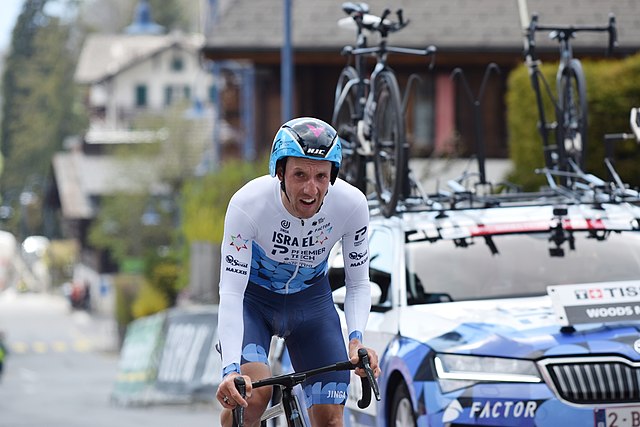
Stage 6 of the Tour de France 2023 involves a lot of climbing, but the finale is not that hard.
Christian Prudhomme seems pretty confident that this is a day for the puncheurs. If so, Julian Alaphilippe, Wout van Aert, Mathieu van der Poel, or Tom Pidcock may fancy their chances.
I'm nowhere near as confident as Prudhomme that this won't be a battle among GC contenders - but there again, he is the Director of the Tour de France, so he's probably right.
Of the GC contenders, it's easy to imagine Tadej Pogacar winning, or perhaps Jonas Vingegaard - although we know he doesn't win many sprints.
Finally, I wonder if Michael Woods will have Stage 6 circled in red. He could get into a breakaway and hold off the peloton.
Who do you think will win Stage 6?

Price £10.11 from Amazon at the time of writing.

Ghost Drift cycle cam on Amazon.
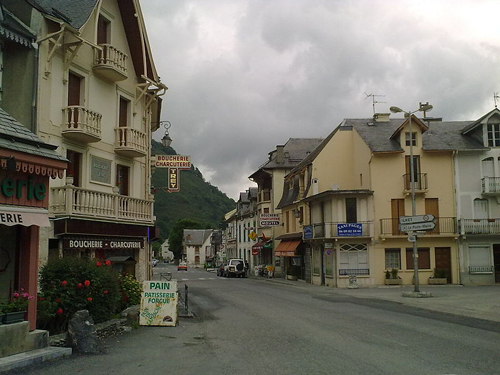
Sarrancolin developed around a Benedictine Priory in the C11th, and became capital of the Quatre Vallées - Aure, Neste, Barousse, and Magnoac.
The village and the Vallée d'Aure are known for marble, which has been quarried since Roman times. The marble has been used in the Petit Trianon at Versailles, the Opéra Charles Garnier in Paris, and in the entrance of the Empire State Building in New York. More recently, there has been paper and glass manufacture, and an Alcan aluminium factory at Beyrède.
Today, tourism is an important part of the economy for this area, with skiing in the winter - for example in the small resort of Nistos, east of Sarrancolin - and walking, mountain biking, fishing, and spa treatments in the summer).
Arreau is a village of 819 people, at the junction of the Aure and Louron valleys, and thus the confluence of the Neste d'Aure and the Neste du Louron. It's the historic capital of the Vallée d'Aure.
The building in the photograph is the Chateau de Ségure, with a C16th square tower, probably on the site of a C12th fortification.
Because Arreau is between the Col d'Aspin and the Col de Peyresourde, the Tour de France visits quite often.

New in May 2023, Bike Rides in the Yorkshire Dales is available in colour paperback.
Find out more about Bike Rides in the Yorkshire Dales or buy a copy.

Bike Rides In and Around York features a historical city tour, plus family rides, road rides, and mountain bike rides.
Find out more about Bike Rides In and Around York or buy a copy.

Bike Rides in Harrogate and Nidderdale is a book of family, mountain and road bike rides.
Find out more about Bike Rides in Harrogate and Nidderdale or buy a copy.

Luz means 'light' in Spanish.
Luz-Saint-Sauveur is at the junction of two valleys, so that the rays of the sun can reach it from three different directions at different times of the day.
Its position also means that it suffers from floods when the mountain streams meeting here overflow. The last time there were major floods was June 2013. There are also earthquakes from time to time.
Luz-Saint-Sauveur has thermal baths, which have been in use since the C16th. (The person waiting for them to be free is getting pretty fed up now).
Above Luz-Saint-Sauveur, on the slopes to the west, is the ski resort of Luz-Ardiden.
This page includes some affiliate links. If you click and buy a product, Hedgehog Cycling may receive a small commission.
This can help cover my costs; overall, running this cycling website is not a lucrative business that results in a millionaire lifestyle.


