Cycling in Yorkshire & Beyond

Cycling in Yorkshire & Beyond
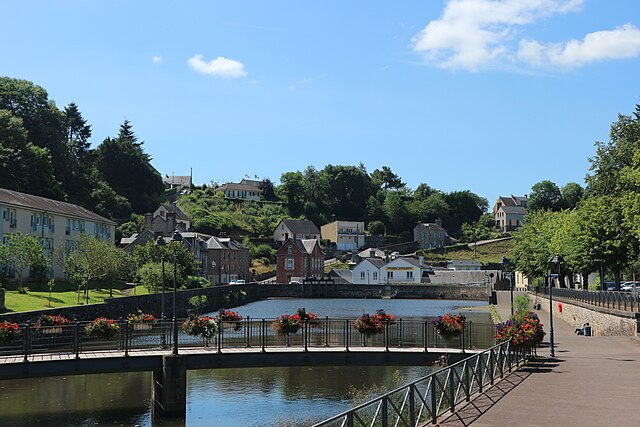
Stage 6 of the Tour de France 2025 is a 201.5km hilly stage from Bayeux to Vire Normandie.
It goes through 'Norman Switzerland', which is rugged terrain. The height gain is 3,550m. The finish is 700m uphill at 10%.
This looks like being one for the Classics riders, with the winner possibly coming from a breakaway.
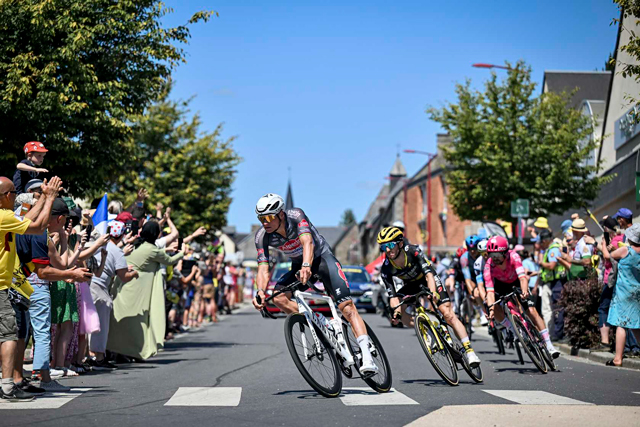
This is the race report for Stage 6 Tour de France 2025.
These are video highlights of Stage 6.
Race Details | Poll | Map & Profile | Timings | Videos | Food & Drink | Route Notes | Favourites
| Date | Thursday 10th July 2025 |
|---|---|
| Stage classification | Hilly |
| Distance | 201.5km |
| Intermediate sprint | Villers-Bocage |
| Climbs | Côte du Mont Pinçon (Cat. 3) Côte de la Rançonnière (Cat. 3) Côte de Mortain Cote 314 (Cat. 3) Côte de Juvigny-le-Tertre (Cat. 3) Côte de Saint-Michel-de-Montjoie (Cat. 3) Côte de Vaudry (Cat. 4) |
| Total climbing | 3,550m |
Vote for one of the main contenders to win Stage 6.
This is a map of the route of Stage 6, Tour de France 2025.

This is a zoom-able map of Stage 6 Tour de France 2025.
This is the profile of Stage 6 Tour de France 2025.

| Caravan | Fast Schedule | Slow Schedule | |
|---|---|---|---|
| Start Time (départ fictif) | 1035 |
1235 |
1235 |
| Start Time (départ réel) | 1045 |
1245 |
1245 |
| Intermediate Sprint Villers-Bocage | 1117 |
1314 |
1317 |
| Mont Pinçon Climb | 1137 |
1332 |
1337 |
| Saint-Michel-de-Montjoie Climb | 1500 |
1637 |
1700 |
| Finish Line (201.5km) | 1540 |
1714 |
1740 |
This is a video of the route of Stage 6 Tour de France 2025.
Stage 6 starts in Bayeux and finishes in Vire Normandie. The whole stage is in Normandy.
Normandy scallops from Viller-sur-Mer are one of the local specialities.
The dairy cooperative at Isigny-sur-Mer is famous for its butter, cream and cheeses.
By the way, Walt Disney is descended from Robert d'Isigny, who crossed the Channel with William the Conqueror. The family name was anglicised to Disney and the village in Lincolnshire where they settled was named Norton Disney. Some of the Disneys moved to Ireland, then it was Walt's great grandfather Arundel Disney who emigrated to North America in 1834.
Dupont's Isigny caramels are toffees made from Isigny butter and milk as well as Guérande salt.
Tarte Normande is an apple tart.
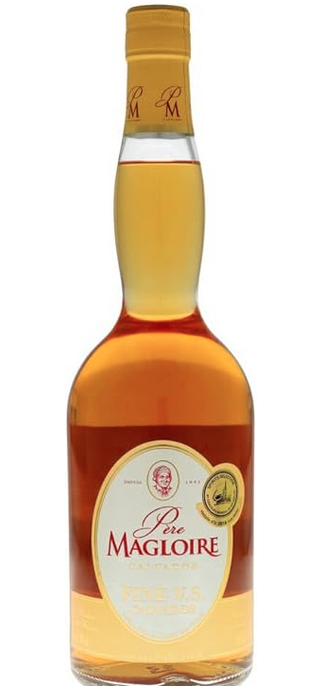
Calvados, an apple brandy, is made by distilling cider. Pommeau is an aperitif made from calvados and apple juice.
Buy a bottle of Calvados (affiliate link).
The stage starts in Bayeux (départ fictif).
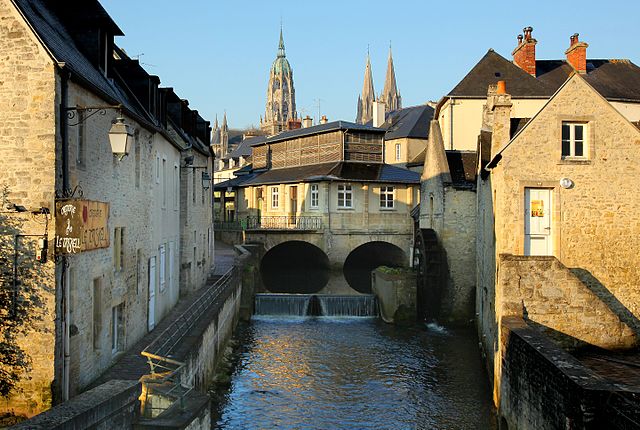
Bayeux was a Gaulish town, then a Roman town.
The Vikings (Normans) captured it, and Rollo the Viking married here. It remained Scandinavian and Norse-speaking longer than Rouen did.
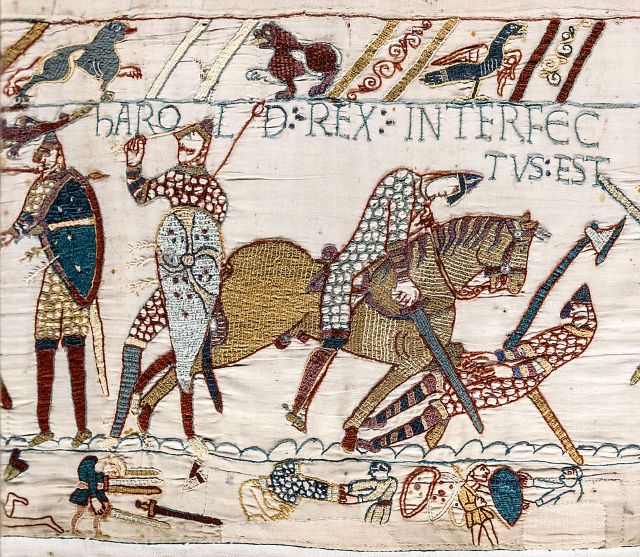
The Bayeux tapestry is one of the most lively and accurate documents to survive from the Middle Ages. It provides a lot of detailed information about what people wore, the ships and arms they used, and the lifestyle of the period.
It is the only embroidered narrative to survive from the 1000s.
It is called 'the tapestry of Queen Mathilde' (William the Conqueror's wife). Legend has it that she embroidered it with her ladies-in-waiting, but more likely it was made for William's half-brother Odo, Count of Kent and Bishop of Bayeux.
A tapestry is a woven fabric with an unbroken surface. The Bayeux tapestry is really an embroidery of wool on linen. It is 50cm high and 70m long, and consists of nine pieces stitched together.
The tapestry was probably begun the day after the Battle of Hastings in 1066, and completed within around 10 years. It was first exhibited in 1077.
The objective of the tapestry was to glorify and justify William's actions in invading England, in 58 detailed scenes.
Edward the Confessor sent Harold Godwinson to Normandy to give William the news that he would be King after Edward.
Harold is shipwrecked and fell into the hands of a count, from whom William rescues Harold.
Harold and William have some adventures together, and Harold swears an oath of allegiance to William, then leaves for England.
Edward dies, and the nobles hand the crown to Harold. William builds ships and sets off across the Channel. The Battle of Hastings takes place, and Harold gets an arrow in his right eye. It penetrates his skull and he can't pull it out.
The Normans rout the English army.
The end of the story is missing from the Bayeux tapestry - perhaps where William is crowned in Westminster Abbey.
The racing starts south of Bayeux, on the D67 Route de la Belle-Epine just after passing Guéron (départ réel).
The riders head south on the D67, going through Saint-André and Belle-Epine. They cross the river Aure and continue to Torteval-Quesnay and Saint-Germain-d'Ectot.
The next place of any significance on the route is Villers-Bocage, where the intermediate sprint takes place.
Green jersey competition: from 20 points for first place, down to 1
point for 15th place
The village of Villers-Bocage is best-known for a battle of the same name, which took place on 13th June 1944.
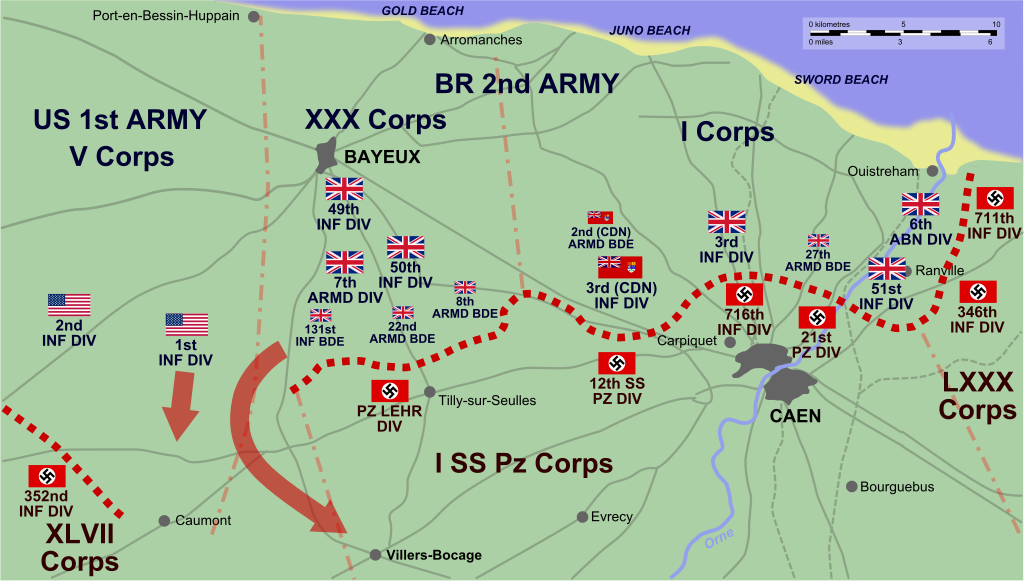
It was part of British attempts to take Caen from the Germans during the Battle of Normandy. British and Canadian troops came from Gold, Juno and Sword beaches, where they landed, and made their way south to try to take Caen as part of Operation Perch.
Caen was well-defended and did not fall. Villers-Bocage was part of efforts to get around the flanks of the German army.
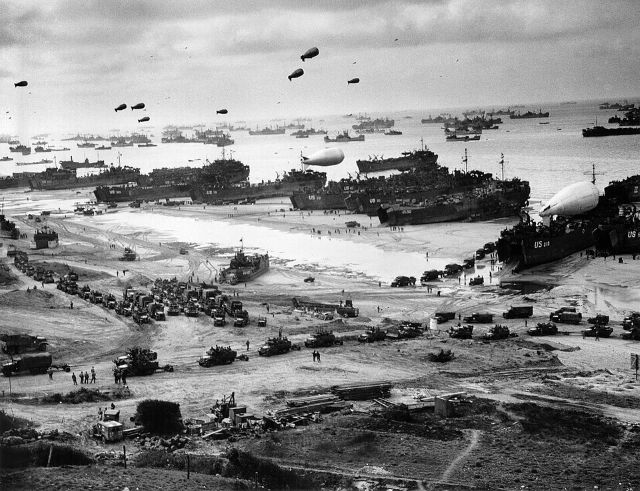
The Normandy landings were agreed during Churchill-Roosevelt meetings in 1943. The idea was to liberate France, Belgium and Holland, then push into Germany.
Operation Overlord was planned in secrecy, with the aim of getting Allied forces ashore and inland before the Germans realised what was happening. If the Allies were caught on the beaches, they would be vulnerable.
The invasion army sailed the night before D-Day, to the middle of the English Channel. There were 6,843 vessels, including 4,000 landing craft. 12,000 aircraft supported the landing. Airborne troops were dropped under cover of darkness.
The Allies hoped to capture Caen on the day of the landings, 6th June 1944, but that didn't happen. The RAF had to drop 2,500 tons of bombs on Caen, virtually destroying it, and the city fell on 9th July.
The fighting after the landings was fierce.
The Americans were heading south and west, and they had to fight the 'war of the hedgerows', where there were sunken lanes and hedges planted 2,000 years earlier by Celtic farmers. Later in the campaign, they equipped their tanks with 'hedgedozers'.
The Battle of Normandy was over by 21st August 1944. It had cost the Germans 640,000 men killed, wounded or taken prisoner. On 23rd August, the first troops made it to Paris.
Next Stage 6 continues south to Les Monts-d'Aunay. From there, the D54 leads to the climb of Mont Pinçon.
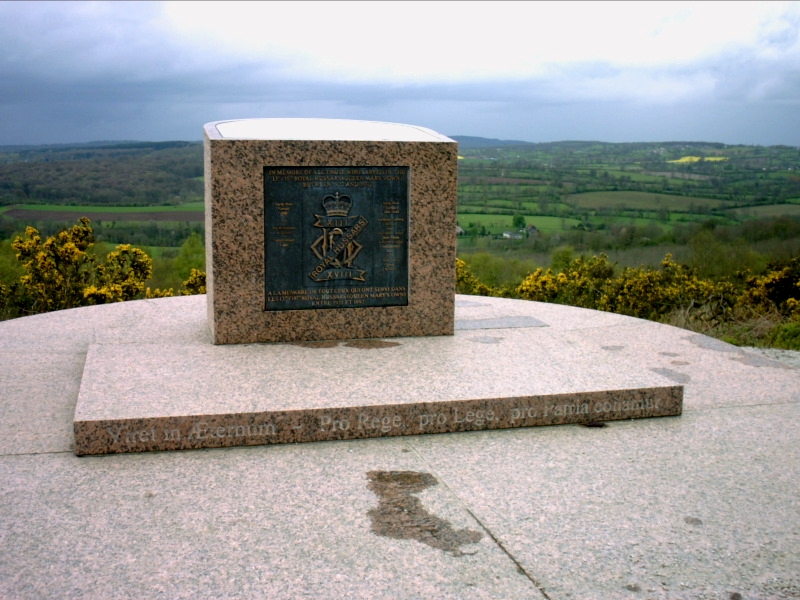
The Mont Pinçon climb is 5.6km at an average 3.7%.
KOM competition: 2 points for 1st place and 1 point for 2nd place.
Royal Hussars worked their way up this hill on an old farm track, as part of the Battle of Normandy.
The riders descend to Le Plessis-Grimoult, then continue to Culey-le-Patry. The route then crosses the river Orne and reaches Saint-Rémy.
Stage 6 follows the Orne south to Clécy/Le Vey. The race is now in the hilly area of Normandy known as la Suisse Normande.
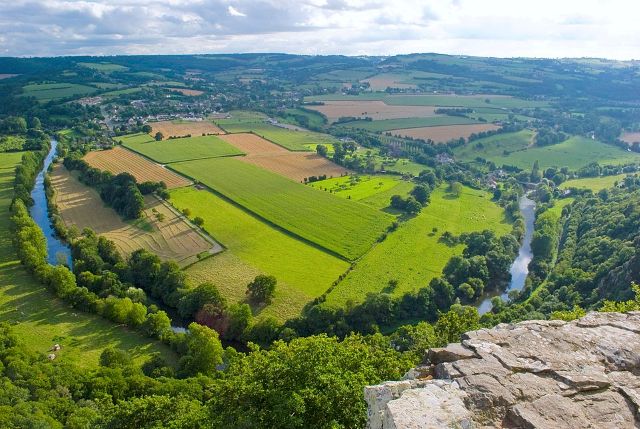
Then the riders tackle the next categorised climb.
The climb of the Côte de la Rançonnière takes the riders from Le Vey up to Le Haut du Vey and the top of the climb just beyond.
It is 2.2km at an average 7.9%, to a height of 216m.
KOM competition: 2 points for 1st place and 1 point for 2nd place.
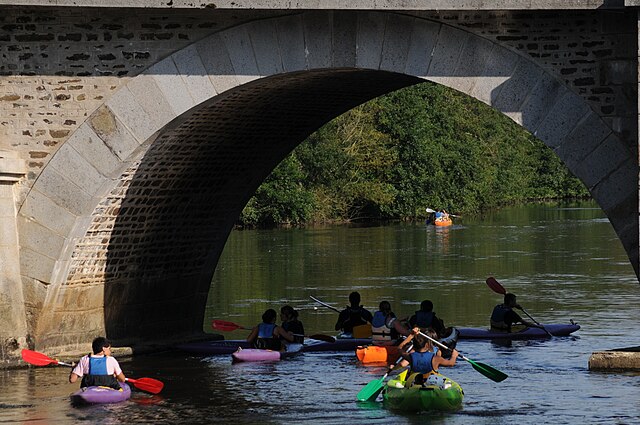
Now the route goes south to the river Orne at Pont-d'Ouilly.

Skiing Made Easy is a practical guide to learning to ski based on many happy seasons of ski teaching.
It takes you through the beginner's progression from snowplough to parallel turns, starting at the very beginning and not assuming any prior knowledge.
The book suggests relevant exercises to develop and improve your skills. Common faults are identified, along with the best ways to correct them.
'By the way' sections contain information about many of the little things that people assume you just know, but you may not.
'This is the book I wish I'd had when I started skiing' - reviewer on Amazon.
How to buy:

Skiing Made Easier is the follow-up to Skiing Made Easy, and picks up from where the first book left off.
The first chapter is Refining Your Parallel Turns.
The chapters on ski technique beyond basic parallel turns are Carving, Short Turns, Bumps and Off Piste.
There are then further chapters on Avalanche and Mountain Safety, Ski Psychology, Physical Preparation, Ski Servicing and Alpine Wildlife.
As in Skiing Made Easy, common faults are identified and exercises suggested to correct them and to develop your skills.
'By the way' passages contain bits of skiing knowhow that could otherwise take years to pick up.
How to buy:
The Amazon URLs are affiliate links.
Next the route goes south west on the D25, past the Château de Saint-Sauveur to Sainte-Honorine-la-Chardonne and Athis-Val-de-Rouvre.
It continues to Flers.
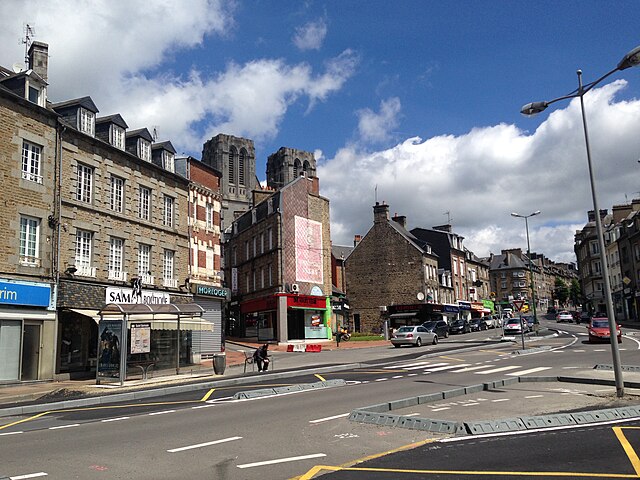
80% of Flers was destroyed in Allied bombing on 6th and 7th June 1944.
Flers château dates from the 1500s and 1700s.
The race route continues to Saint-Clair-de-Halouze, then enters the Parc Naturel Régional de Normandie-Maine.
Within the Parc, the riders go through the village of Lonlay-l'Abbaye.
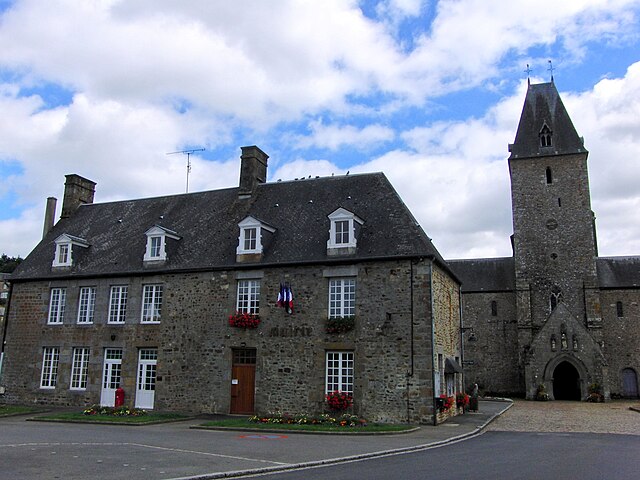
The route continues to Ger, then it goes south on the D36 to Barenton.
From Barenton, Stage 6 heads north west on the D907 to Romagny and Mortain.
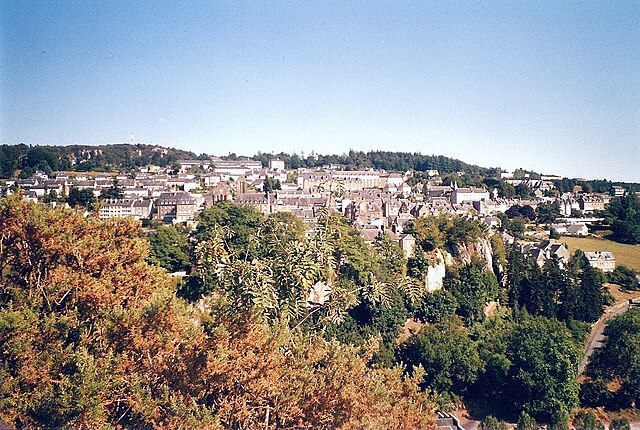
Mortain is famous as the location of a counter-attack by the German 7th Army during the Battle of Normandy, Operation Lüttich. J D Salinger fought on the American side.
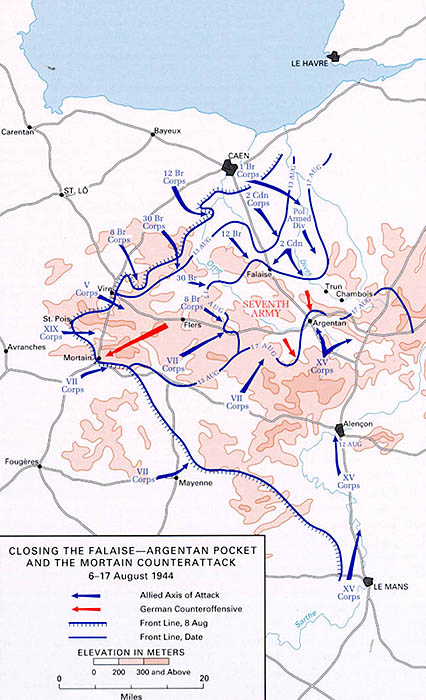
Ultimately the Germans were caught in a pincer movement by Canadian and American soldiers, and had to surrender.
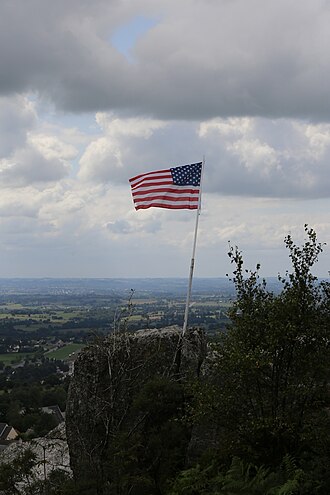
There's a climb here, the Côte de Mortain Cote 314.
Mortain Cote 314, or Hill 314, was defended by 700 American infantry against German Panzer attacks as part of the German counter-offensive Lüttich. They had to hold out from 7th August 1944 until the night of the 12th August. 300 of the defenders were killed.
The climb is 1.6km at an average 9.5%.
KOM competition: 2 points for 1st place and 1 point for 2nd place.
Next the riders go north west to Saint-Barthélemy and Chérence-le-Roussel. Then it's south to Juvigny-le-Tertre for another climb.
The Côte de Juvigny-le-Tertre climb is 2.2km at an average 7.3%.
KOM competition: 2 points for 1st place and 1 point for 2nd place.
The descent is to Le Mesnil-Adelée. A loop brings the race through Le Mesnil-Gilbert and to Chérence-le-Roussel.
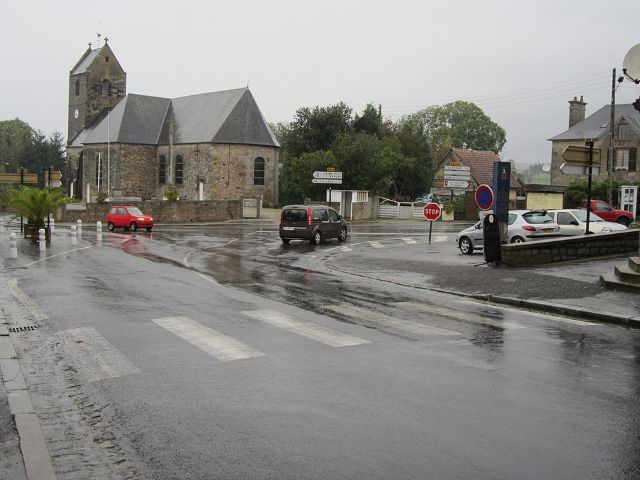
From there it heads north to Saint-Pois and Saint-Michel-de-Montjoie.

The Côte de Saint-Michel-de-Montjoie is a climb of 3.7km at an average 4.5%.
KOM competition: 2 points for 1st place and 1 point for 2nd place.
The race continues north to Champ-du-Boult. This is now the final stretch towards the finish.

Stage 6 finishes in Vire Normandie.
The race arrives in Vire on the D150 Route des Vaux and follows the river Vire until it reaches a lock. It takes the Avenue du Général de Gaulle past the Parc de l'Europe.
The riders go along Rue de la Mercerie and Rue de l'Artinasat, Avenue de Bischwiller, and Route du Pont de Vaudry. Then they are on the on Route de la Libération, which takes them towards Vaudry. This must be the Côte de Vaudry.
The Côte de Vaudry is a 1.2km climb at 7.2%. The summit is reached 4.4km before the finish line.
KOM competition: 1 point for 1st place.
Then Stage 6 is on the D512, D407, Rue d'Aunay, and Rue du Fort Chabrol. Rue du Fort Chabrol is steeply uphill through a residential area.
The riders turn left onto Avenue d'Atalcomulco, also steeply uphill.
The finish line is on Avenue d'Atalcomulco, near the Ehpad Symphonia.
Green jersey competition, finish line: from 30 points for 1st place down to 2points for 15th place.
Time bonuses on the line:

The Stage 6 finish town is Vire Normandie. It is a commune that includes Vire and several other smaller settlements.
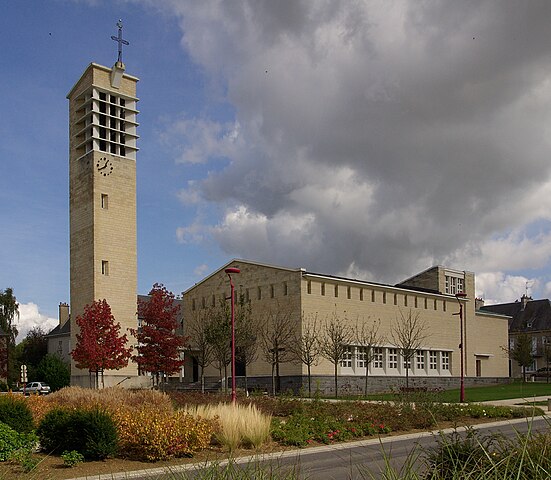
The Porte Horloge (pictured above) is a gate into the town dating from the 1200s.
Vire also has Normandy's drama centre, the Préau Theatre.
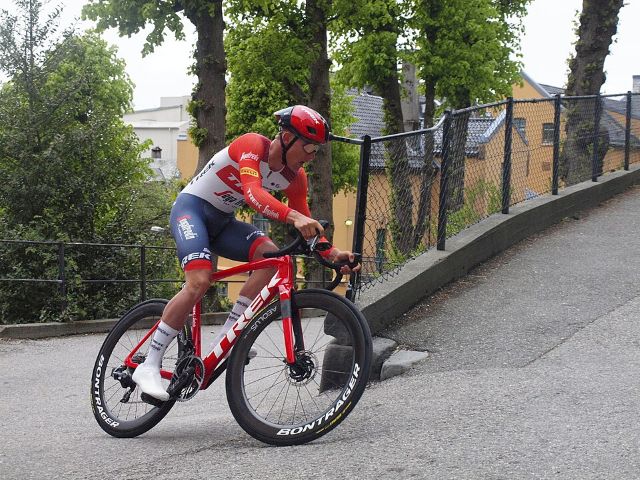
Favourites for Stage 6 of the 2025 Tour de France will include those riders who can win a hilly race from a breakaway (or from the bunch).
That could include Wout van Aert, Mathieu van der Poel and Thibau Nys (Lidl Trek).
It's not impossible to envisage one of the GC favourites winning this stage either - for example Tadej Pogacar or Primoz Roglic.
Who do you think will win Stage 6 of the 2025 Tour de France?

Muc-Off dry chain lube, price £7.66 from Amazon at the time of writing (affiliate link).
'Thousands of purchasers can't be wrong'.
As an Amazon Associate, I earn from qualifying purchases.

Bike Rides in the Yorkshire Dales is available in colour paperback.
Find out more about Bike Rides in the Yorkshire Dales or buy a copy.

Bike Rides In and Around York features a historical city tour, plus family rides, road rides, and mountain bike rides.
Find out more about Bike Rides In and Around York or buy a copy.

Bike Rides in Harrogate and Nidderdale is a book of family, mountain and road bike rides.
Find out more about Bike Rides in Harrogate and Nidderdale or buy a copy.

Find out more about Mountain Bike Rides in the Yorkshire Dales.
Buy Mountain Bike Rides in the Yorkshire Dales at £8 + P&P.

Garmin Edge Explore, £197.99 at the time of writing.
Garmin Edge Explore on Amazon (affiliate link).

Faster by Michael Hutchinson on Amazon (affiliate link).


