Cycling in Yorkshire & Beyond

Cycling in Yorkshire & Beyond
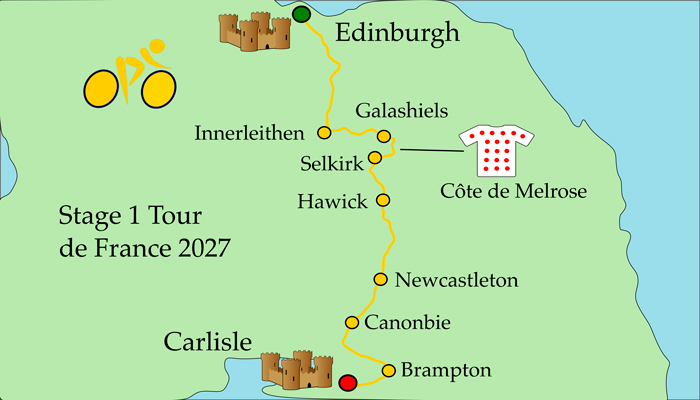
Stage 1 of the Tour de France 2027 is a 184km flat stage from Edinburgh to Carlisle.
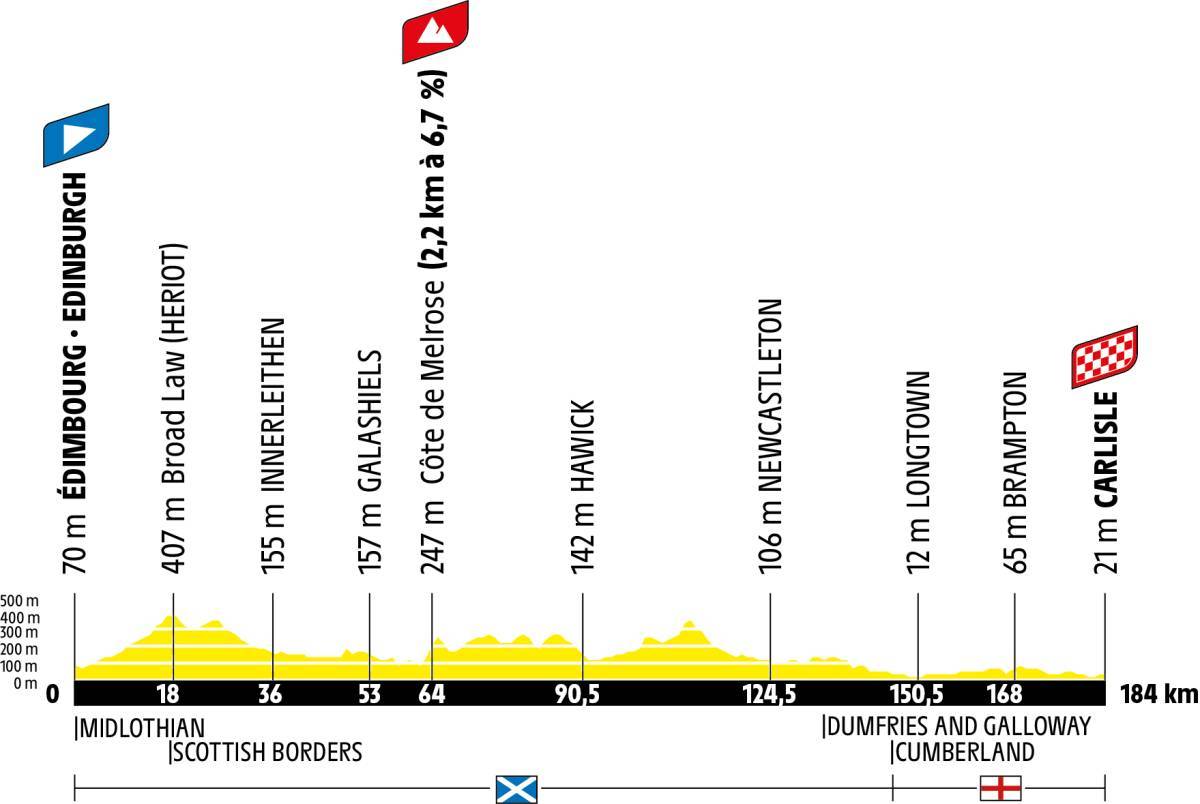
There's rolling terrain through hilly countryside in the first half of the stage, with the day's one categorised climb the Côte de Melrose after 64km.
Hawick is around the half-way point, then the peloton enters England with about 35km to go.
The route in England is largely flat and on wide roads - perfect for a charging peloton to catch any breakaway riders and wind up their speed towards the finish.
The finale in Carlisle is on Georgian Way and Castle Way, which are multi-lane roads. I can't see Stage 1 ending in anything other than a bunch sprint, giving the sprinters a rare chance to claim the yellow jersey.
Race Details | Poll | Map & Profile | Timings | Videos | Food & Drink | Route Notes | Favourites
| Date | Friday 2nd July 2027 |
|---|---|
| Stage classification | Flat |
| Distance | 184km |
| Intermediate sprint | TBC |
| Climbs | Côte de Melrose |
| Total climbing | TBC |
Vote for one of the main contenders to win Stage 1 (to be added later).
This is a map of the route of Stage 1, Tour de France 2027.
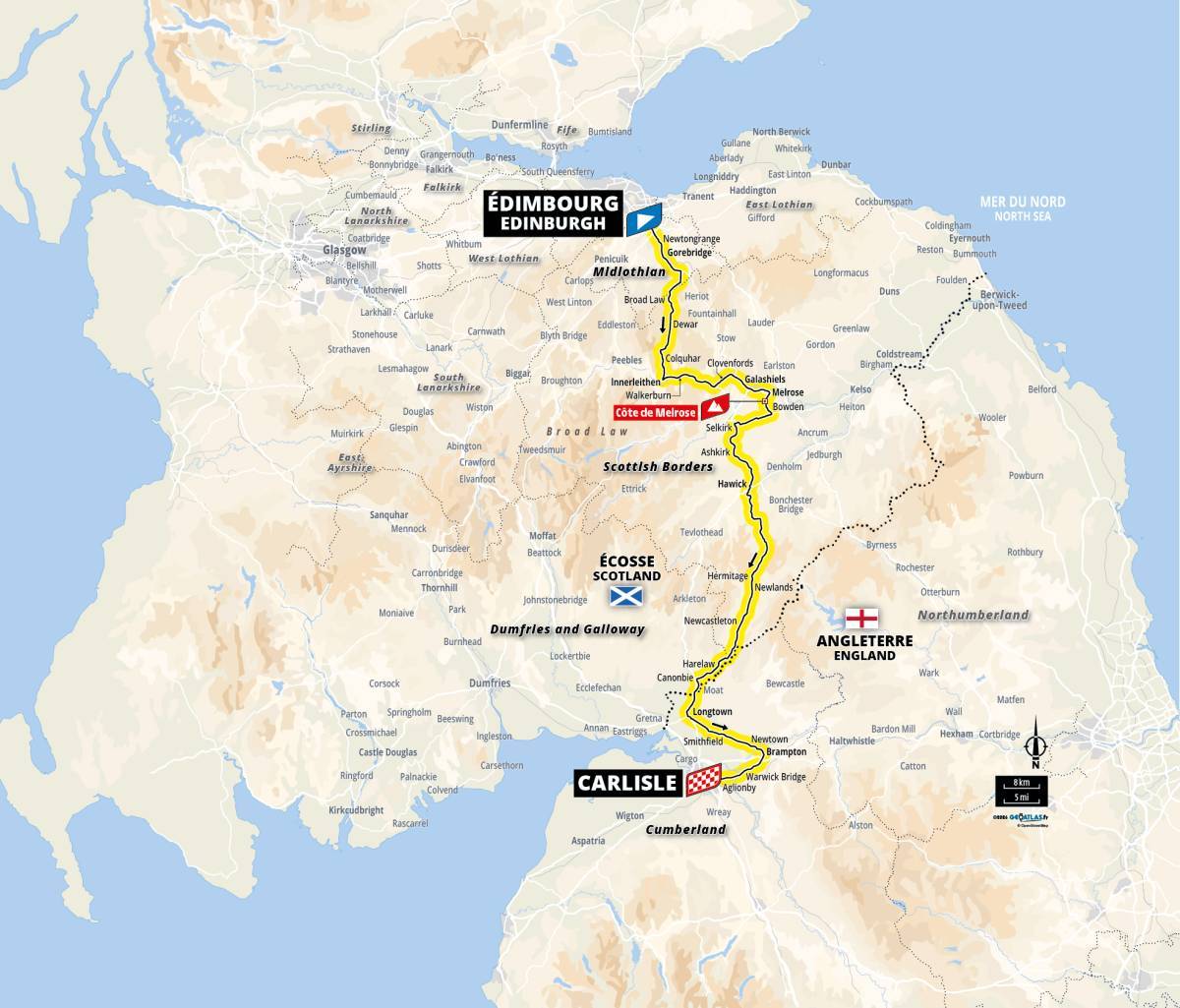
This is a zoom-able map of Stage 1 Tour de France 2027, which I have plotted based on the official map image and the Le Tour GB route video. It is as accurate as it can be, but it's possible that one or two little details have escaped me.
This is the profile of Stage 1 Tour de France 2027.
| Caravan | Fast Schedule | Slow Schedule | |
|---|---|---|---|
| Start Time (départ fictif) | |||
| Start Time (départ réel) | |||
| Côte de Melrose Climb | |||
| Intermediate Sprint | |||
| Finish Line (184km) |

Get the official Tour de France 2026 Race Guide.
The fully authorised guide includes detailed stage maps, team profiles, expert analysis and stunning photography.
Available in Standard and Premium Editions.

Get a bundle with the premium race guide, Cycling Plus Ride Like a Pro, plus socks, coasters and an allen key, for £26.38.

This is my video of the route and the interesting places along it.
This is a short official video of the route of Stage 1 Tour de France 2027.
Stage 1 starts in Edinburgh, Scotland.
I suppose it is obligatory to mention haggis - offal, oatmeal and spices, cooked in a sheep's stomach, and served with neeps (swede) and tatties (potatoes).
Another Scottish speciality is cullen skink, a soup made with smoked haddock, onions and potatoes. Arbroath smokies are salted and smoked haddock.
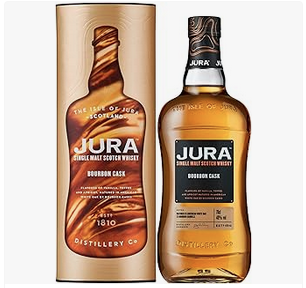
Whisky is Scotland's national drink and biggest export.
Buy a bottle of Jura Scotch whisky (affiliate link).
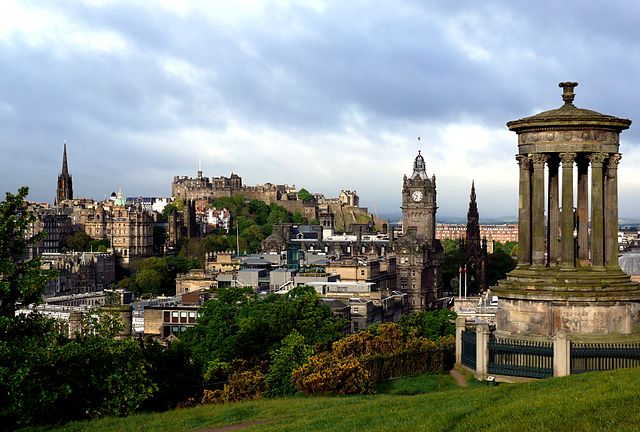
The stage starts in Edinburgh (départ fictif).
It is suggested that the neutralised section will start at Edinburgh Castle and go down the Royal Mile to Holyrood Palace, with perhaps a lap of Holyrood Park. This is to be confirmed.
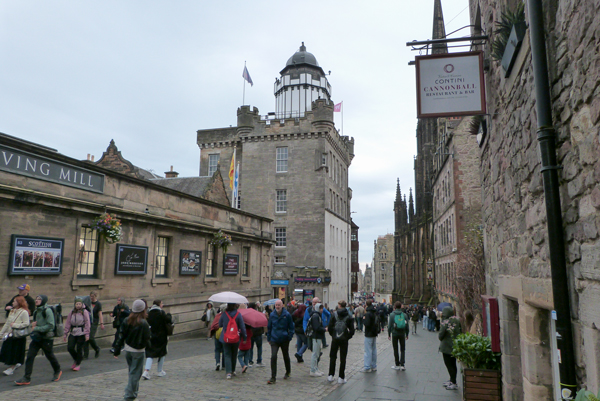
Edinburgh is the capital of Scotland, with a population of 500,000.
'Edin' comes from the Brittonic Celtic Eidyn. Eidyn was a region centred on a hillfort at Castle Rock.
Edinburgh is also referred to as Auld Reekie, meaning Old Smoky. Residents of the surrounding countryside gave it that name as there was always a cloud of smoke over the old town.
People call it the Athens of the North too, and it has a replica of the Parthenon on Calton Hill.
The Brittonic Celtic tribe here in the 1st century AD when the Romans came into the area were the Votadini. They transitioned into the Gododdin Kingdom.
In 638, King Oswald of Northumbria besieged the Gododdin stronghold at Castle Rock, and the region was then controlled by the Angles until 950.
King David I of Scotland founded the Royal Burgh here in the early 1100s.
Edinburgh was under English control for periods in the late 1200s and early 1300s.
From the 1400s, Edinburgh was the capital of Scotland. In 1582, James VI of Scotland (and later - 1603- I of England) gave the city a royal charter that permitted the founding of a University. Scotland and England did not merge into one kingdom until 1707.
In the late 1700s, Edinburgh developed a reputation as an academic centre, with Enlightenment thinkers such as David Hume (1711-76) and Adam Smith (1723-90). Around this time, the wealthier residents of the city tended to move from the Old Town to the New Town.
In the 1800s and 1900s, Edinburgh became an industrial centre with industries such as printing, brewing, distilling, and rubber and engineering works.
Since the 1990s there has been a new financial district on disused railway land to the west of the castle. The Edinburgh International Conference Centre is here.
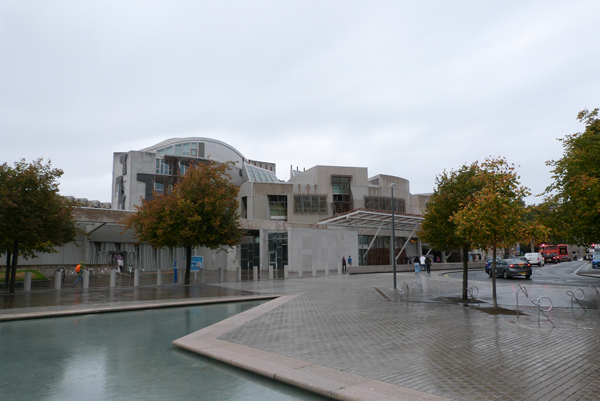
The 1998 Scotland Act set up a Scottish Parliament and government. The Parliament meets in an ugly concrete building at Holyrood, near the Royal Palace of Holyroodhouse.
The Old Town is perched on the remnant of an extinct volcano, with the castle on top of it.
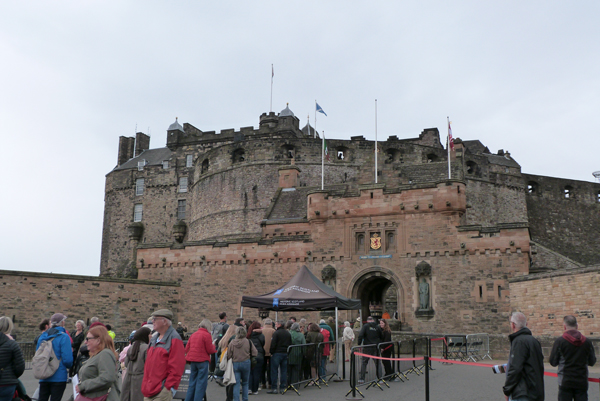
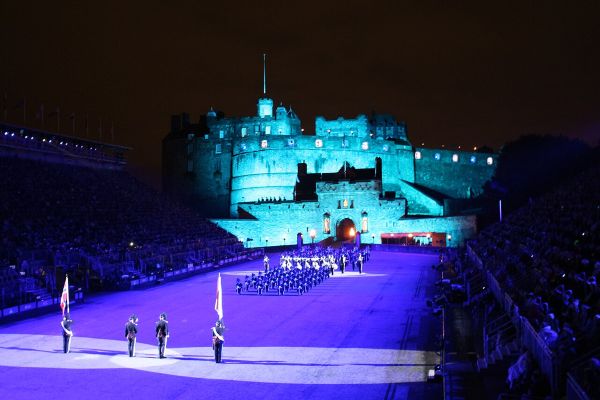
The Tour de France Teams Presentation is to take place on the esplanade of the castle on Wednesday 30th June 2027, with a Royal Military Tattoo as part of the entertainment.
The Royal Mile runs down from the castle at the top to Holyrood Palace at the bottom.
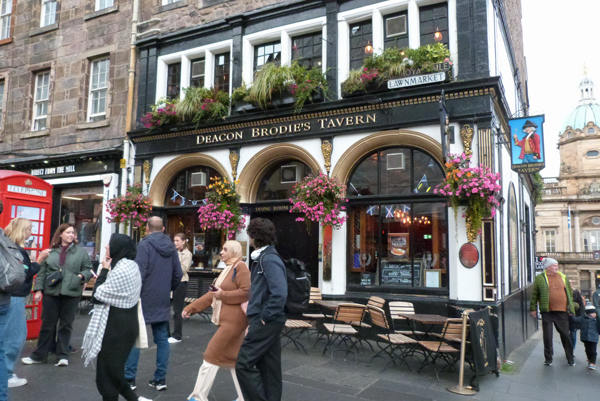
Gerry Rafferty sang about the Royal Mile.
The New Town was designed by 27-year-old architect James Craig after he won a competition in 1766.
The streets make a grid pattern. George Street was to be the centrepiece, but Princes Street has become better known and is Edinburgh's main shopping street.
Edinburgh's economy is stronger than any other UK city outside London.
It is based on government and the legal system, education, defence, health and social care, scientific and technical services, and construction and manufacturing.
There is tourism too, with 4.4 million people attending the Edinburgh Festivals.
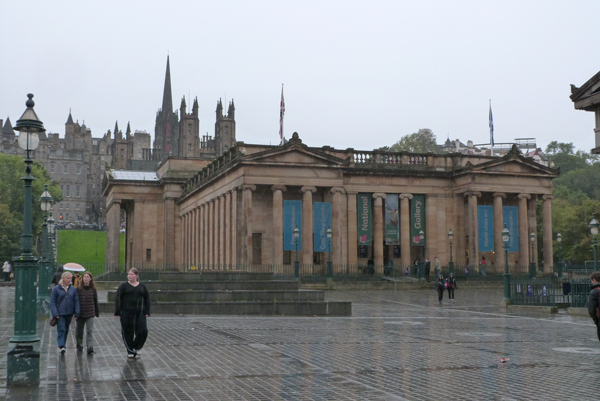
Edinburgh has plenty of museums and galleries, including The Scottish National Gallery and the Scottish National Portrait Gallery.
Edinburgh Castle is Scotland's top paying tourist attraction.
The oldest part, St Margaret's Chapel, dates from the 1100s. The Honours, or Crown Jewels, of Scotland are in the castle, as is the Mons Meg gun and the One o'Clock Gun.
'It was a nice castle, but I thought Camera Obscura next to it was a bit more entertaining' says one Tripadvisor reviewer.
'Busy busy with lots of people so be patient. Still highly recommend' says another.
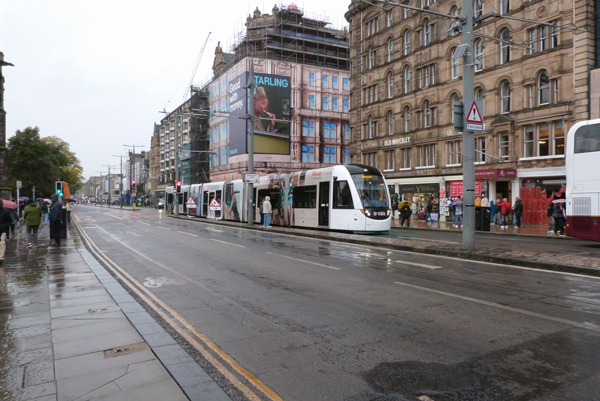
A tram system has been built in Edinburgh, with the project overrunning in terms of time and cost.
A 9 mile stretch opened in 2014. It was later extended to reach the port of Leith.
The Edinburgh football teams are Heart of Midlothian (Hearts) and Hibernian (Hibs).
Authors from Edinburgh include Sir Walter Scott and Robert Louis Stevenson. Stevenson's The Strange Case of Doctor Jekyll and Mr Hyde is based in the Scottish capital, and was inspired by the real-life villans Deacon Brodie and Burke and Hare.
Arthur Conan Doyle lived in Edinburgh in his early years.
More modern Edinburgh-based writers include Ian Rankin, Alexander McCall Smith and J K Rowling.
Greyfriars Bobby was a terrier who kept watch over his dead master's grave in Greyfriars Kirkyard for 14 years.
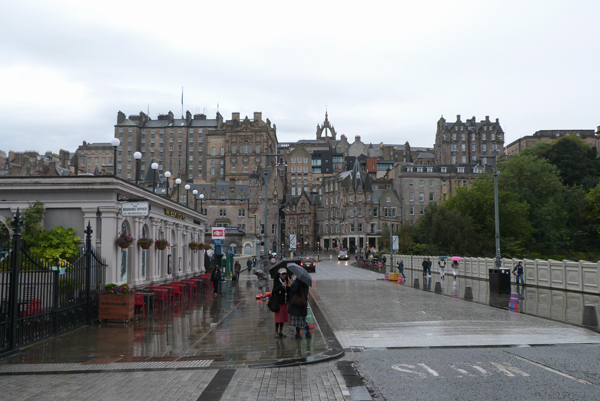
The départ réel will be in Edinburgh, likely from North Bridge.
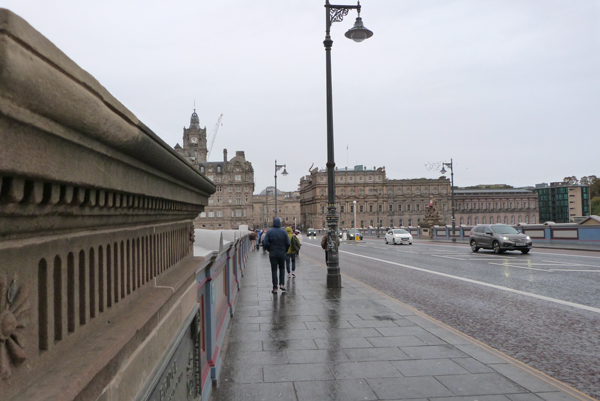
The riders head south on the A7 through Southside. They continue on the A701 Minto Street through Newington.
A right turn onto Liberton Road followed by a left onto the A772 Gilmerton Road leads the race through Moredun and Gilmerton.
It then crosses the A720 Edinburgh Bypass, and turns right onto the A7 to go over the North and South Esk rivers. It continues to Newtongrange, past the National Mining Museum Scotland.
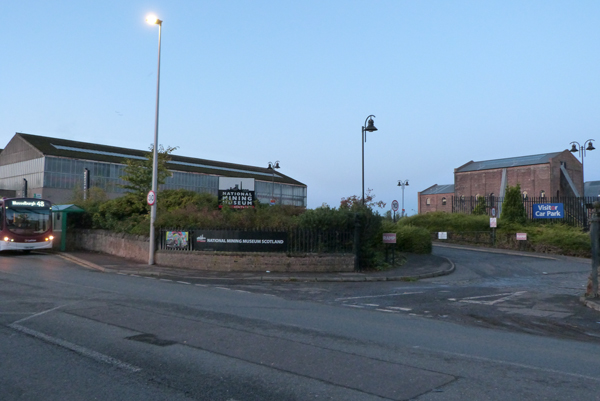
Then the race goes south past Gorebridge, over Gore Water, and to North Middleton.
At Middleton Hall, there's a right turn on the B7007.
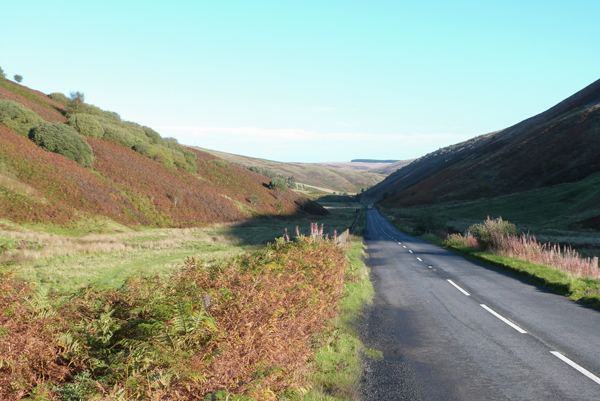
It is a nice road, but it has been removed from the National Cycle Network as not meeting safety standards. When I cycled it there wasn't much traffic, but those vehicles I did encounter were travelling fast, and many were HGVs or commercial vans.
The B7007 takes the peloton up into the hills, and to the high point of the day at Broad Law (407m).
It's then downhill, and the race follows the Leithen Water to Innerleithen.
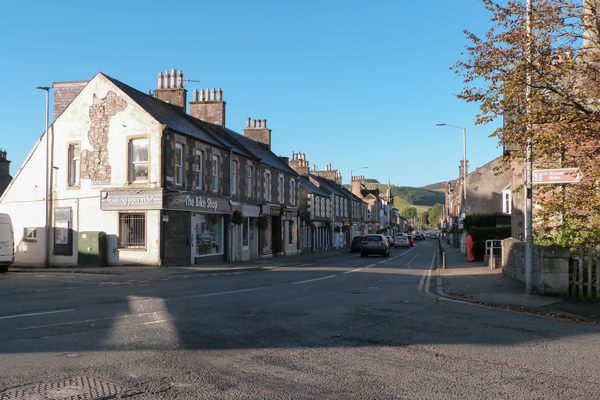
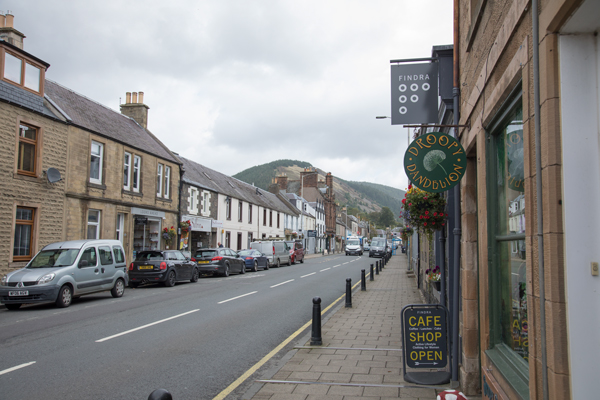
Innerleithen is a market town at the confluence of Leithen Water and the river Tweed.
It is surrounded by hills including Lee Pen, Kirnie Law and Plora Craig.
There's a Iron Age hillfort on Caerlee Hill, and there may have been a semi-permanent Roman marching camp on the other side of the river Tweed at Traquair.
It is said that a pilgrim monk called St Ronan established the town in AD737. St Ronan's Borders Games are held in Innerleithen in July, and have been since 1827.
St Ronan's Well is a spring where people have taken the waters for a long time, including Robert Burns in 1787. The spa building was put up by the Earl of Traquair in the 1820s, then rebuilt and extended in 1896.
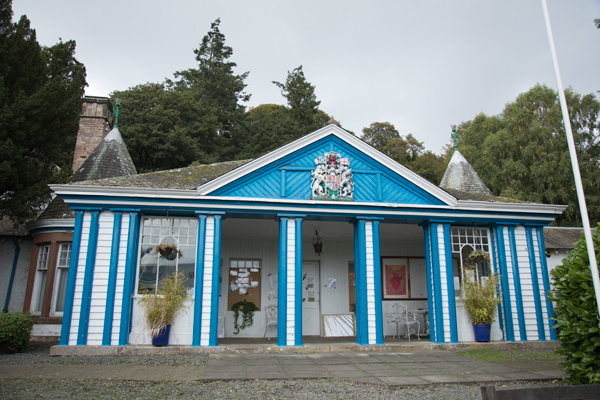
There's a St Ronan's Hotel.
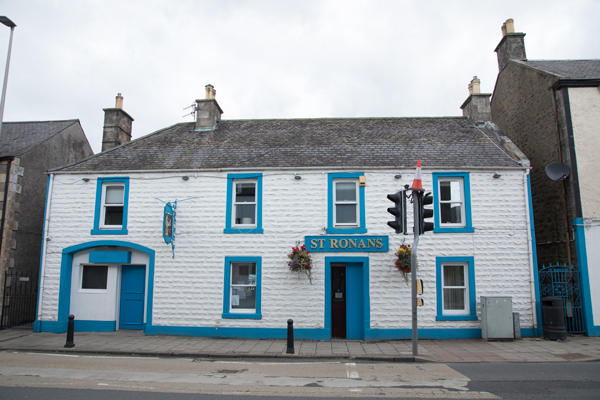
St Ronan used to 'cleik' or hook the devil by the leg with his staff in order to drive him out. That's why there's a Cleikum Mill in Innerleithen.
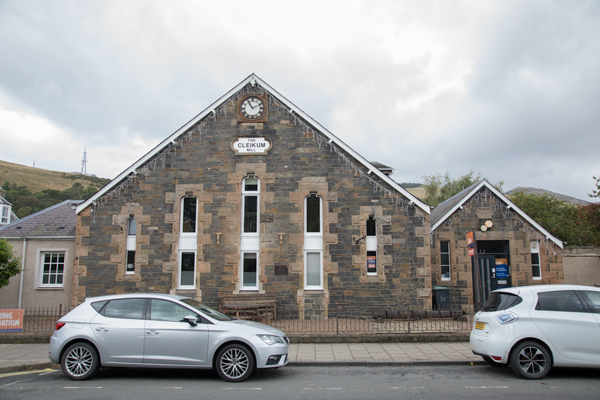
Innerleithen grew in the 1800s due to its woollen mills.
Immediately south of Innerleithen is Tweed Valley Forest Park, which is used for forestry and mountain biking.
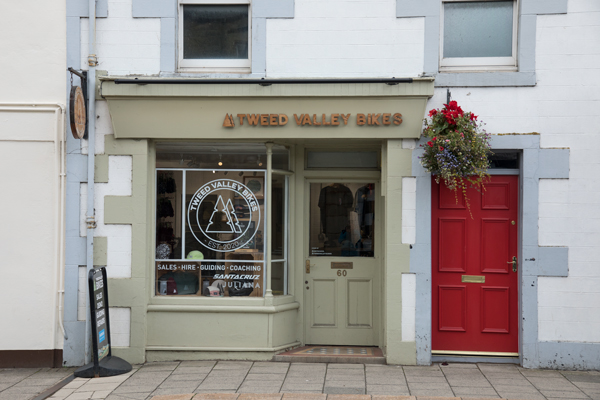
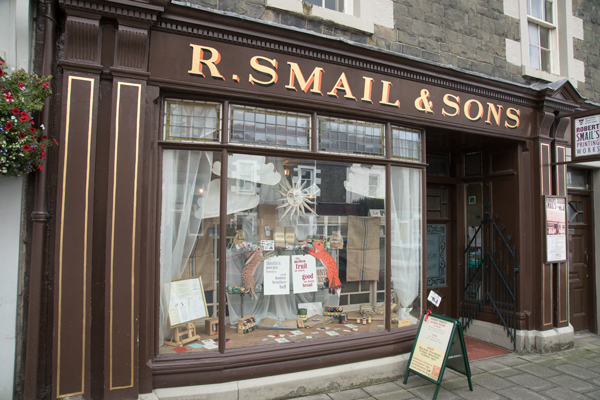
One attraction in the town is Robert Smail's Printing Works, an industrial heritage museum.
Now Stage 1 goes east on the A72 alongside the river Tweed through Clovenfords and to Galashiels.
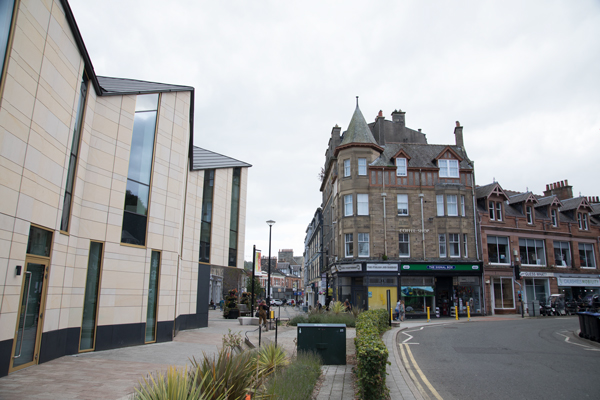
Galashiels is a town in the Scottish Borders with a population of around 10,000.
There are prehistoric earthworks in the area.
The town's motto is Sour Plums, a reference to a 1337 incident with an English raiding party. The English were picking wild plums when the Scots came across them and slaughtered them.
Galashiels received its Burgh Charter in 1599, and the event is celebrated every summer with riders on horses parading through the town.
The population of Galashiels increased dramatically in the 1800s due to its textile mills.
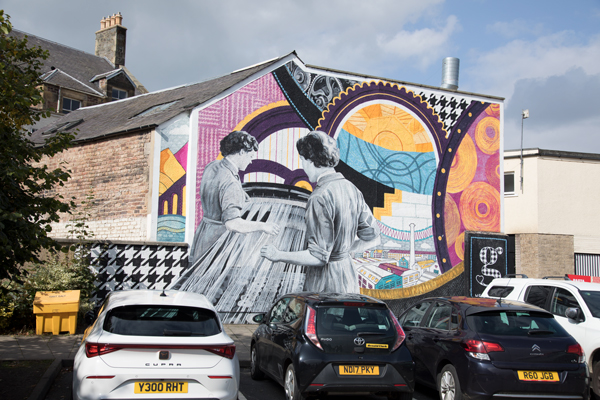
Robbie Burns wrote two poems about Galashiels - Sae Fair Her Hair and Braw Lads. Sir Walter Scott built his house, Abbotsford, just across the river Tweed from Galashiels.
There is rivalry between Galashiels and Hawick. The people of Gala call the town further south 'dirty Hawick', and those in Hawick say that the residents of Gala are 'pail merks' - people who rely on buckets because mains water came late to Galashiels.
Robert Coulter (1833-80) was a confectioner who sold his boiled sweets in Galashiels and beyond. There's a statue of him in Market Square.
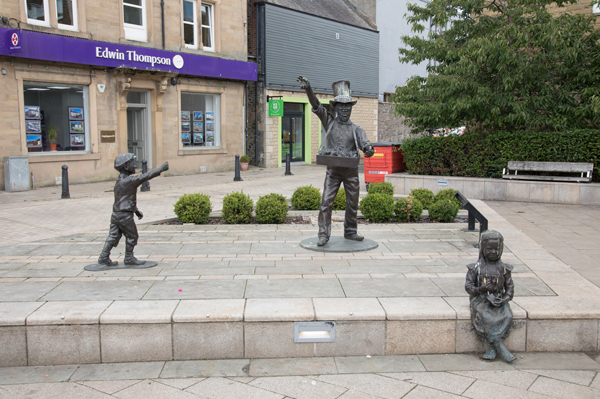
He wore colourful clothes and sang a song to advertise his wares:
Ally bally, ally bally bee
Sittin' on yer mammy's knee
Greetin' for a wee bawbee
Tae buy some Coulter's Candy
Marillion's song Kayleigh may be partly inspired by the time he spent in Galashiels. Some of the lyrics are engraved in paving stones in Market Square.
Galashiels has a visitor centre that hosts the Great Tapestry of Scotland, telling the country's history.
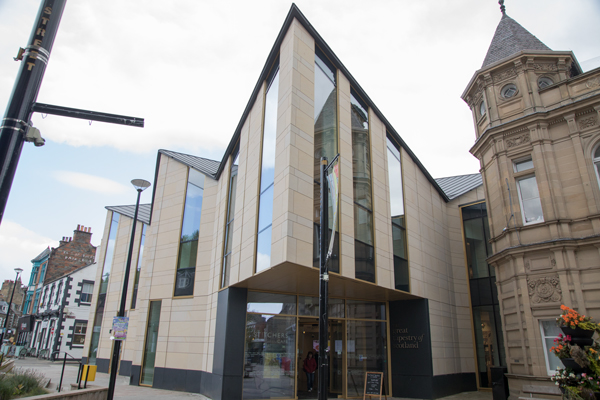
The Waverley Line from Edinburgh reopened (2015) as far as Galashiels.
The race appears to be on the A7 Abbotsford Road out of Galashiels, on the A6091 over Galafoot Bridge, then on the B6374 Waverley Road to Melrose.
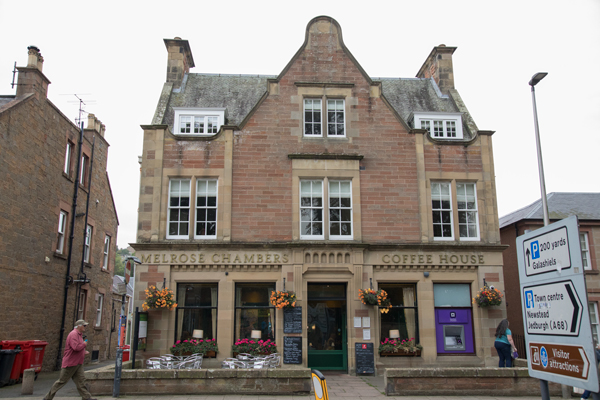
There was a Roman fort at Newstead, close to Melrose. It was called Trimontium, and occupied intermittently from 79 to 184AD.
There is a Trimontium Trust Roman Museum in Melrose.
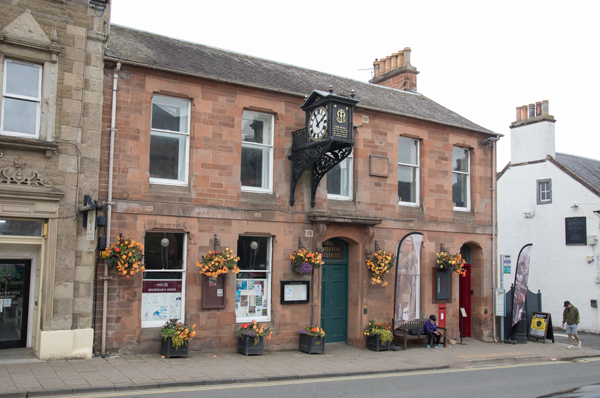
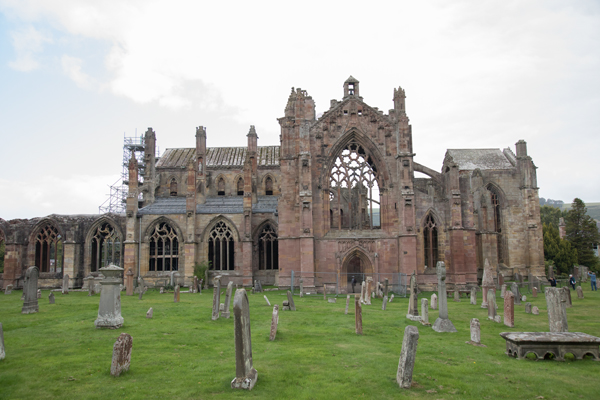
Melrose Abbey, a Cistercian monastery, was founded here in 1136, and the town grew around it. The abbey fell into ruin after the Dissolution of the Monasteries.
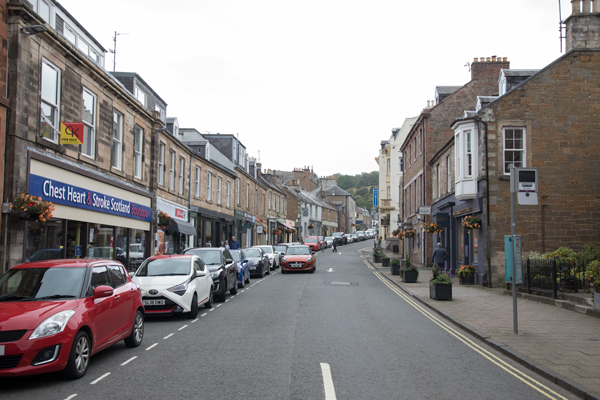
There are plenty of independent shops on Melrose High Street.
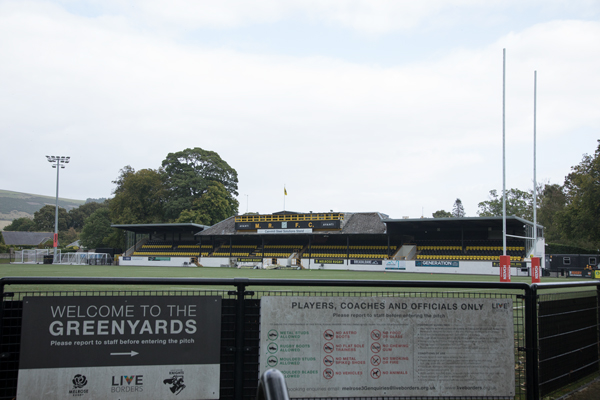
Melrose has a rugby club.
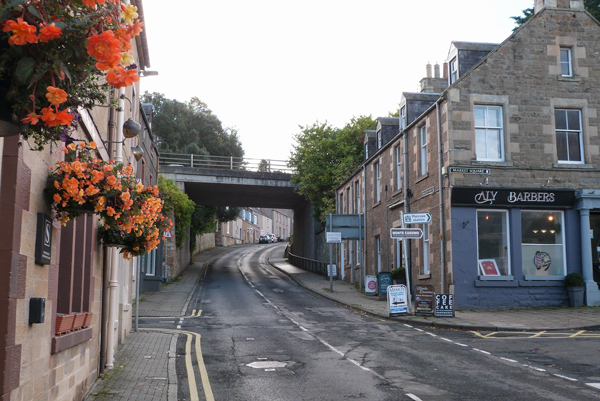
Now comes the day's only categorised climb, the Côte de Melrose.
It's on the B6359 Dingleton Road, past Melrose Golf Club and to Bowdenmoor Reservoir. It's 2.2km at an average 6.7% gradient.
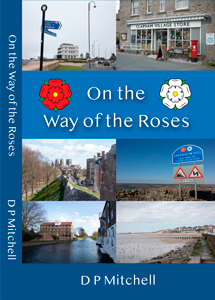
On the Way of the Roses is a humorous and informative look at the places on the route of this long-distance cycle ride.
It provides solid historical and factual information, often in an irreverent style, and with occasional flights of fancy.
The route takes in Morecambe, Lancaster, Settle, Pateley Bridge, Fountains Abbey, Ripon, York, Stamford Bridge, Driffield, Bridlington, and other fascinating places.
Each chapter includes a brief outline of the town's history, then an account of my tour of it. Before leaving, I resolve whatever unfinished business I have - for example, brainstorming extravagant ideas to improve its appeal and attract more visitors.
On the Way of the Roses aims to be an entertaining read regardless of whether you're planning to cycle the route.
On the Way of the Roses on Amazon.
Next, Stage 1 turns right and heads west on the A699 to Selkirk.
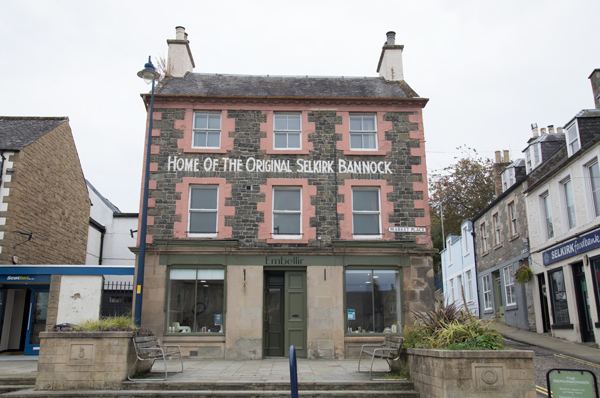
Selkirk is a market town of 4,600 people on Ettrick Water and in the Scottish Borders. The local people are known as Souters, which means shoe makers and menders.
There was a Borders Abbey here in the 1100s.
Eighty Selkirk men went to fight against the English at the Battle of Flodden in 1513, and only one of them returned.
A woollen industry grew here in the mid-1800s, but had largely closed by the 1970s.
Selkirk is known for 'bannocks', a dried fruit cake first sold in the market place here by baker Robbie Douglas in 1859.
The Haining was the residence of the Pringle family. The last owner left it to a charitable trust, which will restore the building as an art gallery.
Now Stage 1 picks up the A7 and climbs towards Green Hill. The race crosses the Ale Water, passes Blackcastle Hill, then descends to Hawick.
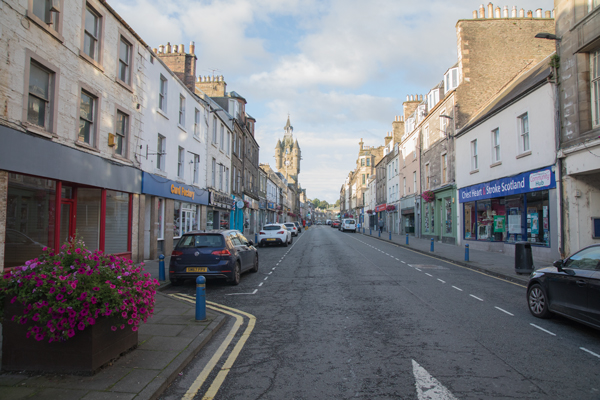
Hawick is a market town with a population of 13,512 (2022 count). Scottish Borders Council governs this area.
It's at the confluence of the river Teviot and Slitrig Water. There was flooding here in October 2021. Hawick is one of the furthest towns from the sea in Scotland.
The local people are called 'Teries', a name that comes from a song with the line 'Teribus ye teri odin'.

The name Hawick is Old English, meaning 'enclosed farm' and dates back to 1167.
The Motte in Hawick's West End is a probable Scoto-Norman motte and bailey castle.
Hawick was declared a town in 1514 after local youths defeated an English raiding party at the Battle of Hornshole.
A statue of one of the youths on a horse holding the captured English flag was put up in 1914, 400 years after the battle.
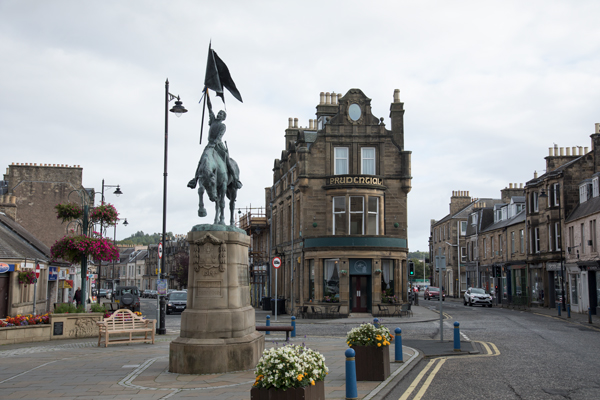
Not content with one statue commemorating a victory over the English, Hawick put up another one in 2014.
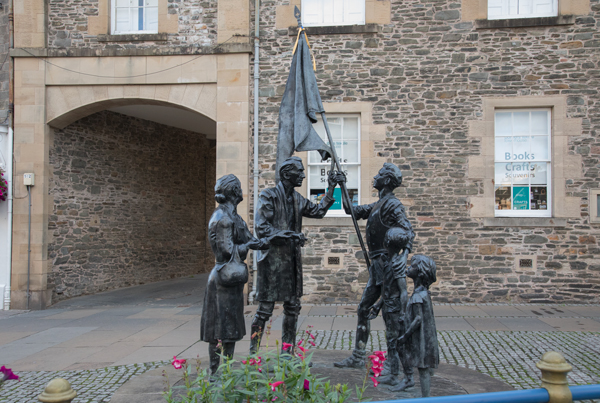
The second statue is called Return from Hornshole.
There was a textile industry in Hawick in the 1700s and 1800s after knitting machines were brought to the town in 1771.
Tweed originated here, and is said to be so-called because of a miscommunication - twill was being sent to the river Tweed. Its distinctive feature is a herringbone pattern.
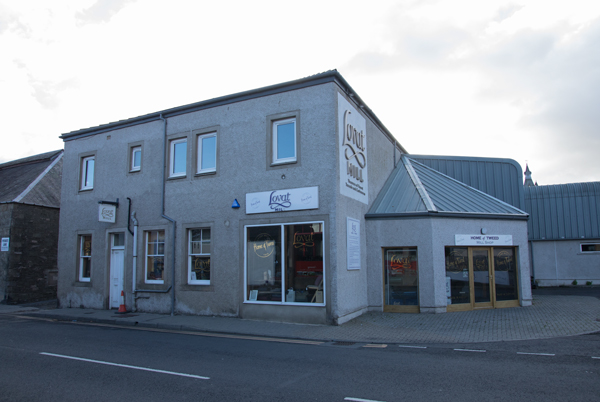
Cashmere garments were also produced. In the 1930s, 1,200 people were employed in the knitwear industry.
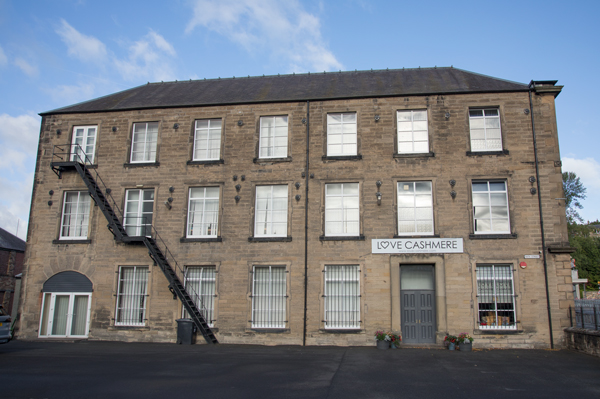
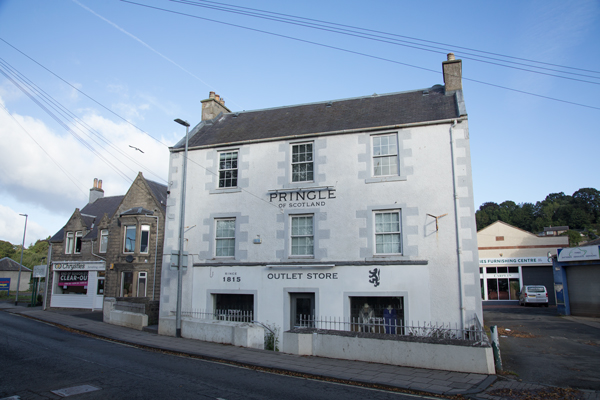
The decline of the textile industry has resulted in unemployment and deprivation.
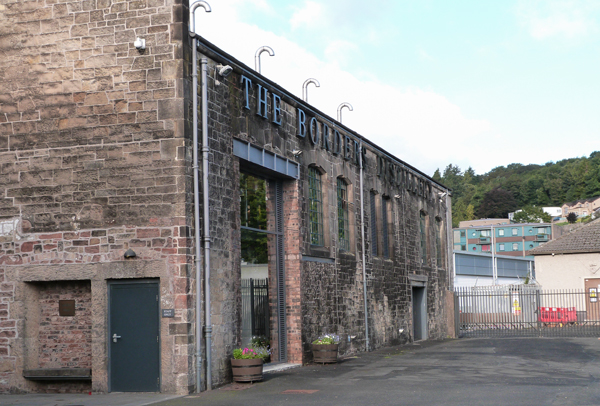
A new business centre opened in 2024, and Hawick is now also home to the Borders Distillery.
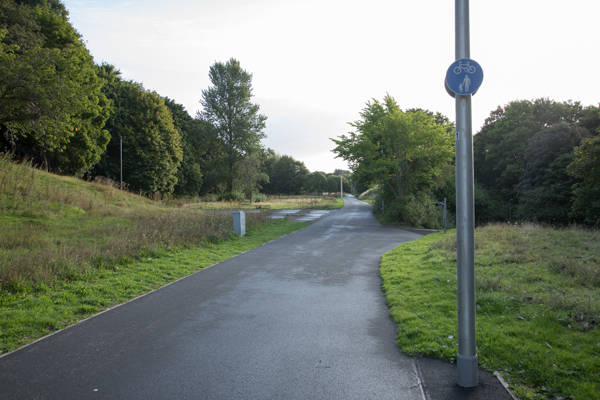
The Waverley rail route ran from Edinburgh via Hawick to Carlisle. It reached Hawick in 1849, but closed in 1969 during the Beeching cuts.
In 2015 the northern part of the Waverley route reopened, as far as Tweedbank. The Waverley Walk is a footpath on the old railway.
The Common Riding involves riding along the boundaries of the town's common land, and also commemorates the Battle of Hornshole.
As well as the two Hornshole-related statues, Hawick has one in which the English are not the villains: the Turning of the Bull.
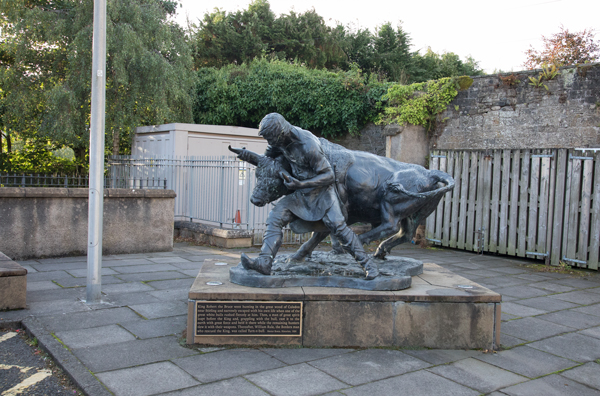
It commemorates the Borders man who rescued Robert the Bruce from a charging bull.
It's in front of Heart of Hawick, a cinema, theatre and entertainment venue in an old mill.
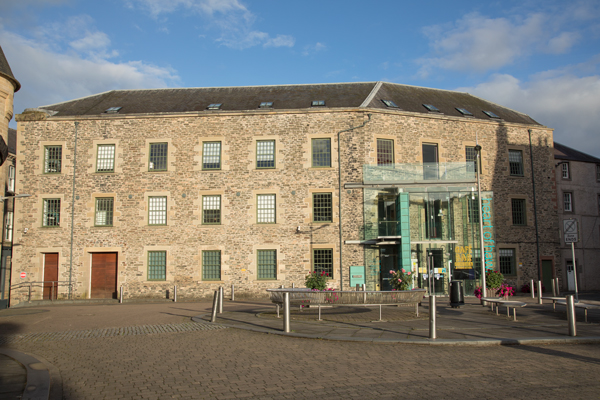
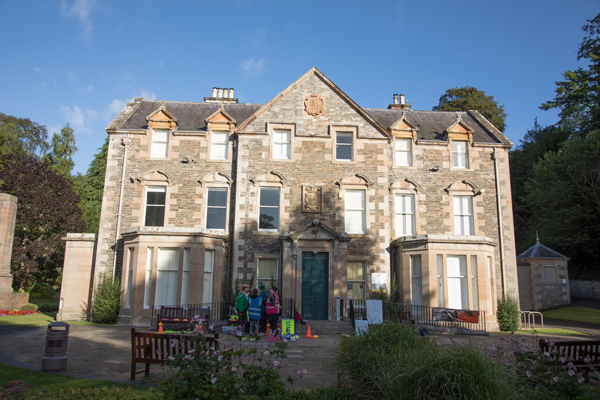
The Borders Textile Towerhouse Museum incorporates Drumlanrig's Tower from the mid-1500s. Hawick Museum is in Wilton Lodge Park.
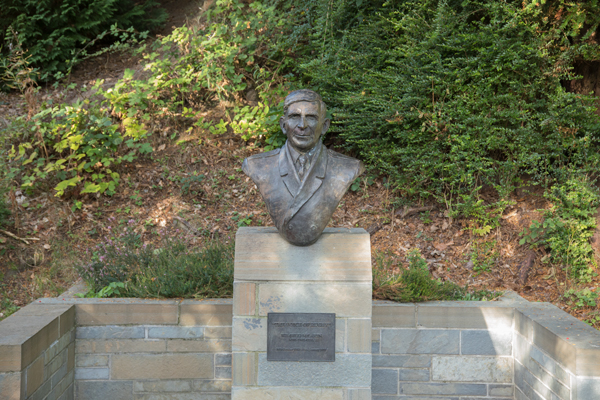
There's also a statue of rugby commentator Bill McLaren in the park.
The Alchemy Film and Moving Image Festival is held in Hawick.
The Hawick baw game used to be played in Hawick in February but has now moved to Jedburgh.
Hawick balls are peppermint-flavoured boiled sweets, but they are now made in Greenock.
The Borders Abbeys Way runs through Hawick.
The peloton rides along Hawick High Street and past the Borders Textile Towerhouse Museum.
Leaving Hawick, the riders take the B6399 south by Slitrig Water. They pass Stobs Military Training and Prisoner of War Camp.
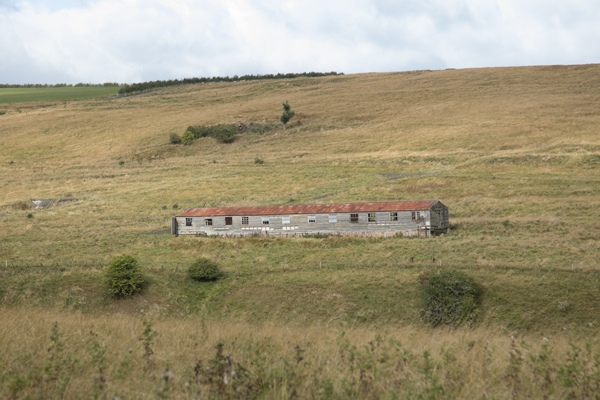
A little further on is Stobs Castle.
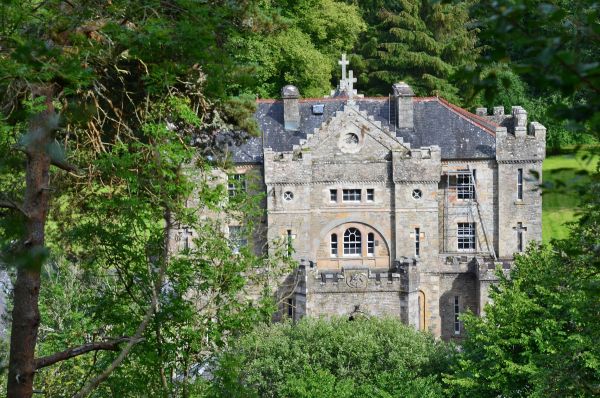
The race heads up into the hills of Wauchope Forest, passing Whitrope Siding and Heritage Centre, a Waverley railway museum in two railway carriages.
The riders come back down to Hermitage Water at Hermitage Castle, originally a Norman motte and bailey castle built by Nicholas de Soulis around 1240.
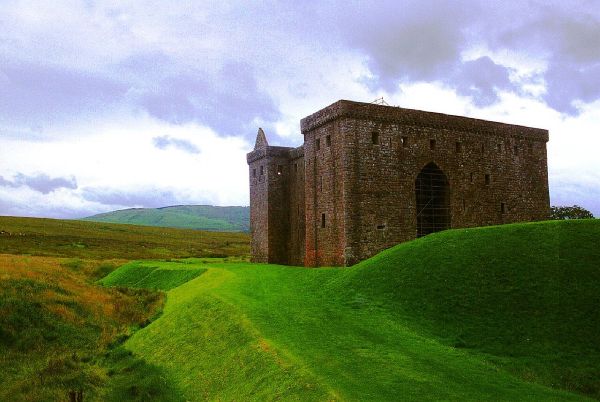
The current castle building dates from the 1300s. The information board says it is associated with the Elliot clan, and it suggests that Border Reivers were active in this area.
Stage 1 now takes the B6357 by Liddel Water to Newcastleton (Copshaw Holm).
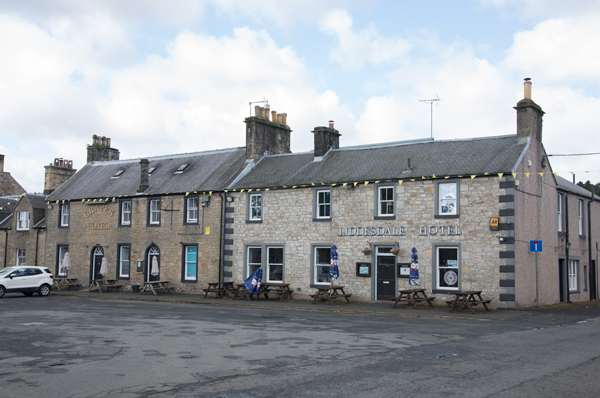
Newcastleton is a planned village in Liddesdale. There were land clearances in the 1790s when people were forced to move from Old Castleton village, and that's why Newcastleton was built.
There are mountain bike trails in Newcastleton Forest.
Newcastleton has a traditional music festival, going since 1970. Copshaw Common Riding is on bikes rather than horses and parodies the more formal events of neighbouring towns.
It seems to me that the long, straight road through Newcastleton is ideally suited to an intermediate sprint.
Still on the B6357, the riders make their way through countryside to Canonbie, on the river Esk.
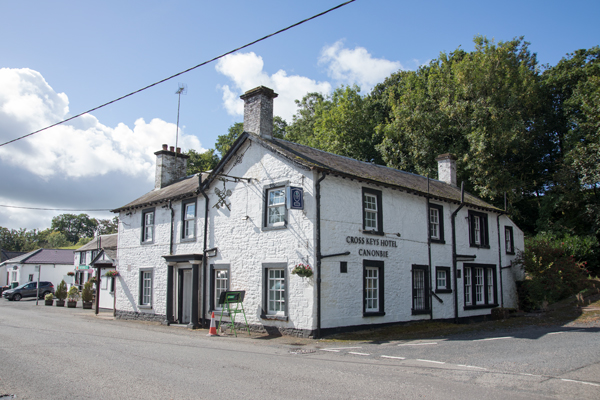
Canonbie is a village on the river Esk and in Dumfries and Galloway.
There was a Roman camp near Canonbie, at Gilnockie, during the Antonine period. It marks the passage of a substantial Roman army along the river Esk.
From 1165 until 1542 there was an Augustinian priory just south of Canonbie, at the confluence of the Esk and Liddel Water. It was probably destroyed by Lord Wharton after the Battle of Solway Moss.
Canonbie gets its name from the Augustinian canons.
The little area around Canonbie is called the Debatable Lands. From the late 1200s to 1603 (the unification of the Crowns of England and Scotland under James I/VI), it was dominated by Border Reivers, who were lawless people who stole livestock.
King James embarked on a pacification of the borders.
Soon after Canonbie, Stage 1 joins the A7 and crosses into England at Scotsdike. The race continues to Longtown.
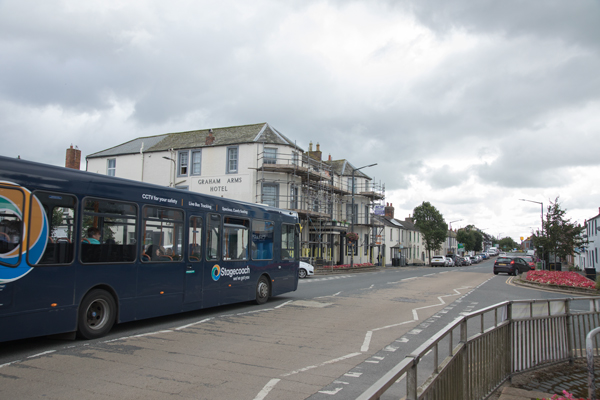
Longtown is in Cumbria, and is a market town specialising in sheep. It was the epicentre of the 2001 foot and mouth disease crisis.
Near Longtown is a Defence Munitions Centre (DMC) or Central Ammunition Depot (CAD).
Now the race is on the largely flat and straight A6071. It crosses the river Lyne and goes through Smithfield.
After crossing Cam Beck and the river Irthing it brings the riders into Brampton.
There was a Roman fort just west of Brampton, by the river Irthing, where Brampton Old Church is today.
Brampton itself was founded by the Anglians in the 600s. In Old English, the town's name meant 'place where broom grows'.
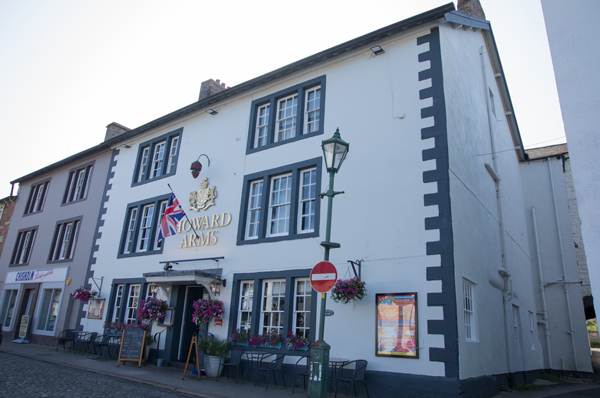
Brampton is overlooked by a Medieval motte, or hill, which has a statue of George Howard, 7th Earl of Carlisle on top of it. There's also a pub called the Howard Arms in Brampton.
Bonnie Prince Charlie stayed a night in Brampton in 1745.
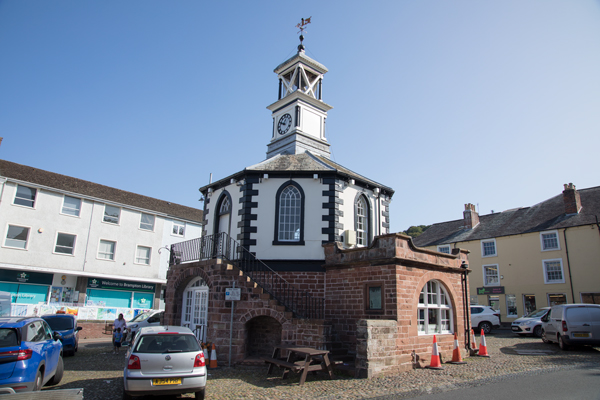
The Moot Hall was commissioned by Frederick Howard, 5th Earl of Carlisle, in 1817.
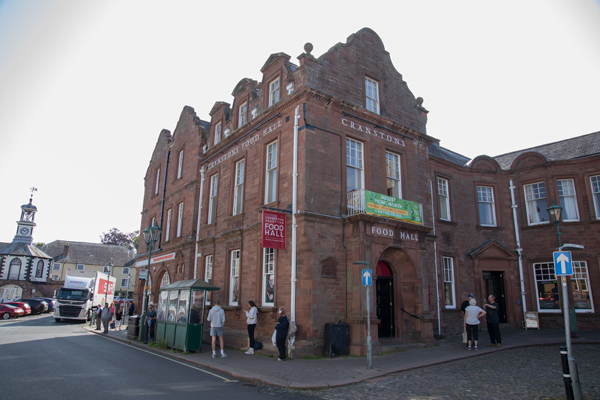
Another imposing building in Brampton is Cranton's Food Hall.
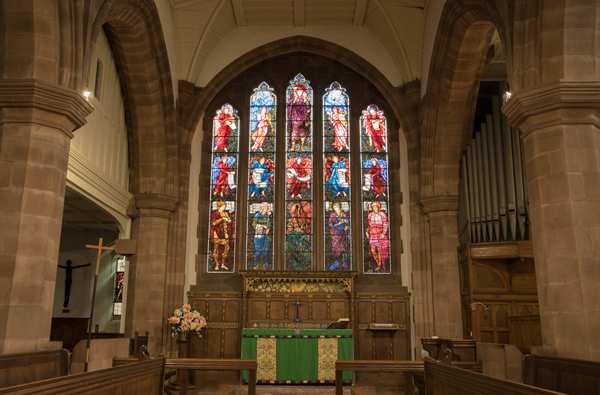
St Martin's Church was designed by Pre-Raphaelite architect Philip Webb.
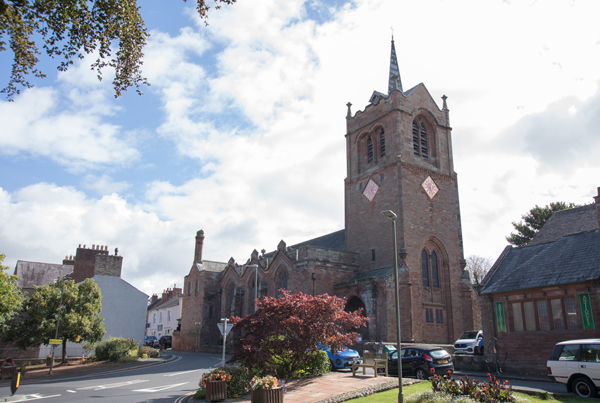
It has stained glass windows by Sir Edward Burne-Jones.
Footballer Geoff Twentyman (1930-2004) was born and brought up in Brampton; he became a talent scout for Liverpool FC.
If I might be allowed some editorialising, Brampton is very nice but absolutely choked with cars. Pedestrianisation of the centre would be a huge improvement.
The riders are on Greenhill out of Brampton, then the A69 towards Carlisle.
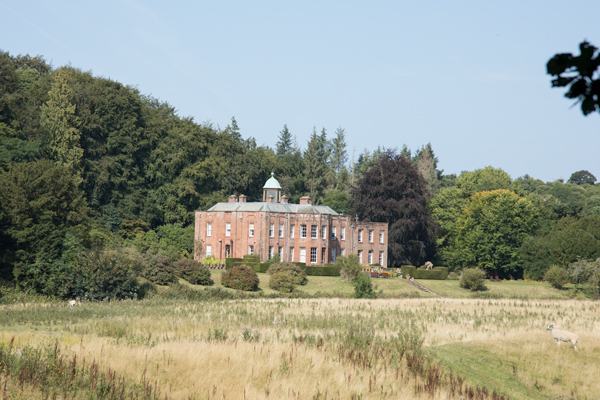
They cross the river Gelt then go through Corby Hill/Warwick Bridge. From the bridge there's a view of Warwick Hall.
The race continues on the A69 over the M6 motorway and enters Carlisle.
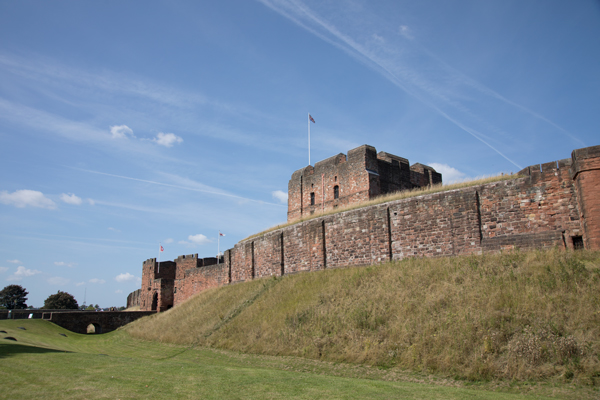
Stage 1 finishes in Carlisle.
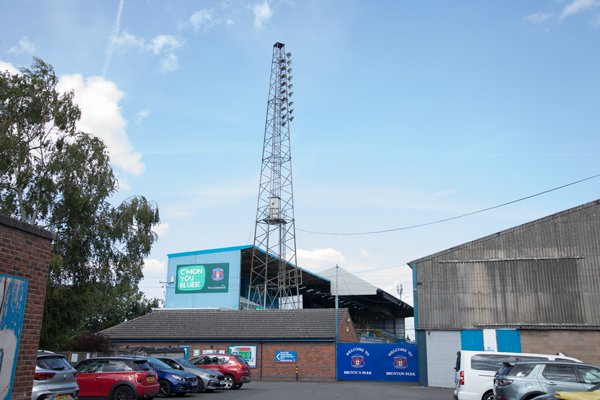
Warwick Road takes the race past Carlisle United's football ground, Brunton Park.
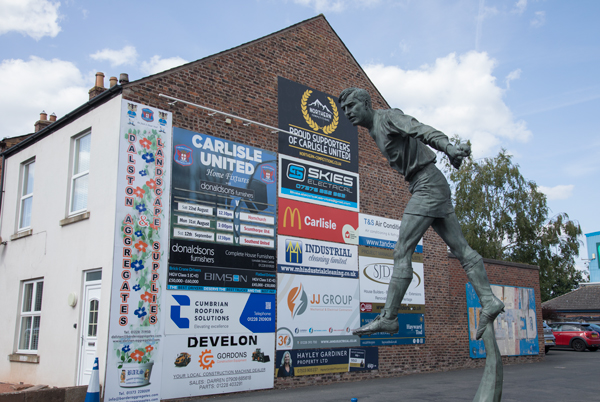
The race leaves the A69 where it goes straight on on Warwick Road. There's a sharp right turn onto Spencer Street, then the riders go straight on on the A7 Georgian Way.
There's a bend round to the left at a roundabout where Georgian Way becomes Castle Way.
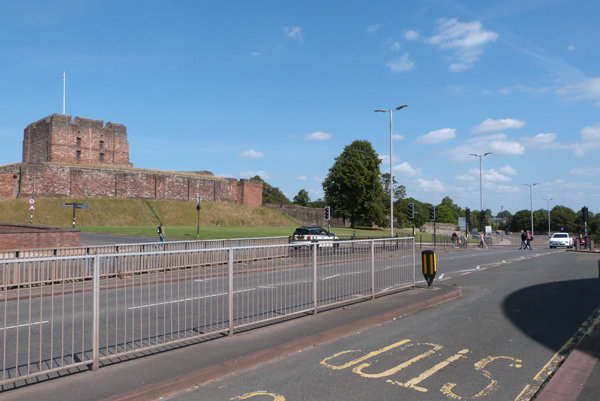
Carlisle Castle is to the right and the Tullie House Museum to the left.
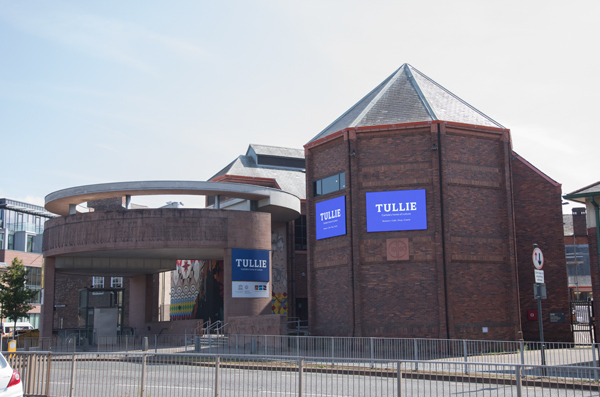
The finish line is where Castle Way becomes Bridge Street and crosses the railway and river Caldew.
Georgian Way, Castle Way and Bridge Street are big wide roads suitable for a sprint finish.
It's worth saying that the day-to-day experience for pedestrians and cyclists here is truly terrible, with multiple lanes and lots of traffic resulting in noise, pollution and danger. There are miles and miles of iron railings preventing you from going where you want on foot, and crossing is by underpass.
The highways authority, Cumberland Council, must be stuck in the 1970s if it thinks this is acceptable.
Carlisle is a city of 78,000 people in Cumbria, at the confluence of the rivers Eden, Caldew and Petteril.
It is the historic capital of Cumberland, and the most besieged place in the British Isles.
The name Carlisle is an evolution from the Brittonic Celtic 'Caer Luel', meaning something like 'the fortified town of the Celtic god Lugus'.
The Brittonic Carvetii tribe lived in this area before the Roman invasion. They may have been part of the Brigantes confederation.
The Romans arrived around 73AD, and built a wooden fort on a pre-existing Celtic stronghold - the site of the current Carlisle Castle.
They called the place Luguvalium, based on the Brittonic Celtic Luguwalion, or 'stronghold of Lugus'.
The Roman fort was manned by the Ala Gallorum Sebosiana, an auxiliary cavalry unit from the Loire valley.
In 122AD, Emperor Hadrian visited Britain and supervised the building of a wall. He ordered a new fort at Carlisle; it was called Petriana, and was on the other side of the river Eden.
The Ala Gallorum Petriana garrisoned the new fort, which was rebuilt in stone in 130AD.
The Romans were in Carlisle until approximately 392AD.
After the Romans left, Carlisle was part of the British kingdom of Rheged. The kings included Urien and his son Owain. They were based at Caer-Luel.
Rheged came under Northumbrian control in the 600s or 700s, possibly when Rienmelth married King Oswiu of Northumbria. Thereafter, Carlisle was contested by Northumbria and the Kingdom of Strathclyde.
By 1066, Carlisle was a Scottish possession, but William Rufus incorporated it into England in 1092. The next year (1093), the Normans started building Carlisle Castle on the site of the original Roman fort.
It was rebuilt in stone in 1112, with city walls added at this time.
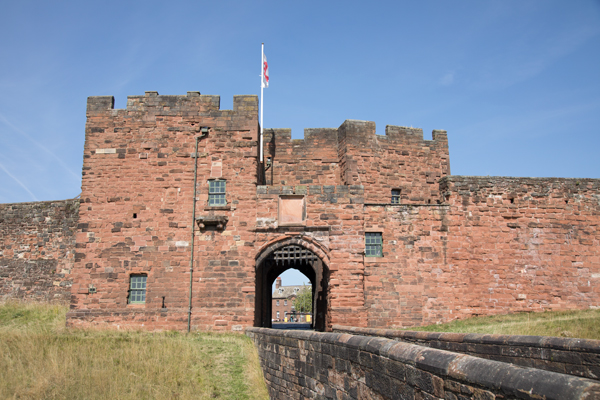
Carlisle Cathedral started out as an Augustinian Priory, and became a cathedral in 1133.
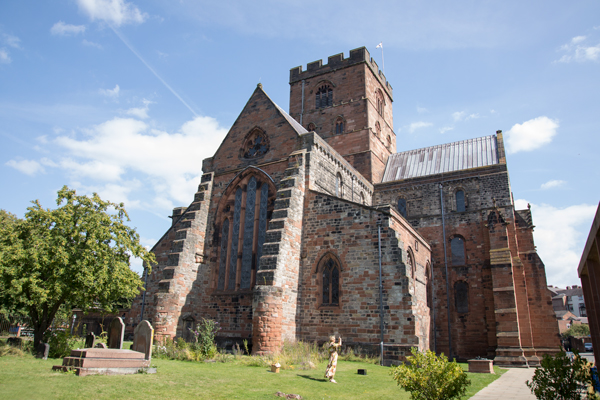
In 1157, Carlisle became the capital of the county of Carliol, renamed Cumberland in 1177. Cumberland was contested by England and Scotland, and changed hands several times over the next decades.
During the turmoil of the wars between England and Scotland, some local people took advantage of the chaos to raid the local countryside, rustling cattle and sheep. They were called the Border Reivers, and they were particularly active between 1350 and 1450.
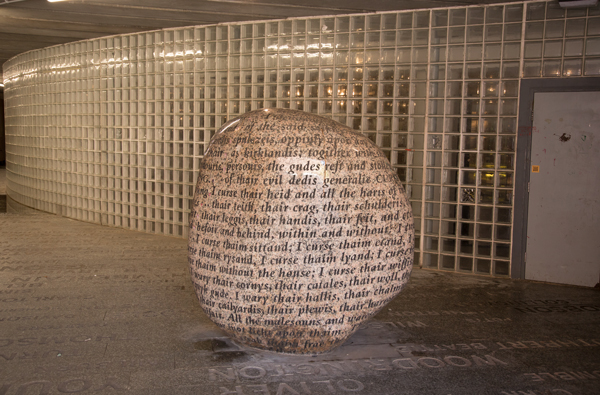
Archbishop of Glasgow Gavin Dunbar cursed them in 1525, saying:
'I curse their head and all the hairs of their head; I curse their face, their brain (innermost thoughts), their mouth, their nose, their tongue, their teeth, their forehead, their shoulders, their breast, their heart, their stomach, their back, their womb, their arms, their leggs, their hands, their feet and every part of their body, from the top of their head to the soles of their feet, before and behind, within and without'.
The curse is inscribed on a 14-tonne granite boulder, a work by Gordon Young for the Millennium, which is in the pedestrian underpass between the castle and the Tullie Museum.
Under Henry VIII in 1539, Stefan von Haschenperg was commissioned to improve Carlisle's defences. He built the Citadel, which consists of two towers near the railway station.
The Royalists held the castle at the start of the English Civil War. It was besieged from October 1644 to June 1645, when it fell. Thereafter, there was a garrison of Parliamentary and Scottish forces. Carlisle remained a military town for a long time after that.
The Industrial Revolution came to Carlisle in the early 1800s, and there were textile mills, engineering works and food manufacturing. Shaddon Mill was the largest cotton mill in England.
A short-lived canal was built in 1823, then the railway came to town a few years later. Carlisle is on the West Coast Mainline, and it became a major railway centre with the largest marshalling yard in Europe.
In World War II, Carlisle hosted over 5,000 evacuees.
The city centre was pedestrianised in 1989.
Carlisle suffered flooding in January 2005 and again in December 2015.
You can visit Carlisle Castle. One of its attractions is the Museum of Military Life.
Some of Carlisle's city walls are intact, and you can walk alongside them.
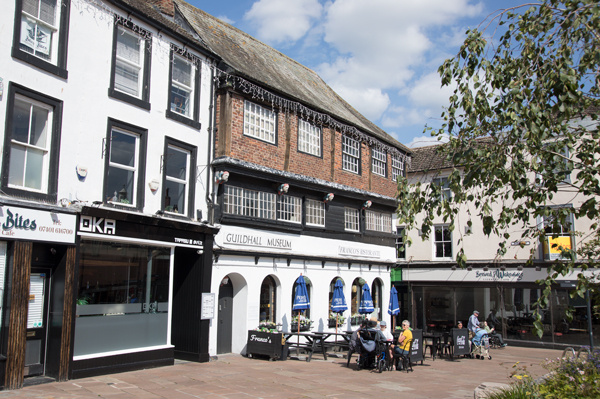
The Guildhall is a wattle-and-daub building from the 1300s. The Tullie Museum has various collections including a Roman Frontier Gallery.
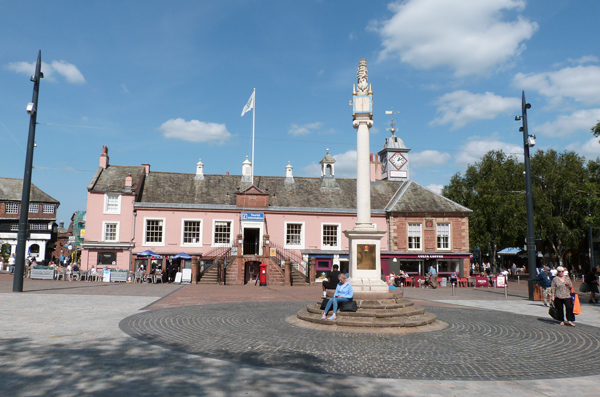
The Old Town Hall in Market Place dates from 1669. Carlisle Tourist Information is based there.
Carlisle United's ground is called Brunton Park, and it is on Warwick Road in the east of the city.
The Sands Centre is a sports and leisure hub near Eden Bridge.
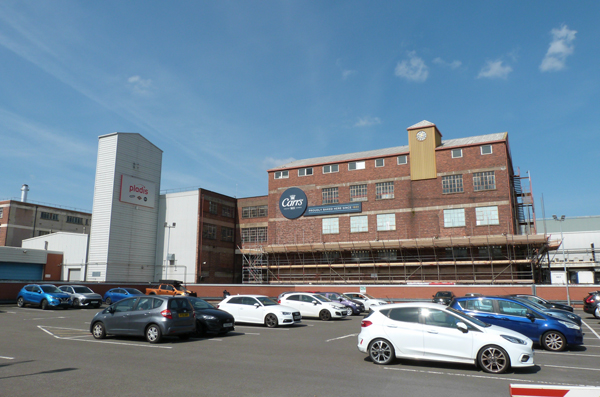
Businesses based in Carlisle include McVitie's (originally Carr's of Carlisle), Kangol, and Cowans Sheldon railway and marine engineering.
The University of Cumbria has four campuses in Carlisle.
Carlisle Music Festival takes place in the Cathedral; Carlisle Food Fair is in the city centre in August.
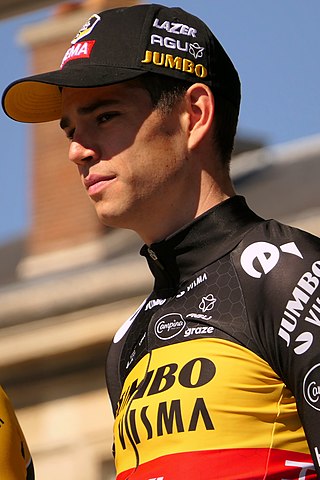
Stage 1 favourites will include the top sprinters such as Jasper Philipsen and Olav Kooij.
Wout van Aert has won sprint stages himself, but in the 2026 Vuelta he served as a lead-out man par excellence for Britain's Matthew Brennan.
Who do you think will win Stage 1 of the 2027 Tour de France in Edinburgh?

Amazon Fire TV Stick Lite, £34.99 at the time of writing (affiliate link).
As an Amazon Associate, I earn from qualifying purchases.

Bike Rides in the Yorkshire Dales is available in colour paperback.
Find out more about Bike Rides in the Yorkshire Dales or buy a copy.

Bike Rides In and Around York features a historical city tour, plus family rides, road rides, and mountain bike rides.
Find out more about Bike Rides In and Around York or buy a copy.

Bike Rides in Harrogate and Nidderdale is a book of family, mountain and road bike rides.
Find out more about Bike Rides in Harrogate and Nidderdale or buy a copy.

Garmin Edge Explore, £197.99 at the time of writing.
Garmin Edge Explore on Amazon (affiliate link).

Faster by Michael Hutchinson on Amazon (affiliate link).


