Cycling in Yorkshire & Beyond

Cycling in Yorkshire & Beyond
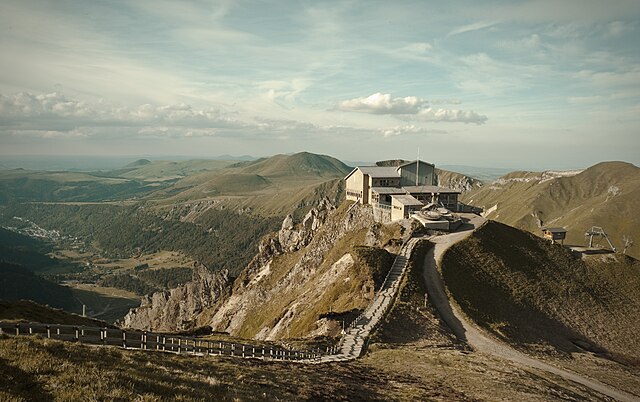
Stage 10 of the Tour de France 2025 is a 165.3km mountain stage from Ennezat to Le Mont-Dore Puy de Sancy.
It follows a similar route to Stage 10 of the 2023 edition of the Tour. The riders take on the first few kilometres of the Puy de Dôme early in the stage. As it's Bastille Day, we can expect big crowds.
There are seven Category 2 climbs. The final climb is 3.3km at 8%.
Although this looks like a classic breakaway stage, it also wouldn't be a surprise if the break was caught and it turned into a GC scrap.

This is the race report for Stage 10 Tour de France 2025.
These are video highlights of Stage 10.
Race Details | Poll | Map & Profile | Timings | Videos | Food & Drink | Route Notes | Favourites
| Date | Monday 14th July 2025 |
|---|---|
| Stage classification | Mountain |
| Distance | 165.3km |
| Intermediate sprint | Durtol |
| Climbs | Côte de Loubeyrat (Cat. 2) Côte de la Baraque (Cat. 2) Côte de Charade (Cat. 2) Côte de Berzet (Cat. 2) Col de Guéry (Cat. 2) Col de la Croix Morand (Cat. 3) Col de la Croix Saint-Robert (Cat. 2) Puy de Sancy (Cat. 2) |
| Total climbing | 4,450m |
Vote for one of the main contenders to win Stage 10.
This is a map of the route of Stage 10, Tour de France 2025.

This is a zoom-able map of Stage 10 Tour de France 2025.
This is the profile of Stage 10 Tour de France 2025.

| Caravan | Fast Schedule | Slow Schedule | |
|---|---|---|---|
| Start Time (départ fictif) | 1110 |
1310 |
1310 |
| Start Time (départ réel) | 1125 |
1325 |
1325 |
| Intermediate Sprint Durtol | 1232 |
1426 |
1432 |
| Col de Guéry Climb | 1432 |
1612 |
1632 |
| Col de la Croix Saint-Robert Climb | 1537 |
1710 |
1737 |
| Finish Line (165.3km) | 1553 |
1725 |
1753 |
This is a video of the route of Stage 10 Tour de France 2025.
These are highlights of Stage 10 Tour de France 2023, which was raced on a similar parcours.

The Auvergne region has produced wine since Roman times, and in the C11th had over 10,000 hectares of vineyards. It is not necessarily one of France's most celebrated wine-producing areas today, though.
Instead if you want to sample a local alcohol, why not try Gentiane? It is made with the root of the gentian plant. Génépi, made in the Alps, uses the plant itself to create a similar liqueur.
The Auvergne is not one of the most famous regions of France for food and drink, but it does make some excellent cheeses. Cantal is one of the best-known.
Local blue cheeses include Blue d'Auvergne, Rochebaron, Bleu de Chèvre (which is, as you would expect from the name, blue cheese made from goat's milk), Saint Agur, and Fourme d'Ambert.
Puy lentils, lentilles vertes du Puy, have been grown in the region for centuries. Truffade is a thick potato and cheese pancake.
Buy a bottle of Suze Gentiane liqueur (affiliate link).
The stage starts in Ennezat (départ fictif).

Ennezat is a little town north of Clermont-Ferrand and east of Riom, in the Puy-de-Dôme département.
Ennezat has a methane production plant. The town's church is notable because it's built in two styles: Romanesque and Gothic.
The riders head west towards Riom. The départ réel is in the outskirts of Riom, on the Rue d'Ennezat.
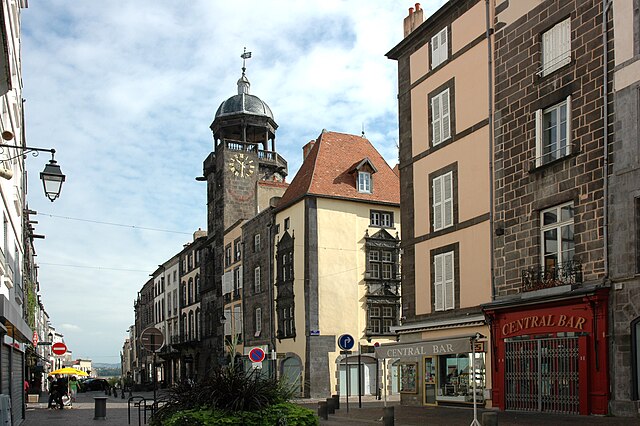
The race goes around the historic centre of Riom.
Riom existed in pre-Roman times, and the Romans called it Ricomagus. It was the capital of the Dukes of Auvergne until the French Revolution.
From Riom, Stage 10 heads north west to Châtel-Guyon.
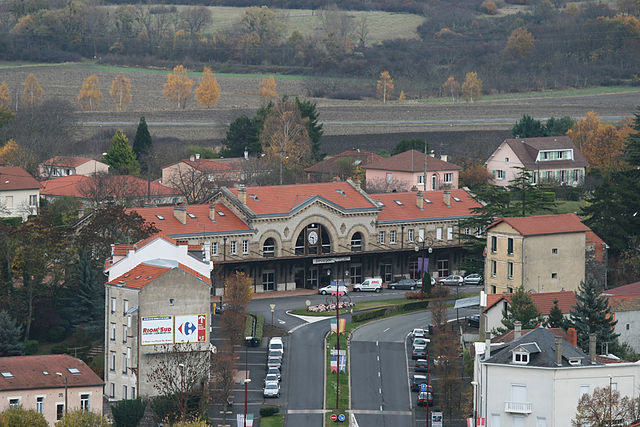
Châtel-Guyon's name means 'castle of Guy', which refers to the second Duke of Auvernge of that name.
The spa waters of Châtel-Guyon were discovered relatively late. The town now promotes itself as a tourist and spa resort in the heart of the Volcans d'Auvergne Regional Natural Park.
It hosted the start of Stage 13 of the 2020 Tour de France.
Soon after leaving Châtel-Guyon, the race begins the climb of the Côte de Loubeyrat.
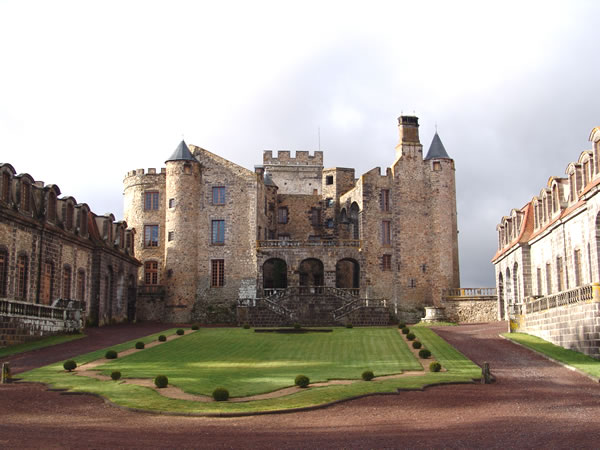
The Côte de Loubeyrat is 4.1km at an average 6.3% gradient. On the way up, the riders pass the Château de Chazeron.
KOM competition: 5 points for 1st place, 3 points for 2nd place, 2 points for 3rd place, and 1 point for 4th place.
This could be where a breakaway forms.
Loubeyrat is after the top of the climb. The descent is via Charbonnieres-les-Varennes and Enval to Volvic.
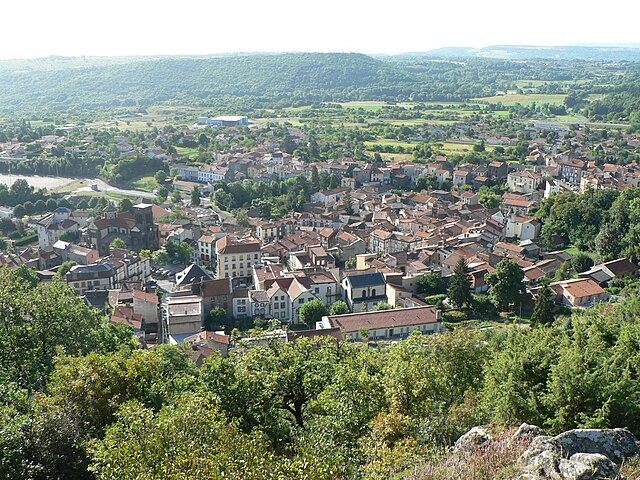
Volvic is known for its bottled mineral water. The water's selling point is that it is filtered through volcanic rock.
The road climbs out of Volvic, through Tourtoule, but it doesn't qualify as an official climb. The riders go through Mas d'Argnat and Chanat-la-Mouteyre before reaching Durtol in the outskirts of Clermont-Ferrand. This is where the intermediate sprint takes place.
Durtol's name might mean 'uncultivated clearing'. A curate from Durtol, Gilbert d'Orcet, went on to become Bishop of Langres. (As far as famous sons and daughters are concerned, that's the best I can do).
The day's breakaway may bag the intermediate sprint points.
Green jersey competition: from 20 points for 1st place down to 1 point for 15th place.
The peloton will go into the centre of Clermont-Ferrand.
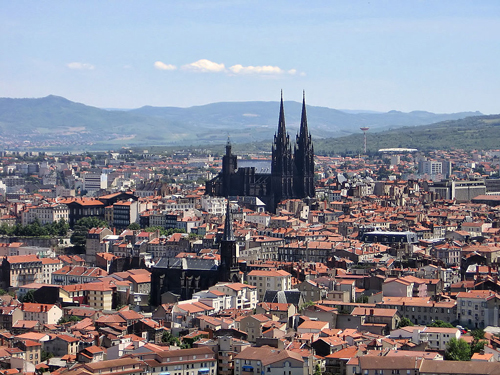
Clermont-Ferrand is a city of 147,000 people. It is the capital of the Puy-de-Dôme département.
It is surrounded by a chain of volcanoes, the Chaîne des Puys, including the Puy de Dôme.
It was known by the ancient Greeks as the capital of the Avernie tribe. In the C1st BC it developed as a Gallo-Roman settlement under the name Augustonemetum. The Roman forum was on Clermont mound, the site of the present-day black lava stone Cathedral.
Clermont suffered Barbarian attacks as the Roman Empire crumbled. Later, there were Viking raids in the 800s as Charlemagne's Empire weakened.
Clermont was the starting-point of the First Crusade, in which Christendom sought to free Jerusalem from Muslim domination. Pope Urban II preached the Crusade in 1095 at the Second Council of Clermont.
The 'Ferrand' part of Clermont-Ferrand came out of disputes between the Counts of Auvergne and the Bishops of Clermont. The Counts founded a rival city to Clermont on a mound next to Clermont's walls; they called it Montferrand.
Clermont and Montferrand were joined as one city, Clermont-Ferrand, by edict in 1630.
Clermont-Ferrand is home to tyre company Michelin.
In 2023 Clermont-Ferrand hosted both the men's and the women's Tour de France.
Stage 10 heads west out of Clermont-Ferrand and up the Côte de la Baraque.
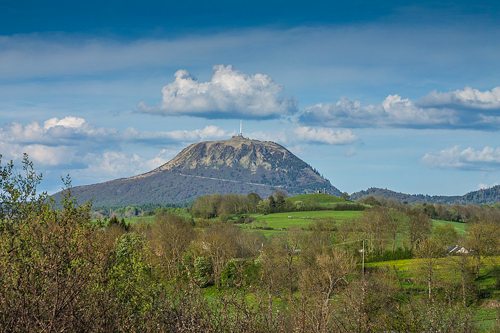
The riders go through Baraque and continue on the D942 Route de Bordeaux towards the Puy de Dôme, before forking left to La Font de l'Arbre.
This is the closest the race comes to the Puy de Dôme volcano, which was last climbed on Stage 9 of the 2023 Tour.
The Côte de la Baraque is 4.8km at an average 7.4%.
KOM competition: 5 points for 1st place, 3 points for 2nd place, 2 points for 3rd place, and 1 point for 4th place.
The descent is to Royat on the south western edge of Clermont.
There's another climb almost immediately - the Côte de Charade.
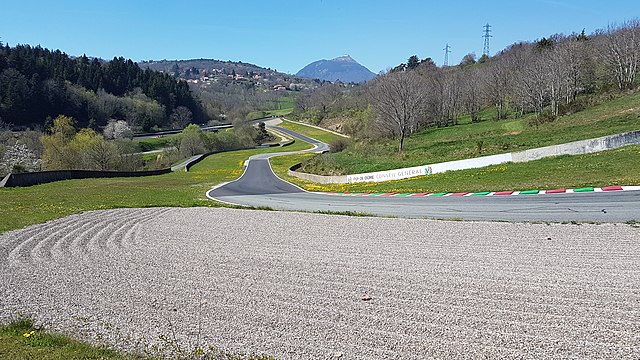
The Côte de Charade climb takes the riders up past the Puy de Gravenoire and the Puy de Charade to the village of Charade.
The climb is 5.1km at 6.8%.
KOM competition: 5 points for 1st place, 3 points for 2nd place, 2 points for 3rd place, and 1 point for 4th place.
The descent is past the Circuit de Charade, a motor sport race track built in 1958. The terrain meant that no run-off areas could be provided, so it was rather dangerous. The last race was held in 1988, but a modified course holds track days and historic motor sport events.
The race arrives in Ceyrat, another Clermont suburb.
Once again, there's no respite as the riders have to climb again, this time up the Route de Berzet.
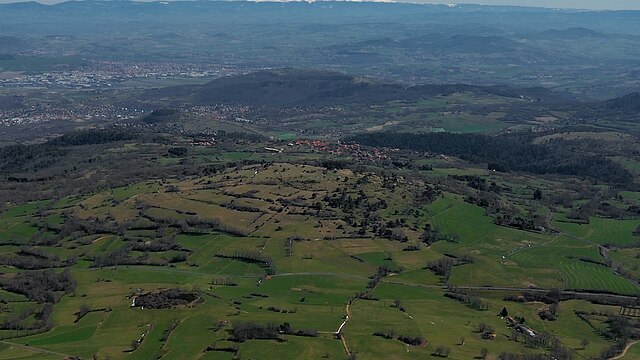
The Côte de Berzet is a 3.4km climb at an average 7.4% gradient.
KOM competition: 5 points for 1st place, 3 points for 2nd place, 2 points for 3rd place, and 1 point for 4th place.
The village of Saint-Genès-Champanelle is on the race route, then Stage 10 takes the D90 north to Thèdes and Manson.
From Manson, the race goes west to Laschamps and continues west on the Route de la Moréno, via the Col de la Moréno which is between the Puy Monchier and the Puy de la Moréno.
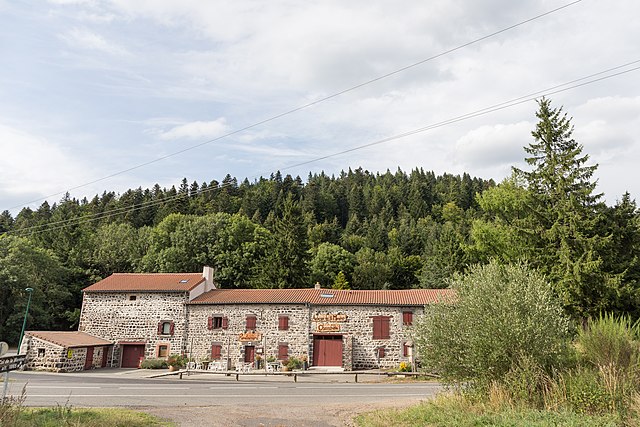
The riders reach Saint-Bonnet-près-Orcival, then pass through Saint-Martin-de-Tours at the foot of the Puy-de-Saint-Martin.
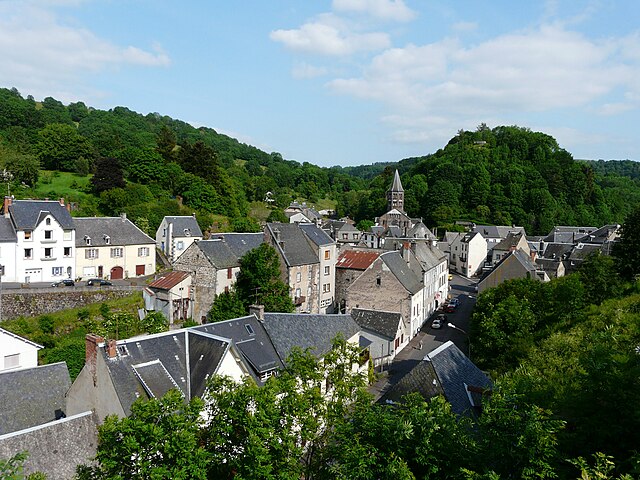
Then it's on to Rochefort-Montagne.
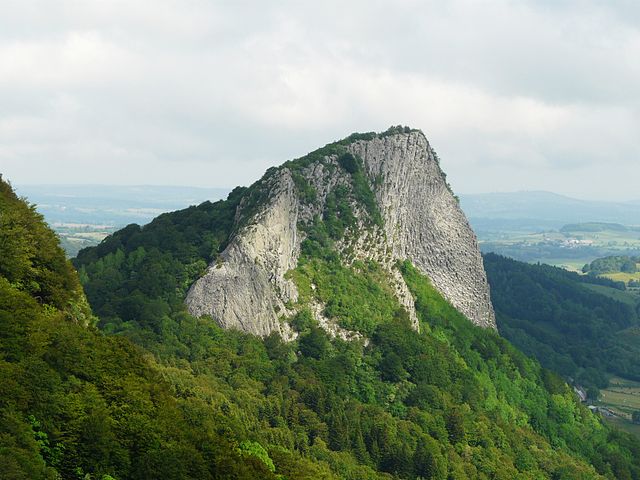
Next the race goes south on the D80a, passing the Puy de Cros, the Roche Tuillière and the Roche Sanadoire.
Next Stage 10 heads up to the Col de Guéry (1268m), which is near the Puy de l'Ouire (1,509m) and overlooks the Lac de Guéry.
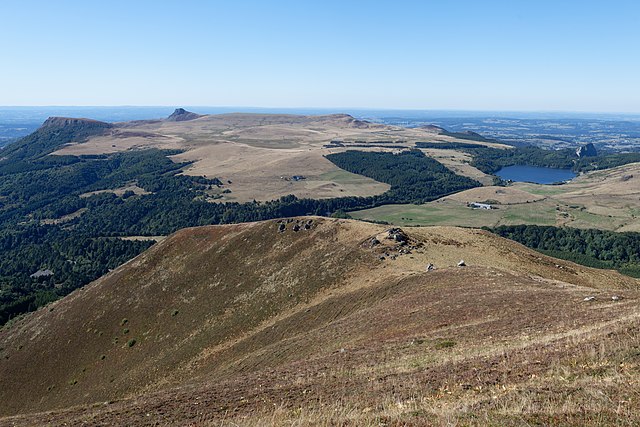
'A nice pass, with a beautiful finish at the Lac de Guéry and nice views of the Massif du Sancy.'
Review on climbfinder
The Col de Guéry climb is 3.4km at an average 6.7%. The summit is at 1,268m and comes after 115.4km raced.
KOM competition: 5 points for 1st place, 3 points for 2nd place, 2 points for 3rd place, and 1 point for 4th place.
After a short descent, the road climbs again to the Col de la Croix Morand.
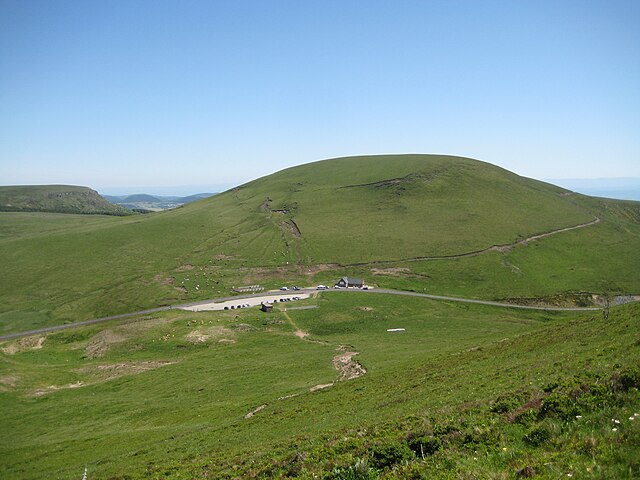
The Col de la Croix Morand is 3.4km at 5.7% to a height of 1,401m.
KOM competition: 2 points for 1st place and 1 point for 2nd place.

Skiing Made Easy is a practical guide to learning to ski based on many happy seasons of ski teaching.
It takes you through the beginner's progression from snowplough to parallel turns, starting at the very beginning and not assuming any prior knowledge.
The book suggests relevant exercises to develop and improve your skills. Common faults are identified, along with the best ways to correct them.
'By the way' sections contain information about many of the little things that people assume you just know, but you may not.
'This is the book I wish I'd had when I started skiing' - reviewer on Amazon.
How to buy:

Skiing Made Easier is the follow-up to Skiing Made Easy, and picks up from where the first book left off.
The first chapter is Refining Your Parallel Turns.
The chapters on ski technique beyond basic parallel turns are Carving, Short Turns, Bumps and Off Piste.
There are then further chapters on Avalanche and Mountain Safety, Ski Psychology, Physical Preparation, Ski Servicing and Alpine Wildlife.
As in Skiing Made Easy, common faults are identified and exercises suggested to correct them and to develop your skills.
'By the way' passages contain bits of skiing knowhow that could otherwise take years to pick up.
How to buy:
The Amazon URLs are affiliate links.
Next there's a long descent to Chambon-sur-Lac and the Lac de Chambon.
Stage 1 of the 2023 Critérium du Dauphiné started and finished in Chambon-sur-Lac. Christophe Laporte won the stage in Chambon.
Chambon-sur-Lac is at the western end of the Lac de Chambon.
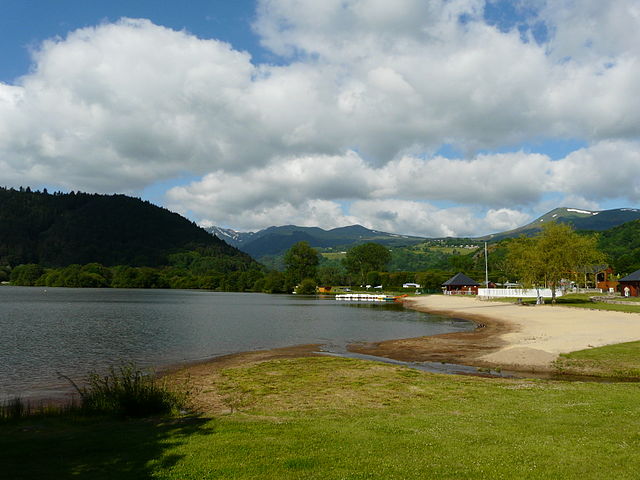
The Lac de Chambon is a volcanic dam lake that formed after the eruption of the Tartaret Volcano that stands by Murol. Debris from the eruption blocked the course of the Couze, and caused the lake to form.
It's either 4m or 6m deep, depending on who you believe, and dotted with islands.
At the far end of the lake beyond Le Tartaret is the village of Murol.
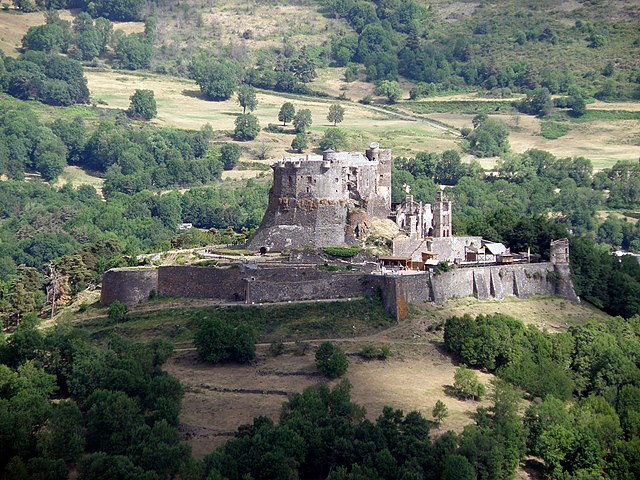
Murol has a striking castle which was built in the 1100s.
The name Murol comes from walls or fortifications, and the site was inhabited by Gauls before the Romans. There was a junction of three Roman roads here.
At the start of the twentieth century, a group of Impressionist painters settled here and formed the Ecole de Murol.
From Murol, Stage 10 heads south then west through the hamlets of Jasssat and Montaleix. The race is heading for the next climb, the Col de la Croix Saint-Robert.
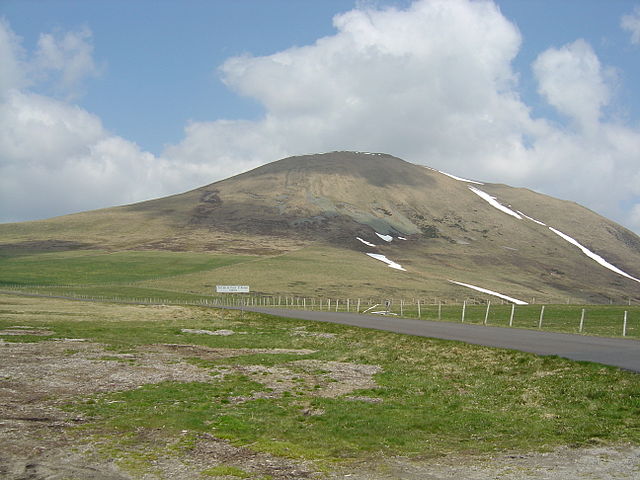
Stage 10 climbs the D36 to the Col de la Croix Saint-Robert.
The climb is 5.1km at an average 6.4% to a height of 1,451m. The summit comes after 155.4km raced.
KOM competition: 5 points for 1st place, 3 points for 2nd place, 2 points for 3rd place, and 1 point for 4th place.
Then there's a descent to Le Mont-Dore.
Stage 10 finishes at Le Mont-Dore Puy de Sancy.
From the village of Mont-Dore, the riders head south on the D983, uphill to the ski resort of Mont-Dore (Station du Mont-Dore), which is near the Puy de Sancy.
The final climb is 3.3km at a gradient of 8% to a height of 1,324m.
KOM competition at the finish: 5 points for 1st place, 3 points for 2nd place, 2 points for 3rd place, and 1 point for 4th place.
Green jersey competition at the finish: from 20 points for 1st place down to 1 point for 15th place.
Time bonuses at the finish:

Mont-Dore is on the banks of the Dordogne, not far from its source.
The thermal springs here were identified by the Romans, and are still in use today. The minerals in the water include sodium bicarbonate, iron and arsenic - not all of which sounds good. People drink and bathe in the spring water.
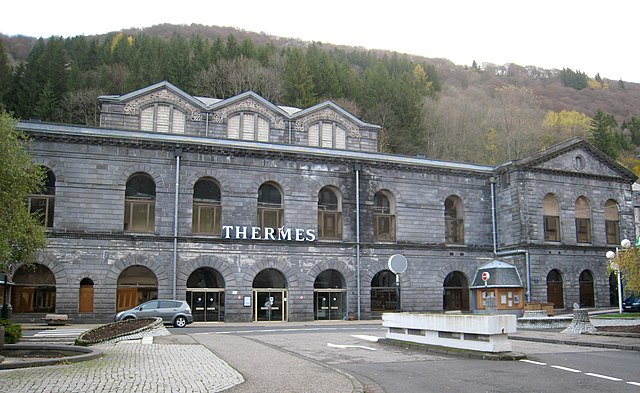
Mont-Dore is also a ski resort, with 30 downhill runs on the Puy de Sancy and the Puy Ferrand, and 25km of cross-country ski trails.

Favourites for Stage 10 of the 2025 Tour de France include breakaway specialists.
Possible Stage 10 winners from a breakaway include Julian Alaphilippe, Bruno Armirail, Ben Healy and Fred Wright.
In case the break is caught and this comes down to a GC battle, I've added Pogacar, Vingegaard and the others to the Stage 10 poll.
Who do you think will win Stage 10 of the 2025 Tour de France?

BASESAILOR USB to USB C Adaptor 3 Pack price £5.99 from Amazon at the time of writing (affiliate link).
As an Amazon Associate, I can earn from qualifying purchases.

Bike Rides in the Yorkshire Dales is available in colour paperback.
Find out more about Bike Rides in the Yorkshire Dales or buy a copy.

Bike Rides In and Around York features a historical city tour, plus family rides, road rides, and mountain bike rides.
Find out more about Bike Rides In and Around York or buy a copy.

Bike Rides in Harrogate and Nidderdale is a book of family, mountain and road bike rides.
Find out more about Bike Rides in Harrogate and Nidderdale or buy a copy.

Find out more about Mountain Bike Rides in the Yorkshire Dales.
Buy Mountain Bike Rides in the Yorkshire Dales at £8 + P&P.

Garmin Edge Explore, £197.99 at the time of writing.
Garmin Edge Explore on Amazon (affiliate link).

Faster by Michael Hutchinson on Amazon (affiliate link).


