Cycling in Yorkshire & Beyond

Cycling in Yorkshire & Beyond
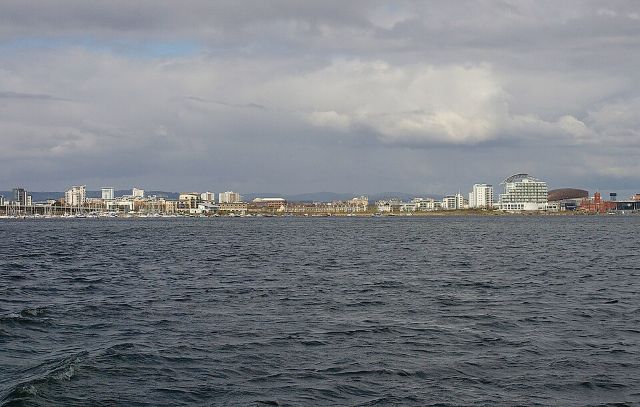
Stage 3 of the Tour de France 2027 is the final stage of the British Grand Départ.
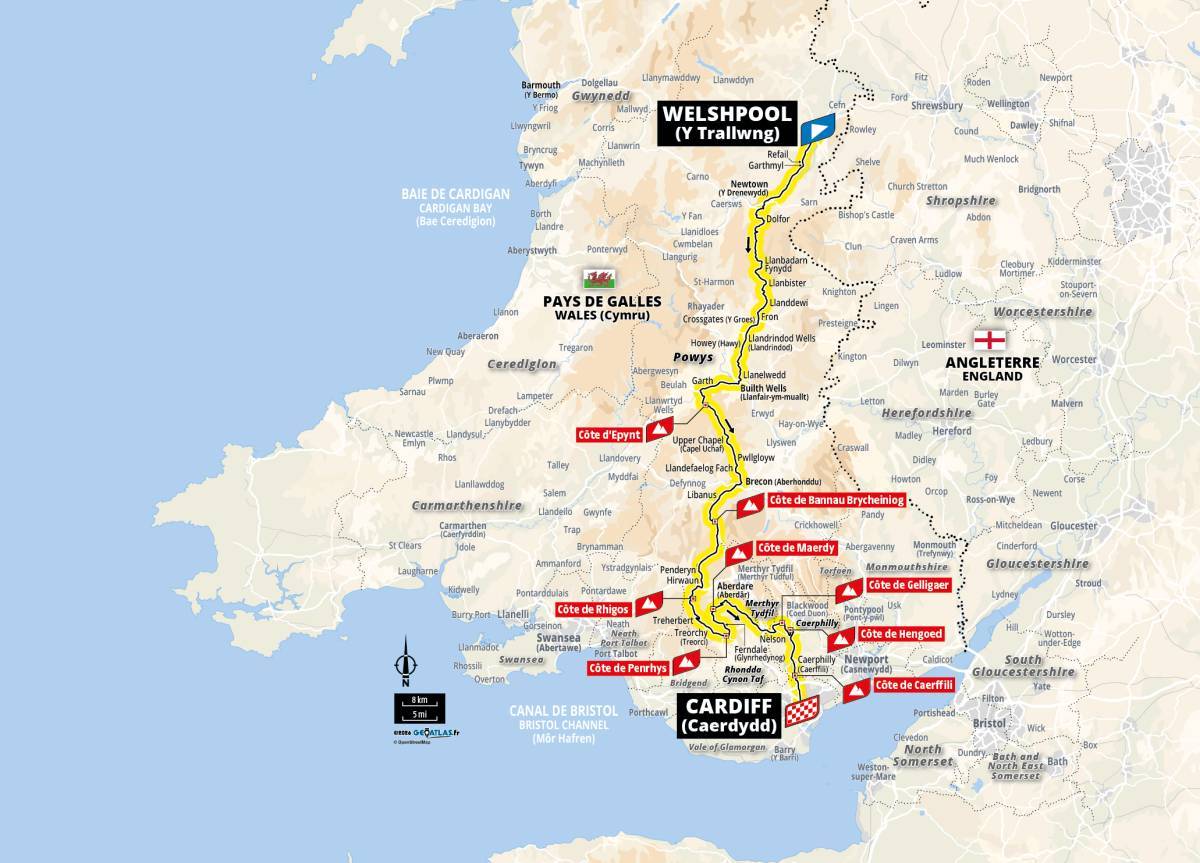
It is all in Wales, and goes from Welshpool to Cardiff. It's a 223km hilly or mountain stage.
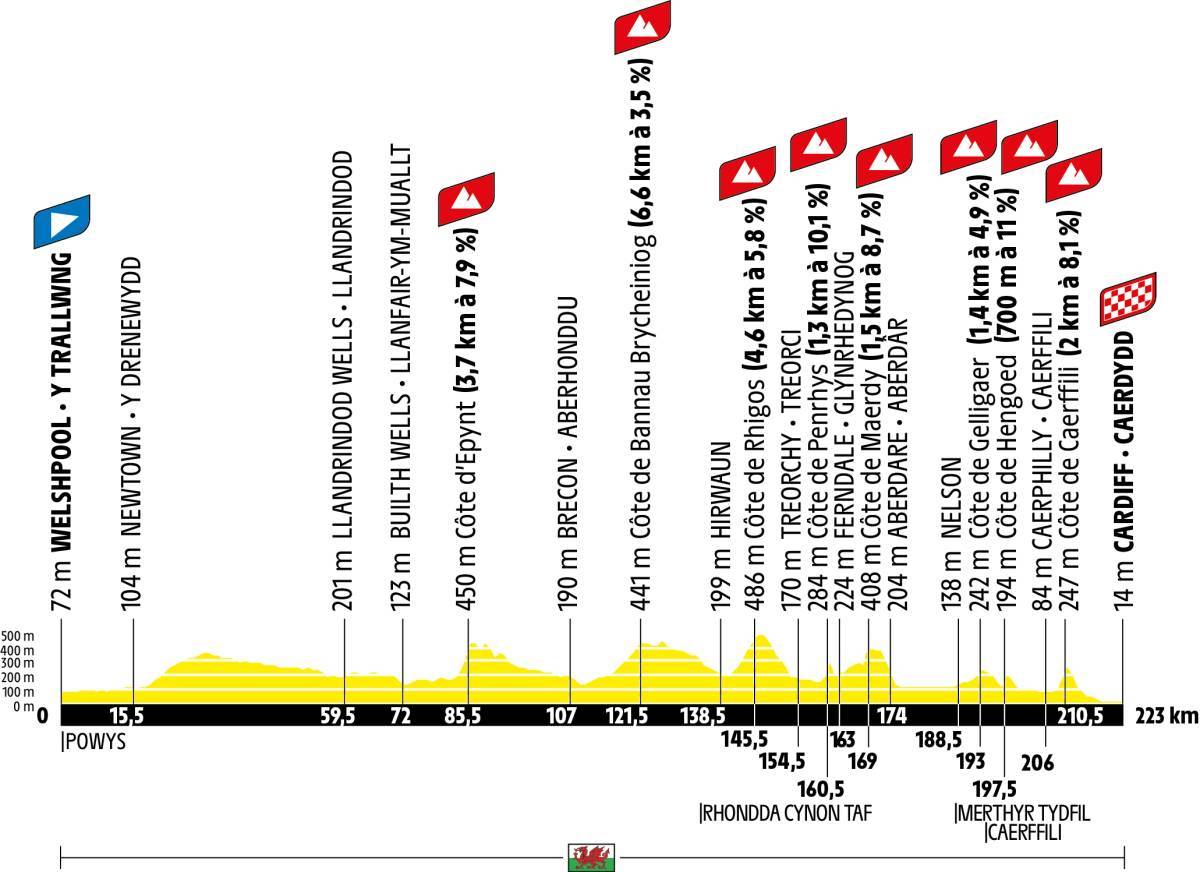
The first 80km are straightforward, but after 85.5km the riders reach the top of the Côte d'Epynt, and that's just the start of the climbing.
The second half of the race is in old coal-mining areas, with a series of short, steep climbs.
The last climb is the Côte de Caerffili, which is 2km at an average 8.1%. Then it's a fast 12.5km run through Cardiff, past the castle and the Principality Stadium to the finish line.
Race Details | Poll | Map & Profile | Timings | Videos | Food & Drink | Route Notes | Favourites
| Date | Sunday 4th July 2027 |
|---|---|
| Stage classification | Hilly (TBC) |
| Distance | 223km |
| Intermediate sprint | TBC |
| Climbs | Côte d'Epynt Côte de Bannau Brycheiniog Côte de Rhigos Côte de Penrhys Côte de Maerdy Côte de Gelligaer Côte de Hengoed Côte de Caerffili |
| Total climbing | TBC |
Vote for one of the main contenders to win Stage 3 (to be added later).
This is a map of the route of Stage 3, Tour de France 2027.
This is the profile of Stage 3 Tour de France 2027.
| Caravan | Fast Schedule | Slow Schedule | |
|---|---|---|---|
| Start Time (départ fictif) | |||
| Start Time (départ réel) | |||
| Intermediate Sprint | |||
| Climb | |||
| Finish Line (223km) |
This is a video of the route of Stage 3 Tour de France 2027.

Stage 3 of the Tour de France 2026 is in Wales, finishing in Cardiff.
Welsh rarebit is essentially cheese on toast, but the cheese is mixed with mustard and sometimes beer. Glamorgan sausage is cheese and leeks in breadcrumbs.
Bara brith is a dried fruit cake or bread infused with tea.
Penderyn Distillery produces Welsh single malt whisky in the Brecon Beacons.
Buy a bottle of Penderyn Welsh whisky (affiliate link).
The stage starts in Welshpool (départ fictif).
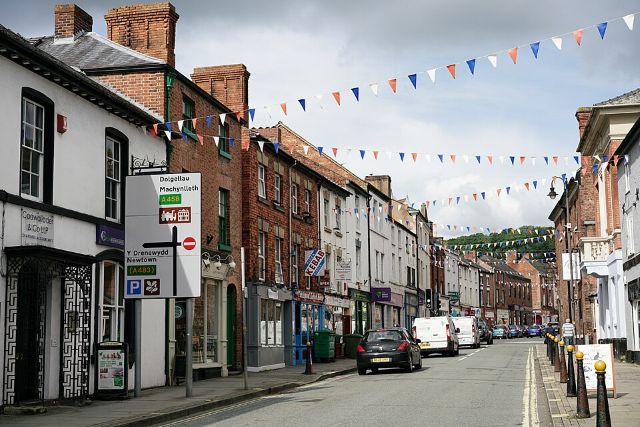
The start town is Welshpool.
It is a market town in Powys, Wales, but only 4 miles from the English border. The population is around 6,000 people.
Welshpool's name means 'marshy land in Wales' - the 'Welsh' added to distinguish it from Poole in Dorset.
The Long Mountain to the east overlooks Welshpool.
St Cynfelin is reputed to have founded two churches here in the 400s and 500s.
Owain Glyndŵr devastated Welshpool in 1400 at the start of his rebellion against the English King Henry IV.
William Morgan, Vicar of Welshpool in the 1500s, translated the Bible into Welsh.
The local economy in modern Welshpool is based on agriculture and local industry.
The départ réel is just south of Welshpool.
The riders head south on the A483, following the course of the river Severn, past Welshpool Airport. They go through hamlets called Refail and Garthmyl, then continue to Newtown.
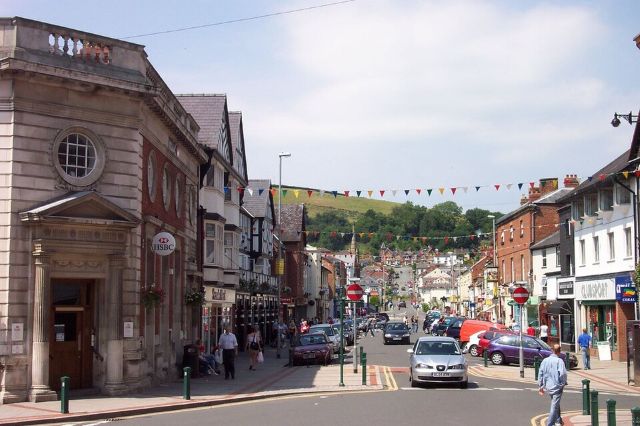
Newtown was a new town in 1967. Now it has a population over 11,000
It is the birthplace of Robert Owen (1771-1858), a textile manufacturer and socialist who sought to improve working conditions in factories.
There was already a small settlement here called Llanfair in the early Medieval period.
In the late 1200s, Edward I developed Newtown as an English plantation town.
In the 1700s and 1800s, the textile and flannel industries developed here, with transport via the Montgomeryshire Canal. In 1856, Cambrian Mills woollen mills opened, but by the end of the 1800s they were no longer competitive with those of the north of England.
The A483 climbs away from Newtown to a place called Dolfor and past a summit named Glog.
There's then a descent by a river, Afon Ieithon. The race passes the hamlets of Llanbadarn Fynydd, Llanbister and Llanddewi Ystradenni.
Then Stage 3 reaches Crossgates, and continues to Llandrindod Wells.
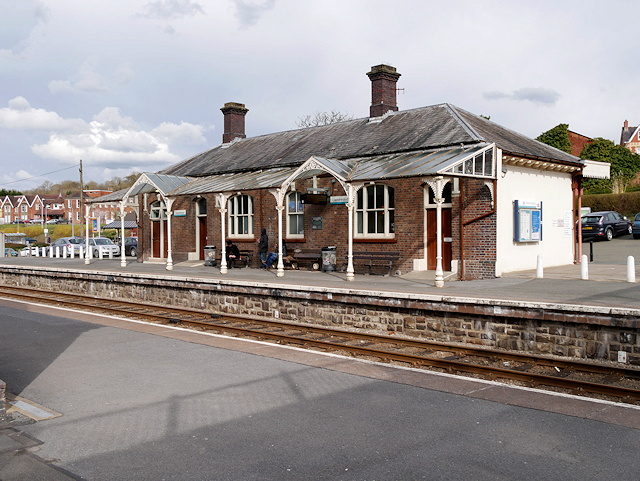
Llandrindod Wells is the administrative centre of Powys, with a population of around 5,600.
From the mid-1700s, local spring waters with healing properties attracted visitors, and the Llandrindod Hall Hotel was built to cater for them.
Cwmygof Well was the most famous of the springs. When the railway came to town, it opened Llandrindod up to more visitors.
In the late 1800s, an ornamental lake was formed and a golf course built.
During World War I and World War II, Llandrindod accommodated soldiers doing training or recovering from injuries.
Llandrindod has two garages in the Art Deco style of architecture. One of them, the Automobile Palace, houses the National Cycle Collection.
Llandrindod Wells has a Victorian Festival at the end of August each year.
Next the race goes through Howey then continues to Llanelwedd, which has the Royal Welsh Agricultural Showground.
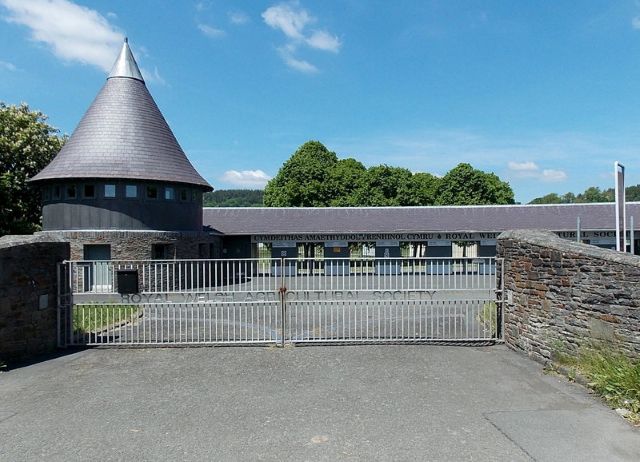
There's also a quarry at Llanewedd.
Just over the river Wye from the Showground is Builth Wells.
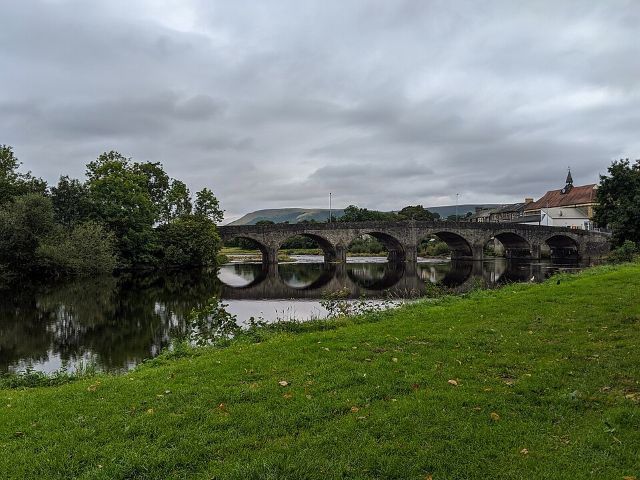
Builth Wells is a market town at the confluence of the Irfon and the Wye. It has a population of around 2,500.
A Norman motte and bailey castle was built here on the banks of the Wye in the late C11th by Philip de Braose. He was a 'marcher lord' - a noble appointed by the King of England to guard the border between England and Wales.
In the late 1200s Edward I conquered Wales, and he built a larger castle in stone. In 1278, Builth got the right to hold a market.
The castle was dismantled in 1690 after a devastating fire because the town's people needed the stone to rebuild their town.
In Victorian times, Builth became a spa town with visitors attracted by Glanne Wells and Park Wells. It got a railway station in 1860.
A livestock market was first held here in 1910, and that led to the Royal Welsh Agricultural Show being held here.
It's mainly sheep in this area, and one local breed is the Beulah Speckled Face.
Builth has a male voice choir.
Now Stage 3 takes the A483 up the river Irfon to Garth.
Soon the first categorised climb on the stage starts, the Côte d'Epynt.
How to Write a Kindle Ebook is a step by step guide to writing and publishing an ebook on Amazon.
It takes you through the process of writing and formatting it using Microsoft Word, then uploading it to Kindle Direct Publishing and selling it on Amazon.
There's advice and guidance at every stage, with examples including screenshots, and tips on how to overcome practical problems you're likely to encounter.
How to Write a Kindle Ebook will be your reliable and trusted companion as you write and publish your own book.
'I find this a really helpful and informative guide to e-book writing and recommend to others' - reviewer on Amazon.
Buy the ebook or the paperback on Amazon (affiliate links).
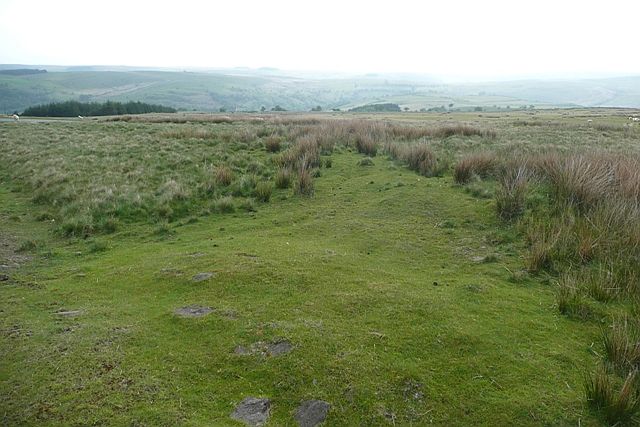
The Côte d'Epynt is a climb on the B4519 passing close by a peak called Pennau (393m). A higher peak on this moor is Mynydd Epynt (456m), and that's also the name of the upland plateau.
Mynydd Epynt is bounded by the Usk, Irfon and Wye. It has a number of prehistoric (Bronze Age) cairns and stone circles. In the Middle Ages, there were droving inns here.
In 1940, Mynydd Epynt became part of the Sennybridge Military Training Area. It includes a mock village built in 1988 for Fighting In Built Up Areas training.
The Epynt Way is a long-distance footpath around the perimeter of the military range.
The Tour de France climb is 3.7km at an average 7.9%, to a height of 450m after 85.5km raced.
The race joins the B4520 and descends alongside the Honddu river. The riders enter the Brecon Beacons National Park (Bannau Brycheiniog).
Very soon, Stage 3 enters Brecon.
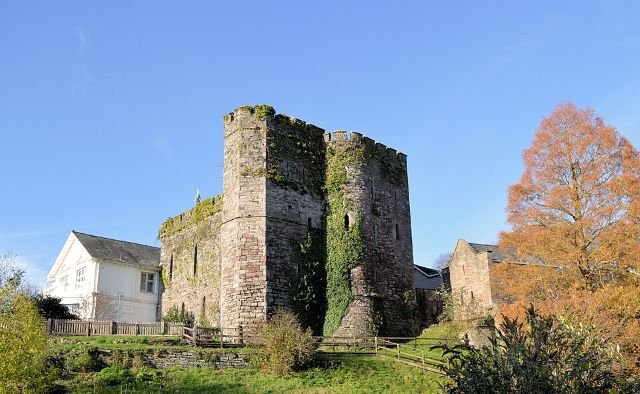
Brecon (Aberhonddu) is a significant town at the confluence of the Honddu, the Tarell and the Usk.
It also has the Monmouthshire and Brecon Canal.
The settlement grew up because the Usk could be forded here. The Romans had a fort here, and a cavalry base nearby at Y Gaer (Cicucium).
The Normans also recognised the military value of the location, and in the late 1000s they built the castle that still overlooks the town.
The town walls were built by Humphrey de Bohun from 1240. They were reinforced following the rebellion led by Owain Glyndŵr, but only fragments remain now.
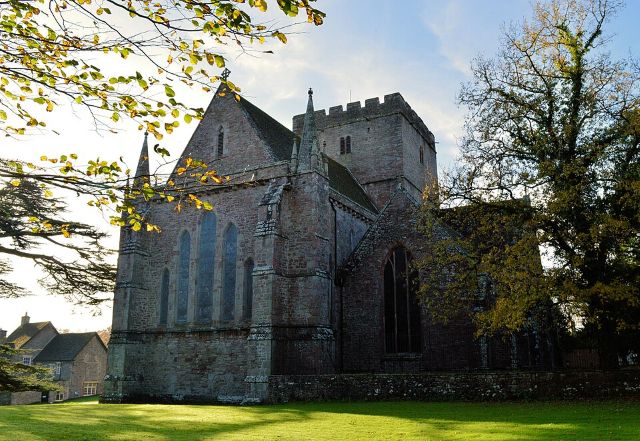
Brecon is overlooked by two hills, Pen-y0crug and Slwch Tump. Both had Iron Age hill forts on them.
Brecon has a modest Cathedral.
There are two military establishments, the Dering Lines (Infantry Battle School) and the Barracks.
Two festivals are held in Brecon - a jazz festival in August and a Baroque Music Festival in October.
From Brecon, Stage heads south west on the A470, by the river Tarell, through Libanus.
The race is in Bannau Brycheiniog National Park, which is a hilly area. The riders tackle a categorised climb on the A470, the Côte de Bannau Brycheiniog.
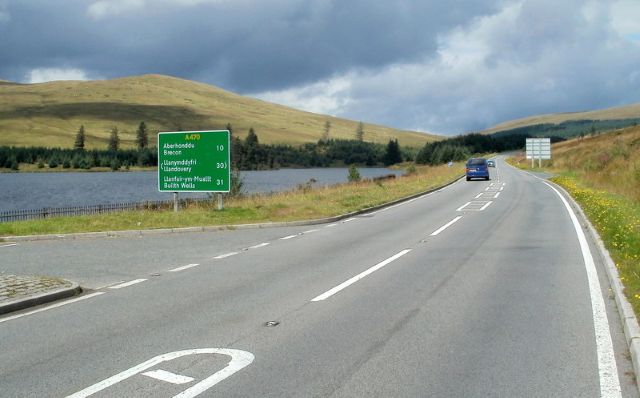
The Côte de Bannau Brycheiniog is 6.6km at an average 3.5%.
After the summit the race continues past Beacons Reservoir.
The riders fork right off the A470 and onto the A4059; they go through Penderyn and reach Hirwaun.
There was an ironworks in Hirwaun, and coal mining in the surrounding area.
Here the race crosses the Heads of the Valleys Road and takes the A4061 Rhigos Road. This is the Côte de Rhigos climb.
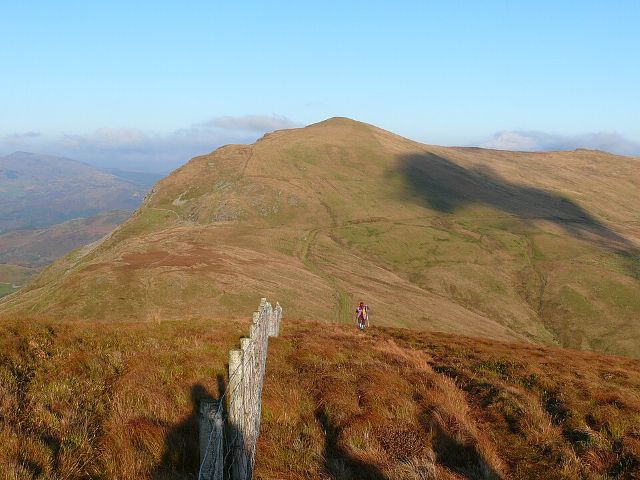
Up to the right of the road as the riders climb is a mountain called Craig y Llyn. There's also a zip wire at Zip World, on the site of the former Tower Colliery.
The Côte de Rhigos is 4.6km at an average 5.8%.
The descent is to Treherbert and Treorchy.
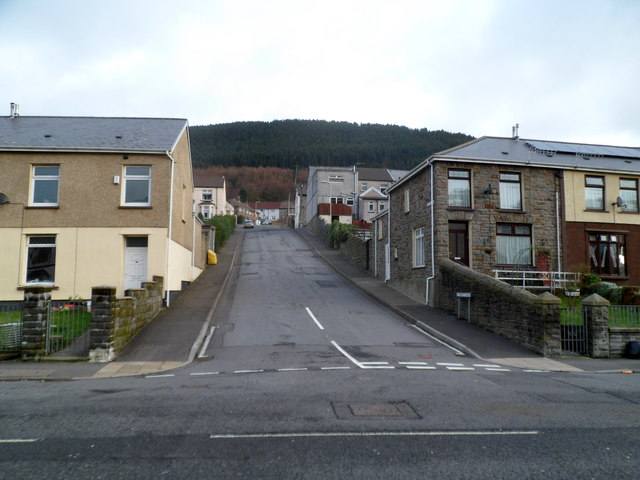
Treherbert is at the top of the Rhondda Fawr (Great Rhondda) valley.
This was a largely rural and undeveloped area until the 1850s when the first coalmine opened. Coal was transported to Cardiff Docks on a new railway.
Treherbert & District Band was originally associated with Glenrhondda Colliery, but is still going after it closed.
Treorchy has a similar history as a coal-mining village, but after the collieries closed it became a commuter village for people working in Cardiff.
Treorchy has a male voice choir.
After going through the next village, Gelli, the riders leave the A4058, forking left on the B4512 Penrhys Road. This is the next categorised climb.
The Côte de Penrhys is 1.3km at 10.1%, so steep. The top of the climb comes after 160.5km raced.
The race then joins the A4233, by the Rhondda Fach (Little Rhondda). The riders go up the valley to Maerday and the hills above it. This is another climb.
The Côte de Maerdy is 1.5km at 8.7%.
The descent is to Aberdare.
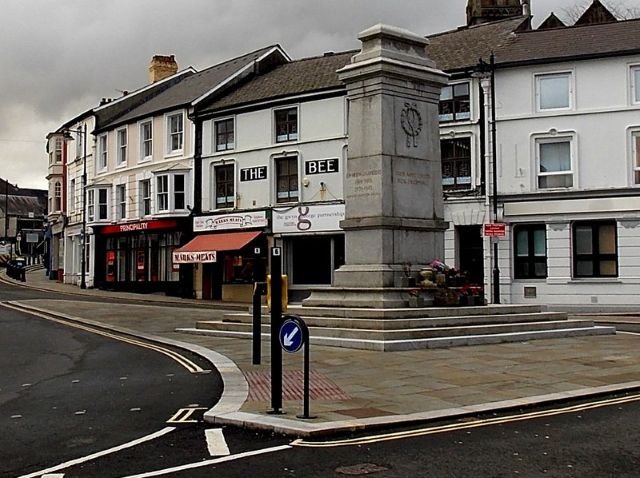
Aberdare is at the confluence of the Dare and Cynon rivers. It grew rapidly in the 1800s due to iron and coal industries.
In the early 1900s, the majority of the population spoke Welsh, and in the 1900s Aberdare was a centre for publishing in Welsh. The language is less widely spoken now.
From Aberdare, the race heads down the Cynon valley on the A4059 to Mountain Ash. It then crosses the river Taff and takes the A472 Mafon Road to Nelson.
Now there's another categorised climb.
Stage 3 takes the B4255 through Nelson, then up to Gelligaer.
The Côte de Gelligaer is 1.4km at 4.9%.
The Côte de Gelligaer is swiftly followed by another climb, the Côte de Hengoed.
The Côte de Hengoed is on Hengoed Road and Gelligaer Road (to be confirmed). It is 700m at 11%.
The race then heads south on the A469 alongside the Rhymney River.
At Pwllypant the race joins the B4623 Pontygwindy Road and starts the Côte de Caerffili climb.
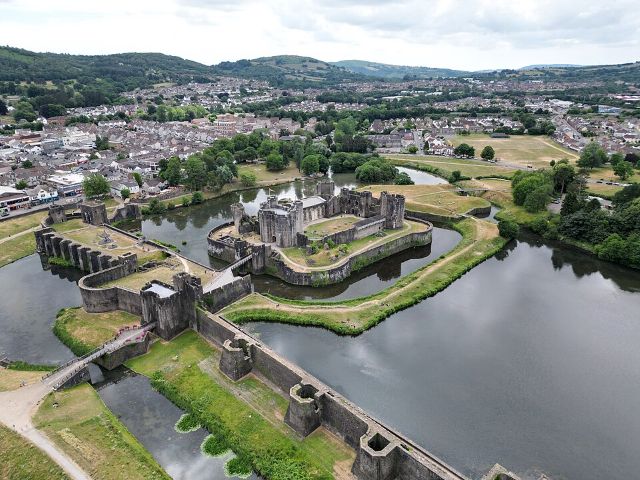
The Côte de Caerffili climb is 2km at an average 8.1%.
Caerffili (or Caerphilly) Castle was built in the 1200s for Gilbert de Clare, the Anglo-Norman Earl of Hertford and Gloucester, during his campaign to retain control of Glamorgan.
It is the largest castle in Wales, and has extensive water defences.
In the late 1400s, the castle fell into disrepair, but in the 1700s the Marquesses of Bute restored it. The water defences were re-flooded in the 1950s.
The race continues on the B4623 Mountain Road past Caerphilly Mountain.
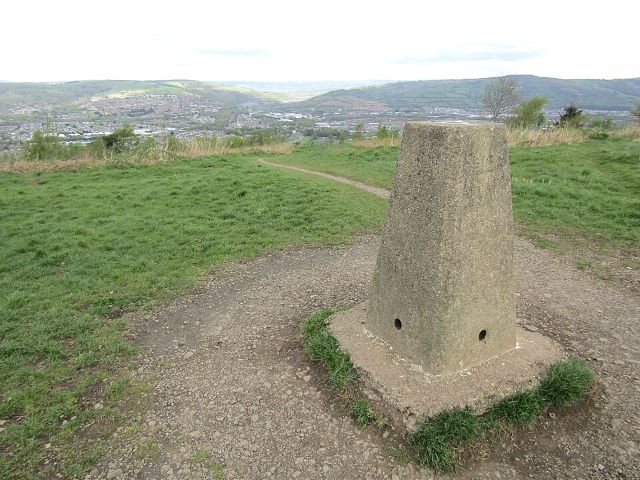
Then Stage 3 is on the A469 Thornhill Road over the M4, heading for Cardiff.
Stage 3 ends in Cardiff.
The race enters Cardiff on the A469. The exact route in Cardiff is to be confirmed.
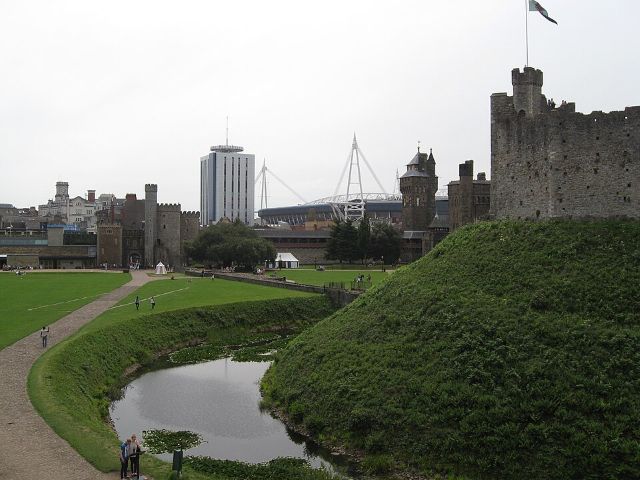
The finish town may well be Cardiff.
It is the capital and largest city in Wales, with a population of 370,000. It is the county town of the historic county of Glamorgan.
It owes its development to the fact that it is a port well-positioned to export coal mined in the area from the 1830s onwards.
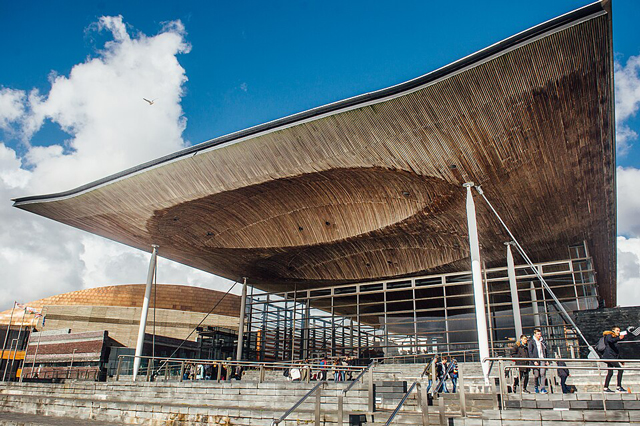
The Senedd, or Welsh Parliament, is in Cardiff.
The Romans established a fort here, near the mouth of the river Taff.
William the Conqueror came this way in 1081, and ordered work to start on a castle within the walls of the old Roman fort. His castle still stands, but was altered in the Victorian period.
In 1404, Owain Glyndwr burned Cardiff and took possession of the castle.
Cardiff was granted city status in 1905, and was recognised as the capital of Wales in 1955.
The Senedd was established in 1999, and the Senedd building opened in 2006.
The Taff Trail is a 55-mile walking and cycling path between Cardiff Bay and the Brecon Beacons. It follows the river Taff and the course of some disused railways.

The favourites for Stage 3 will be puncheurs or GC contenders.
Who do you think will win Stage 3 of the 2027 Tour de France?

Price £84.99 from Amazon at the time of writing (affiliate link).
As an Amazon Associate, I earn from qualifying purchases.

Bike Rides in the Yorkshire Dales is available in colour paperback.
Find out more about Bike Rides in the Yorkshire Dales or buy a copy.

Bike Rides In and Around York features a historical city tour, plus family rides, road rides, and mountain bike rides.
Find out more about Bike Rides In and Around York or buy a copy.

Bike Rides in Harrogate and Nidderdale is a book of family, mountain and road bike rides.
Find out more about Bike Rides in Harrogate and Nidderdale or buy a copy.

Find out more about Mountain Bike Rides in the Yorkshire Dales.
Buy Mountain Bike Rides in the Yorkshire Dales at £8 + P&P.

Garmin Edge Explore, £197.99 at the time of writing.
Garmin Edge Explore on Amazon (affiliate link).

Faster by Michael Hutchinson on Amazon (affiliate link).


