Cycling in Yorkshire & Beyond

Cycling in Yorkshire & Beyond
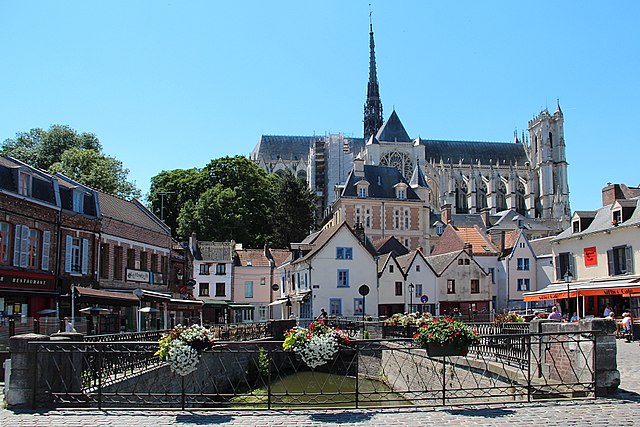
Stage 4 of the Tour de France 2025 is a 174.2km hilly stage from Amiens Métropole to Rouen.
There might be crosswinds and echelons on Stage 4.
The hilly finale in Rouen includes the Côte de Bonsecours, the Côte de Grand'Mare, and the steep (15%) Rampe Saint-Hilaire. The finish is on the Boulevard de l'Yser.
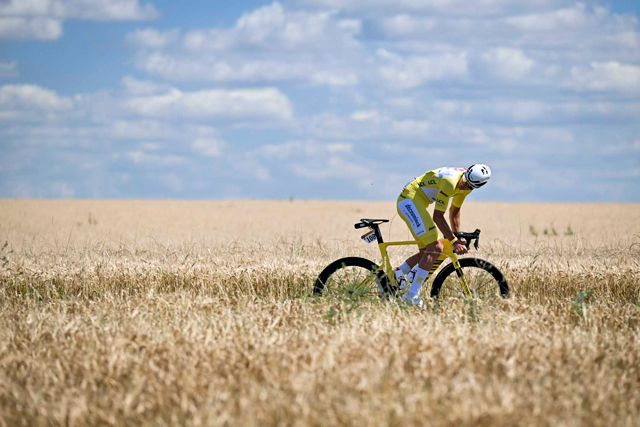
This is the race report for Stage 4 Tour de France 2025.
These are video highlights of Stage 4.
Race Details | Poll | Map & Profile | Timings | Videos | Food & Drink | Route Notes | Favourites
| Date | Tuesday 8th July 2025 |
|---|---|
| Stage classification | Hilly |
| Distance | 174.2km |
| Intermediate sprint | Saint-Adrien |
| Climbs | Côte Jacques Anquetil (Cat. 4) Côte de Belbeuf (Cat. 3) Côte de Bonsecours (Cat. 4) Côte de Grand'Mare (Cat. 4) Rampe Saint-Hilaire (Cat. 3) |
| Total climbing | 2,050m |
Vote for one of the main contenders to win Stage 4.
This is a map of the route of Stage 4, Tour de France 2025.

This is a zoom-able map of Stage 4 Tour de France 2025.
This is the profile of Stage 4 Tour de France 2025.

| Caravan | Fast Schedule | Slow Schedule | |
|---|---|---|---|
| Start Time (départ fictif) | 1115 |
1315 |
1315 |
| Start Time (départ réel) | 1135 |
1335 |
1335 |
| Intermediate Sprint Saint-Adrien | 1500 |
1642 |
1700 |
| Côte de Belbeuf Climb | 1504 |
1646 |
1704 |
| Rampe Saint-Hilaire Climb | 1536 |
1715 |
1736 |
| Finish Line (174.2km) | 1544 |
1722 |
1744 |
This is a video of the route of Stage 4 Tour de France 2025.
André Greipel won a sprint in Rouen on Stage 4 of the 2012 Tour de France.
Stage 4 is from Amiens to Rouen, and so this is a trip into Normandy.
In what may be a translation of text originally written in French, Visit Rouen says that 'the cheese, apple and cider routes will whet the gustatory curiosity of the greediest'.
The Big Four Normandy cheeses are Camembert, Livarot, Pont-l'Evêque and Neufchâtel.
There are a lot of apple orchards in Normandy, and many of them produce cider apples. First, apple juice is made, then it transforms into alcohol as its sugars ferment.
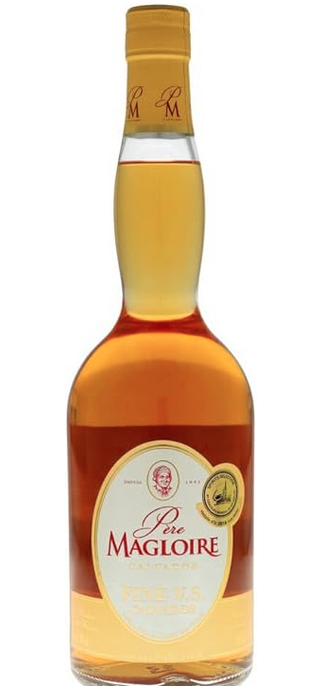
Calvados, an apple brandy, is made by distilling cider. Pommeau is an aperitif made from calvados and apple juice.
Buy a bottle of Calvados (affiliate link).
The stage starts in Amiens Métropole (départ fictif).
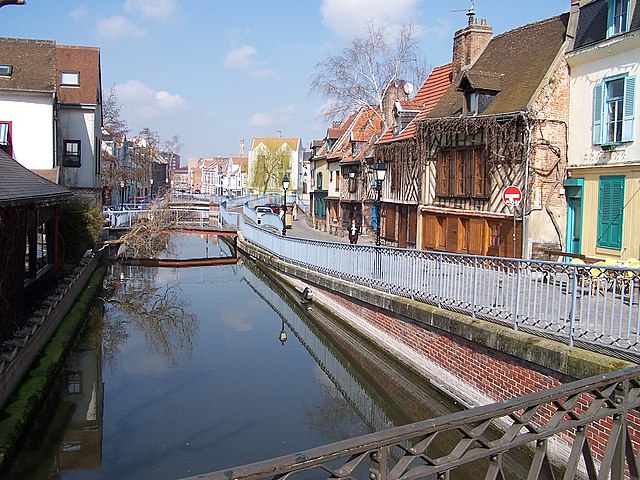
Stage 4 starts in Amiens Métropole. It has hosted 10 stage starts and 10 stage finishes - including most recently the finish of Stage 8 of the 2018 Tour de France. It was a day for Dylan Groenewegen.
Amiens is the capital of the Somme département, and has a population of 135,000. It is in the historic region of Picardy and on the river Somme.
The Gallic Ambiani people lived in this area, and when the Romans arrived, they called the site Ambianum. The Roman name evolved into Amiens.
Amiens was badly damaged in World War I, notably during the Hundred Days Offensive in 1918; it was hit again in World War II by Allied bombing.
Amiens is known for its C13th Gothic Cathedral, the largest of this type in France (by interior volume). It is regarded as a masterpiece of the classic Gothic style. It took only 70 years to build, which is a short time compared to other such Cathedrals, and helps to explain the consistent style.
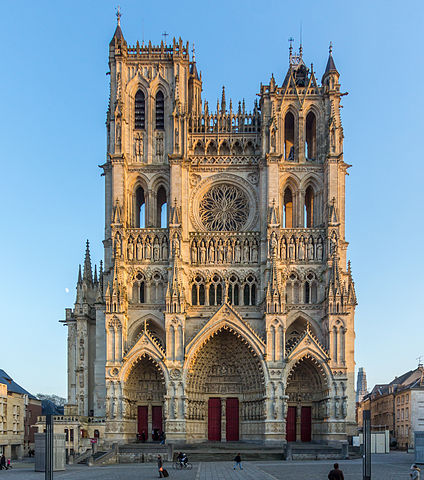
Other attractions in Amiens include the Musée de Picardie and the House of Jules Verne.
One of France's biggest university hospitals is here, and there's a large student population (around 26,000 students and 800 researchers).
There's a dynamic economy based on industry and services. In the years after the last war automotive equipment was an important sector, and Goodyear still have a base in Amiens. Also here are Procter & Gamble. More recently, call centres and internet businesses have set up.
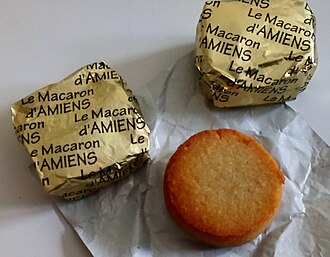
A December Christmas market is held in Amiens, which is large and popular. You can try macarons d'Amiens there.
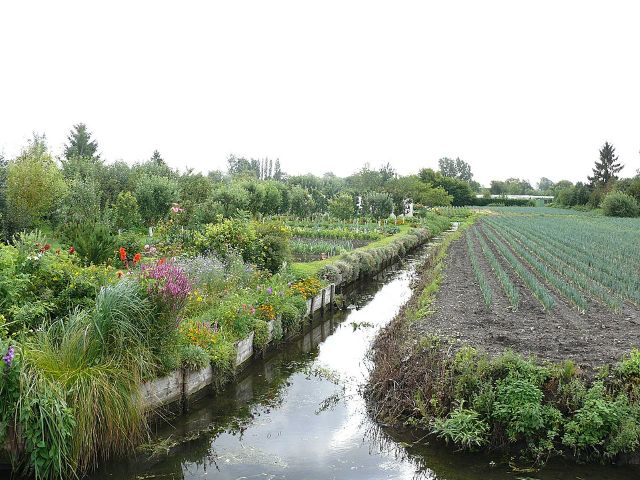
The hortillonages are 'floating' market gardens on small islands in the marshes between the Somme and the Avre.
There are two bike-rental services, Buscyclette and Vélam.
Amiens was home to author Jules Verne from 1871 until his death in 1905. He found that it was close enough to Paris for him to visit the capital but without the unbearable noise and bustle of the big city in his day to day life.
Amiens is also the birthplace of Emmanuel Macron.
It is twinned with Darlington.
The peloton heads south west out of Amiens. The départ réel is on the D608 Avenue du Golf, which turns into the D210.
The D210 takes the race through or past villages including Nampty, Tilloy-lès-Conty, Croissy-sur-Celle and Fontaine-Bonneleau, before reaching Crèvecoeur-le-Grand.
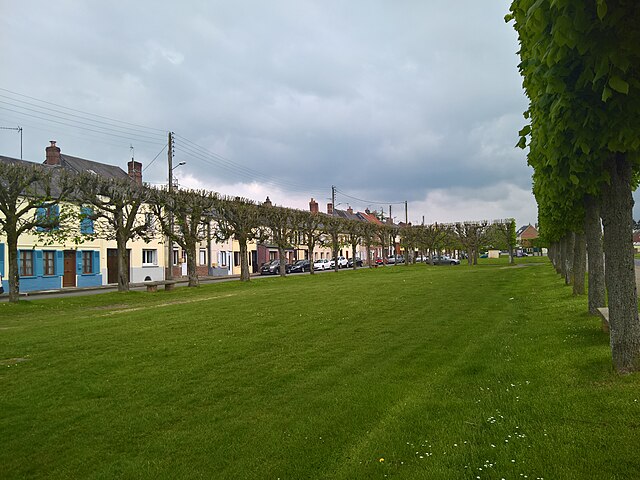
King Francis I of France once stayed in Crèvecoeur-le-Grand, on his way to meet Henry VIII of England at the Camp du Drap d'Or (1520).
There's quite a big château dating from the C16th and C17th.
Crèvecoeur-le-Grand used to be served by two railway lines. One of them is now used as a greenway, and the other has a heritage railway on it.
Next the race takes the D930 to Marseille-en-Beauvaisis and continues to Songeons.
Then Stage 4 takes in the picturesque village of Gerberoy.
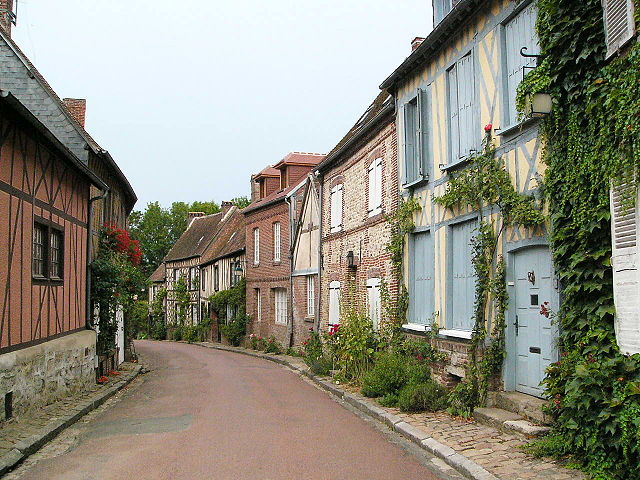
The next significant town on the route is Gournay-en-Bray.
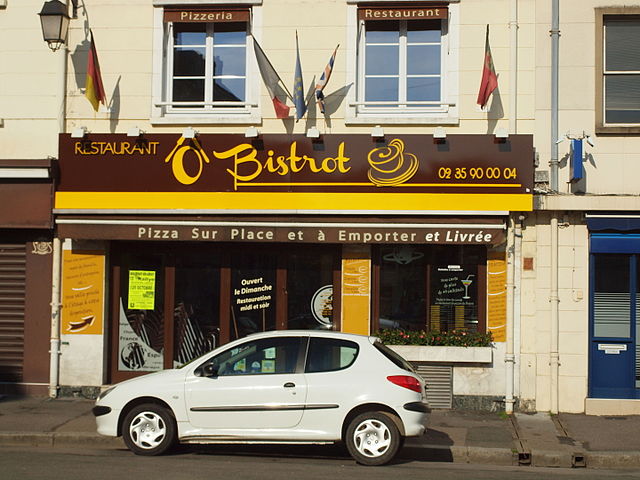
Gournay is a centre for farming and light industry. It is twinned with Hailsham in East Sussex.
Stage 4 leaves Gournay on the D916. The route passes close to the Manoir de la Fontaine du Houx.
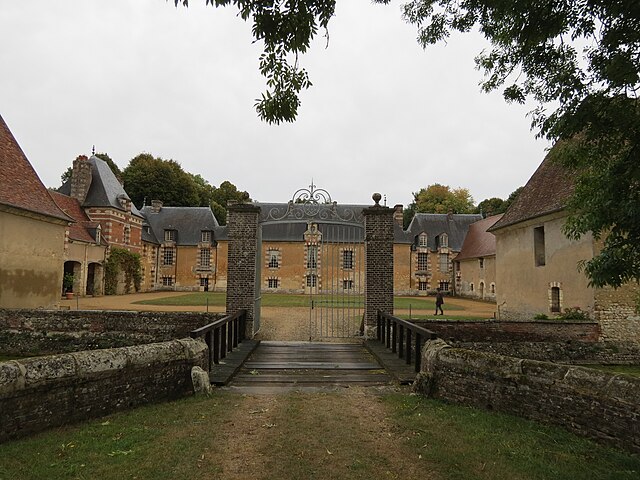
The riders pass through Bézu-la-Forêt. They continue on the D316 to Morgny, La Neuve-Grange, Puchay and Saussay-la-Campagne.
Stage 4 goes through Les Andelys and reaches the Seine.
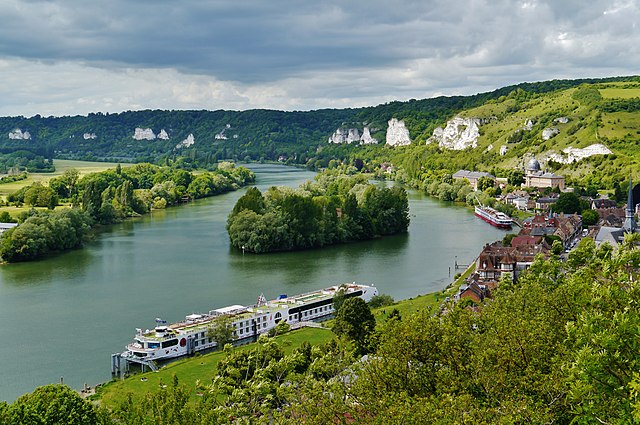
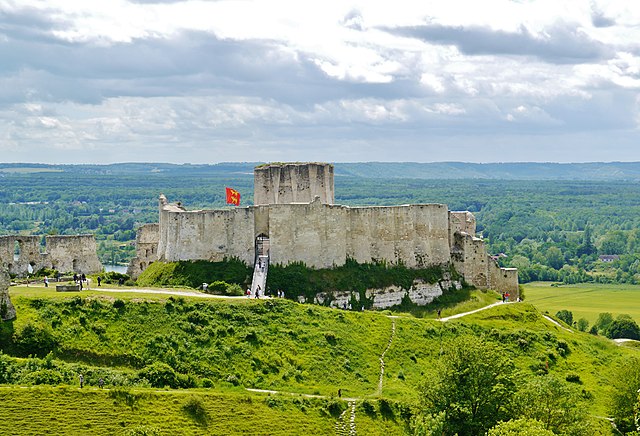
The main attraction at Les Andelys is Château Gaillard. It was built by Richard I of England (Richard the Lionheart) at the end of the 1100s, to protect the frontier of his possessions in Normandy.
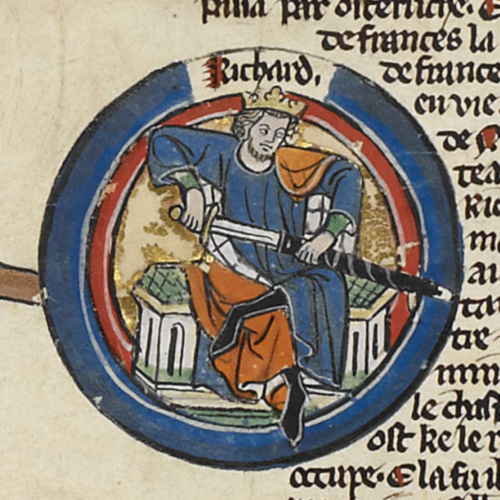
Richard I, or Richard the Lionheart, ruled England from 1189 to 1199 - but he was only in England twice for a few months in that time. His mother Queen Eleanor was his English representative.
He liked war and fighting. Churchill said that 'the advantages gained for him by military genius were thrown away through diplomatic ineptitude'.
Richard I wanted to go on a Crusade in the Holy Land, so he raised as many taxes as possible on his English subjects. He also sold Berwick and Roxburgh to the King of Scotland.
In the Crusade Richard fought well, but disunity on the Christian side prevented an outright victory.
On his way back to England in 1192, Richard was shipwrecked and tried to go home over land. In Austria he was captured by Duke Leopold, who sold him to the Holy Roman Emperor.
The Emperor demanded a ransom of 150,000 marks, which was twice the annual revenue of the English Crown. It was collected from English subjects and paid to the Emperor, and Richard returned home in 1194.
Richard's possessions in France were now under attack so he left England, never to return.
In 1199 he besieged a castle at Chaluz and was struck by a crossbow
bolt fired from the castle wall and wounded on his left shoulder.
Gangrene set in. Richard named his brother John as his heir then
died.

Skiing Made Easy is a practical guide to learning to ski based on many happy seasons of ski teaching.
It takes you through the beginner's progression from snowplough to parallel turns, starting at the very beginning and not assuming any prior knowledge.
The book suggests relevant exercises to develop and improve your skills. Common faults are identified, along with the best ways to correct them.
'By the way' sections contain information about many of the little things that people assume you just know, but you may not.
'This is the book I wish I'd had when I started skiing' - reviewer on Amazon.
How to buy:

Skiing Made Easier is the follow-up to Skiing Made Easy, and picks up from where the first book left off.
The first chapter is Refining Your Parallel Turns.
The chapters on ski technique beyond basic parallel turns are Carving, Short Turns, Bumps and Off Piste.
There are then further chapters on Avalanche and Mountain Safety, Ski Psychology, Physical Preparation, Ski Servicing and Alpine Wildlife.
As in Skiing Made Easy, common faults are identified and exercises suggested to correct them and to develop your skills.
'By the way' passages contain bits of skiing knowhow that could otherwise take years to pick up.
How to buy:
The Amazon URLs are affiliate links.
Now the race heads north west towards Rouen, through Fresne-l'Archevêque, Cuverville, Heuqueville and Amfreville-les-Champs.
It goes through Romilly-sur-Andelle, and from there the road rises. This is the first categorised climb.
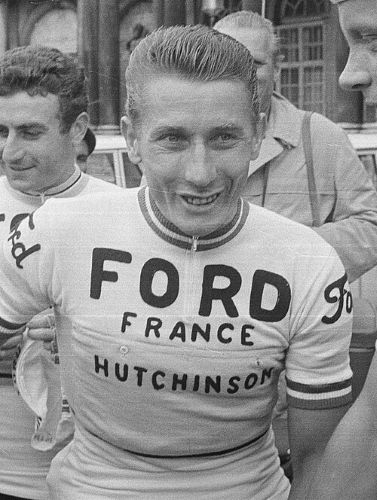
The Côte Jacques Anquetil is so-called because Anquetil had land and a castle here. He was a road-racing cyclist from Rouen who won the Tour de France in 1957, and every year from 1961 to 1964. There's a monument to him at the top of the climb.
The Côte Jacques Anquetil is 3.5km at an average 3.6%, to a height of 149m. 1 KOM point for 1st place.
After La Neuville-Chant-d'Oisel, the descent is to Quévreville-la-Poterie, and Stage 4 reaches the banks of the Seine again at Le Port Saint-Ouen.
We're now into the finale of Stage 4, shown on this map.

Now the race goes north alongside the river through the hamlet of Saint-Adrien.
There could be points in the green jersey points competition for a rider who has managed to stay at the front of the pack over the Côte Jacques Anquetil, or for any breakaway.
20 green jersey points for 1st place, down to 1 point for 15th place.
Stage 4 then leaves the river to climb towards Belbeuf.
The Côte de Belbeuf is 1.3km at 9.1%, to a height of 136m. That will sting.
There are 2 KOM points for 1st place and 1 point for 2nd place.
In the outskirts of Rouen now, Stage 4 goes through Le Mesnil-Esnard before descending again. Then there's another climb at Bonsecours.
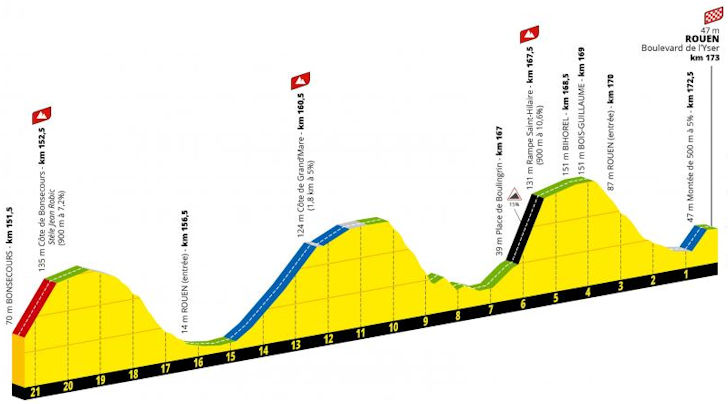
The Côte de Bonsecours is 900m at 7.2% to a height of 135m.
1 KOM point will go to 1st place over the top of the climb.
Here, there's a memorial to Jean Robic who broke free of the peloton on this climb during the first post-war Tour de France, took the yellow jersey, and went on to win the Tour overall.
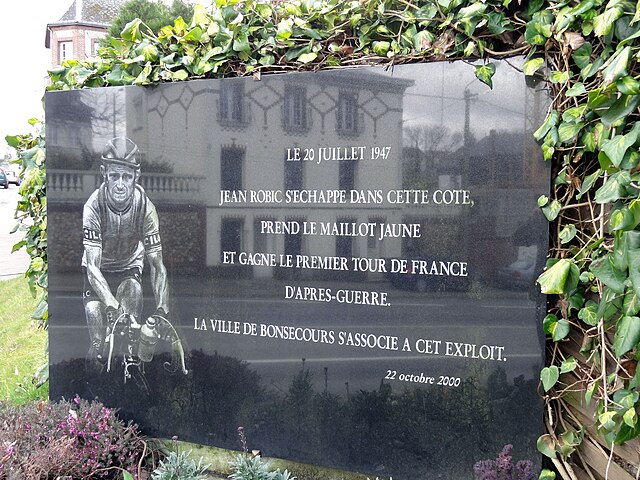
The climb is followed by a descent to Saint-Léger-du-Bourg-Denis and into Rouen.
Next there's another climb, the Côte de la Grand'Mare, on the Avenue de la Grand'Mare. It is 1.8km at an average 5% gradient, to a height of 124m.
1 KOM point will go to 1st place over the top of the climb.
Stage 4 returns towards Rouen and descends the Rue Albert Dupuis. It heads west along Route de Darnétal to Place Saint-Hilaire.
After Place Saint-Hilaire, the riders take the Rampe Saint-Hilaire to Place Boulingrin, which marks the start of the Rampe Saint-Hilaire climb - 800m at 10.6%.
There are 2 KOM points for 1st place and 1 point for 2nd place.
The climb is on Rue Francis Yard, which flattens out at the cemetery at the top.
Then it's Rue de la République to Bihorel, and rue du Docteur Caron past the Hippodrome des Trois Pipes.
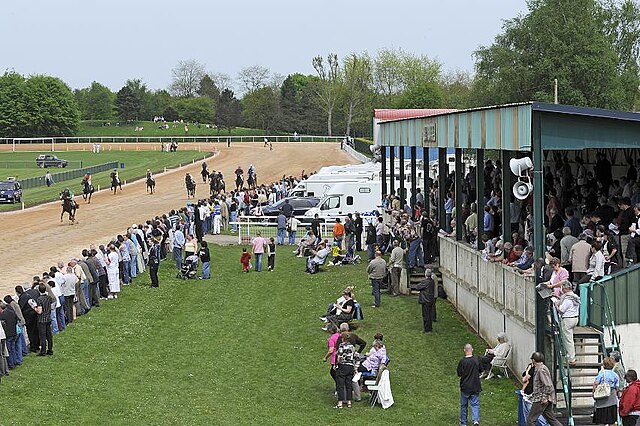
There's a descent on Route de Neufchâtel, a little tour past the Donjon de Rouen and to Square Verdrel and the Town Hall.
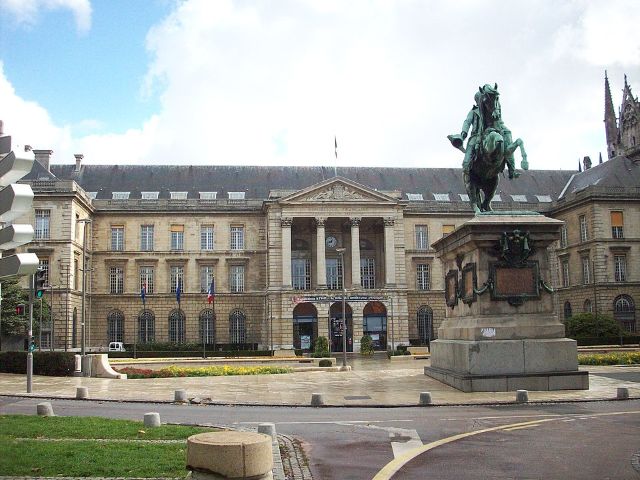
Finally the riders return to Boulevard de l'Yser and the finish line.
Green jersey points at the finish: from 30 points for 1st place down to 2 points for 15th place.
Time bonuses at the finish line:
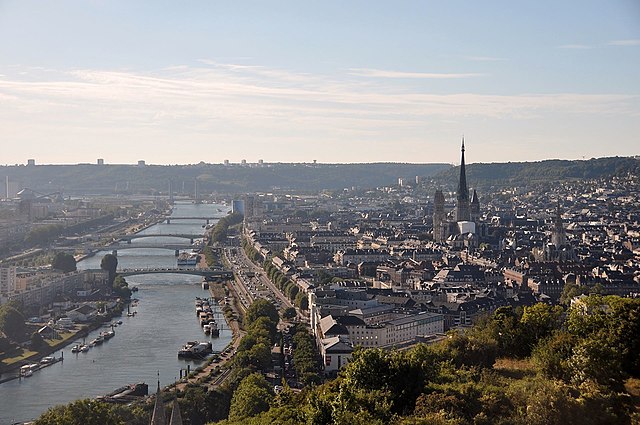
The Stage 4 finish city is Rouen.
It's on the river Seine, and is the capital of the Normandy region. The population of wider Rouen is around 478,000.
The Celtic tribe that lived here in the pre-Roman era called the place Ratumarcos, and the Romans called it Rotomagus. In Roman times, it had an amphitheatre and Roman baths.
The Normans captured Rouen in 841, and it became the capital of the Dukes of Normandy from 912.
Rouen became part of France under King Philippe Auguste in 1204. Around this time, a textile industry developed, using wool imported from England.
During the Hundred Years War, Rouen surrendered to the English (1419). Joan of Arc was a leading figure on the French side, but she was burned at the stake in Rouen in 1431. The French retook Rouen in 1449.
Rouen was the HQ of the Nazi Navy in World War II. The city was badly damaged by Allied bombing in 1944, and its Cathedral nearly destroyed.
Rouen Cathedral is the city's most famous sight.
The Tour de Beurre was financed by the sale of indulgences, allowing people to consume butter during Lent. The facade was finished in the 1500s.
Monet did a series of paintings of the Cathedral at different times of day in different light.
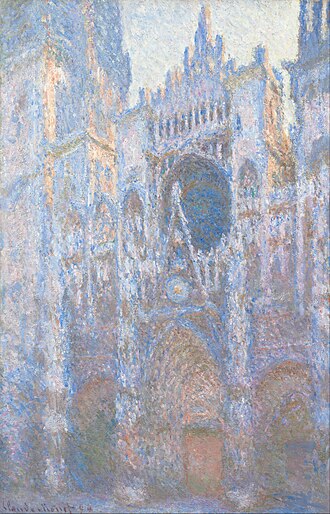
The Gros Horloge is a big astronomical clock.
The Donjon de Rouen is where Joan of Arc was brought in 1431 and threatened with torture. It's on Place du Vieux Marché that she was burnt.
There's a Museum of Fine Arts and Ceramics with Rouen pottery from the 1500s to the 1700s. The Musée des Beaux-Arts de Rouen has Monet paintings.
The Jardin des Plantes de Rouen is a notable botanical garden.
Novelist Gustave Flaubert and politician François Holland were both born in Rouen.
Cyclist Alexis Gougeard is from Rouen.
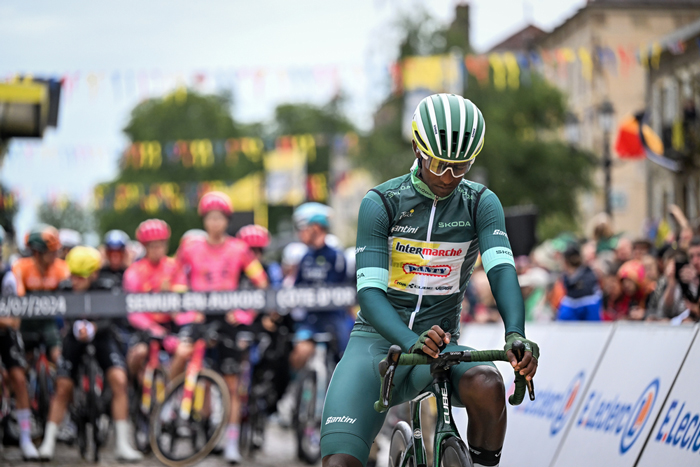
Favourites for Stage 4 of the 2025 Tour de France include Classics specialists who excel in hilly terrain.
Could it be a Wout van Aert or a Mathieu van der Poel stage? Or perhaps one for Neilson Powless or Biniam Girmay.
Who do you think will win Stage 4 of the 2025 Tour de France?

Politics on the Edge, by Rory Stewart.
Price £5.49 in paperback from Amazon at the time of writing (affiliate link).
As an Amazon Associate, I earn from qualifying purchases.

Bike Rides in the Yorkshire Dales is available in colour paperback.
Find out more about Bike Rides in the Yorkshire Dales or buy a copy.

Bike Rides In and Around York features a historical city tour, plus family rides, road rides, and mountain bike rides.
Find out more about Bike Rides In and Around York or buy a copy.

Bike Rides in Harrogate and Nidderdale is a book of family, mountain and road bike rides.
Find out more about Bike Rides in Harrogate and Nidderdale or buy a copy.

Find out more about Mountain Bike Rides in the Yorkshire Dales.
Buy Mountain Bike Rides in the Yorkshire Dales at £8 + P&P.

Garmin Edge Explore, £197.99 at the time of writing.
Garmin Edge Explore on Amazon (affiliate link).

Faster by Michael Hutchinson on Amazon (affiliate link).


