Cycling in Yorkshire & Beyond

Cycling in Yorkshire & Beyond
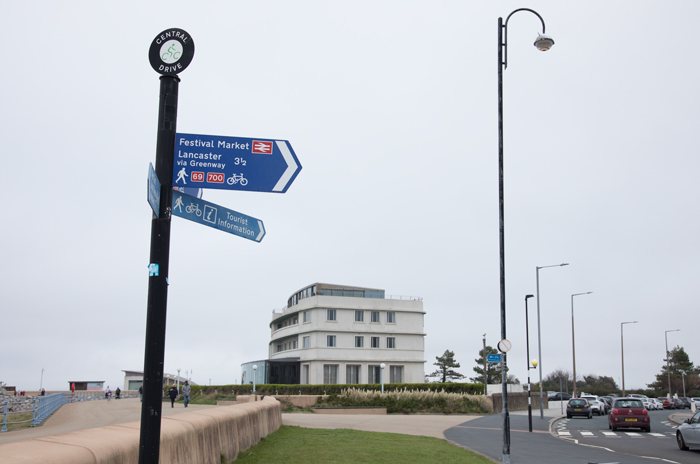
Here are guides to some of the main places on the Way of the Roses, a 170-mile cycle route from the west coast to the east coast of England.
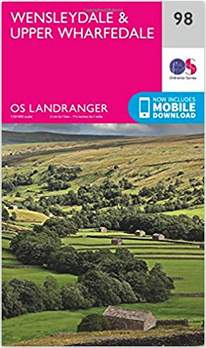
The 1:50,000 OS Landranger map number 98 Wensleydale and Upper Wharfedale covers the second part of the Way of the Roses cycle route.
Morecambe Bay was known to the Romans as the fourth inlet north of Wales.
The town grew and prospered in the 1800s as the railway brought tourists here.
With the advent of the foreign holiday it declined, but the restored
Midland Hotel and the planned Eden Project could help revive
Morecambe's fortunes.
Read about Morecambe.
Lancaster is a city on the river Lune and the Lancaster Canal.
It started out as a Roman fort, and the castle on that site has been important through the centuries since.
The Port of Lancaster thrived on trade in spices and slaves. The main shipping facility is now downriver at Glasson Dock.
Although Lancaster is a city, it is really more like a bustling market town.
Read more about Lancaster.
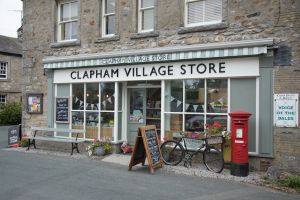
Clapham is a Yorkshire Dales village set either side of Clapham Beck.
Ingleborough Hall is the largest house in the village, and was once the home of local landowners the Farrers.
The most famous of the Farrers was botanist and plant-collector Reginald. Today the best-known (part-time) resident is Alan Bennett.
Clapham's Nature Trail leads to Ingleborough Cave. Keep climbing from
there and you reach Gaping Gill then Ingleborough.
Read more about Clapham.
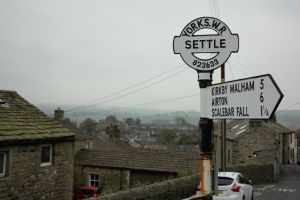
Settle is a market town in the Craven district of North Yorkshire. It's popular with walkers, mountain bikers and motorbike riders.
Animal bones from the prehistoric period have been found in caves around Settle. The town itself was founded by the Angles in the 600s.
Industry such as cotton mills developed in the 1700s and 1800s. The Settle-Carlisle railway was completed in 1875.
Read more about Settle.
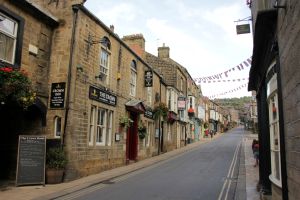
Pateley Bridge is a market town in Nidderdale, North Yorkshire.
There is evidence of Roman activity in the area, notably in lead 'pigs' with Latin inscriptions.
The bridge at Pateley Bridge was first recorded in 1175, and in 1320 the Archbishop of York granted a charter for a market.
The railway came to Pateley in 1862, and in the early 1900s, reservoirs were built above the town to supply Bradford.
Read more about Pateley Bridge.
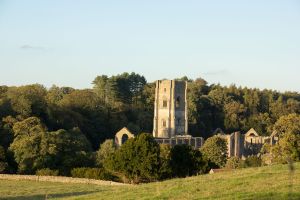
Fountains Abbey was founded in 1132 by thirteen monks who split from St Mary's Benedictine Abbey in York.
The breakaway team joined the Cistercian order. After hard times at the start, they became wealthy, with agricultural land and interests in mining, quarrying, iron-smelting and milling.
The 1530s was the time of Henry VIII's Dissolution of the Monasteries, and that meant the end for the monks of Fountains Abbey.
Read more about Fountains Abbey.

Studley Royal deer park and garden was created by John Aislabie after his disgrace during the South Sea Bubble scandal, when he was forced to abandon political life.
Studley Royal House burned down in 1946, but the stable block remains, as do other buildings such as St Mary's Church.
Deer and wildlife such as owls and stoats thrive in the park.
Read more about Studley Royal.
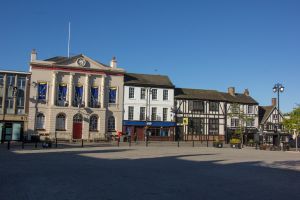
Ripon is the third-smallest city in England. It's at the confluence of the rivers Laver, Skell and Ure.
It was founded by St Wilfrid, who was abbot of a monastery here and had the first church built.
For centuries, the Ripon Wakeman was in charge of the market and of enforcing a curfew. He employed a Hornblower to set the watch, and the Hornblower still performs in the market place every evening.
Read more about Ripon.
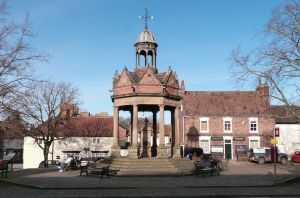
Boroughbridge is a small town in North Yorkshire.
It was an important stage between Edinburgh and London in the era of stagecoaches, and had twenty-two inns.
Its neighbour Aldborough was an important Roman town called Isurium
Brigantum, and English Heritage runs the Roman site there.
Read more about Boroughbridge and Aldborough.
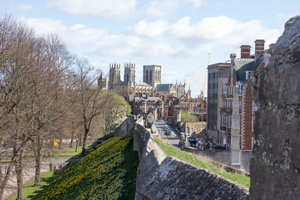
York is a city with a long and rich history.
Because of its Roman, Anglian, Viking and Medieval past, it is one of the most interesting and popular places in Britain to visit.
York Minster is at the heart of the city, with narrow streets packed with cafés and shops around it.
The Yorkshire Museum, the Jorvik Museum, Clifford's Tower, York
Castle Museum and the National Railway Museum are among York's
attractions.
Read more about York.
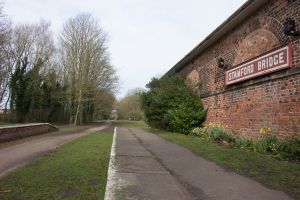
Stamford Bridge is a large village about 5 miles east of York.
It is known for the second-most famous battle of 1066, the Battle of Stamford Bridge. Inspired by the Bayeux Tapestry, there's a much more recent Stamford Bridge Tapestry.
The York & North Midland Railway built the York to Market Weighton railway which opened in 1847. Stamford Bridge was one of the stations on that line.
The Old Station Club uses the station buildings.
Read more about Stamford Bridge.
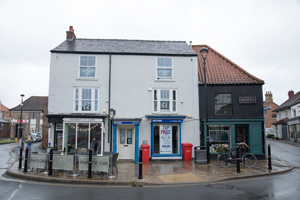
Pocklington is a market town of around 10,000 people. It's a spring line settlement at the foot of the Yorkshire Wolds.
Two Iron Age chariot graves have been found in Pocklington.
All Saints Church has several interesting features, and is known as the Cathedral of the Wolds.
Pocklington has a thriving market, an arts centre, a well-respected
school, and a National Collection of waterlilies at Burnby Hall
Gardens.
Read more about Pocklington.
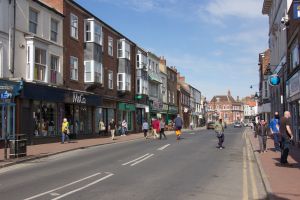
Driffield is a market town with a population of about 13,500 people. It's sometimes called the Capital of the Yorkshire Wolds.
It is said to be the location of an Anglian royal palace, Deira Castle, and there was a Norman motte and bailey castle here.
The canal linked Driffield up to the wider world in 1770, and the railway added another connection in 1846.
Driffield remains a busy market town. It hosts the Driffield Show in
July and Driffield Steam Fair in August.
Read more about Driffield.
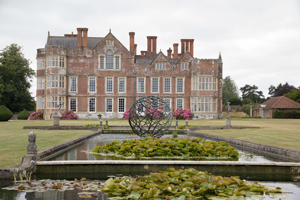
Burton Agnes Hall is an Elizabethan manor house built from 1601-10.
Visitors to the hall can see intricate wood carving that tells stories, often Biblical ones.
There's an impressive art collection in the Long Gallery.
There's also an older and smaller Norman manor house, a Walled
Garden, and a Woodland Area and Adventure Playground.
Read more about Burton Agnes Hall.
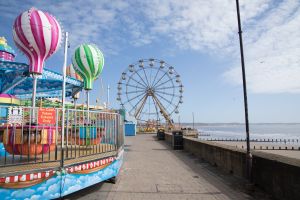
Bright Breezy Bracing Bridlington is a resort on the east coast of Yorkshire.
Until the 1800s it was really two separate settlements - the Old Town around Bridlington Priory, and Bridlington Quay down at the harbour.
Bridlington featured in the history of the English Civil War when Queen Henrietta Maria landed here.
From the 1760s, Bridlington developed as a holiday resort, and
tourism is now the main industry.
Read more about Bridlington.